“Record Shop Stories” is our interview series with the owners and managers of record stores.
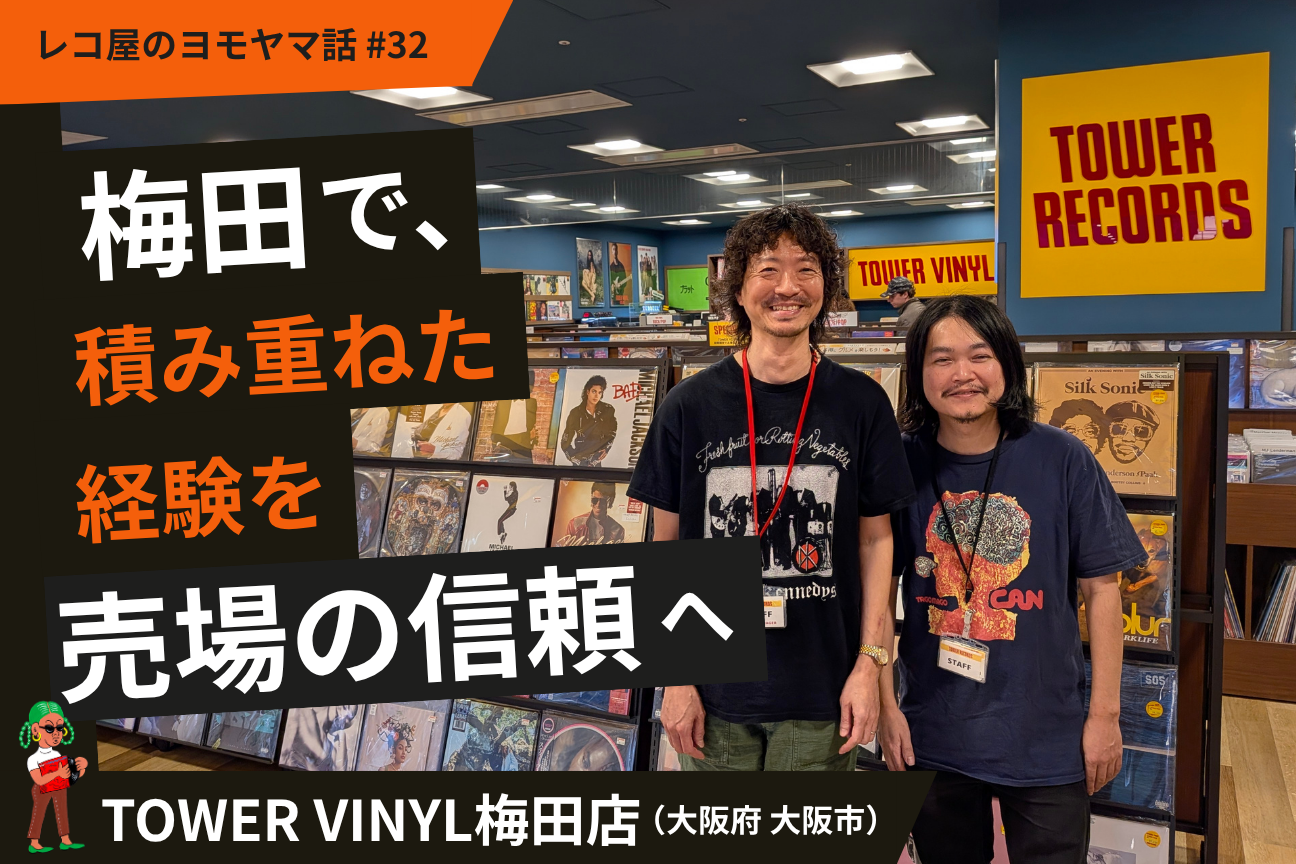
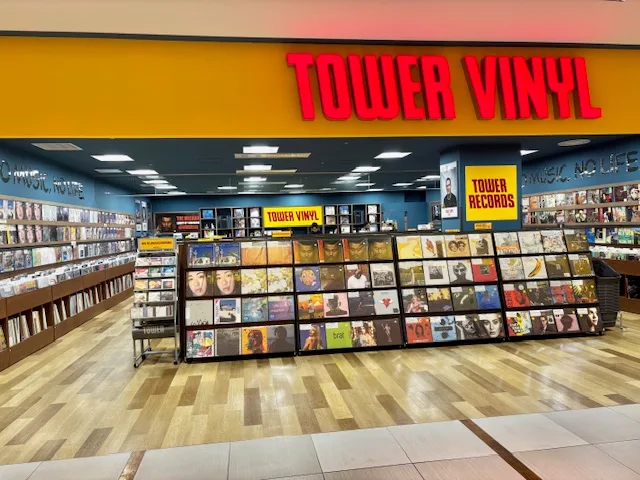
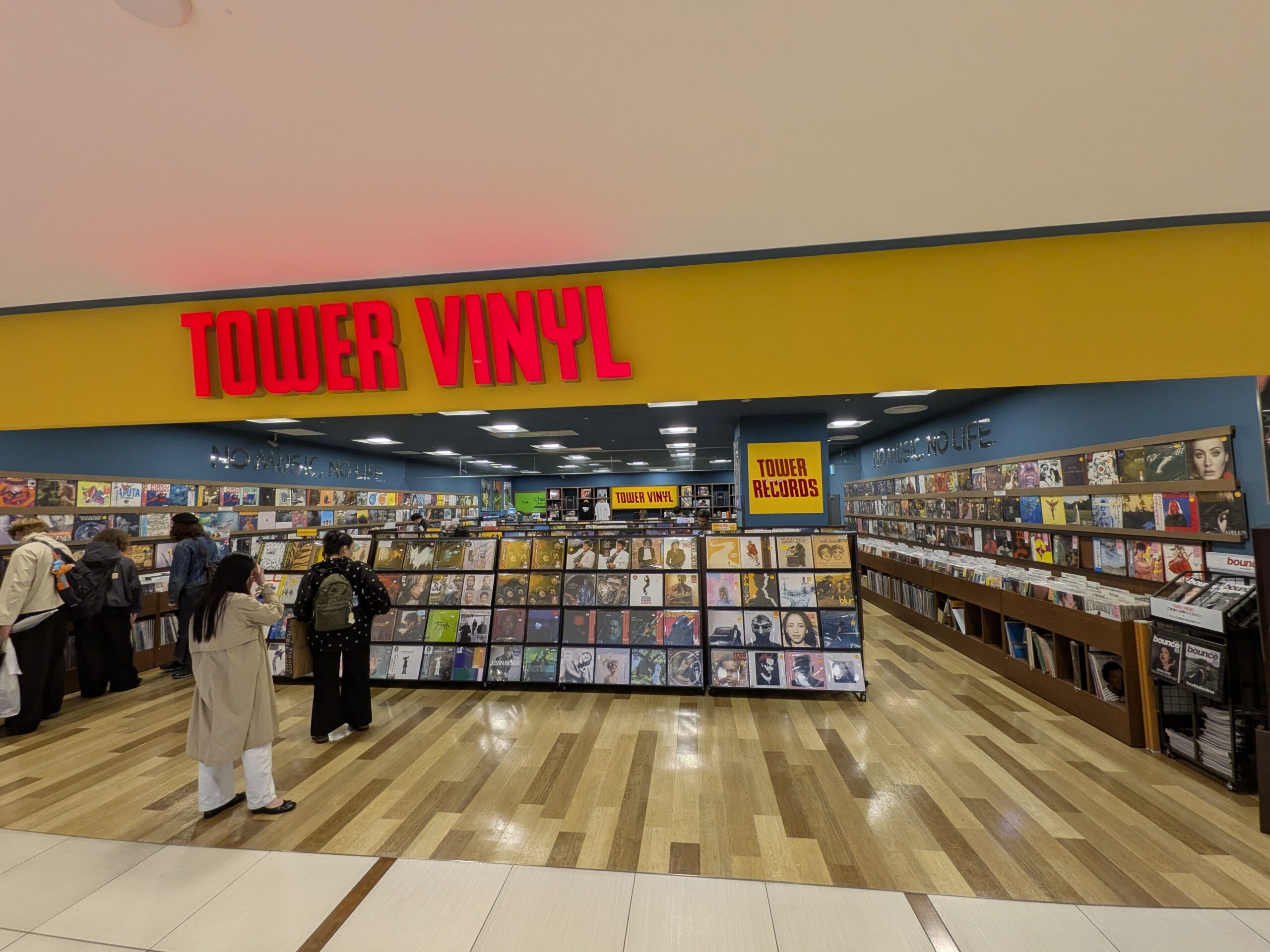
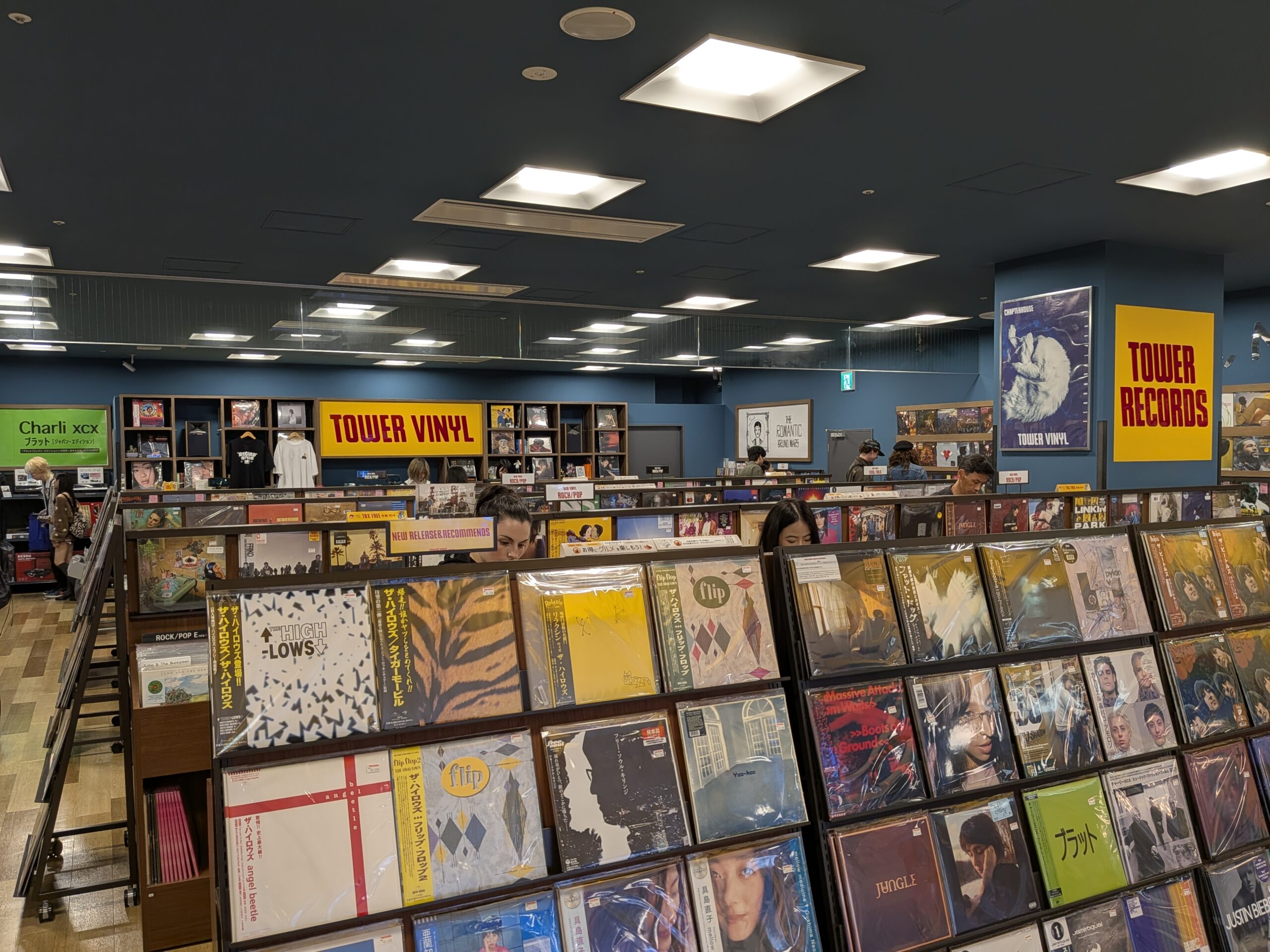
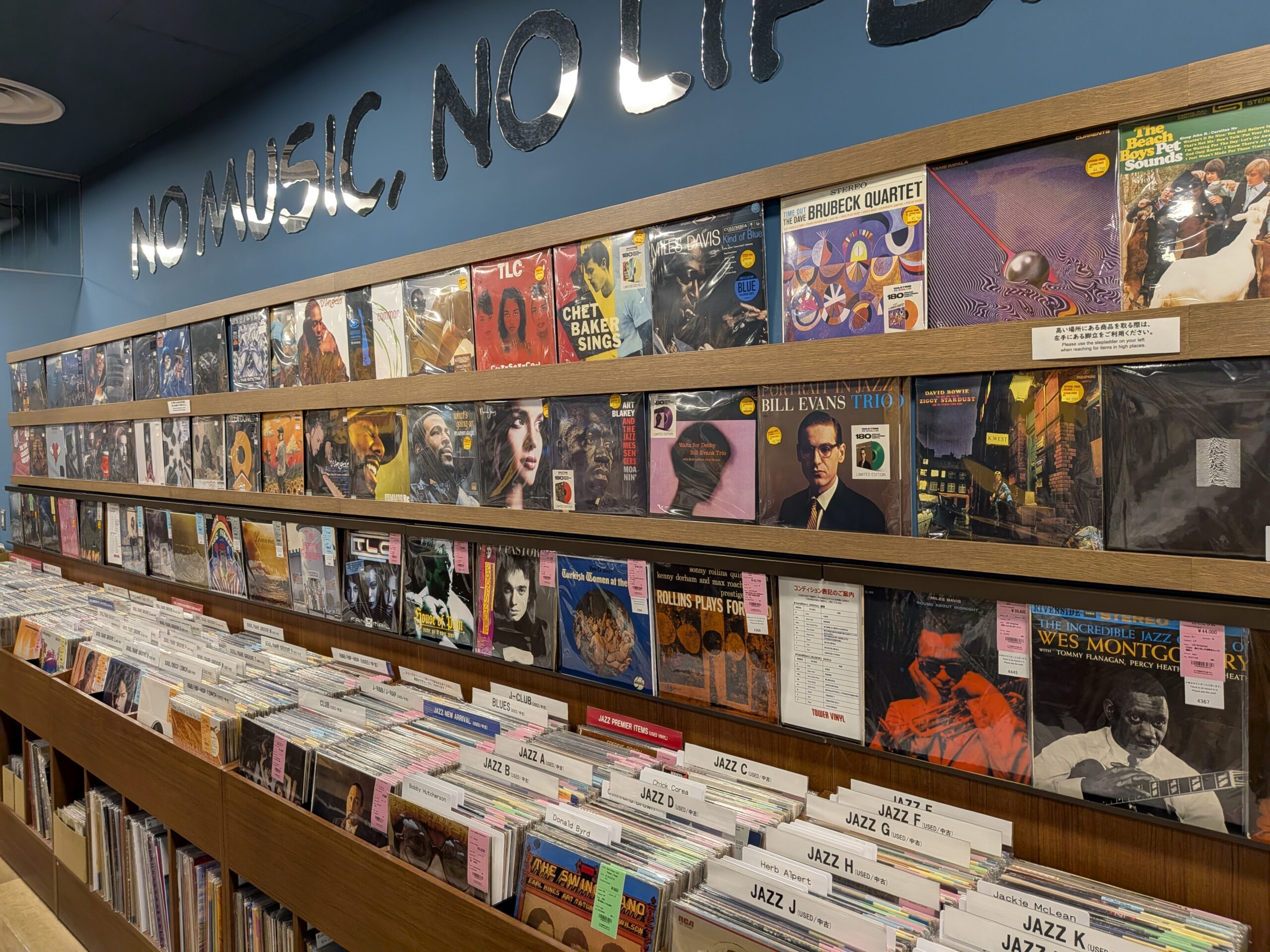
TOWER VINYL UMEDA is located in Umeda, Osaka. In a single sales space, visitors can explore everything from new releases and reissues to used records, each with its own history and condition.
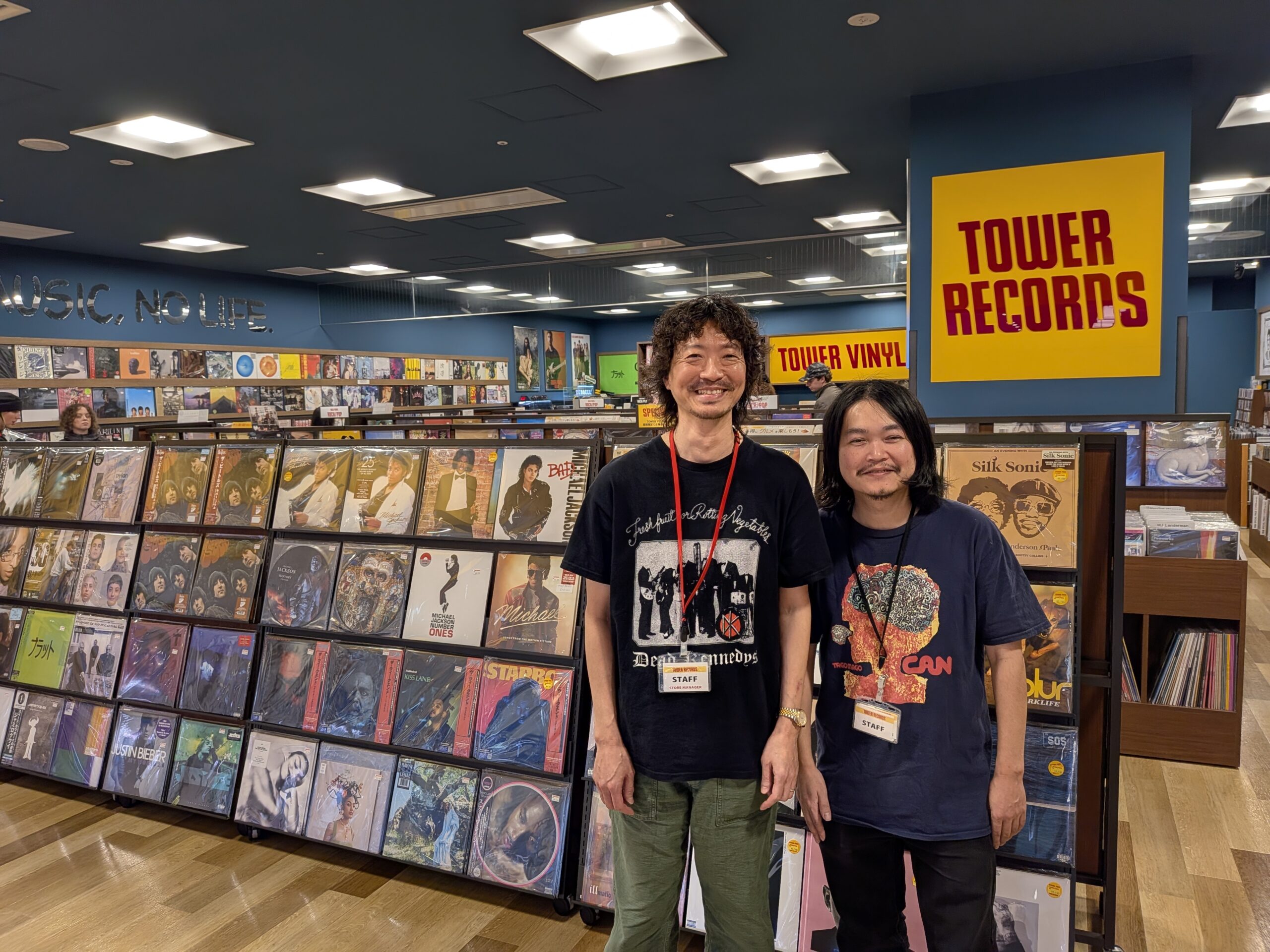
We spoke with store manager Yoneyama and Kikuta, who works on used-record appraisals, purchasing, and sales-floor development.
They told us about the roots of their attraction to music and records, the work of recognizing a record’s value, and how accumulated experience can become trust on the sales floor.

Kikuta, what first drew you to music and records?
 Kikuta
From the later years of elementary school into junior high, I was drawn to music, fashion, and overseas culture as a whole. Once I entered junior high, I began listening to Red Hot Chili Peppers, Nirvana, Sonic Youth, and others. I was a slightly unusual child: even though entering a record shop made me nervous, I would go inside and ask the intimidating-looking staff about the recommendation comments written on price tags.
On my first birthday after entering junior high, I suddenly asked for a pair of Levi’s 501s after previously always wanting a Famicom, which surprised my parents. For me, jeans had replaced video games, and Western music had replaced J-pop. I think I was naturally attracted not only to music, but also to American and British culture through clothes, cars, and coffee.
I bought my first records in junior high as well. I had already bought a small record player and wanted to make some sound with it, so I picked out a few inexpensive records. After high school, footage of DJ KRUSH led me to abstract hip-hop. I bought turntables and an MPC (*1), searched for interesting sounds on 100-yen records, sampled them, and made beats. From there, the amount I bought increased dramatically.
Talking about it now, I realize that music I did not understand at the time can suddenly sound fascinating when I return to it after meeting different people, watching films, or listening to other genres. It is less about rejecting what I used to like and more about feeling that the range of music I can hear has grown with age. Something I do not understand now may reveal its appeal when I am fifty. That open possibility is part of what makes music interesting.
(*1) MPC (Music Production Center): a piece of equipment used to combine sampled sounds and create beats or complete tracks.
How did you acquire the knowledge needed to recognize a record’s value?
At the first large record store where I worked, I was assigned to jazz and classical rather than the hip-hop section I had hoped for. I was a little uncertain at first, but senior colleagues taught me to take pride in the work I was given and to listen across genres. Looking back, that experience broadened my perspective.
I later moved into used records and began seriously learning the differences between original editions and different pressings. I did not begin with systematic knowledge. Ten or twenty questions would arise during a workday, and I would research them at home. If I still could not find the answer, I would ask someone knowledgeable the next day. On days off I visited record shops to compare market prices and the differences in how records were described. It was a constant cycle.
Even the same release can differ in value and sonic character depending on the country and era of manufacture, the label, the matrix (*2), and its condition. The more I learn, the more questions appear, so my interest never runs out. Saying I became knowledgeable naturally is probably closest to the truth.
While working with used records, I once saw a rare UK pressing priced at around one million yen. It was far more expensive than a typical early pressing, and at first I could not understand why. An experienced colleague told me, ‘One day you will understand its value,’ and I compared it with another pressing. It was not simply that one sounded better. The sonic character differed, as did the history of how each copy had survived. That was when the pleasure of digging into records as physical objects finally made sense to me.
(*2) Matrix: an identifying number etched into the runout area of a record, used as one clue for determining its production period and pressing.
What has remained important to you throughout your years working with records?
I want to help people who love music and records. That has never changed since I began working with records. If the knowledge I have acquired can be called a skill or professional expertise, I want to return it to both new record buyers and long-time collectors.
I enjoy spending an entire day appraising records in an office, but I also enjoy speaking with customers on the sales floor. When someone asks, ‘Why is this an original pressing?’ or ‘Why do two copies of the same record have different prices?’ I explain the background and help them think through which copy suits them. When buying a collection, nothing makes me happier than hearing, ‘I am glad I asked you.’
A customer around twenty once asked why three copies of the Beatles’ Rubber Soul—a Japanese pressing, a later UK pressing, and a UK original—had different prices. I explained that although the recorded music is the same, when, where, and how each was made are different.
If someone simply wants to hear the album on vinyl, an affordable Japanese pressing is enough. If they want to try a British pressing, there is a middle price range. An original pressing can feel as though it preserves the atmosphere of its time, but no one needs to stretch beyond their means. After hearing that, the customer chose the most expensive UK original.
What stayed with me was not the sale, but watching that person open the heaviest door and step into the world of records. Whatever price someone chooses, it is the right decision if it makes sense to them. My role is to present three doors, explain the differences, and help that person choose for themselves.
How did you first meet store manager Yoneyama?
I first met Yoneyama when I was in the reuse division and came to Osaka to teach appraisal work. From the beginning, I felt he had a wonderful presence and great energy. When the possibility of transferring to the Umeda store came up, I thought that if Yoneyama was the manager, it would be the right choice.
Working together confirmed that impression. As manager, he thinks about the store and the staff as a whole, while also meeting us at eye level in our used-record work. It is rare to find someone who works alongside you that way. I felt that my decision to come from Tokyo to Osaka and give it everything I had was the right one.
As store manager, what do you see as TOWER VINYL UMEDA’s greatest strength?
 Store Manager Yoneyama
We carry both new and used records in depth. You can browse a wide range of new releases and reissues, then dig through used records right beside them. I think it is an approachable shop not only for experienced record buyers, but also for people who do not yet own a player or are just beginning.
The Umeda store was built together by staff with experience selling new products in existing stores and the reuse division that supplied used stock. When we opened, the sales-floor staff had far less product knowledge than they do now. We listened constantly and learned from our customers every day, gradually building that knowledge.
Kikuta has years of experience in used records and has worked in both buying and appraisal. Having someone like that on the floor—answering customer questions and passing knowledge to the staff—is enormously valuable. I want us to combine our different experiences, teach one another, and keep developing the sales floor together.
Finally, what would each of you like to value as you continue shaping the store?
KikutaI believe an appraisal carries a responsibility to explain. Even the same title will have a different value depending on the pressing and condition. When someone asks why a price is what it is, we must be able to explain the reasoning. Sometimes the result will be lower than expected, but we need to explain why and have the owner entrust the records to us with full understanding. I never want to compromise on fairness.
I have only recently moved to Osaka, but we receive purchasing inquiries almost every day, and more customers have begun remembering my name. Hearing ‘I feel reassured because you explain it’ or ‘The shelves feel different since you arrived’ made me genuinely happy. I do not want merely to display knowledge; I want to return it to the sales floor as trust.
Store Manager YoneyamaTOWER VINYL has expanded from Shibuya to Umeda and Kyoto. As more stores open, the trust accumulated by existing locations will support purchasing and sourcing for the next one. That is why it is important to look carefully at the record in front of us and speak with the customer in front of us. We also want to create more opportunities to encounter records through in-store events and listening programs. By connecting with local record shops and music lovers, I hope not only the Umeda store but the record culture of Kansai as a whole will grow. Through those efforts, I want Umeda to mature further as a living record shop—in both its shelves and its service.
Recoya VIEW
A record’s value is not determined by price alone. When and where it was made, how it was produced, and the condition in which it has survived all matter. When someone carefully explains those differences, choosing a record becomes interesting in a new way.
Kikuta’s accumulated experience meets an approachable sales floor shaped by Yoneyama and the rest of the staff. At TOWER VINYL UMEDA, expertise and openness coexist, giving both first-time buyers and long-time collectors a place to choose a record in their own way.
Experience becomes trust on the sales floor, and records are passed on to the next person. We can imagine that cycle continuing to spread from this shop.