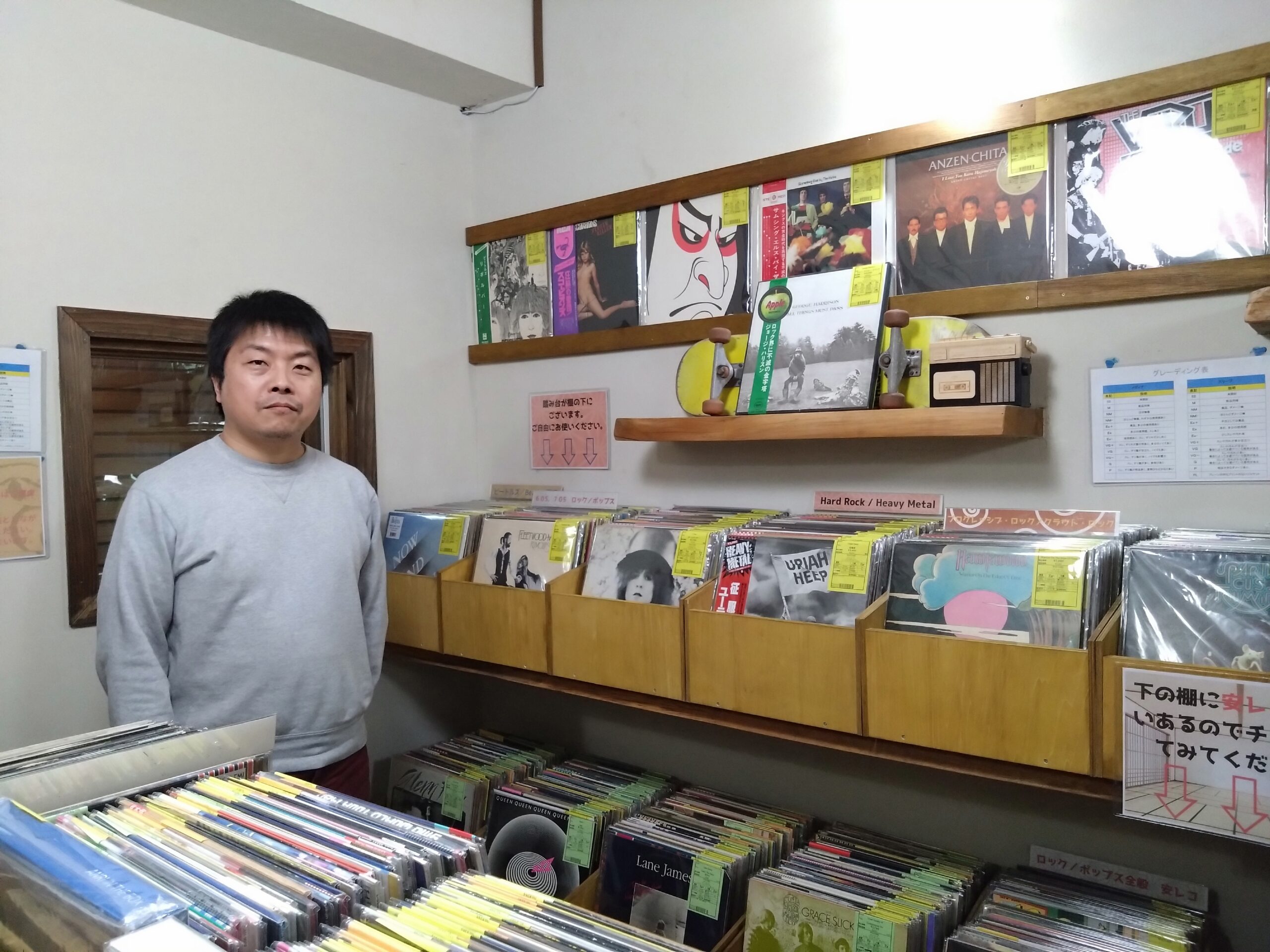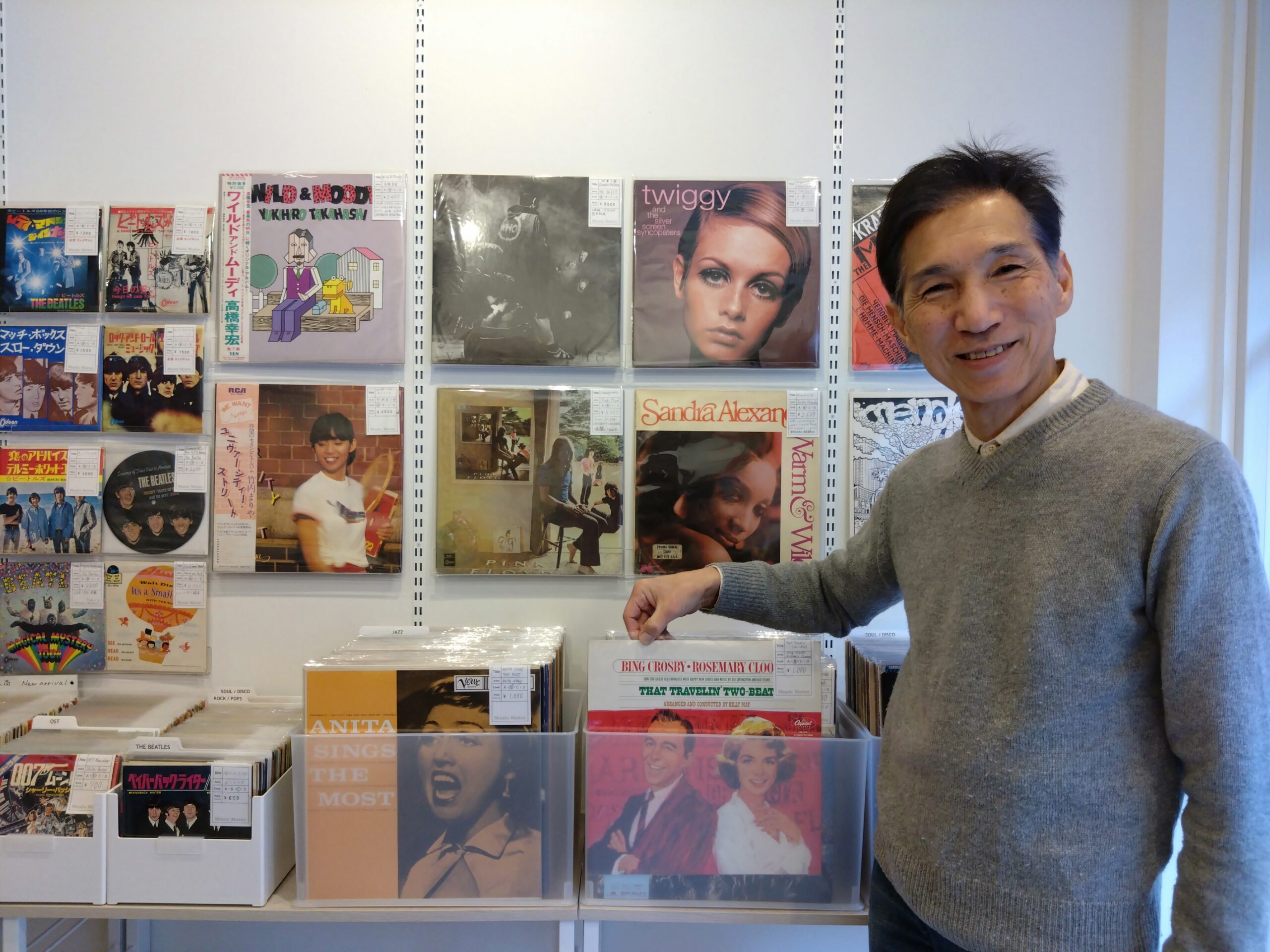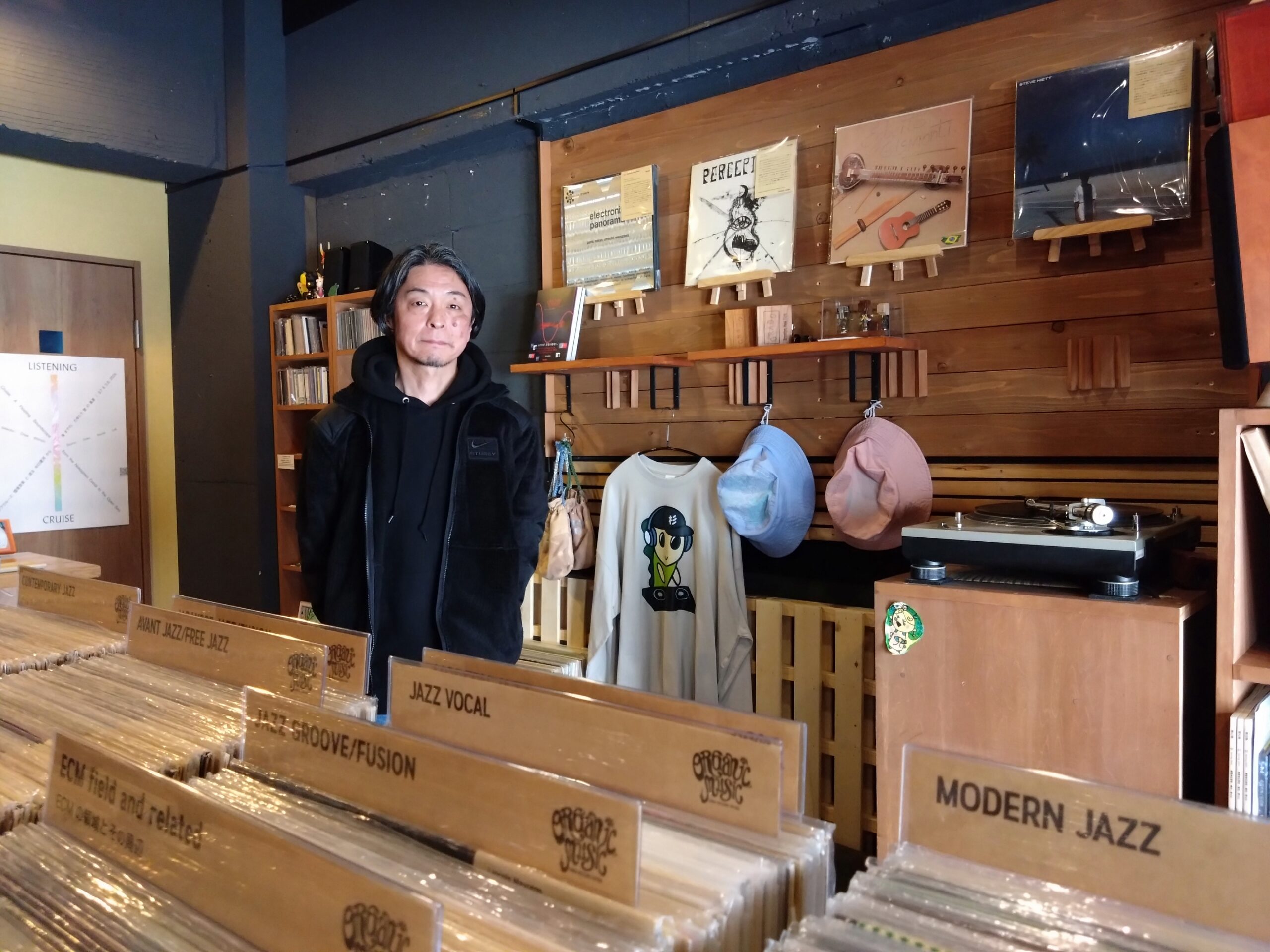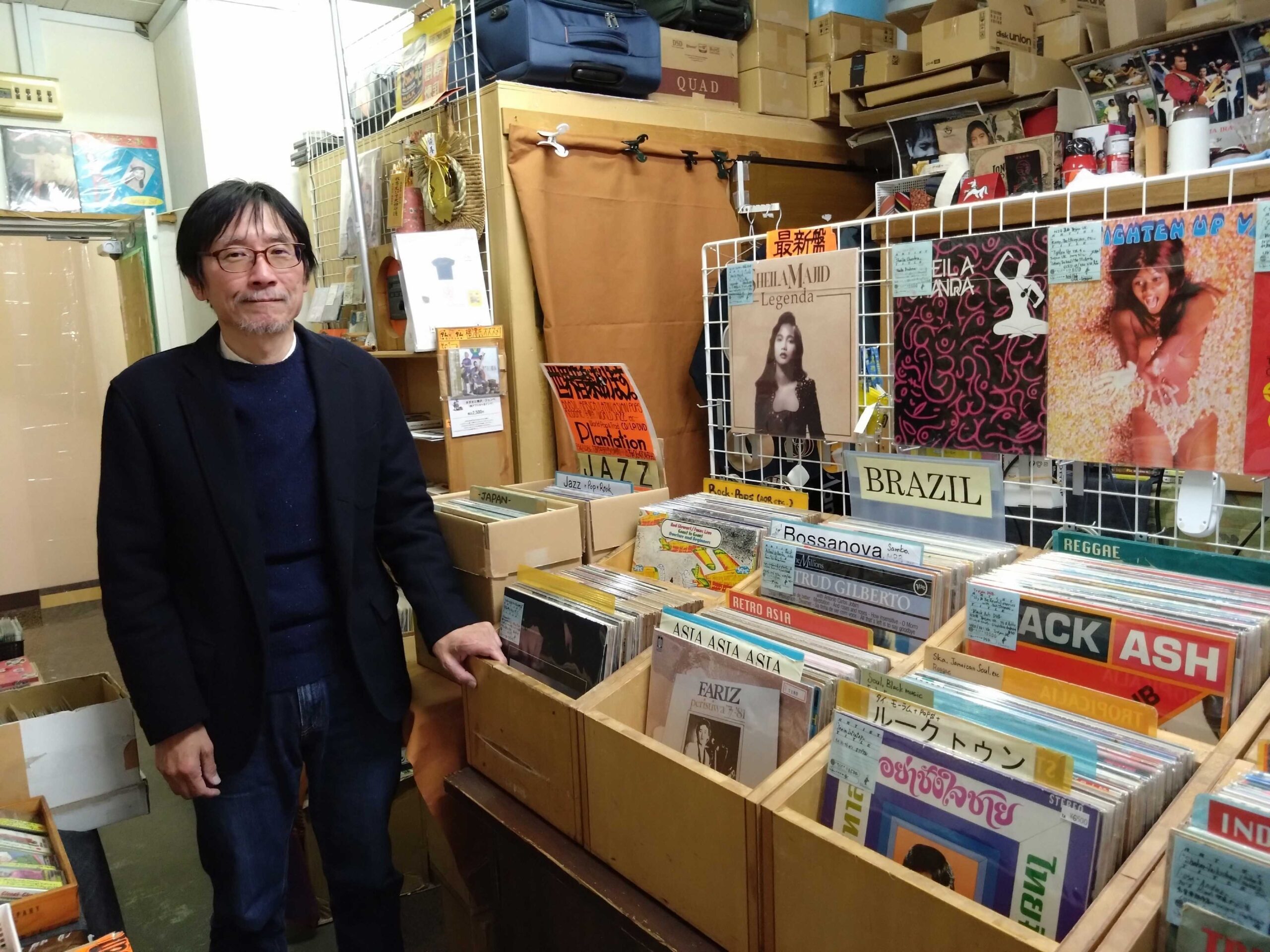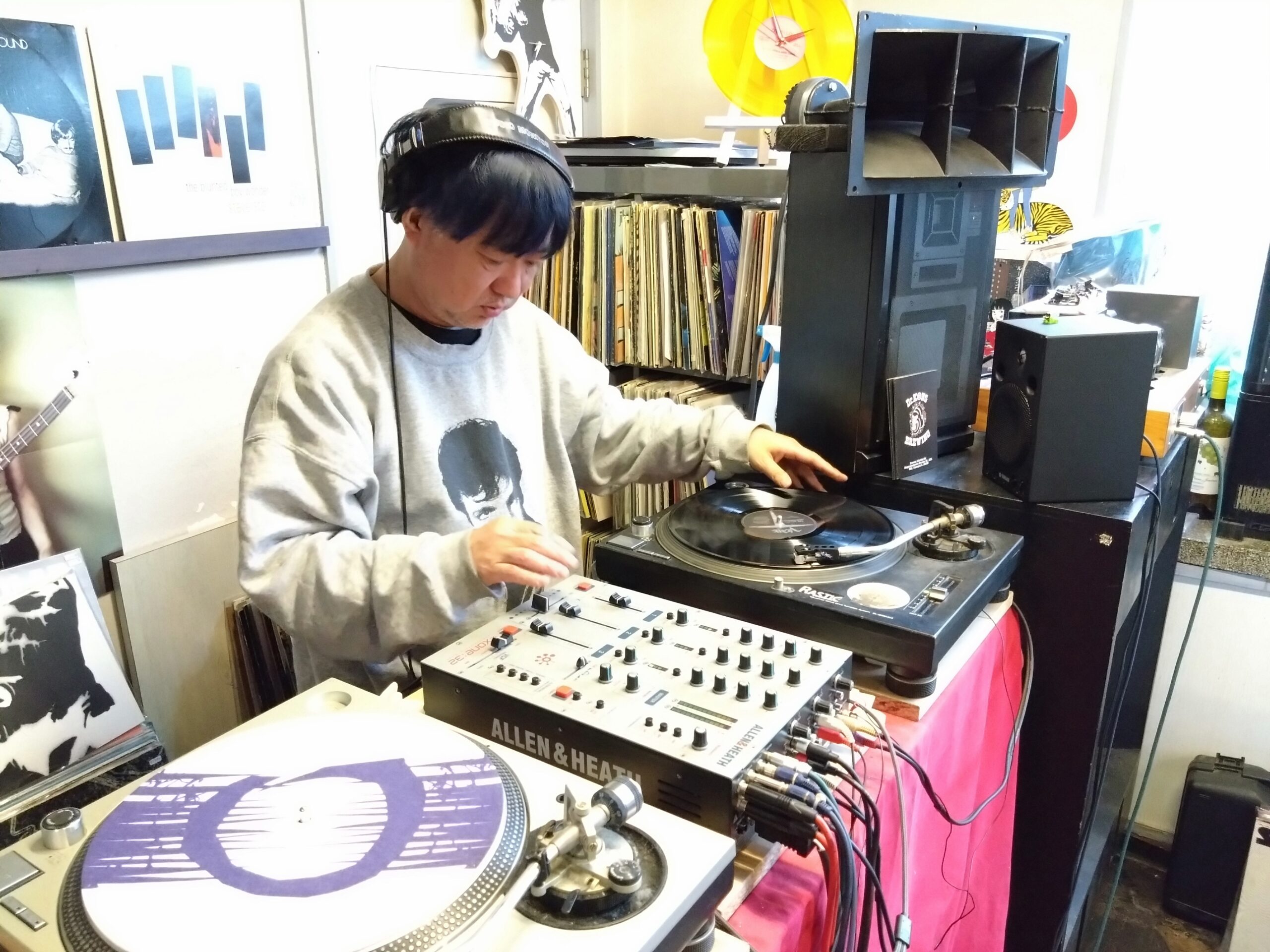
Recoya’s interview series with record store owners, “Record Store Yomoyama Tales.” This time, we visited LiE RECORDS in Toyohashi, Aichi.
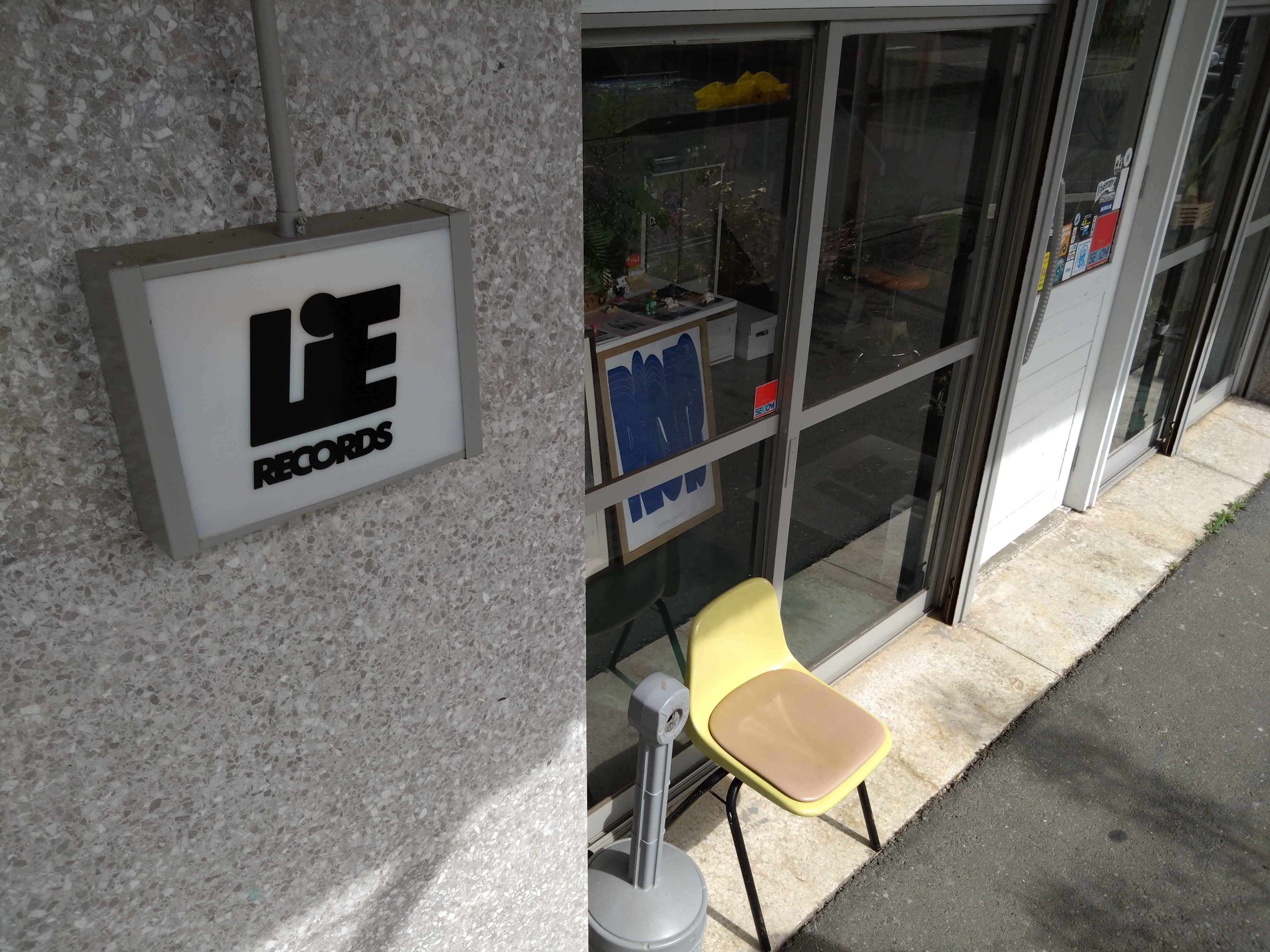
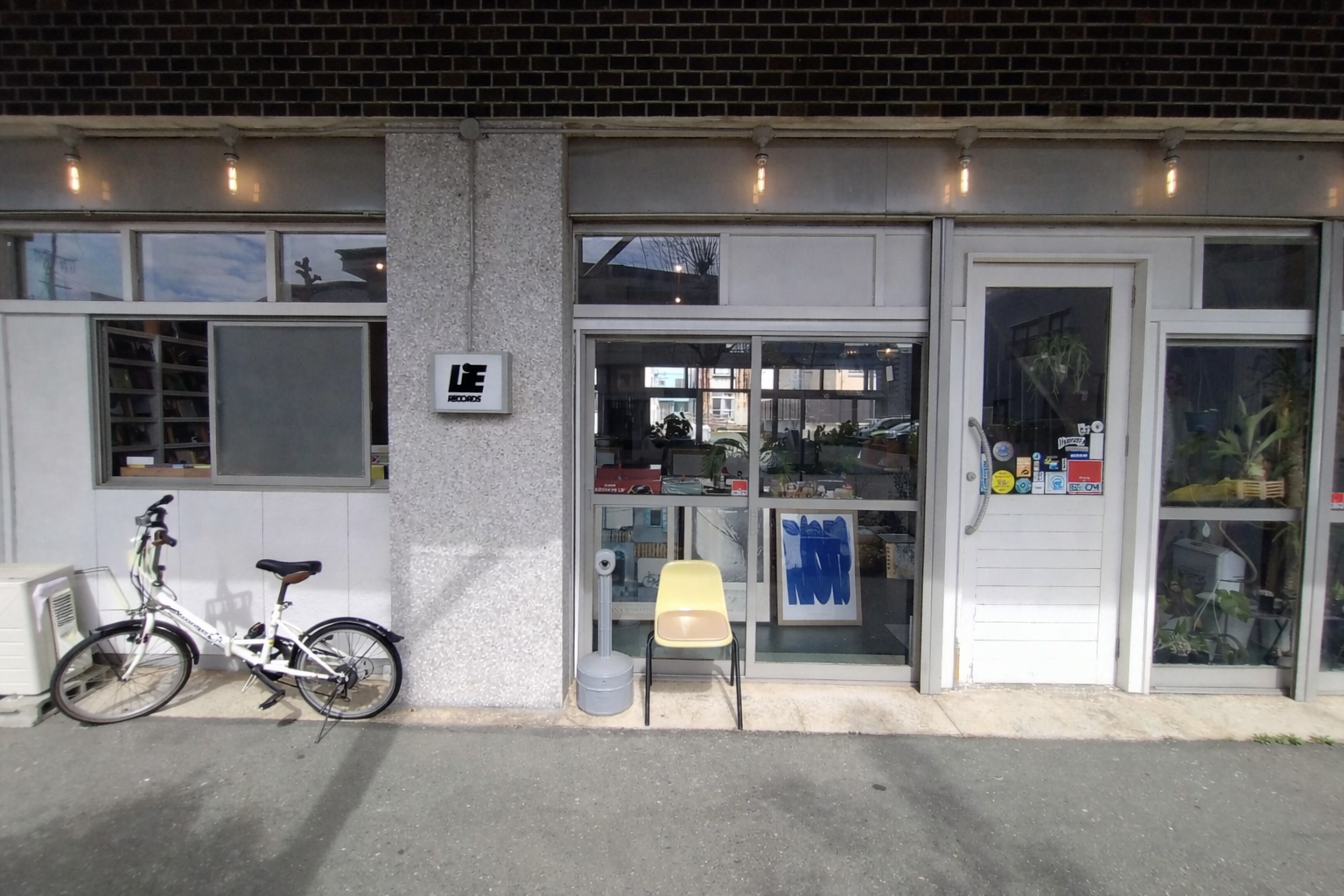
Walking along the corridor of the Mizukami Building, the outer walls feel slightly rough, like a passageway for the wind. In just one corner, the glass catches the light cleanly, with a modest sign: “LiE RECORDS.”
Near the entrance sits a single yellow chair. More than a place to wait, it looks like a bit of “blank space” meant to settle your mind.
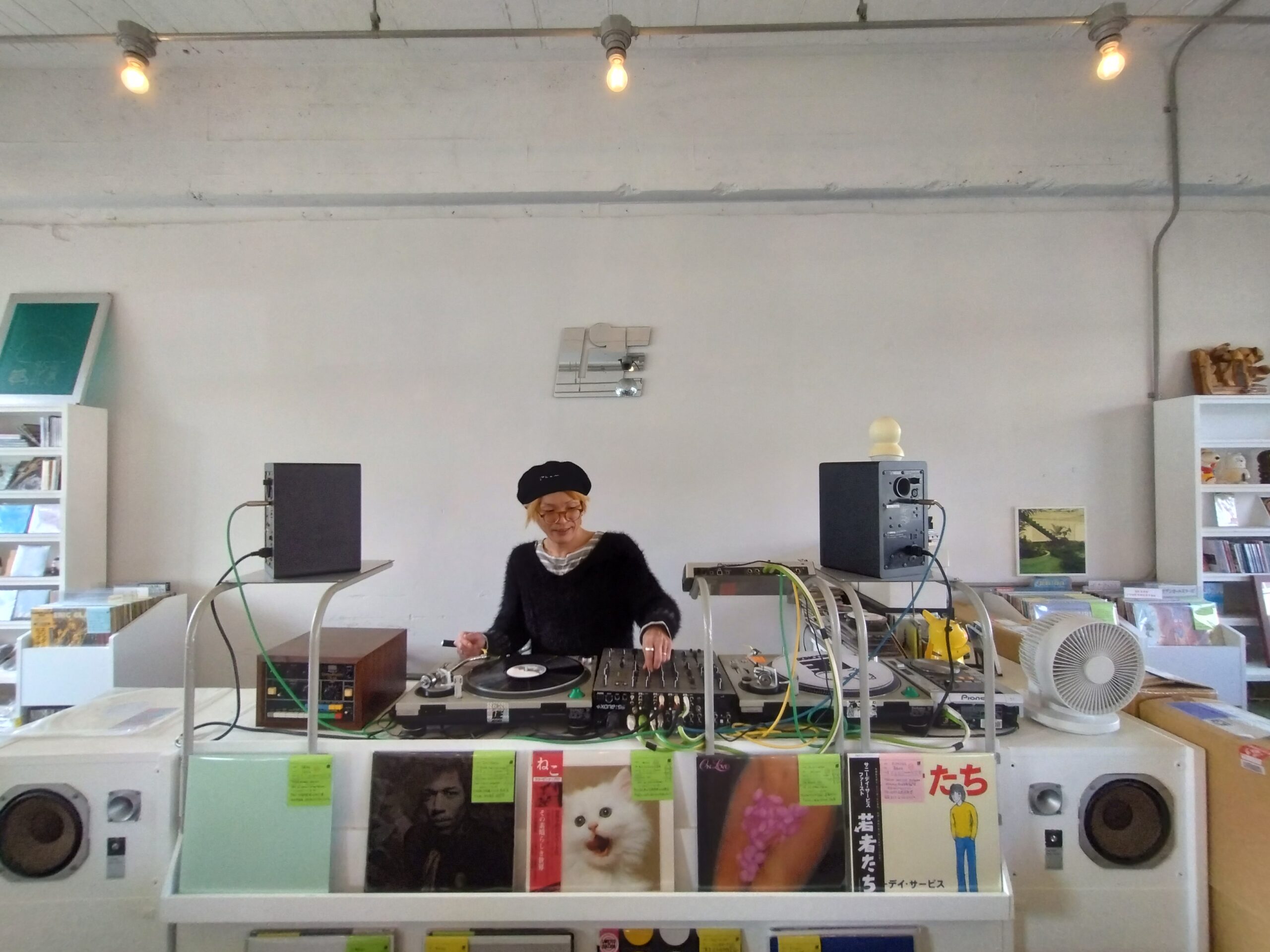
Slide open the door and the ceiling rises high above you. Pipes run across the white ceiling, bare light bulbs hang here and there, and the floor is a deep green. Large windows let in light that falls evenly across the backs of the shelves. It is quiet, but not tense.
The air inside the shop feels “well arranged,” but never “stifling.” It is not the kind of neatness that comes from removing all clutter. It feels more like the result of carefully reducing everything that might feel unpleasant. Paths that don’t force you to bump into others. Shelves at a height that makes it easy to reach. A layout that keeps your gaze from wandering. The selection of music sets the room’s temperature. Owner Hiramatsu chooses what to play according to “that particular day.”
Before it tries to “show” anything, it first makes the space comfortable. That was how the room felt.
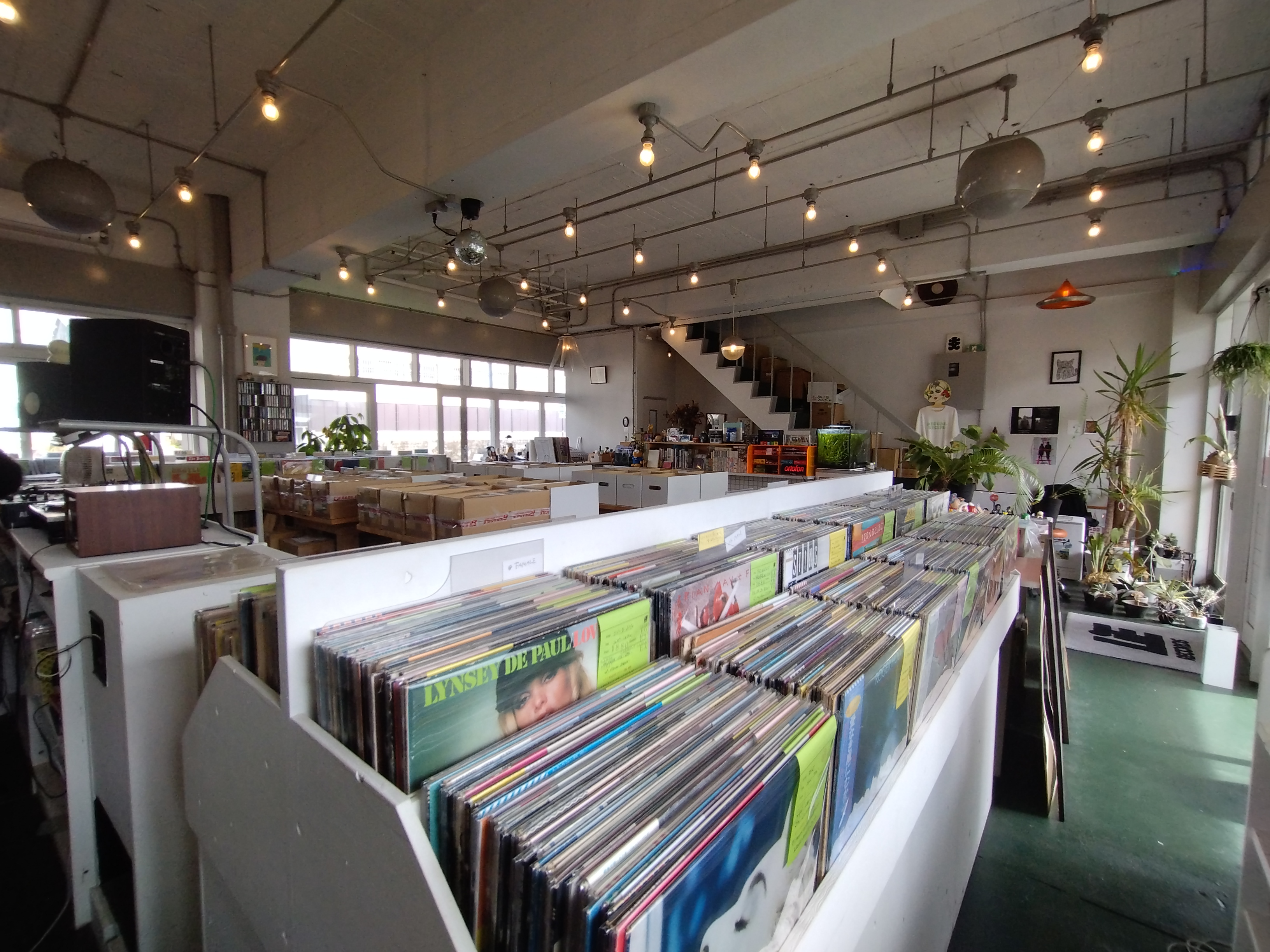
The plants in the aquarium near the register swayed gently. There is a trace of everyday life there, but it never turns into noise. A staircase stretches upward in the back, and when you hear that the living space is upstairs, it all makes sense. The shop breathes not only as a “store,” but as an extension of daily life. There are plants by the windows, quietly casting shadows in the light. Deeper inside, there is the hint of a DJ booth too, placing “listening” and “playing” on the same floor.
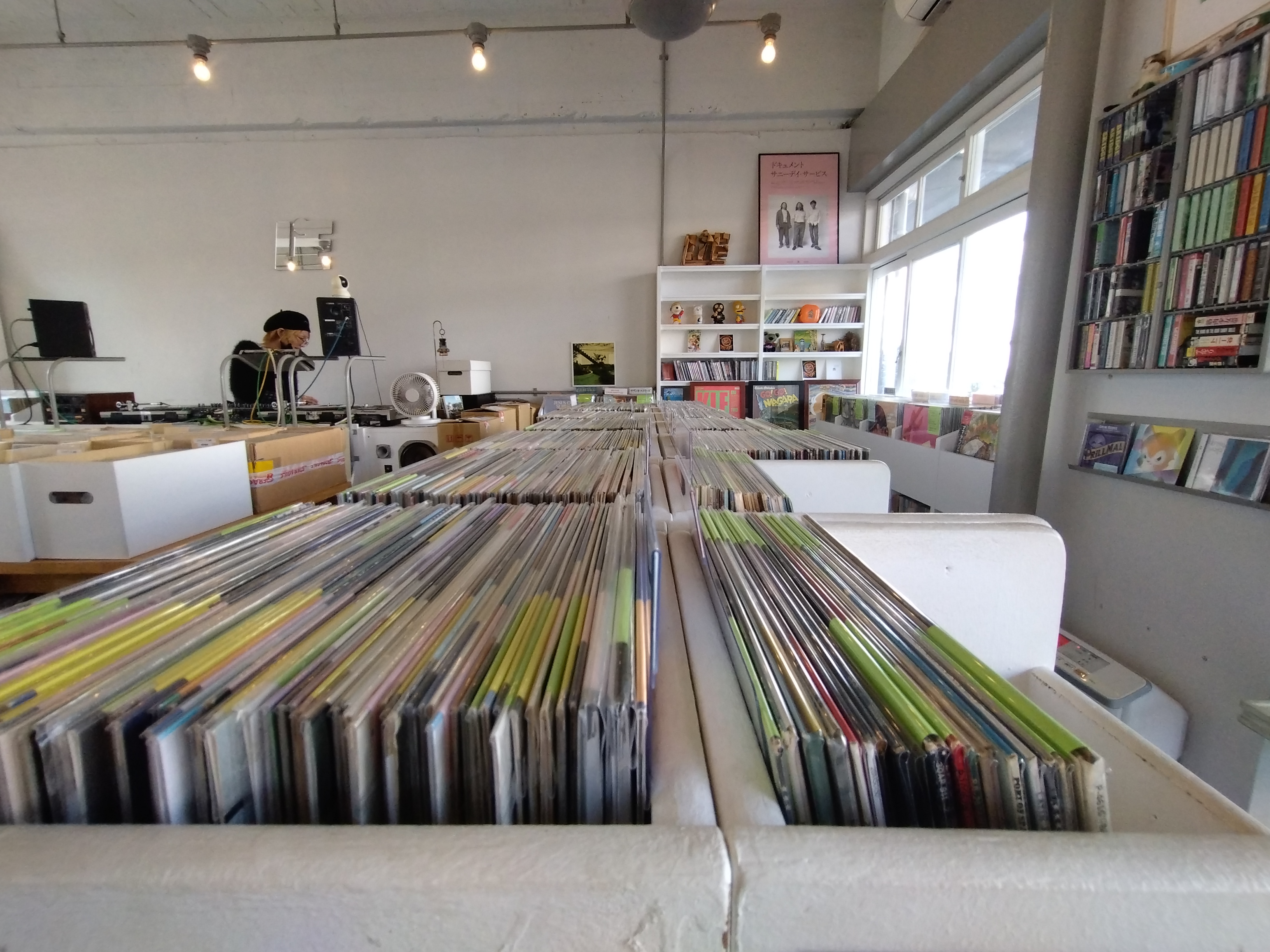
LiE RECORDS may look all-genre. But it is not a shop that simply has everything. It is a shop where “anything could happen.”
The backbone of the shelves is Japanese pop, rock, and jazz. Into that flow hip-hop, kayokyoku, soul, reggae, world music, experimental works, and noise all mix together. Rather than building the shelves around some strict genre correctness, it feels like a place that shapes the sounds that have flowed in into a form that looks and feels good.
There are little notes and sticky tabs on top of the white box shelves. Jackets are displayed so their fronts can be seen. Bare light bulbs hit the corners of the paper, bringing out their texture. The shelves feel like they are speaking—not because of the sheer amount of information, but because the effort itself has become part of their expression.
What fills the shelves does not lean only on the usual “textbook masterpieces.” City pop and AOR from the ’70s and ’80s, as well as standard soul records, all move steadily too. Hearing that Carpenters records sell quickly, you start to sense families and generations on the other side of the shelves.
When I remember those words, I can see family life and the passing of time in the town beyond the shelves—that sense of local warmth is here.
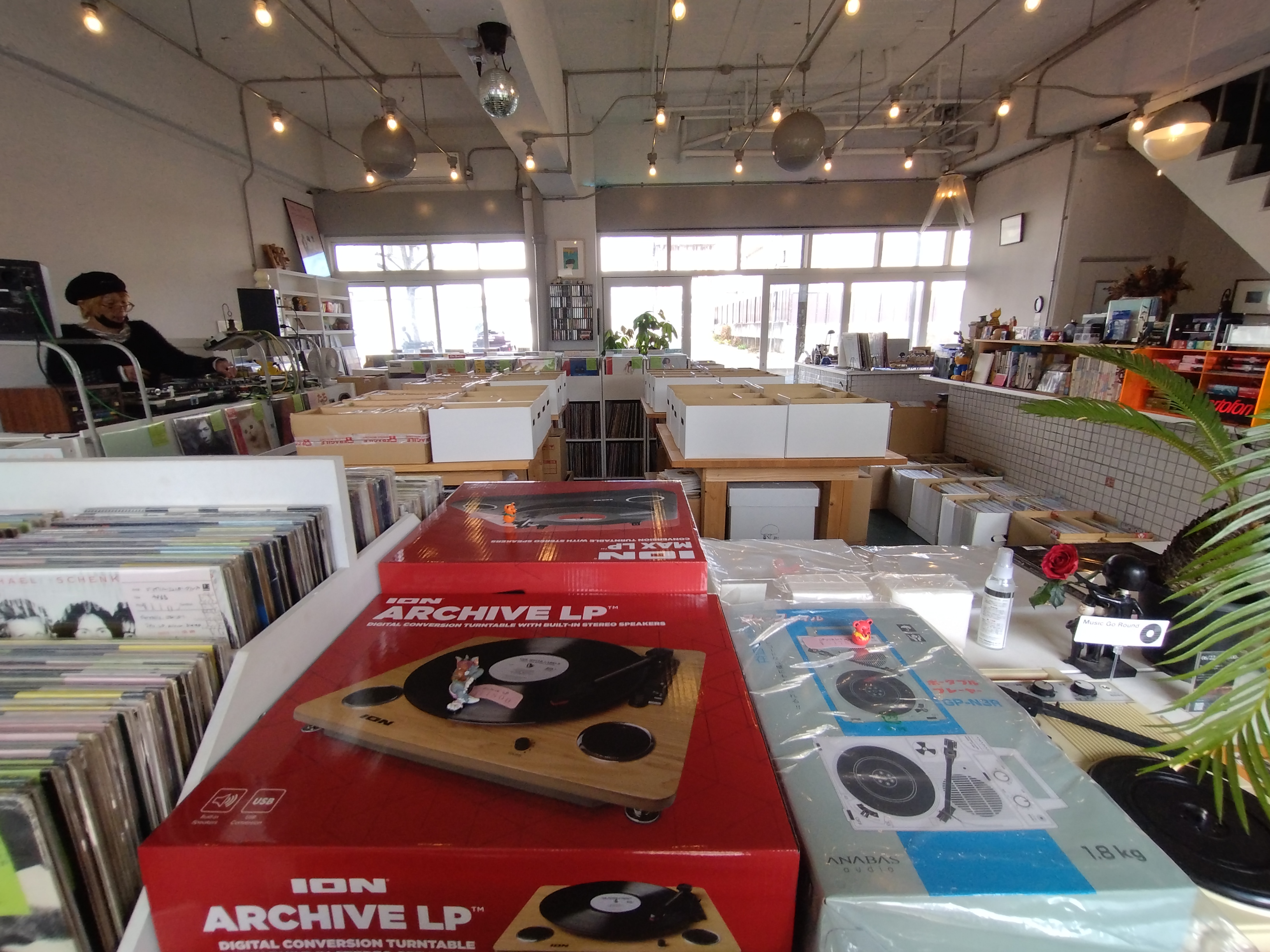
And this shop extends genre into ways of listening as well. Record players and cartridges are on display, and near the entrance there is a “first step.” Apparently, people who buy a player are also given a few affordably priced records to take home. It shortens the time it takes to feel lost at the entrance.
And here, I think, is the real heart of this shop.
Hiramatsu is not simply lining up records. He is carefully removing, one by one, the reasons a customer might think, “This feels unpleasant.”
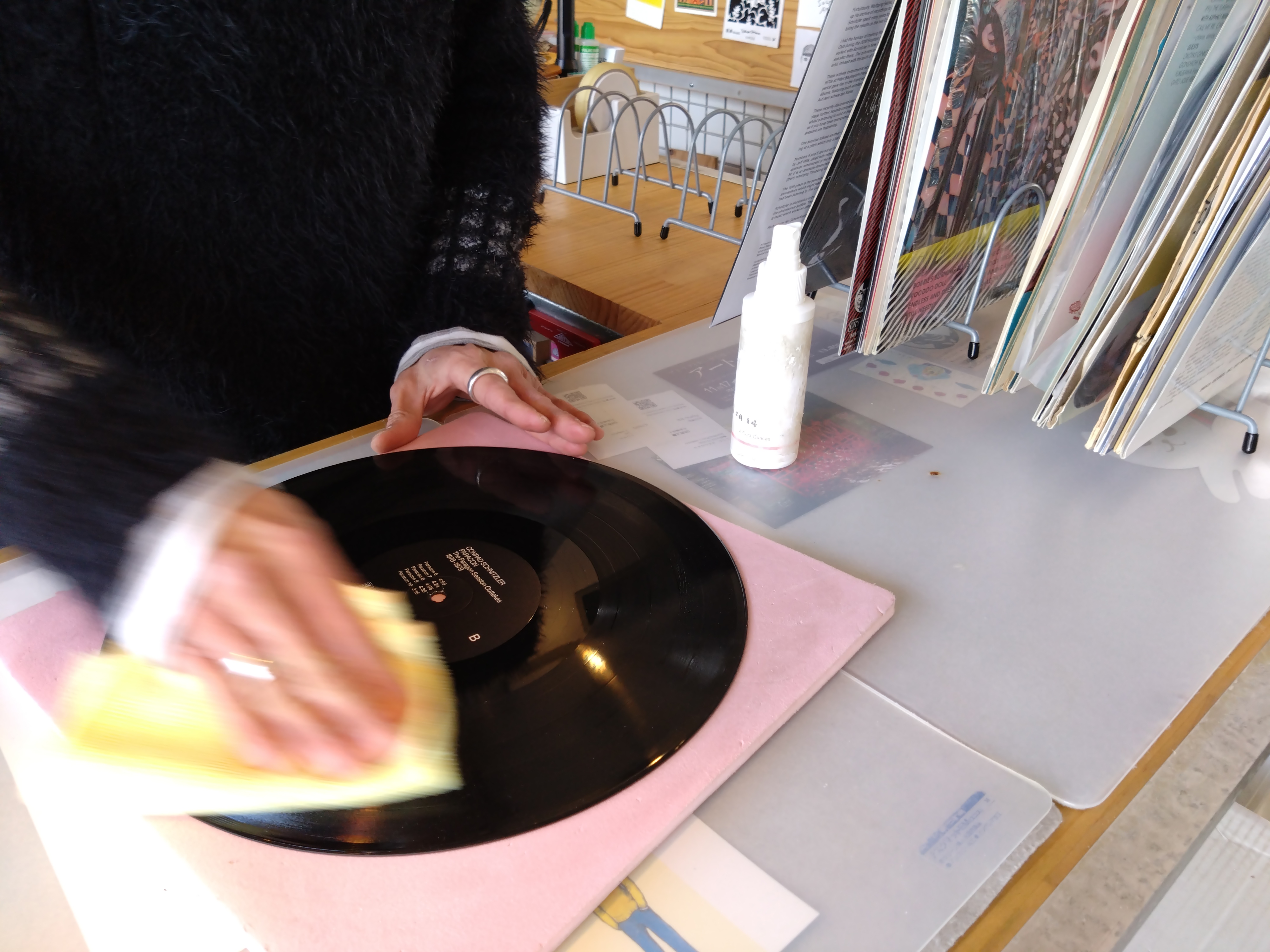
Each record is inspected, repaired if needed, cleaned thoroughly, and only then placed on the shelf. And it is not just the vinyl itself. He pays attention to the inner sleeves, the edges of the paper, all the places a hand might touch.
That sentence was the shelves themselves.
The shop’s DIY construction follows the same line of thought. A design in white and green that carries a faint space-age, almost cosmic feel. The walls, ceiling, and floor were all made by his own hands.
The “order” of this shop is not really about taste. It is about resolve.
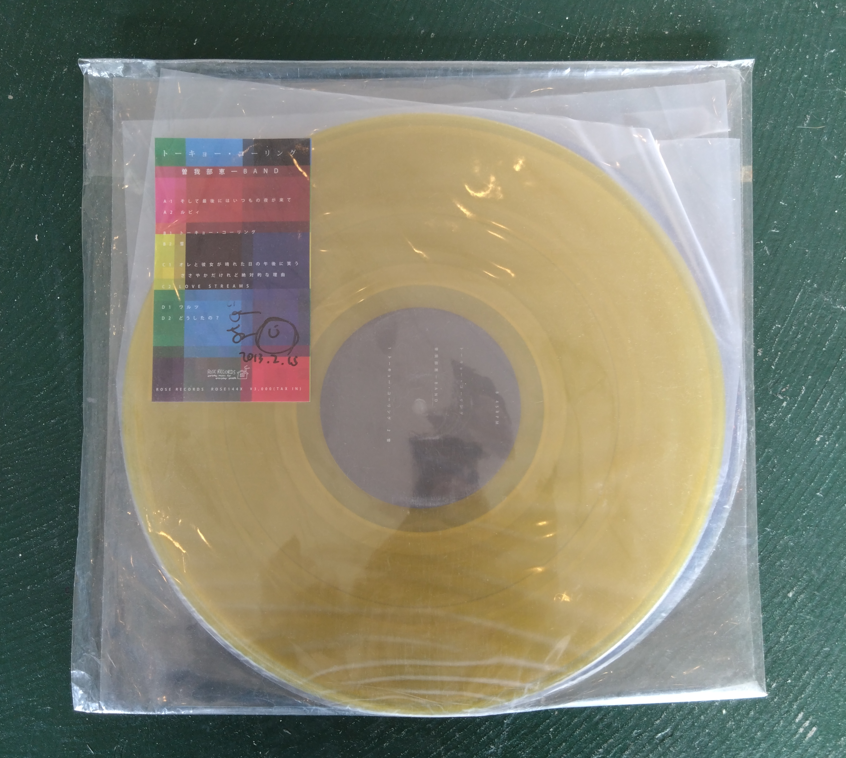
When Hiramatsu was 23, there were records being sold at the merch table of a live venue. He says it was one connected to Sokabe from Sunny Day Service, whether solo work or a related band.
The motivation was almost disarmingly simple. But that kind of simplicity can change a life.
At the time, he did not even own a record player. He bought the record, but could not play it. Most people might stop there. Hiramatsu did not. First came the record, then the player he did not yet have. The order stayed backwards, while life quietly rearranged itself around that choice.
The first player he got was not some impressive piece of gear. It was simply an affordable model that showed up when he typed “record player” into a search bar.
Starting while not knowing anything. In a way, that feels like the most honest form of entry into records.
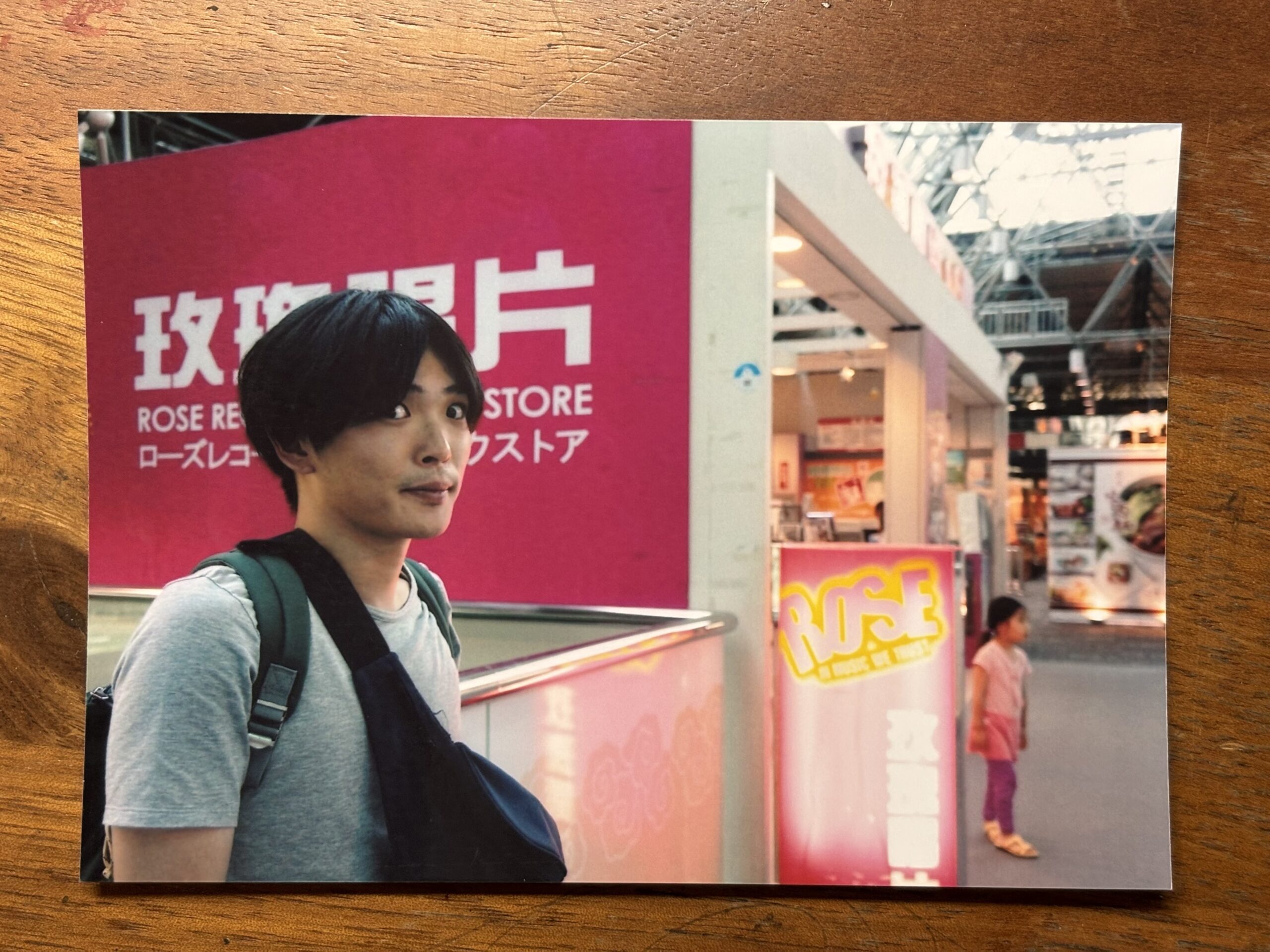
When Hiramatsu talks about the appeal of records, he does not speak only about sound.
It is different from digital files, where the same sound always starts the same way. With records, there is a moment when only this sound, right now, can happen. And if you keep listening, the sound changes little by little too.
Yes, it is troublesome. But sometimes that trouble brings music back into your hands. You look at the artwork on the jacket, take in the smell of paper, wait for the sound of the needle tracing the groove. You make a cup of tea and close your book. Music settles into daily life through gestures like that.
Hiramatsu says he once collected around 3,000 records. There was a time when he was searching for “sounds he could not hear yet.” If he could not hear them, then he would go look for them. Search, find, and take the long way around. All of that built up into these shelves.
Sometimes a record bought while traveling remains strangely vivid in memory. Perhaps because the place, the season, and the air itself are folded into it along with the sound. The records spoken of here never feel like mere “audio sources.” They feel closer to events.
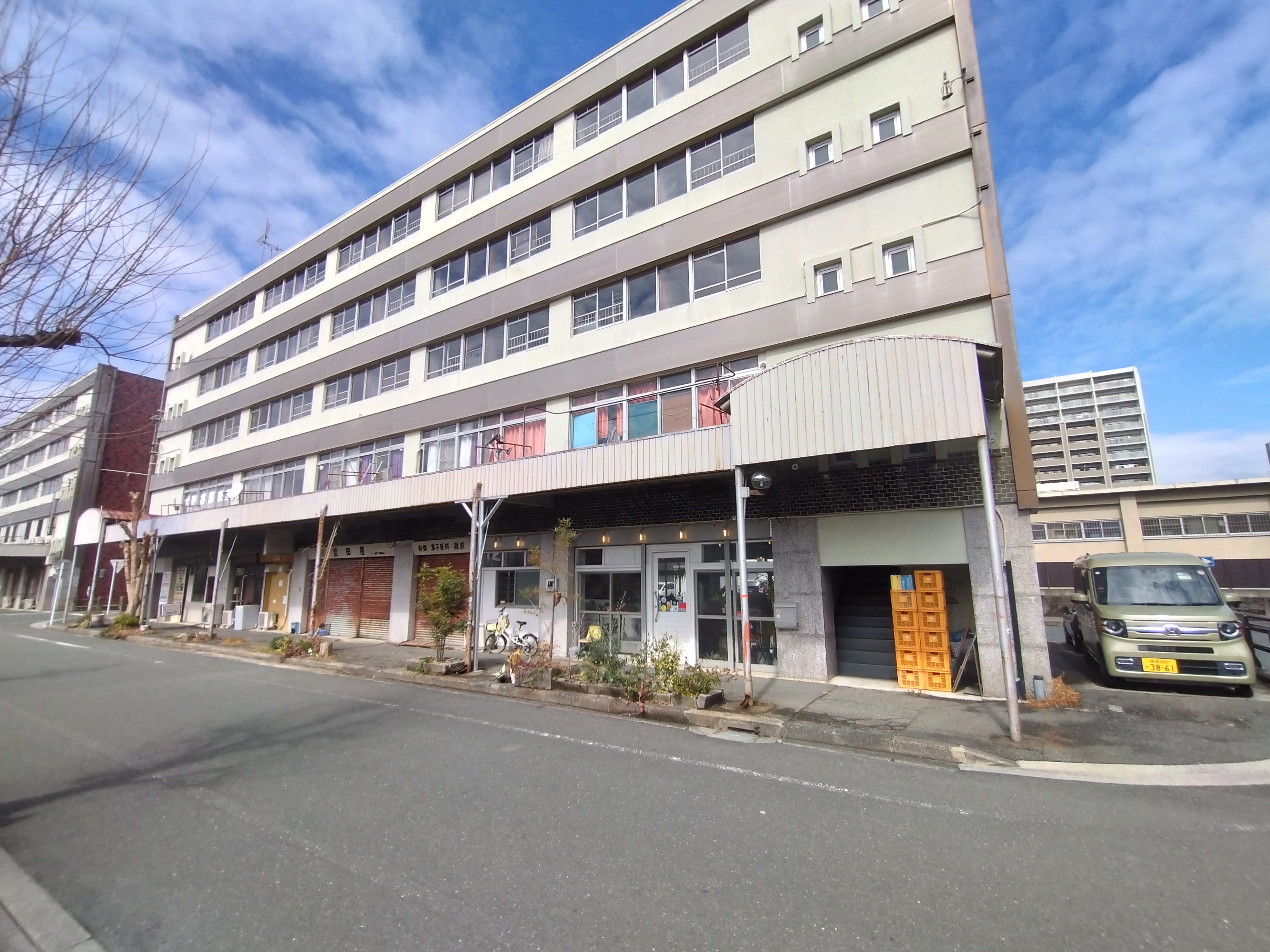
When the conversation about the shop continues, the presence of Toyokawa and Toyohashi naturally comes into view. Cities with many shops and many options. And because of that, the pace of the town—and the pace of the shelves—feels different too.
Hiramatsu chose to plant himself firmly in Toyohashi.
The words were quiet, but strong.

When asked about Toyohashi, he smiles a little and touches on the town’s particular “looseness.”
The touch of ordinary life still remains, and even unusual challenges are received naturally. Older neighbors bring in old records to sell. That kind of circulation is what grows the shelves.
Without being swallowed by the logic of a major city, individual lives can become the shape of a shop 그대로. Even the age of the Mizukami Building is not a flaw here. Nothing is overdecorated. The shelves can stand on their own precision.
LiE RECORDS lives by that rhythm.
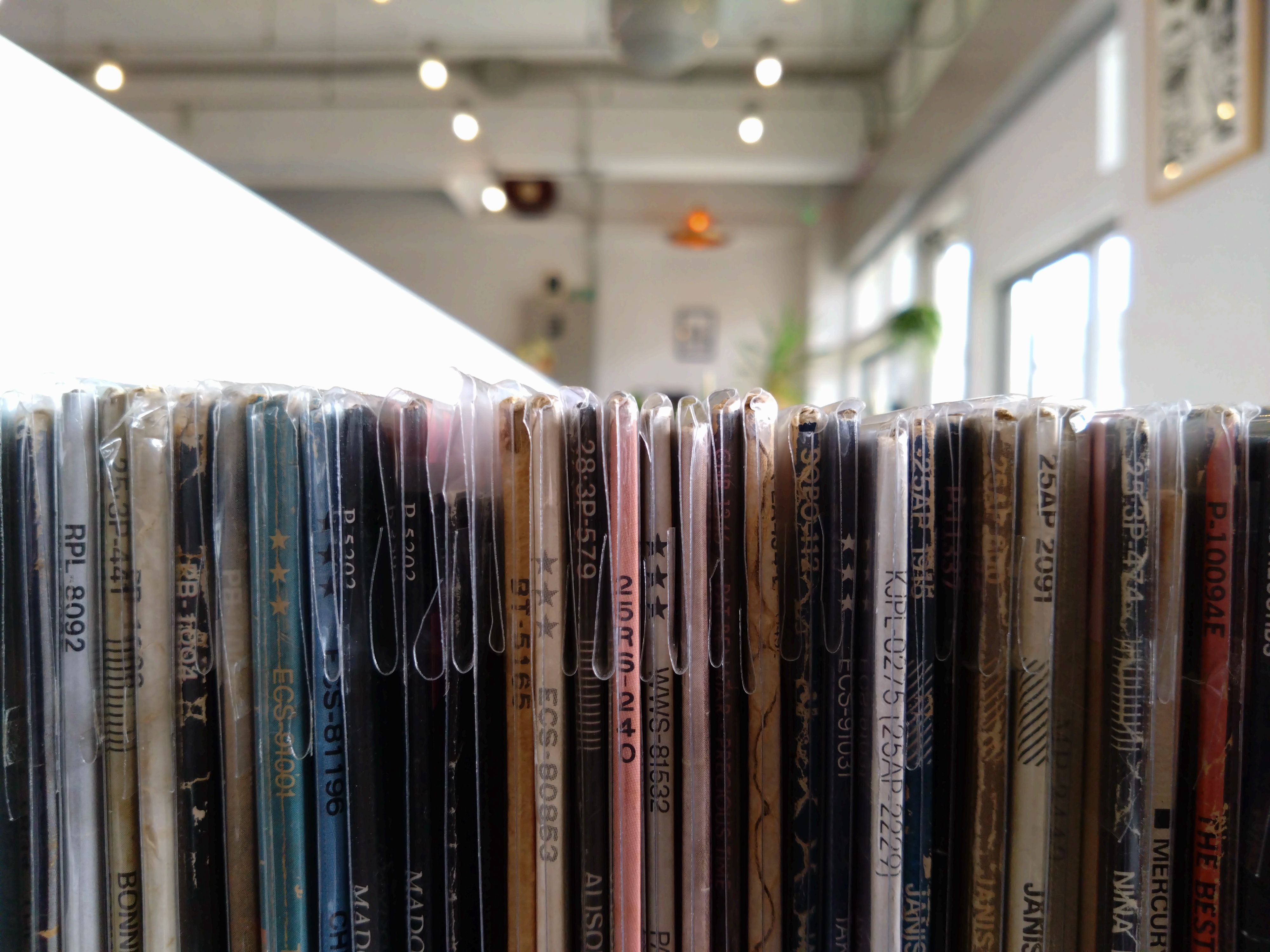
Many of the visitors are beginners too, he says. His words for newcomers were surprisingly practical. Hiramatsu understands the feelings of beginners well, so he does not lock them into some single “correct” entrance.
Being unsure is not a bad thing. In fact, shelves often open from that uncertainty.
For a player, “budget and appearance are enough.” Start with something that lifts your mood when it sits in your room. The fun of chasing better sound can come later, as much as you want.
That makes sense. Because the entrance does not force a single “right answer,” people can begin.
Choosing records is the same. Start with the shelf that matches your own curiosity. If you hesitate, you can hand the choice over to the owner. A first record feels important, so he tends to drift toward The Beatles—that bit of humanity never feels pushy.
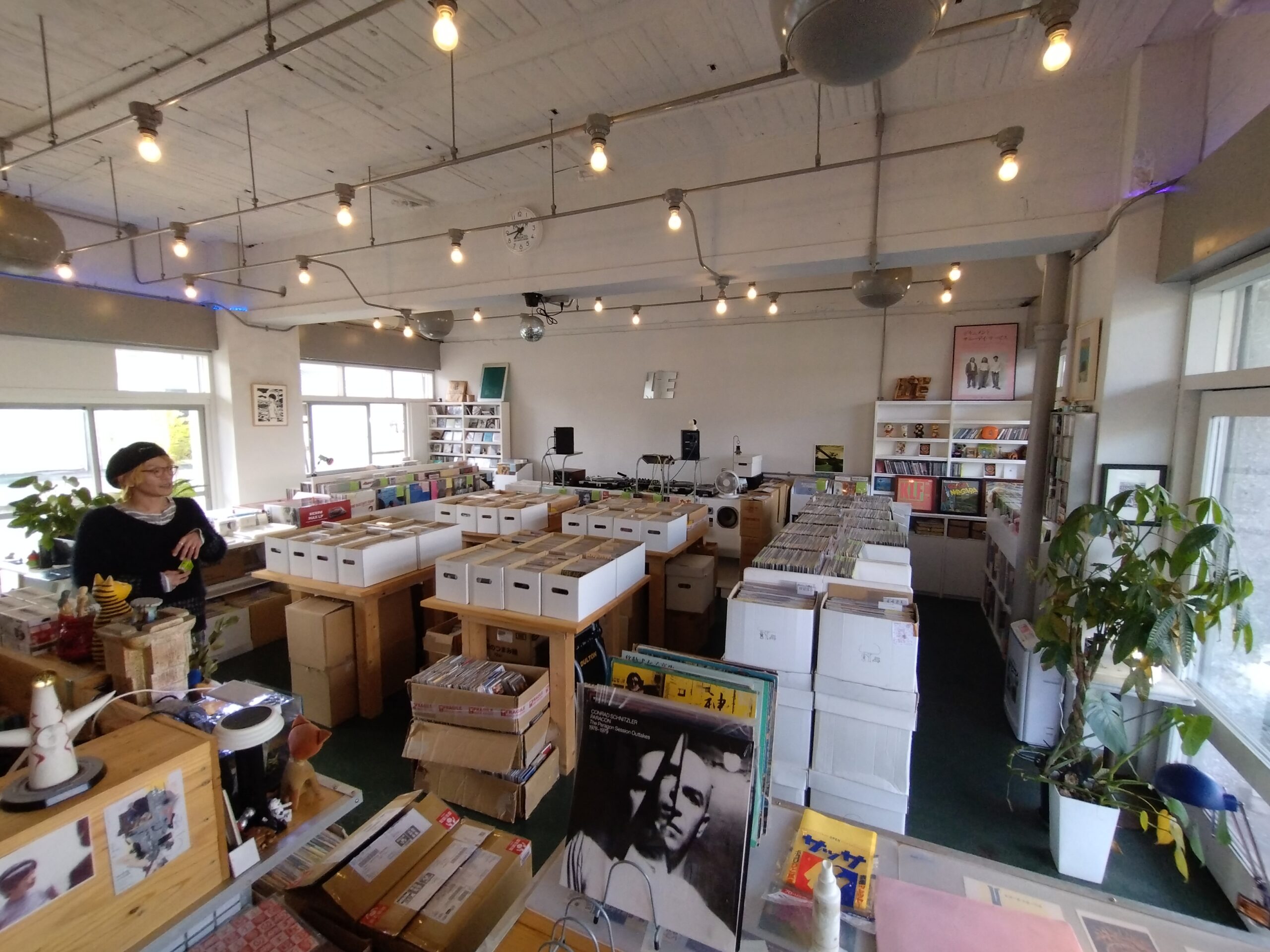
And what this shop truly values is the “pleasantness” of its shelves. A well-arranged shelf naturally makes the hands that touch it more careful too. Not through a long list of warnings, but through good flow and layout, the gestures themselves become orderly. One record is enough. Choose at your own pace, and take it home comfortably. That feels like the right answer here.
It is also nice that there is a “New Arrival” section at the entrance. Sometimes people can start walking with just that first step. You go home, drop the needle, turn the record over, and do it again—and before long, it becomes part of life.
Hiramatsu once worked in Tokyo as an administrative staff member at a care facility. The conditions were good, and so were the working hours. Even so, one day he suddenly felt that he wanted to try doing a “not-normal job.”
Things moved suddenly toward opening a record shop, and the people he relied on were the owners of a record store in Hiroshima. In a short time, they taught him the basics of buying stock and purchasing used records.
And so he opened in 2020. In the very beginning, the stock was not nearly as large as it is now. But Hiramatsu already had his own collection, and years of searching behind him. Rock, jazz, hip-hop, kayokyoku, classical. New records and used ones mixed together. The shelves were built not only from taste, but from choices made for living.
What supports the shelves now is local buying.
Which means this is not so much a display of the owner’s tastes as it is a vessel for the town’s memory.
And Hiramatsu’s thinking shows on the surface of the records. Every one is inspected, repaired if needed, and cleaned. Everything is prepared so the next person can drop the needle in comfort. There is no loud declaration about it. But when you touch them, you understand. Honest digging lives in the feel of things before it even reaches the sound.
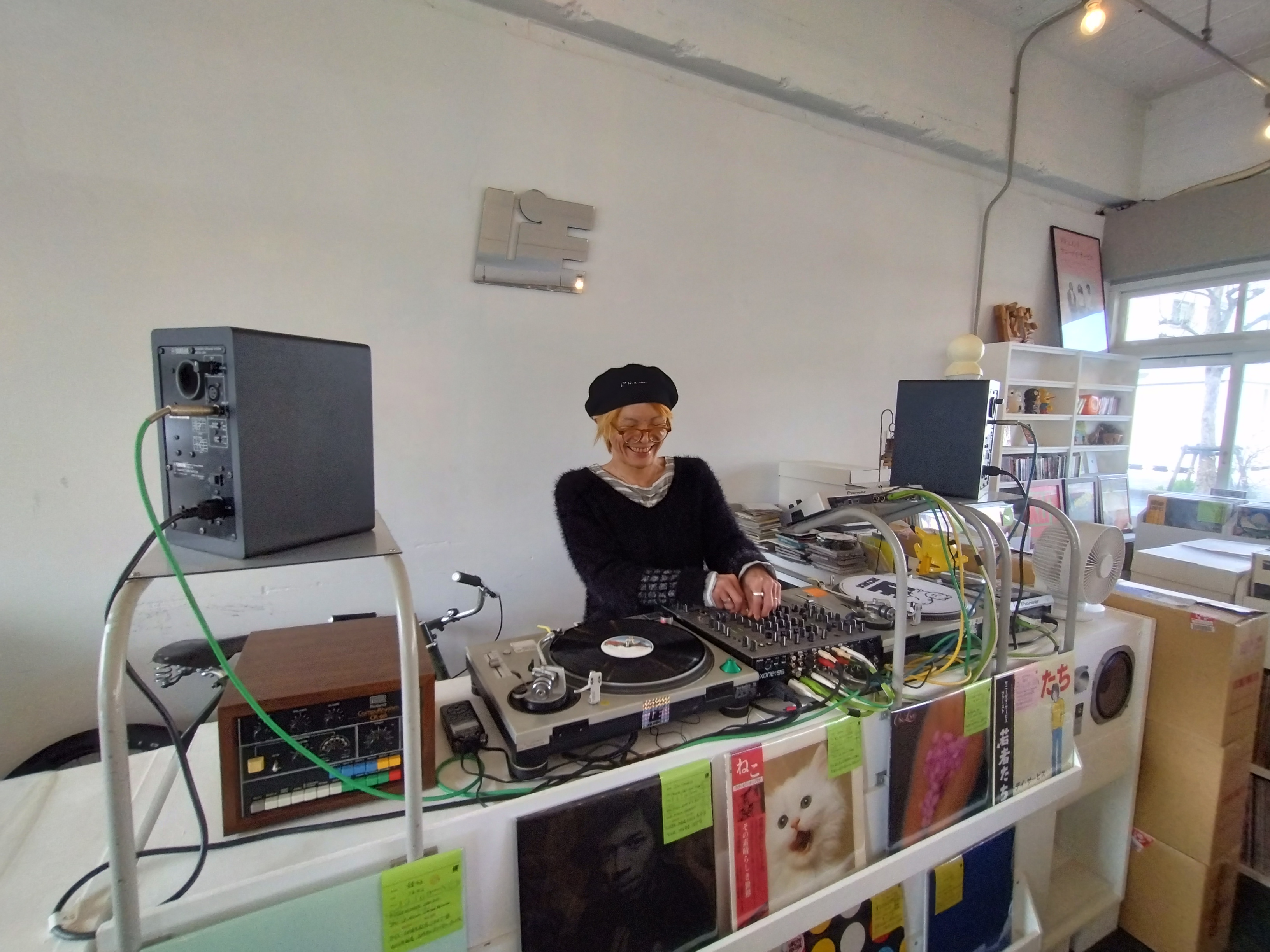
Hiramatsu was never especially good at communication to begin with. He dislikes crowds too, and would basically prefer to spend time alone.
And yet he opens the shop. He arranges the shelves. He makes a place where people come.
The reason for that was records.
When a record sits between people, the distance becomes a little more natural. Conversation passes through sound. You can stand in front of the same shelf without colliding head-on.
And that sense of distance is what connects to the care in the way he builds the shop.
Because he is not naturally good at talking to people, he communicates through space. Through shelves. Through the cleanliness of the records.
Before words, he gives customers a sense of ease. Bright windows. White shelves. Green floors. Dots of bare light. The sway of the aquarium. That first step waiting at the entrance.
Not a “masterpiece,” but “the record you need right now.”
As an entrance to that one record, this shop is quietly being polished.
LiE RECORDS was that kind of record store.

|
||
|
||
|
||
|
||
|