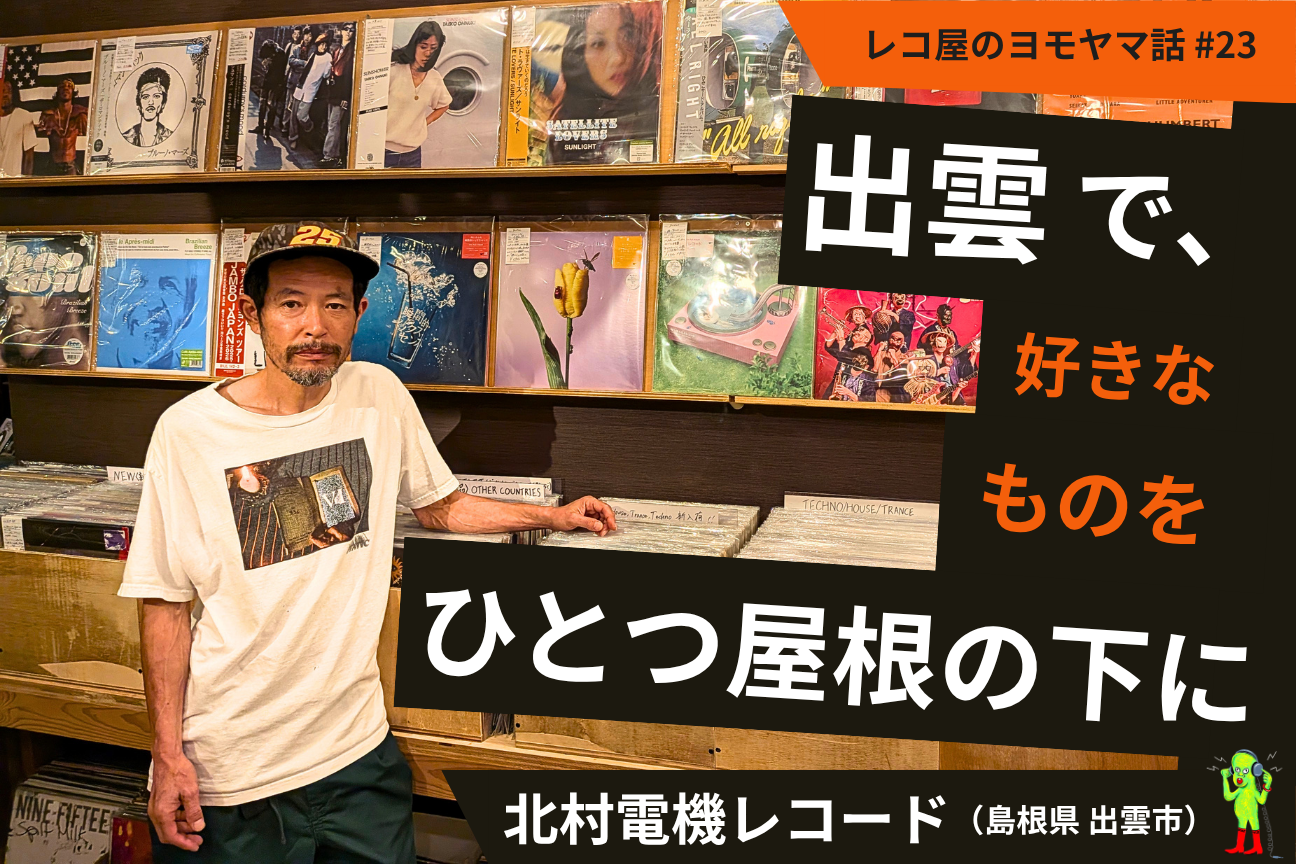
“Record Shop Stories,” an interview series with the people behind Japan’s record stores.
Kitamura Denki Records, a record shop in Izumo, Shimane Prefecture.
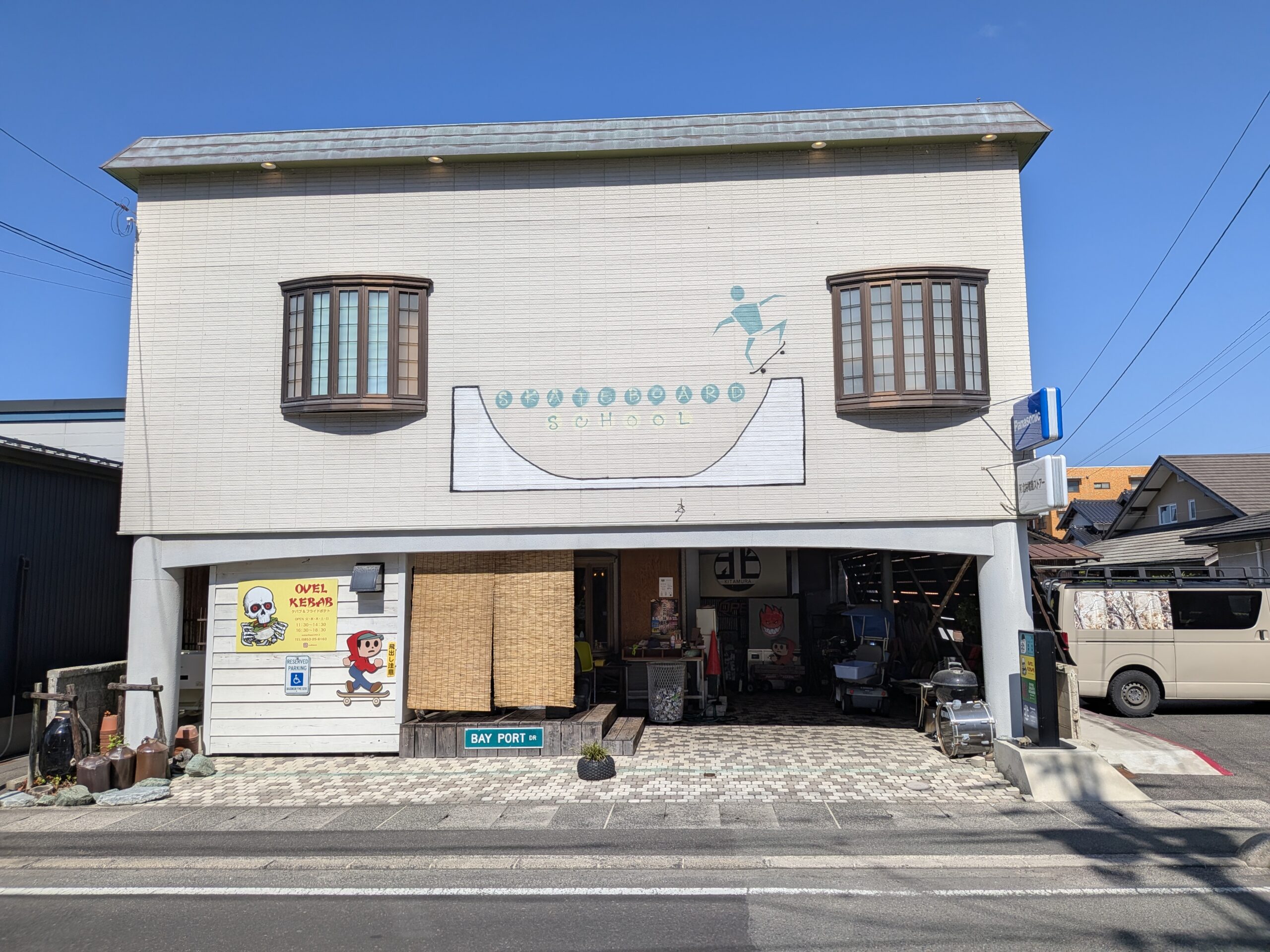
As the name suggests, it originally began as a local electronics shop. But step inside, and you’ll find a scene that is quite different from your typical neighborhood appliance store.
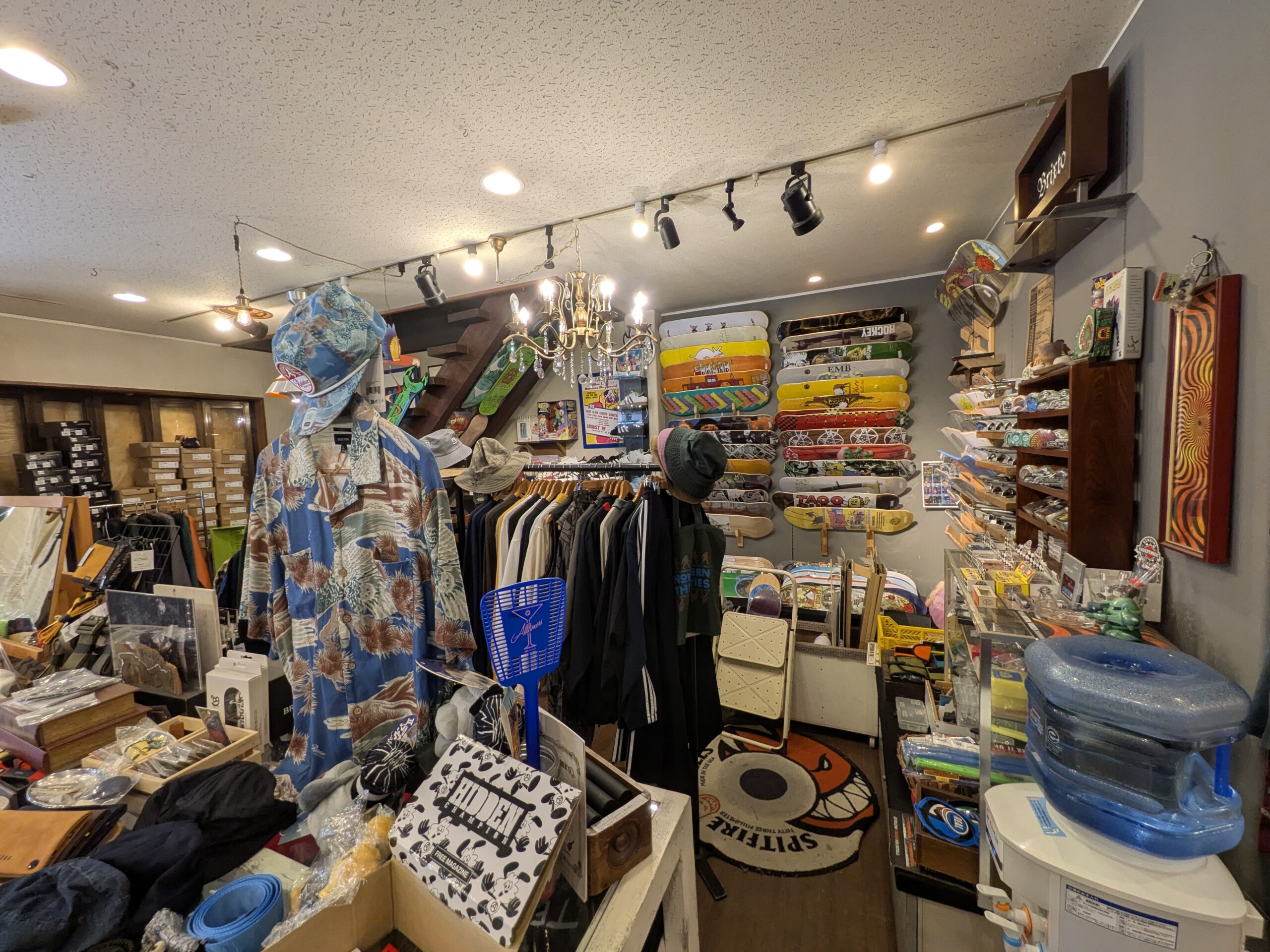
The first floor is lined with home appliances alongside skateboards and apparel. Head upstairs, and you’ll find a space filled wall-to-wall with records.
An electronics shop, a skate shop, and a record store—all under one roof.
We spoke with owner Mr. Kitamura about how he discovered music, the world that opened up to him through skateboarding, and what makes Kitamura Denki Records the place it is today.

What first drew you deeply into music and records?
 Mr. Kitamura
My family ran an electronics shop, so we naturally had record players, televisions, and audio equipment at home. I also had an older sister, so there were records by artists like Kyoko Koizumi, as well as cassette tapes. Music was simply always around me. The first records I remember listening to myself were probably anime songs that my family bought for me when I was in the lower grades of elementary school.
But the decisive moment came when I started skateboarding in my third year of junior high school.
I started watching skate videos, and I became more and more drawn to the music used in them.
At first, there was a lot of melodic hardcore and punk. Then I started hearing rock, soul, and funk from the 1960s and ’70s, and later hip-hop as well.
Artists like Stevie Wonder and Diana Ross—music I had already heard through movies—would also show up in skate videos.
I remember thinking, ‘Wow, they use this kind of music for skateboarding?’
Skate videos weren’t just about watching tricks. For me at the time, they were a way to discover the whole culture around skateboarding—the music, the fashion, even the way the videos themselves were made. That had a huge impact on me.
What role did records play while you were so immersed in skateboarding?
When I was in high school, I competed in national skateboarding contests in places like Yokohama. I was skating alongside people who would later go on to become professionals.
There was a time when I thought about becoming a professional myself, but once I saw how good the skaters from outside the prefecture were, I realized the level was completely different.
Still, I loved competing, and I never really quit skateboarding. I still enter contests even now.
I started seriously buying records around my third year of high school. An older local skater had these black-and-white mail-order catalogs from record shops, and I basically copied what he was doing and started ordering records myself.
Back then, you couldn’t just search online and instantly find information about a record. I looked through catalogs, asked older friends for recommendations, and stopped by record shops whenever I traveled to Hiroshima or Osaka for skateboarding contests.
I’d travel to another city to skateboard, then visit a record shop while I was there. Skateboarding and music naturally became part of the same experience for me.
CDs were becoming popular around that time too, but I liked how tough records were as a physical format. CD cases crack, and scratches can make CDs skip. Records can last a really long time as long as you protect them from things like heat and grit. Even back then, I also felt that records could retain value over time.
Of course, they’re something you listen to, but there’s also pleasure in owning them. The jackets are large, and records have a real physical presence. I sometimes sold records I had bought as well, so I was already conscious of their value even back then.
What led you to eventually open a record shop?
After graduating from high school, I spent some time overseas and experienced all kinds of culture through skateboarding and club scenes.
I would go clubbing with skater friends overseas, and some of the skaters themselves were DJs. Skateboarding, hip-hop, DJ culture, and fashion all mixed together in the same places.
In Japan, those things can sometimes look like separate worlds, but overseas they all felt like part of one continuous culture.
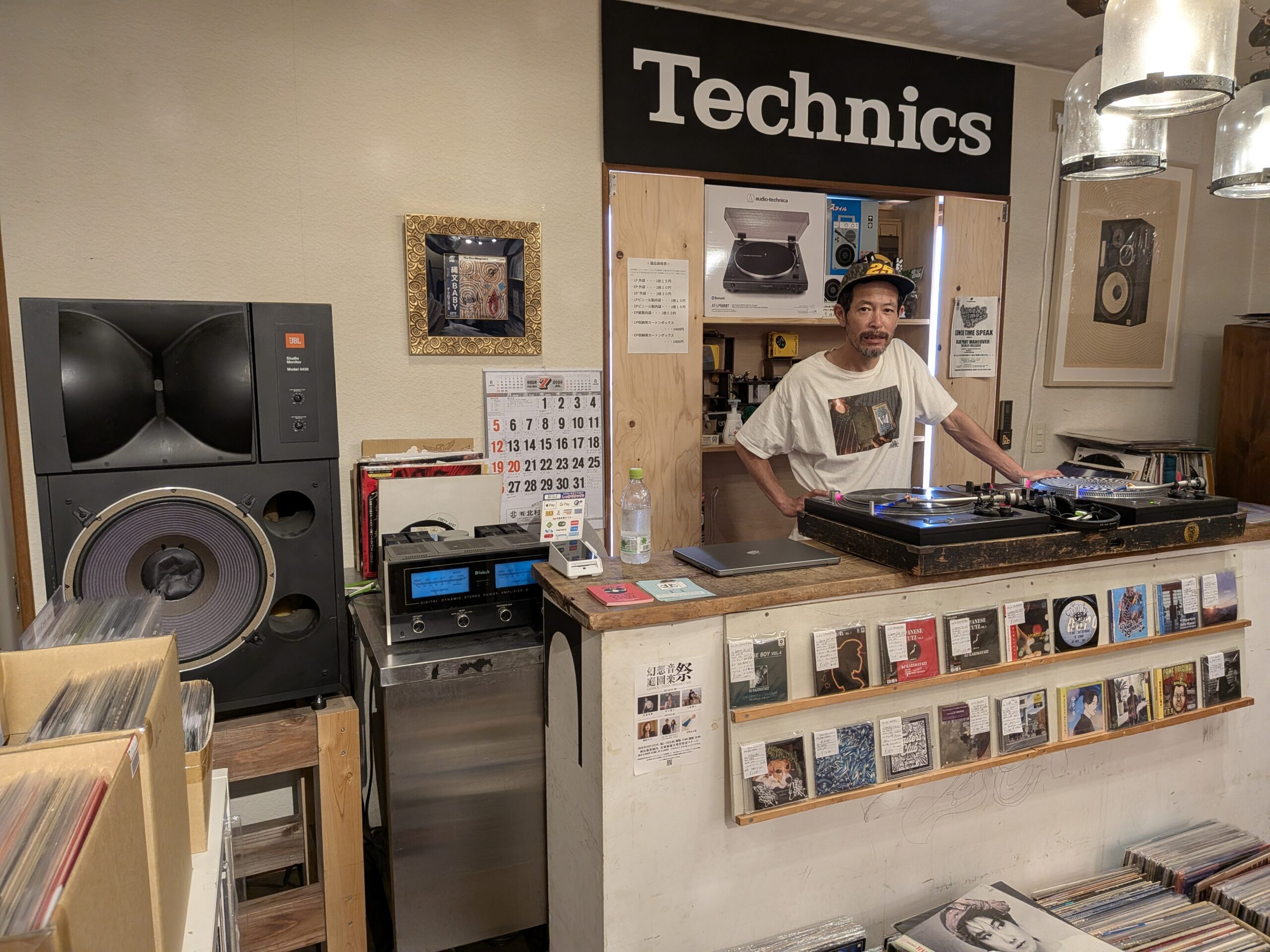
After returning to Izumo, I started organizing DJ events with friends, and around the age of 27 I began helping out with my father’s electronics business.
The electronics business wasn’t something I started because it was my personal passion—it was already there. But it’s a business that supports people in the local community, and it also became the foundation that allows us to keep the skate shop and record store going.
As for the record shop, I think one of the starting points was when I took over a collection from someone locally who had been selling records privately.
I checked the market prices, listed some online, and put the remaining records out for sale on the first floor. We jokingly called it ‘playing record shop,’ but they sold much better than I expected.
That made me think, ‘So there really are people in Izumo looking for records.’
That experience became one of the things that eventually led to the shop we have today.
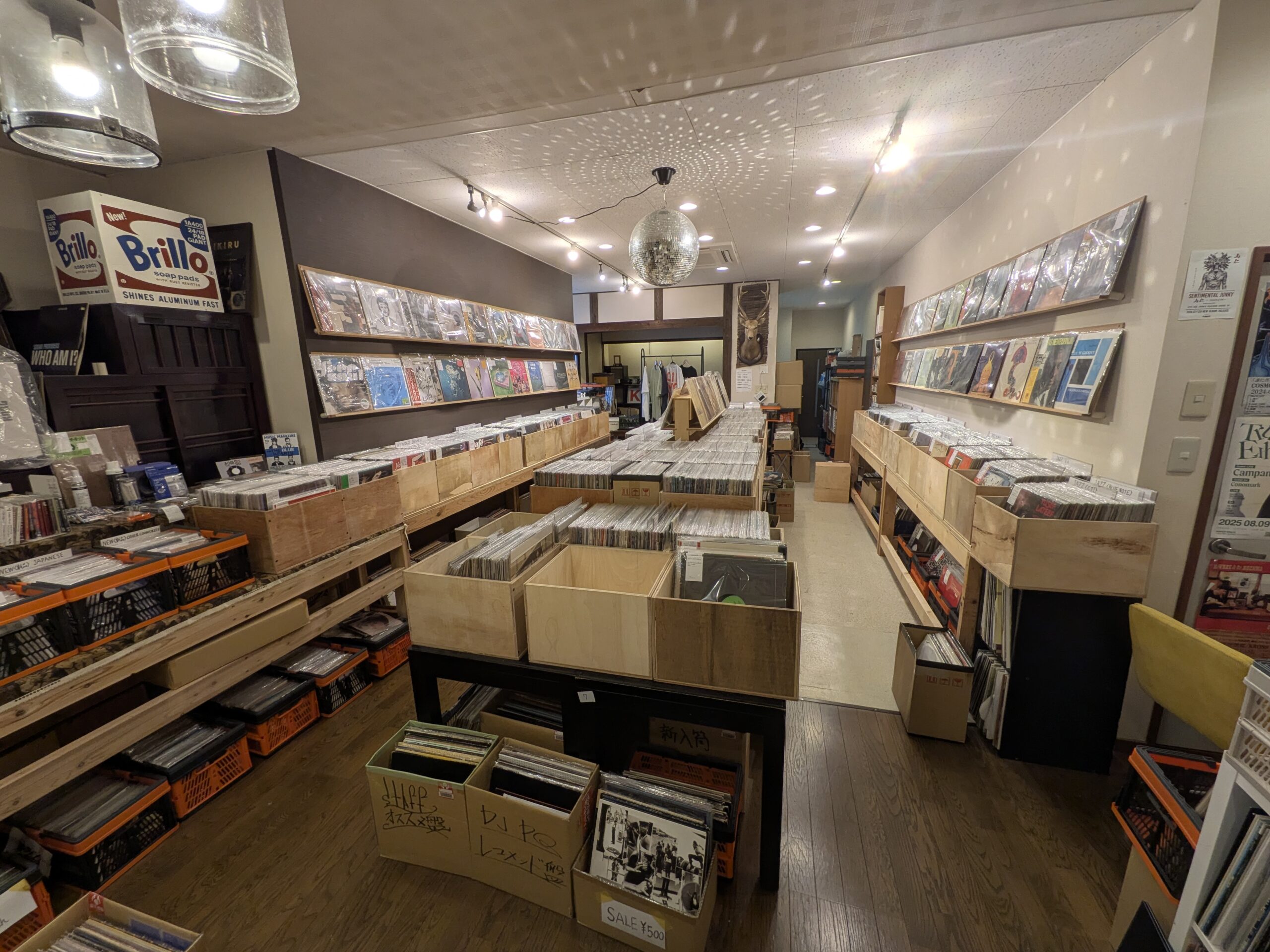
We actually started the shop about four years ago. We were already running the electronics shop and skate shop on the first floor, so we used the space upstairs for the record store.
It wasn’t as though I had planned from the beginning to combine an electronics shop, skate shop, and record store in this particular way.
But looking back, maybe the feeling I experienced overseas—where skateboarding, music, DJ culture, and fashion were all naturally connected—has found its way into this place too.
Through skateboarding, I discovered music, visual culture, and fashion, and records were part of that journey.
And the electronics shop is a place that supports everyday life in the community. Culture alone can be difficult to sustain as a physical place. So we keep doing the work people need in their daily lives while also protecting and continuing the culture we love.
Having all of those things under the same roof ultimately feels like a form that suits me.
What do you pay particular attention to when arranging the shop?
I try to make everything as easy to browse as possible.
If you pack records too tightly into a bin, it becomes difficult to look through them one by one. So I try to leave enough room that you can pull them forward easily and take them out from the side too.
I want the shop to be easy to navigate not only for people who are used to record stores, but also for people visiting one for the first time. We don’t divide everything into too many detailed genres. Instead, we use broader categories like Japanese and international music, then organize mainly by artist name.
Is something soul, jazz, or rock? Depending on the record, different people might classify it differently.
If you divide things too strictly by genre, sometimes it actually becomes harder to know where to look.
Someone buying records for the first time might simply say, ‘I want some Western music,’ or ‘I’m looking for Michael Jackson.’ If they’re not sure where to start, they can just ask and we’ll look together.
Our customers range pretty evenly from people in their twenties to people in their seventies. On weekends, we get couples in their twenties, first-time record buyers, and people who want to hear music they loved years ago on vinyl again. Of course, we also get longtime collectors and people who specifically travel to dig through record shops in regional areas.
We sometimes have records that even well-known DJs or collectors look at and say, ‘I can’t believe you have something like this here.’ I think there’s something special about regional record shops—there are still things here that haven’t been completely dug through yet.
What kind of place would you like Kitamura Denki Records to become in the future?
Even now, junior high and high school students sometimes come to the first floor for skateboards, get interested in the music, and end up buying records upstairs.
And the opposite happens too. Someone comes for records, then looks at music-related T-shirts, shoes, or other apparel downstairs.
And in the end, it quite often leads back to the electronics business too. It isn’t only questions about record players. Sometimes we’ll be talking and they’ll suddenly say, ‘Actually, my air conditioner hasn’t been working properly…’
The electronics shop, skate shop, and record store might look like three completely different businesses, but to me they’re all connected.
The electronics shop supports everyday life in the community, while skateboarding and records are places where I can express the culture I’ve been part of over the years. Having the electronics business as a foundation allows us to keep the culture we love alive too.
Eventually, I’d like to move the records down to the first floor(笑).
Right now they’re upstairs, so carrying records up and down is a lot of work. I’d also like to make the record section easier for people to walk into from outside.
But rather than making some big five-year plan, I think I’m better suited to simply doing whatever seems interesting at the time.
That’s how skateboarding, records, and DJing have all continued for me.
So rather than trying to define this place as one particular thing, I’d like it to remain somewhere people can come for one reason and unexpectedly discover something completely different.
Recoya VIEW
Some people come looking for records. Others come to ask about an air conditioner, or to buy skateboarding gear. Everyone arrives at Kitamura Denki Records with a different purpose, but by the time they leave, they may be talking about something completely unrelated. It’s a slightly strange place—in the best possible way.
Throughout the shop, you can feel the experiences Mr. Kitamura has accumulated over the years: becoming obsessed with skateboarding, discovering music, DJ culture and fashion through it, and encountering all kinds of culture overseas.
He told us, “It’s all connected,” but it probably wasn’t something he deliberately tried to arrange neatly from the start. He simply kept chasing the things he loved, and before he knew it, they had all gathered under one roof. That mix of freedom and beautiful disorder is what gives Kitamura Denki Records its distinctive character.