“Yomoyama Stories from Record Shops” is an interview series with record shop owners.
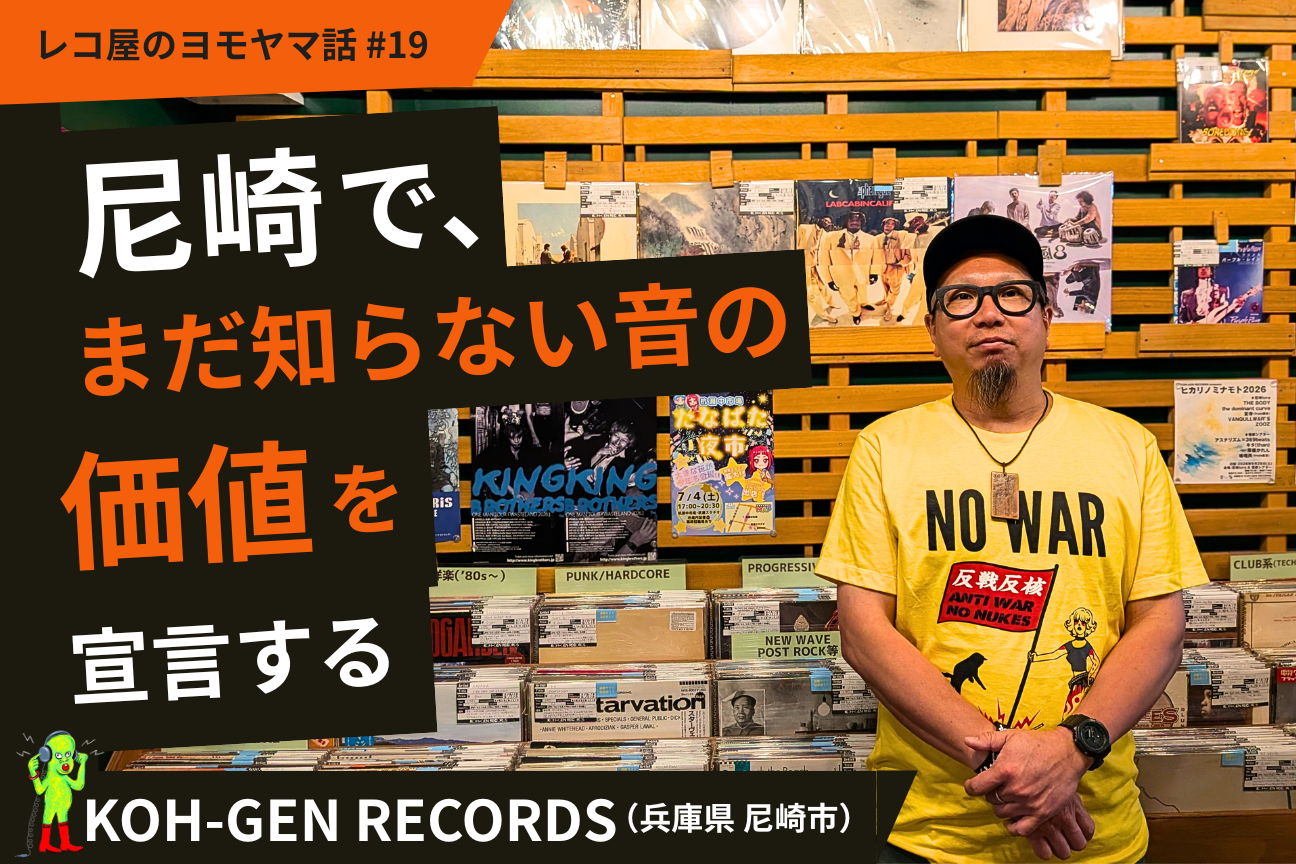
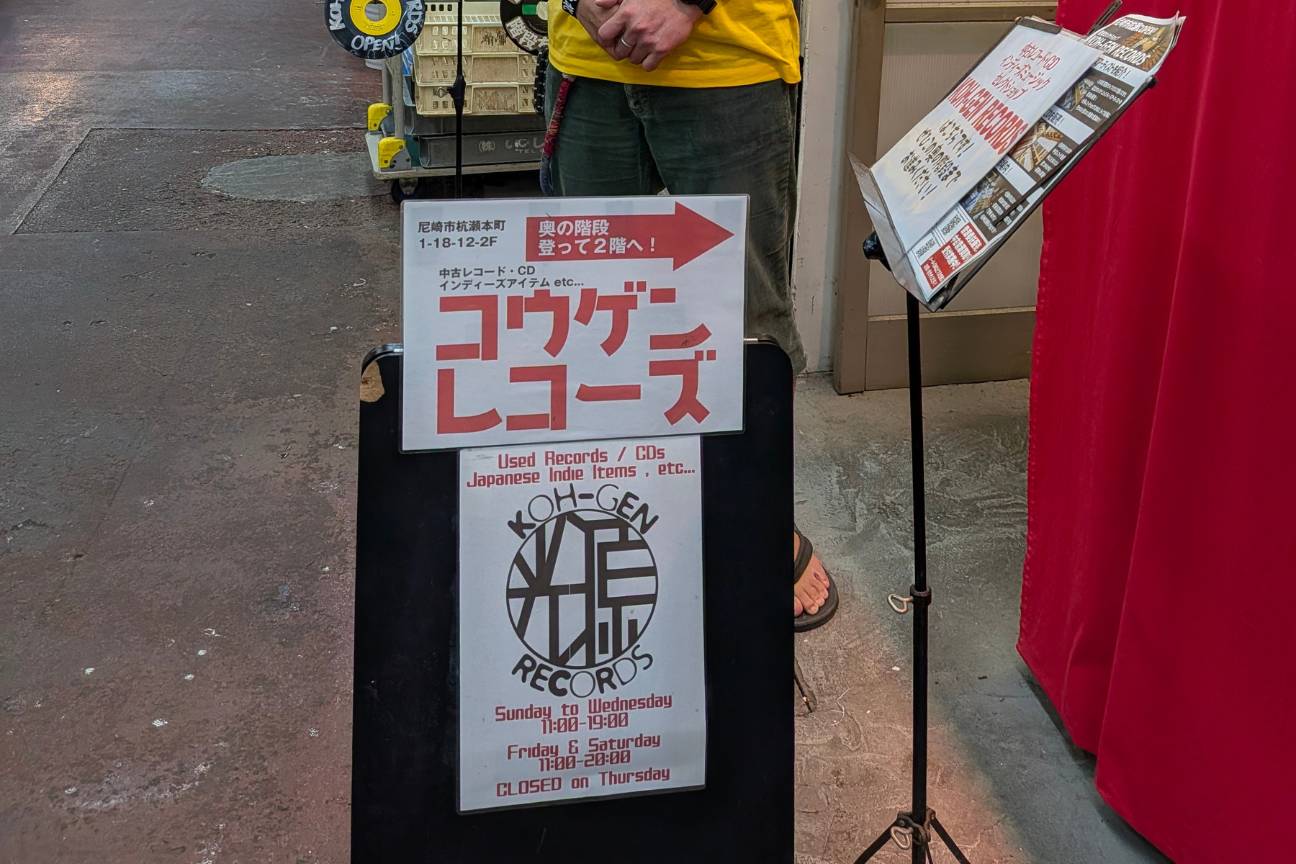
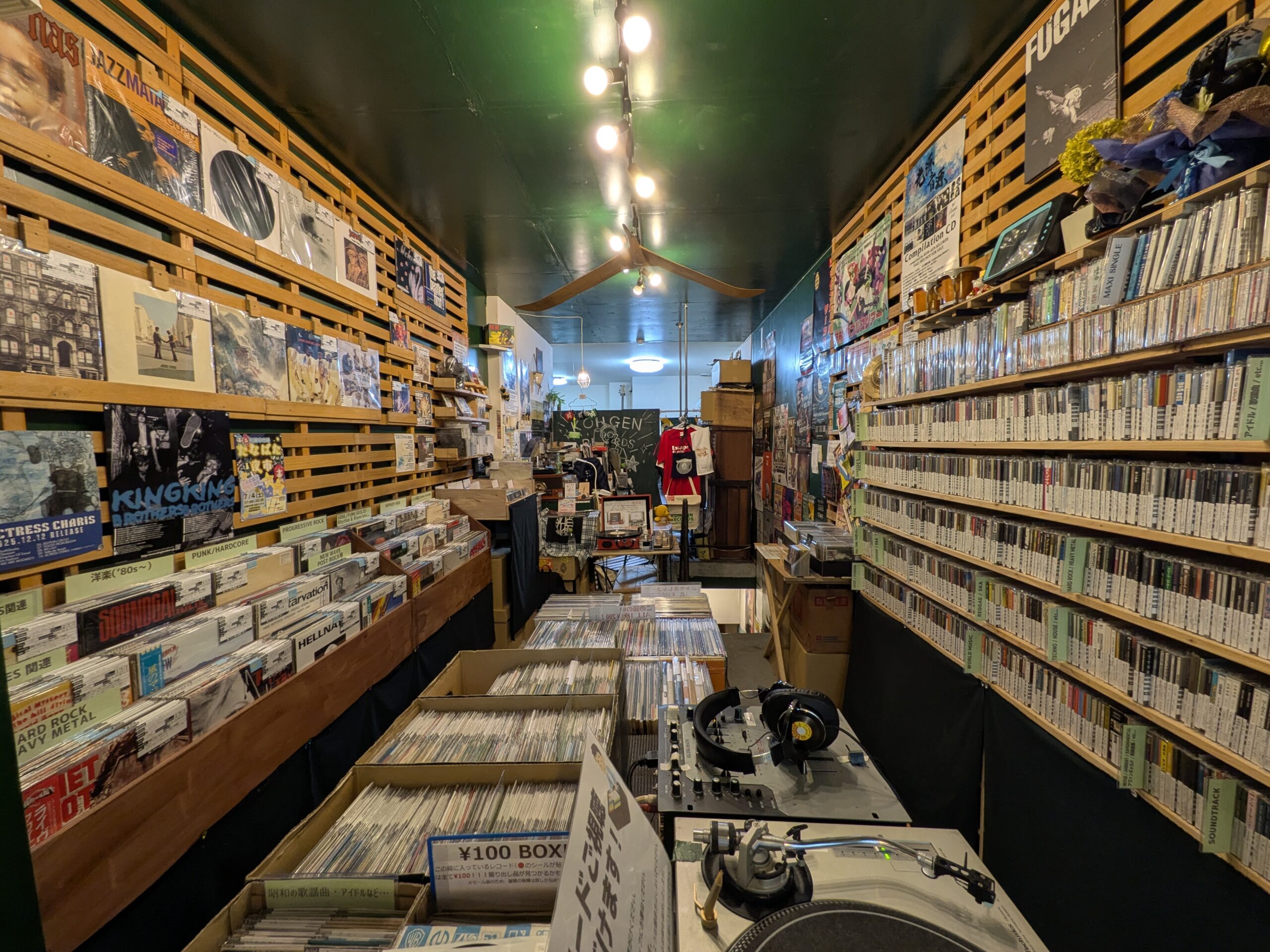
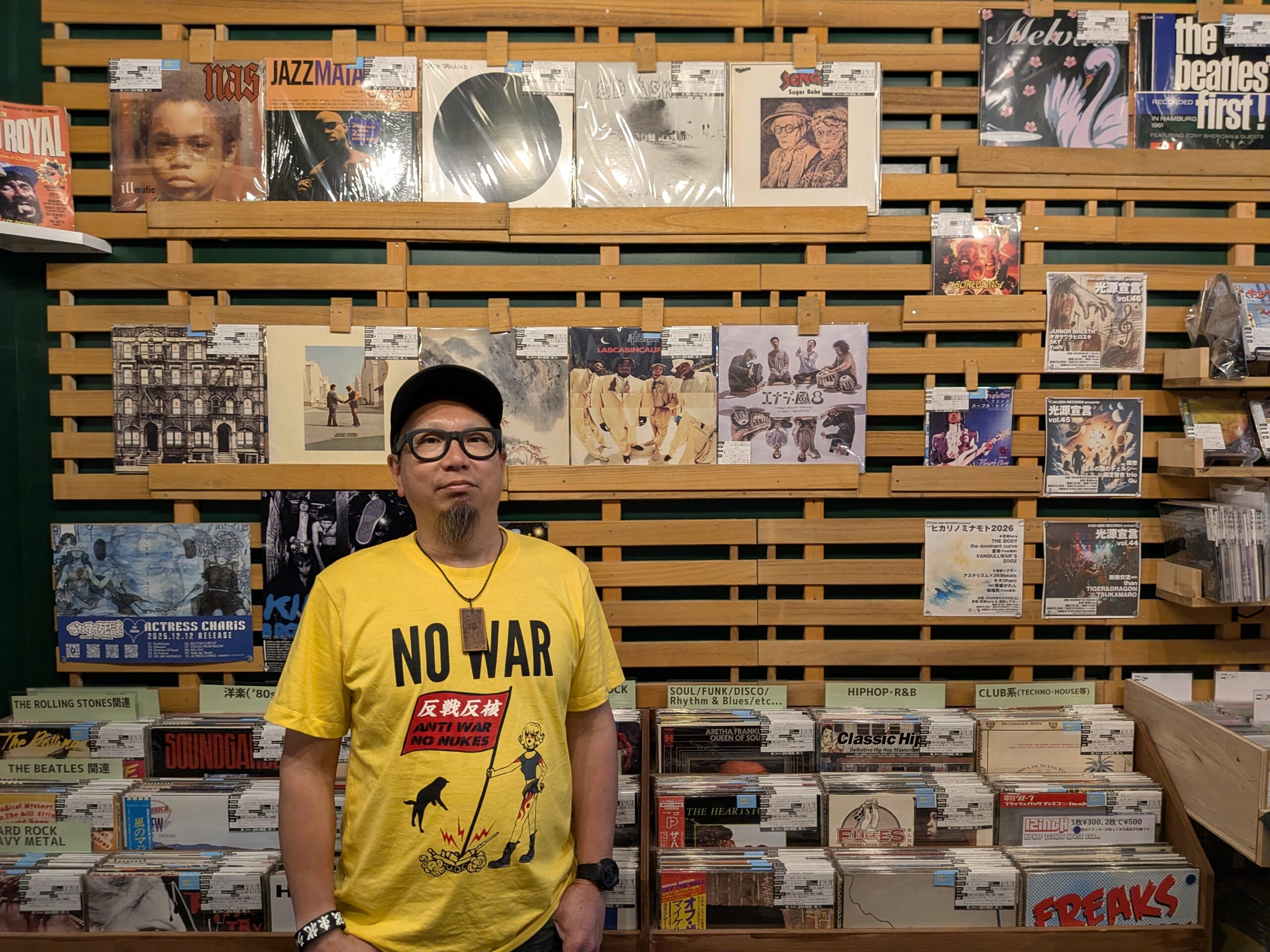
KOH-GEN RECORDS is a record shop located in Kuise Central Market in Amagasaki, Hyogo.
“I had been working behind the scenes at live music venues for a long time.”
Before opening his record shop, owner Takagaki spent many years working in live music venues.
We spoke with Takagaki about his first encounters with music, his experiences in live venues, and what he hopes to do through KOH-GEN RECORDS in the future.

What first drew you strongly toward music?
 Takagaki
I’m originally from Wakayama. I’m from a town called Hidaka, next to Gobo. When I was a kid, it wasn’t like my family listened to records at home. We didn’t even have a record player.
But we did have a red radio-cassette player. I would record anime theme songs from the TV onto cassette tapes and listen to them.
The switch really flipped for me in junior high school. Around the time I entered junior high, there was what people called the band boom. THE BLUE HEARTS, X, JUN SKY WALKER(S), BUCK-TICK, bands like that were suddenly everywhere. There was also a senior one year above me who lived nearby and played drums. There was something like a graduation concert, and when I saw him playing drums, I thought it was so cool.
I got into THE BLUE HEARTS and JUN SKY WALKER(S), and when I started tracing their roots, I found Kiyoshiro Imawano, the Sex Pistols, The Clash, and the Ramones. If I traced things even further back, I got to The Beatles. I really enjoyed listening that way.
Sometimes I would go to Osaka with friends from high school. Everyone else would be shopping for clothes or caps in Amerikamura, but I would be at Tower Records buying CDs. That was the kind of kid I was. (laughs)
Why did you decide to work in live music venues?
After graduating from high school, I had originally told my parents that I would probably become a civil servant or work at the town office. But once I started playing in a band, I became more interested in working in music.
At the same time, I didn’t really have confidence in myself as a player. There were people better than me, and somewhere in my head, I think I knew I couldn’t beat them.
Around that time, touring artists would come to places like Wakayama Prefectural Cultural Hall. When I went to concerts, I would see people working at the back of the room. I thought, “That looks cool. What kind of job is that?” As I looked into it, I found out there were vocational schools where you could study that kind of work. That’s how I became interested in working behind the scenes.
So I went to a vocational school in Osaka. The dormitory happened to be in Amagasaki, and that ended up connecting to where I am now.
What did you find interesting about working in live venues?
As part of my vocational school training, I went to work at a live venue. It was really interesting. I ended up asking them directly, “Could you let me keep working here?”
Looking back, what I’m really glad about is that it wasn’t a venue where major artists came every day. It was a place where local bands, bands that were just starting out and trying to make something happen, were working hard day by day. Being able to watch them up close was huge for me.
There were regular staff members, and we would talk about things like, “How was today’s band?” or “They were better than last time.” That kind of space and time was interesting to me. It wasn’t like we thought, “We raised this band.” It was simply that I was happy to be right there watching them change.
And when their audience started growing and more people came to see them, that made me happy too. Of course, I would say things I noticed from a backstage perspective. As the relationship became closer, they would start saying things like, “We want to do an event here” or “We want to do a one-man show here.” Then you begin to see more detailed changes, including the sound and lighting. It really felt like we were building something together by hand, and that was so much fun.
Live venues are also places that connect people, aren’t they?
As I gained experience in live venues, I was given more responsibilities, including joining BIGCAT (*1) as part of the opening staff and working in stage management. Later, I became the booking manager at a live venue in Kobe called VARIT. (*2). Through those experiences, I realized that even within live venues, the range of things I could do was expanding. At the same time, I started to understand what kind of work I personally found enjoyable.
BIGCAT is a large venue, so established artists would come through almost every day, and the people on-site would keep changing. But in Kobe, it was more about creating the scene ourselves.
It felt like I shifted from the production side to a position where I was connecting people. I was starting almost from zero, so even though my title was booking manager, I did everything: reception, drinks, making timetables, all kinds of things. But what was exciting was how much closer I became to the audience.
And bringing together bands that didn’t know each other, or creating a place where audiences who didn’t know each other could meet, made me really happy. That connects to the event activity I still continue today, “Kohgen Sengen” (*3).
(*1) BIGCAT: One of Japan’s well-known live music venues, located in Amerikamura, Shinsaibashi, Osaka.
(*2) VARIT.: A live music venue in Sannomiya, Kobe, established in 2004.
(*3) Kohgen Sengen: A monthly live event hosted by KOH-GEN RECORDS since 2023, featuring four to five artists each time.
Is that background why KOH-GEN RECORDS values releases by lesser-known artists?
I think a record shop is not just a place where music is placed on shelves. It’s a place where someone comes in and encounters music they didn’t know before. People connect with music. It’s a different form from what I did in live venues, but the root may be very similar.
For me, it’s not simply a feeling of “supporting” them. I’m doing it because I want to. It was the same when I worked in live venues, and I think it’s the same now. I’ve seen bands that weren’t selling yet, but were truly cool. They might not have had many people in the audience, but if you kept watching them, they got better and better. I saw that kind of change up close.
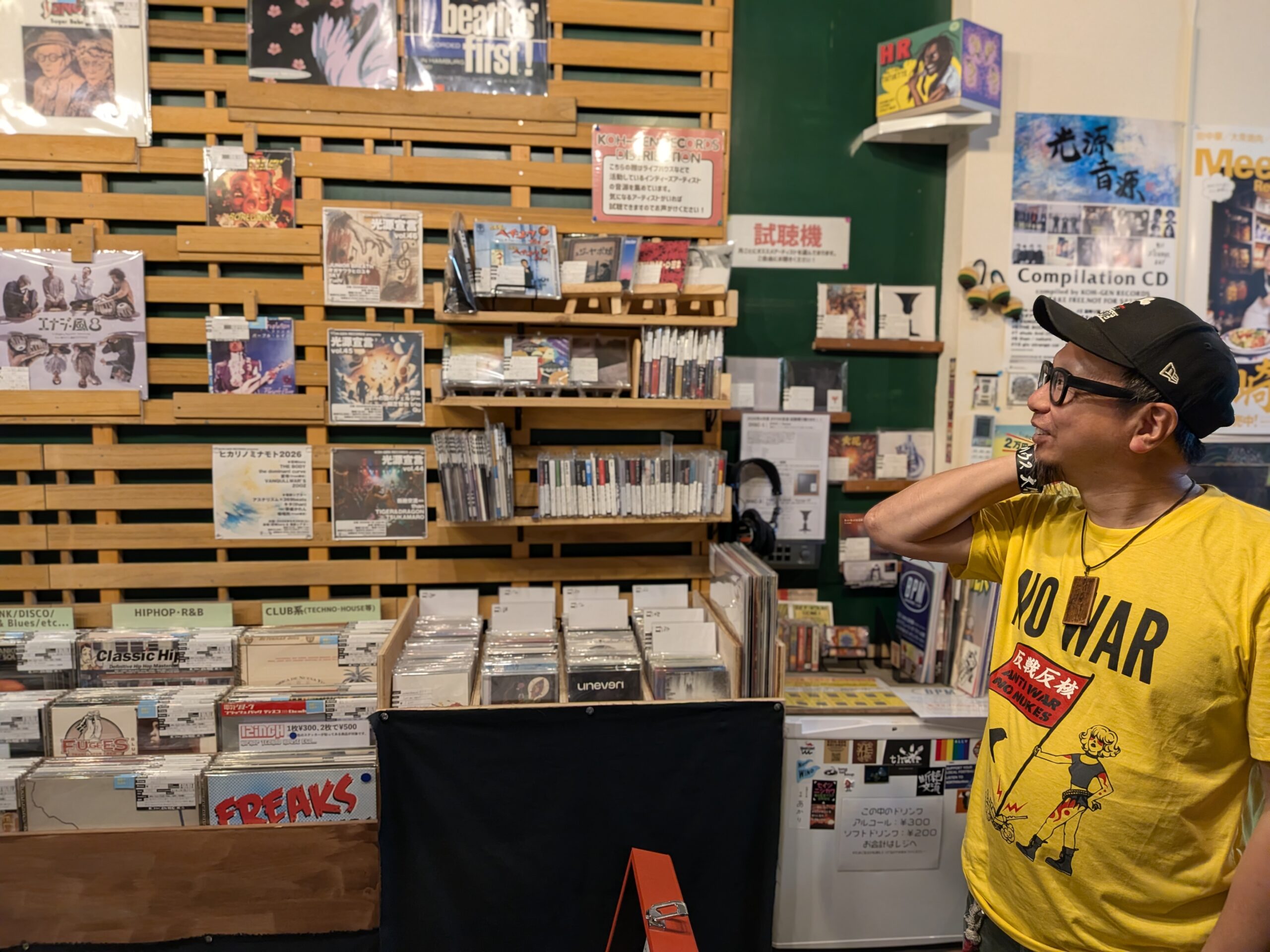
So at the shop, I don’t only want to stock things that have already been evaluated. I want to place things that make people pick them up and wonder, “Who is this?” Just because something isn’t famous doesn’t mean it has no value at all.
For example, there’s a band called honeydip, whose poster is also up in the shop. They’re a band I got to know back in my live venue days. They had broken up once, but while they were inactive, their reputation spread overseas. People started discovering them like, “There used to be this great band in Japan.” Seeing that made me realize that some music can reach people over time.
I think one of the joys of a record shop is encountering things that are not yet widely known. It’s like going to a live venue and randomly seeing a band that turns out to be amazing. I’d love for that kind of encounter to happen in a record shop too.
Of course, I want people who have been listening to records for a long time to come, and I want people who love live venues to come too. But I’d also be happy if people who are just starting to dig into music came by.
What do you hope to do with KOH-GEN RECORDS from here?
I want to keep continuing what I value now.
In the future, I’d like to try starting a label as well. Even now, I help artists with things like distributing their music, so I’m already involved in ways of communicating music. If I could connect artists and listeners in a different form, through something like a label, I think it would also expand what I can do.
It feels like an extension of what I did in live venues. Until now, I connected people with people in live settings, but I’m now looking for forms that are different from live venues. Through artists’ releases, I’d like to share songs and bands that people don’t know yet.
Recoya VIEW
What stood out from speaking with Takagaki was his perspective on “music that is not yet widely known,” shaped through his years in live venues. Whether a band is selling well or famous is not the only measure. He has watched bands and artists slowly change right in front of him, and that experience seems to connect directly to everything KOH-GEN RECORDS does today.
The releases lined up in the shop are not just products. For someone, they can be the entrance to a sound they have never encountered before. Through the live event “Kohgen Sengen” and his future hopes for a label, Takagaki continues to create connections between music and people, and between people themselves.
A single record picked up by chance at a record shop can lead to the next live show, or to a new artist. For anyone who wants to enjoy that kind of musical expansion, KOH-GEN RECORDS is sure to be an interesting place.