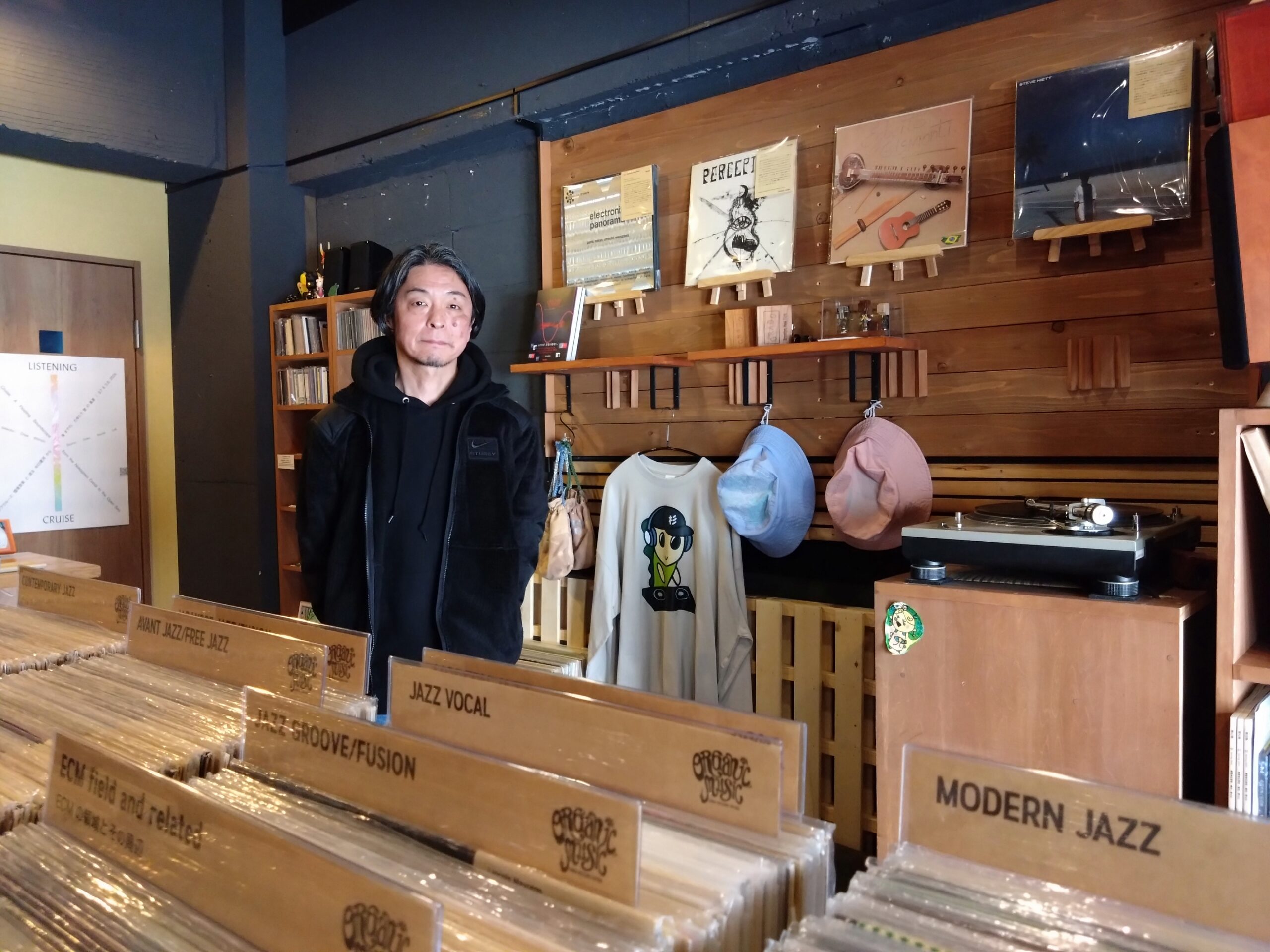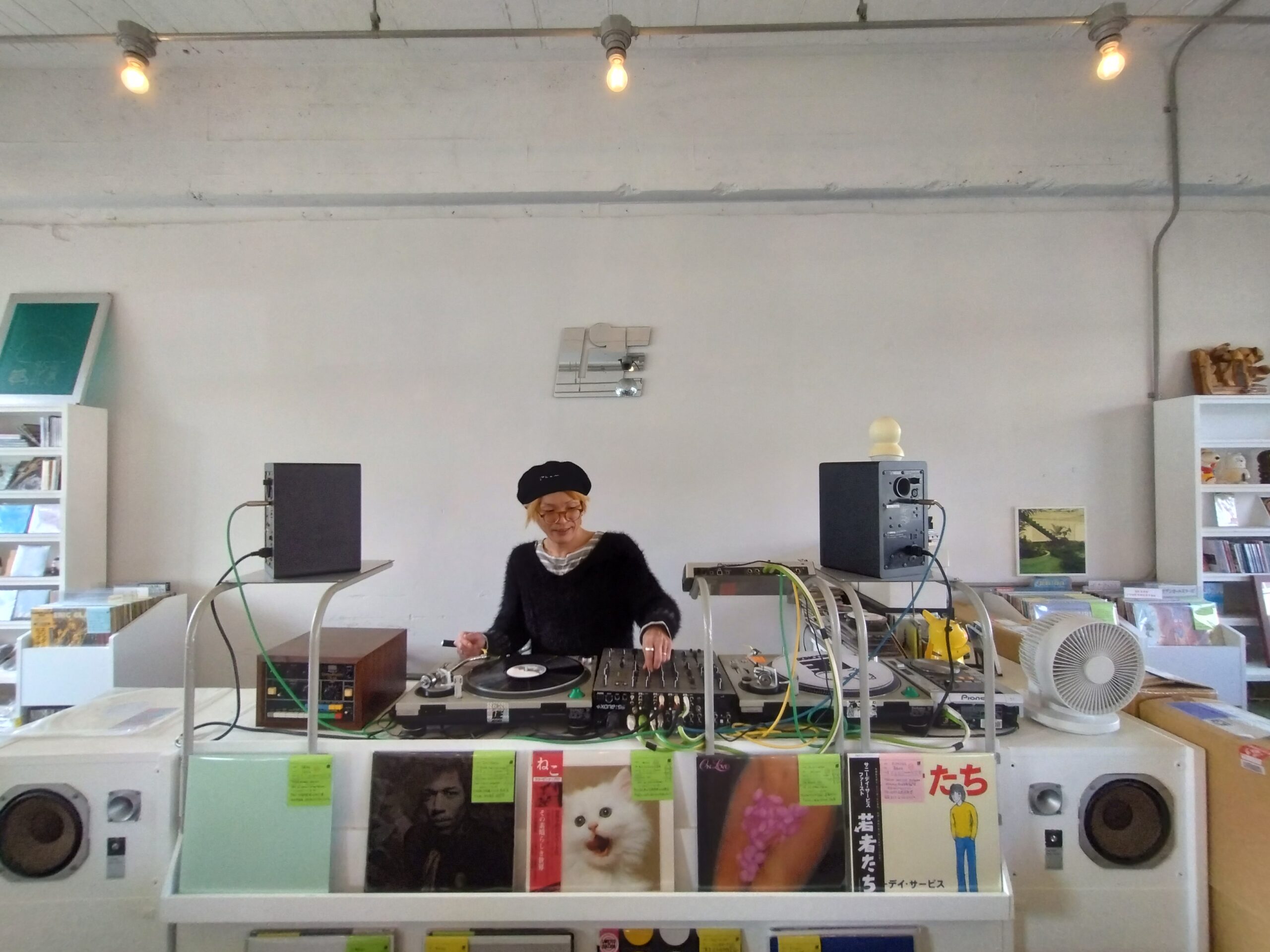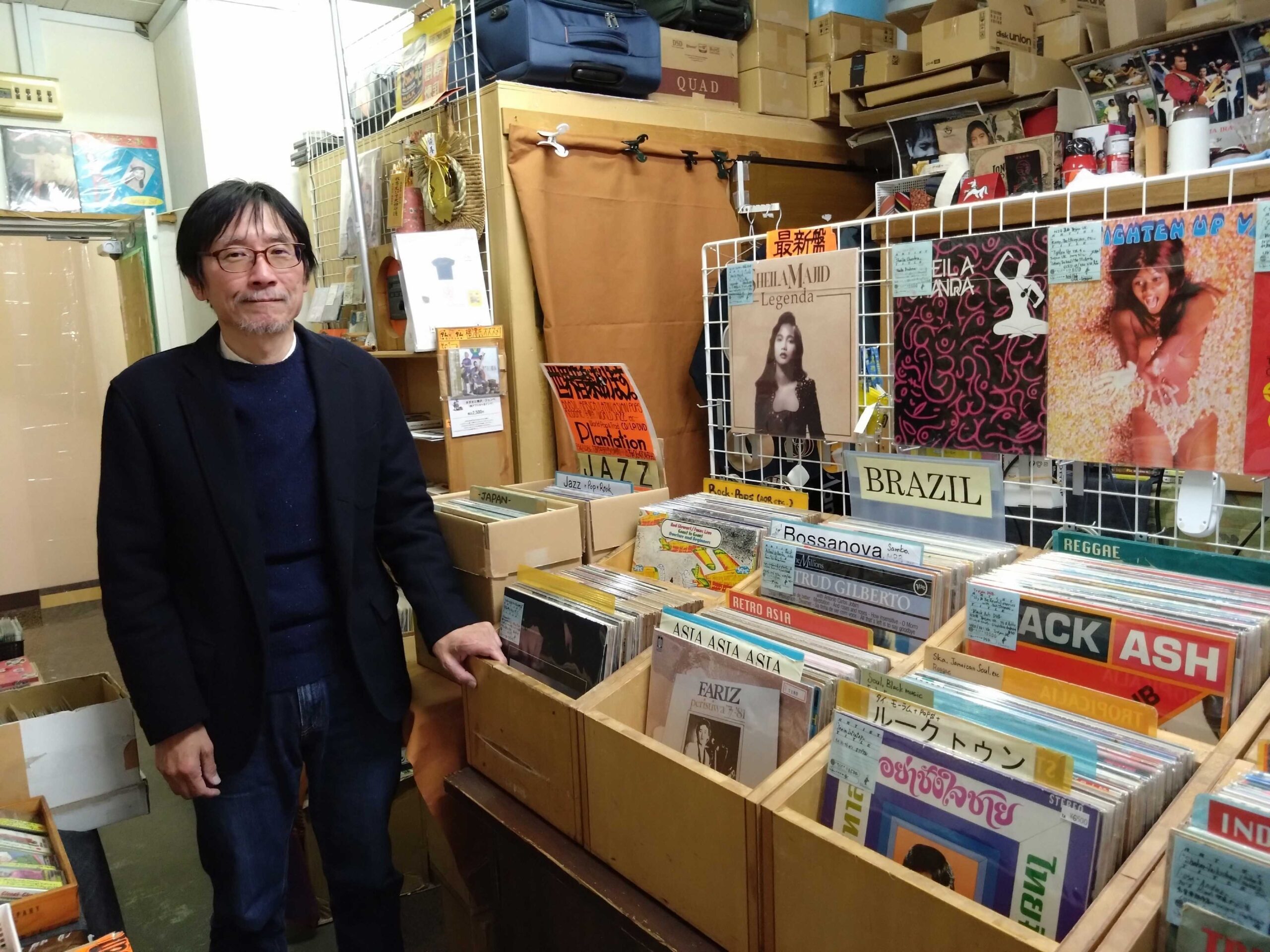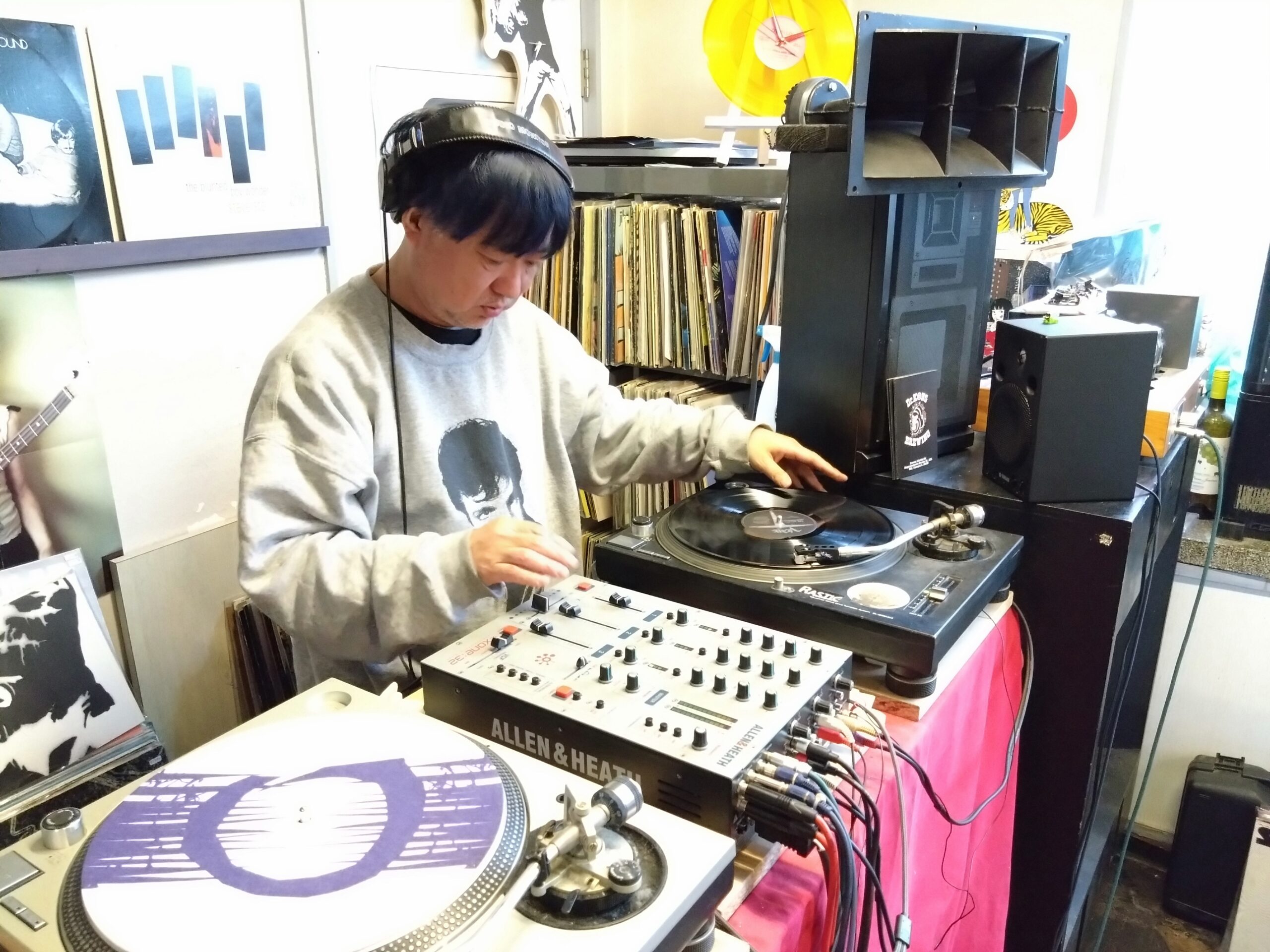
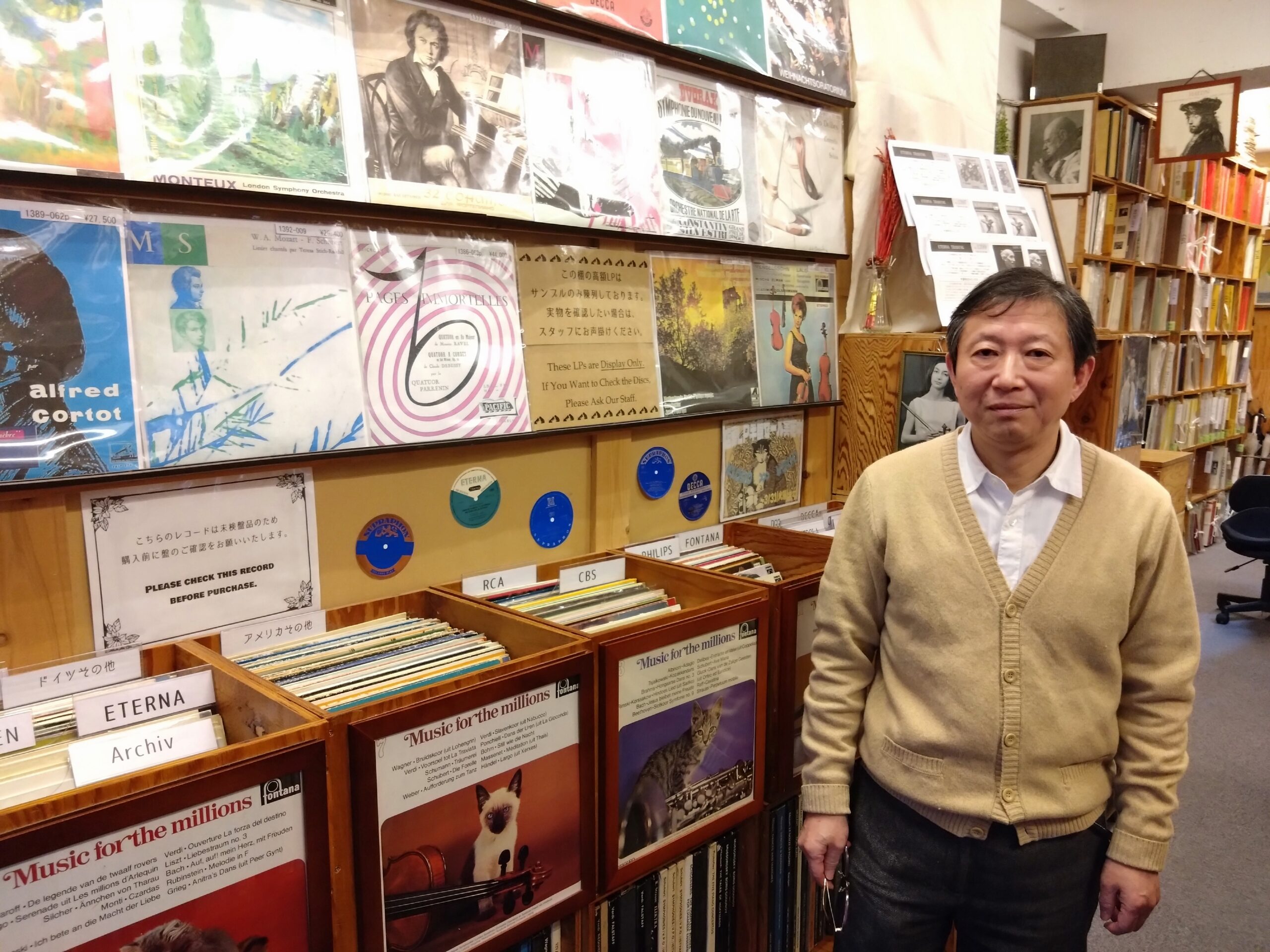
For this installment of our interview series with record shop owners, “Record Shop Yomoyama Stories,” we visited Eterna Trading in Kanda-Sarugakucho, Chiyoda-ku, Tokyo.
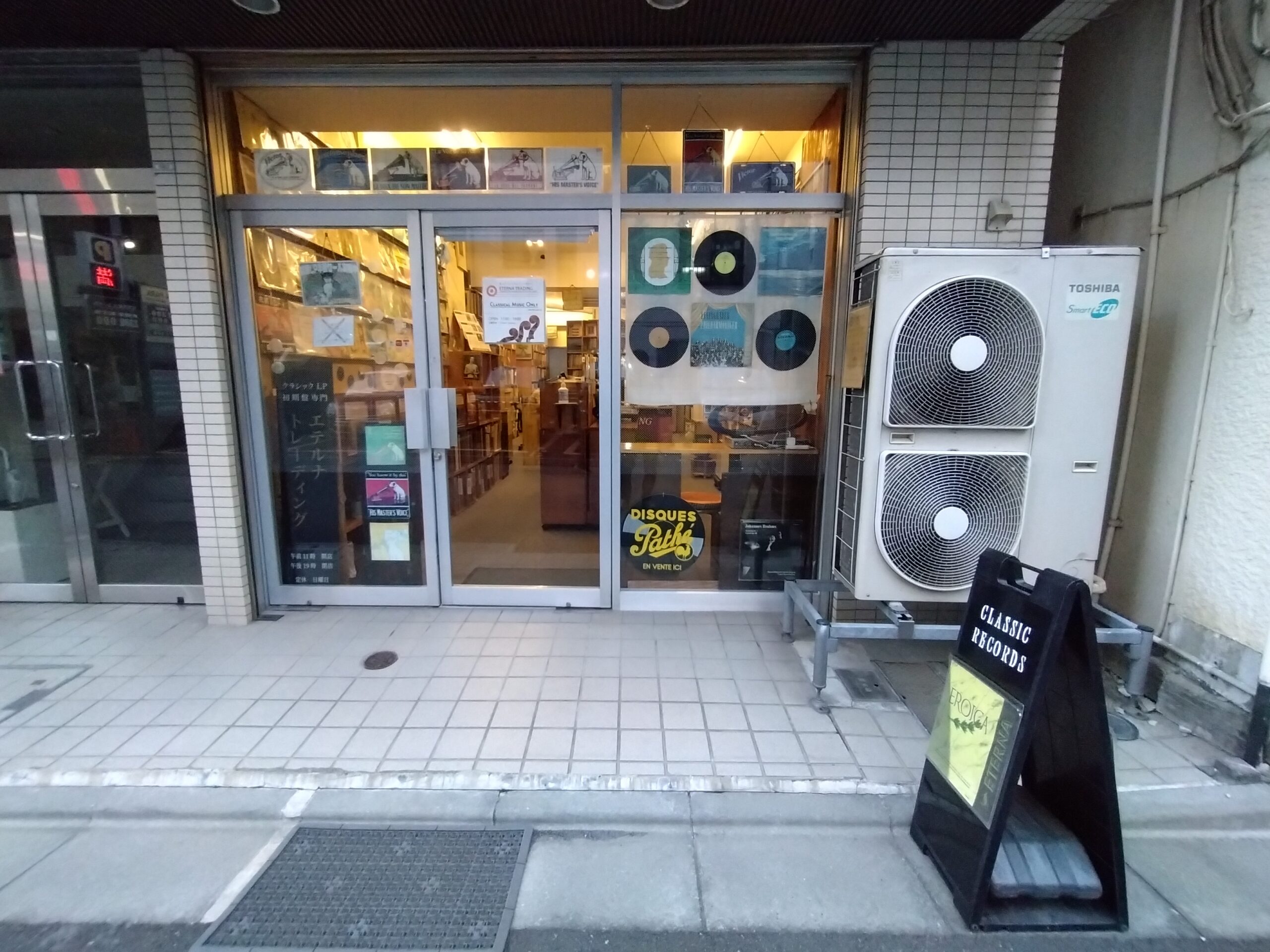
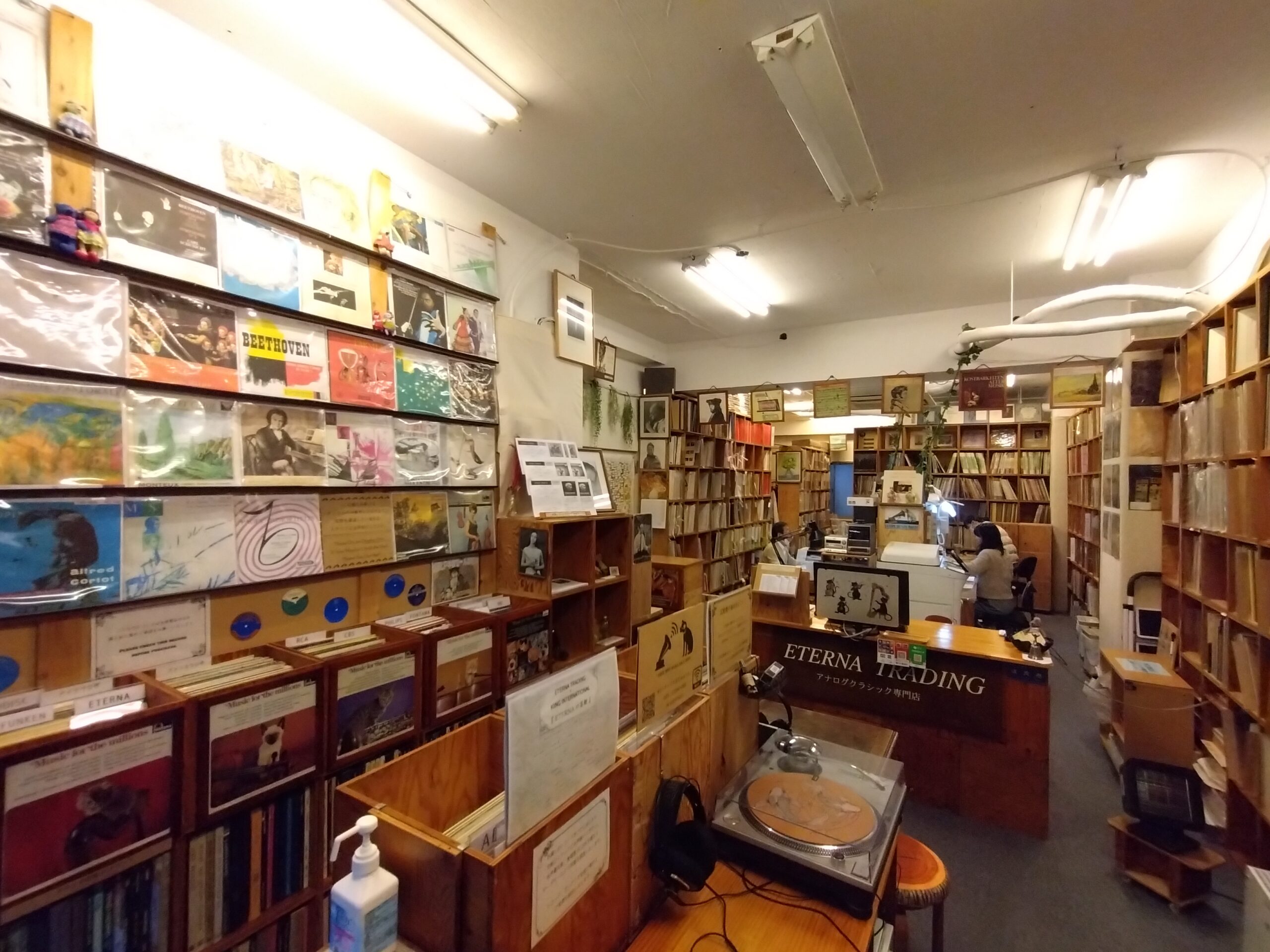
Jimbocho has an atmosphere that only long-standing shops can create. Like its old bookstores and coffee shops, time seems to have quietly settled here. Eterna Trading felt perfectly suited to the texture of this neighborhood.
This shop deals only in classical records. But it is not simply a classical record store. Centered around the East German state-owned label “Eterna,” it has spent many years sourcing records from across Europe, organizing them, and delivering them with carefully chosen words.
There are many things about this shop that you would never understand at a glance. The text beside each price tag is one. The differences between records that appear almost identical are another. But as you listen, you begin to see how each record here holds layers of time patiently built up by Mr. Takani.
You do not need to know classical music in depth to enjoy this shop. In fact, it may be precisely because you do not know it well yet that the charm of this place begins to sink in slowly.
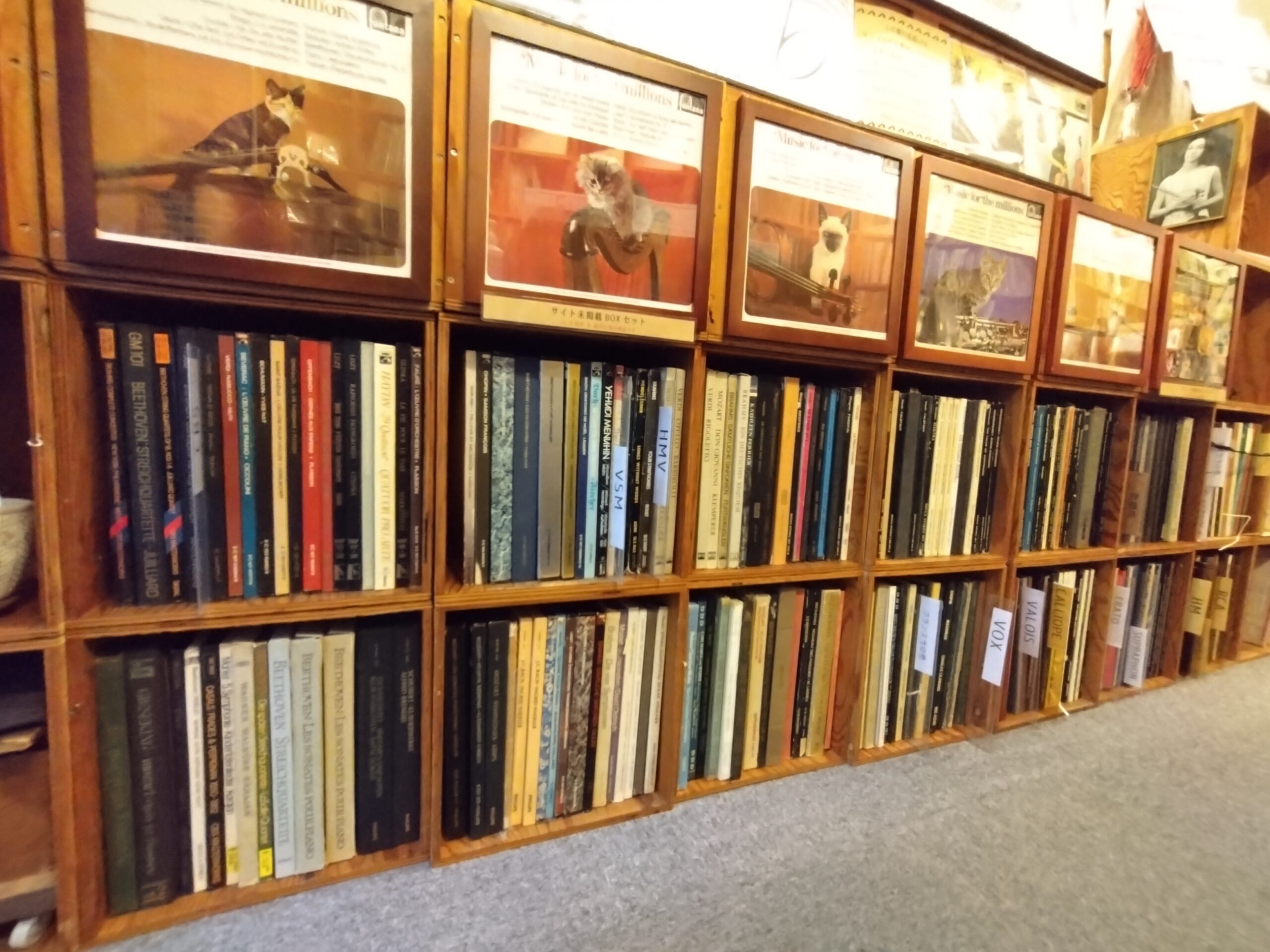
Eterna Trading is now in its 31st year as a business, and in its 26th year as a company. It has always remained in the Jimbocho area, moving locations a few times while continuing its path as a classical record specialist in this neighborhood.
What surprises you first is the sense of time layered into the shop. Since the very beginning, Mr. Takani has been issuing mail-order lists, and as of March 2026, the number had reached 1,400. Today some of that information is online, but originally these were paper lists, sent out with words attached to each record, one by one. That accumulation became the foundation of the shop.
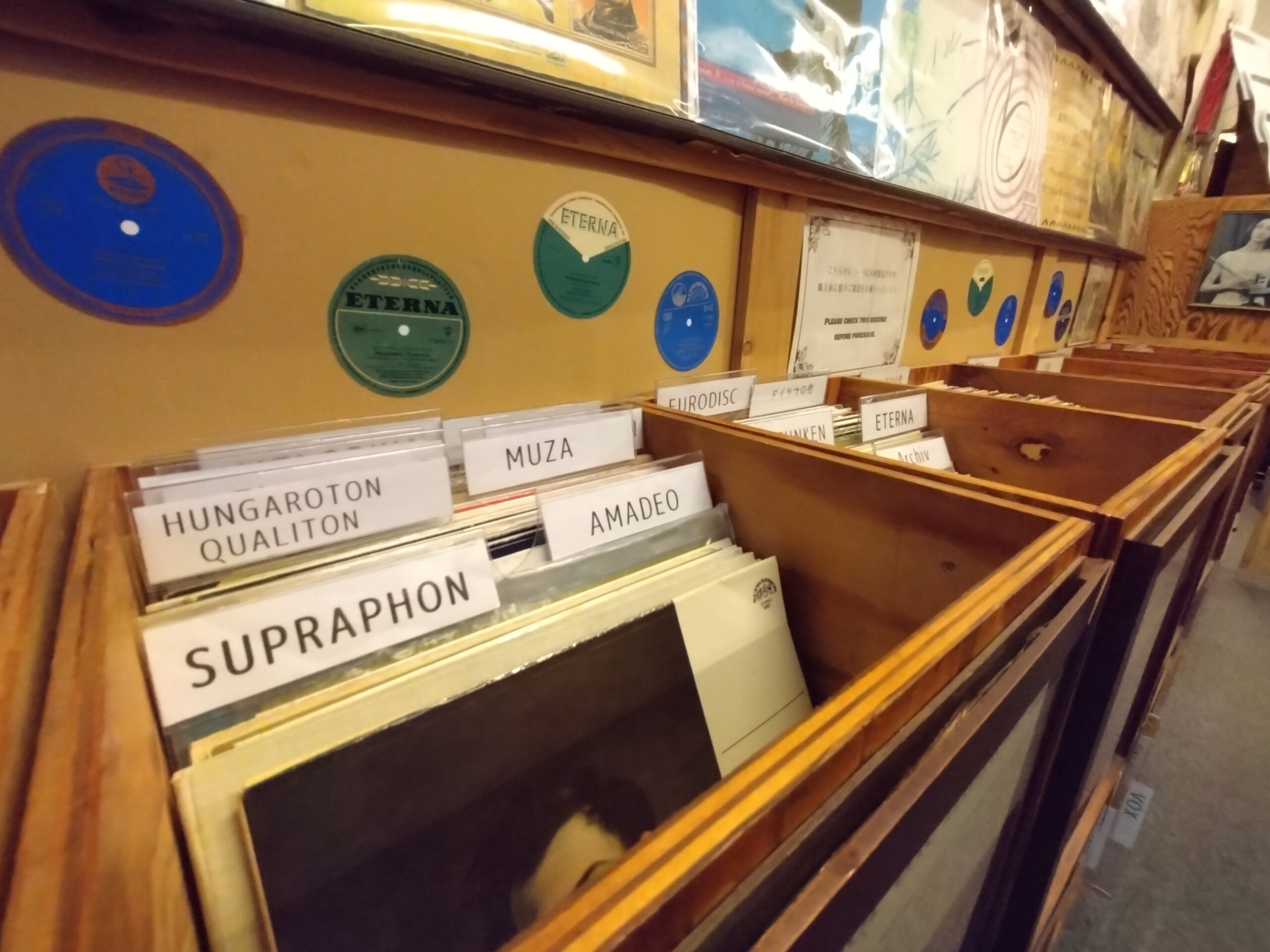
Even the records now lined up in the shop are not simply bought and displayed. Each one comes with proper information, including the characteristics of the pressing, differences between editions, and the background of the performers. Mr. Takani described the core of that work in very simple words.
That phrase stays with you. This shop is not only a place that sells records, but also a place that keeps organizing information about records without stopping.
It is not a flashy way of putting it, but Mr. Takani’s work ethic is right there in those words. Even if only a little each day, he keeps building things accurately. It is through that repetition that Eterna Trading has gained its quiet power of persuasion.
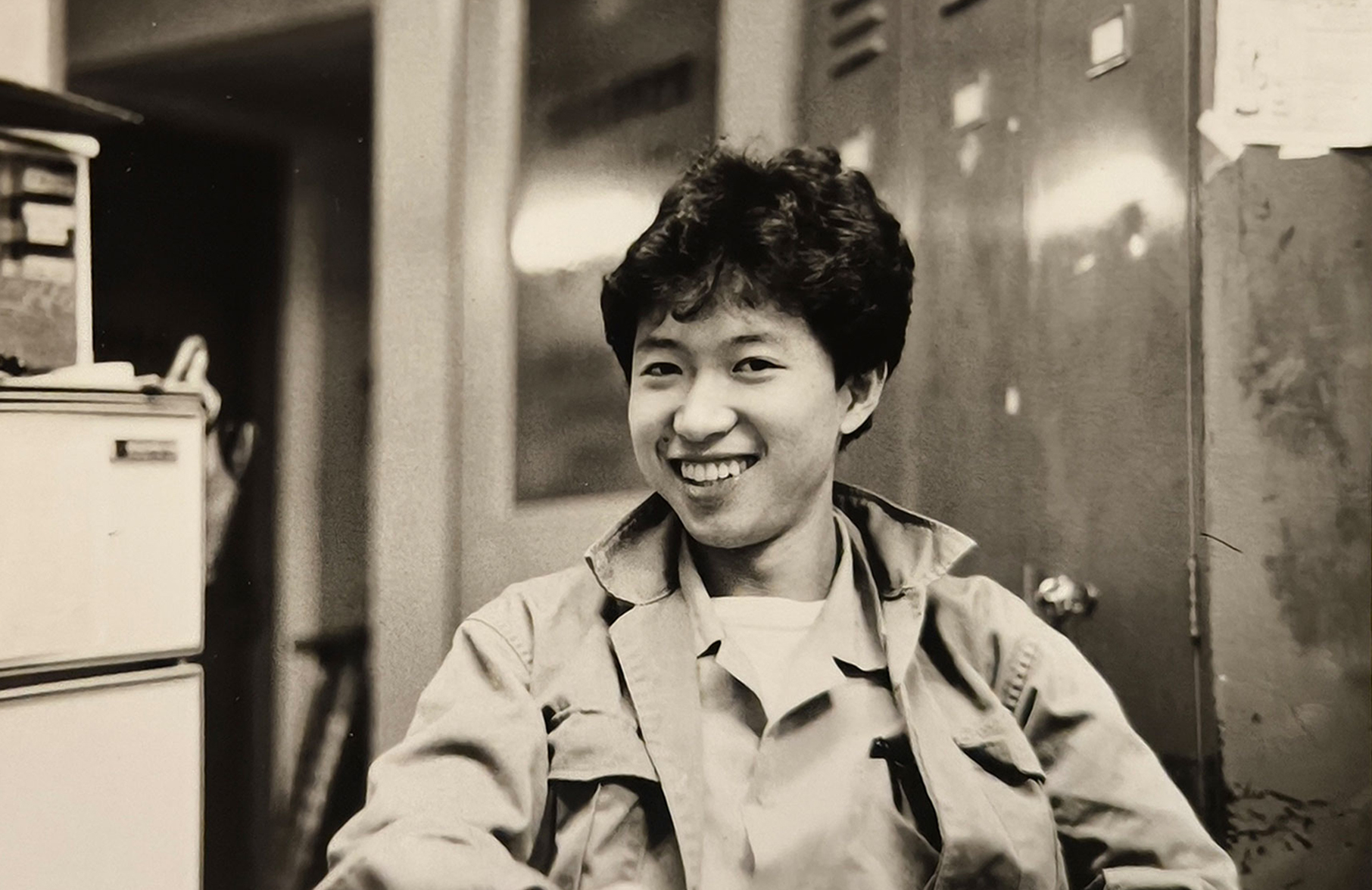
Mr. Takani was born in Matsumoto, Nagano Prefecture. He was not surrounded by music as a child, and there was no record player in the house. He only began moving seriously toward classical music after coming to Tokyo for university. The trigger was a friend’s influence.
What is interesting here is that his entry point was not the classic route of being a devoted classical fan. What first drew him in strongly was not musical education or knowledge of composers, but audio equipment.
He says he bought expensive gear for the time—McIntosh amplifiers and Tannoy speakers—even going into debt to do so. First he was drawn to how sound itself was reproduced, and from there he went deeper into music. That order somehow feels very much like Mr. Takani.
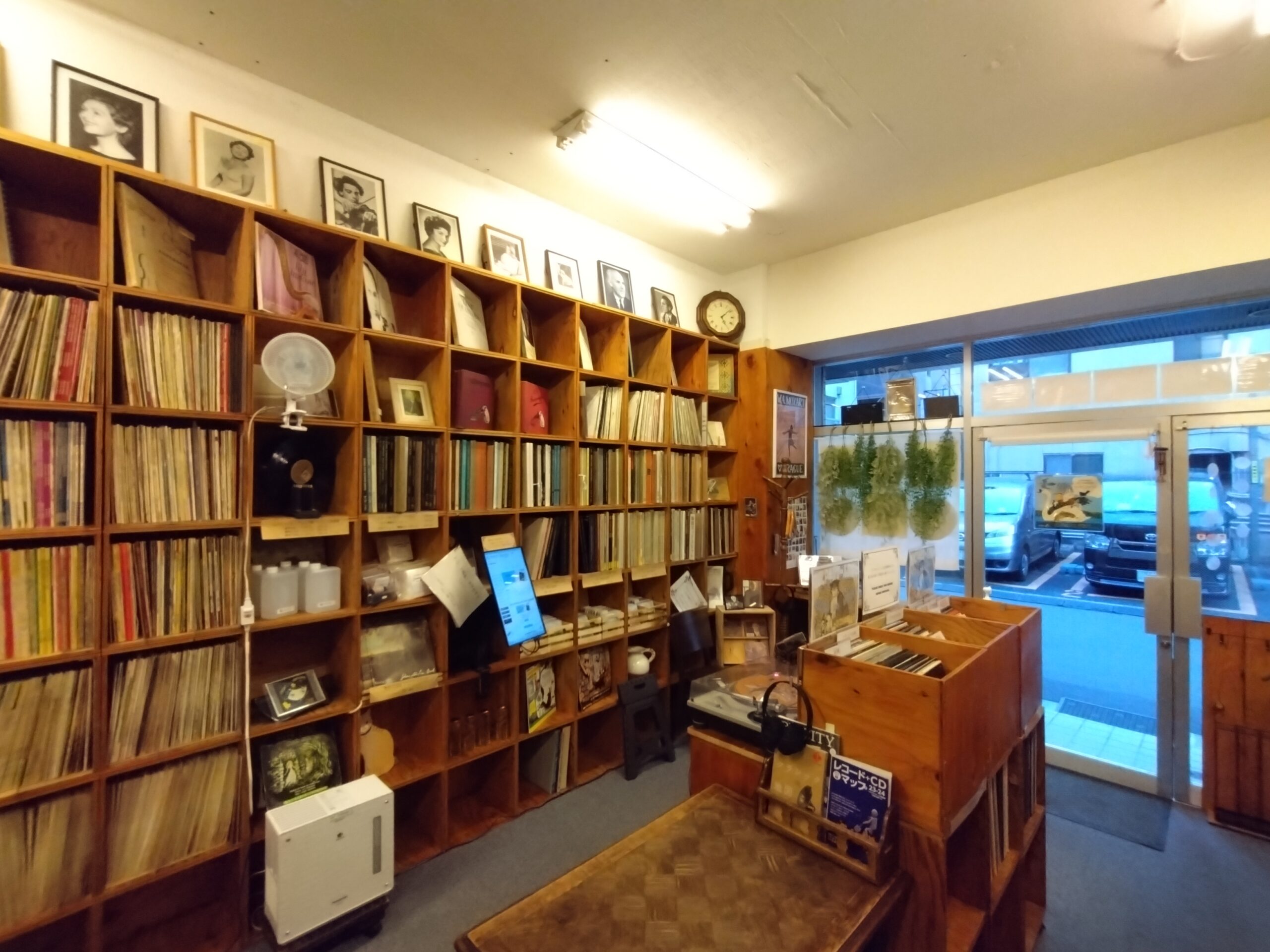
There was a period when he listened to jazz, but after meeting that friend, he leaned strongly toward classical music. Even when CDs began to appear, he remained with records. Little by little, that sense of direction took shape and eventually led to the shop we see today.
Listening to this story, you start to feel that the doorway into classical music does not have to be a difficult one. You can enter through sound itself, or through equipment. What looks like a detour can sometimes lead to the deepest place.
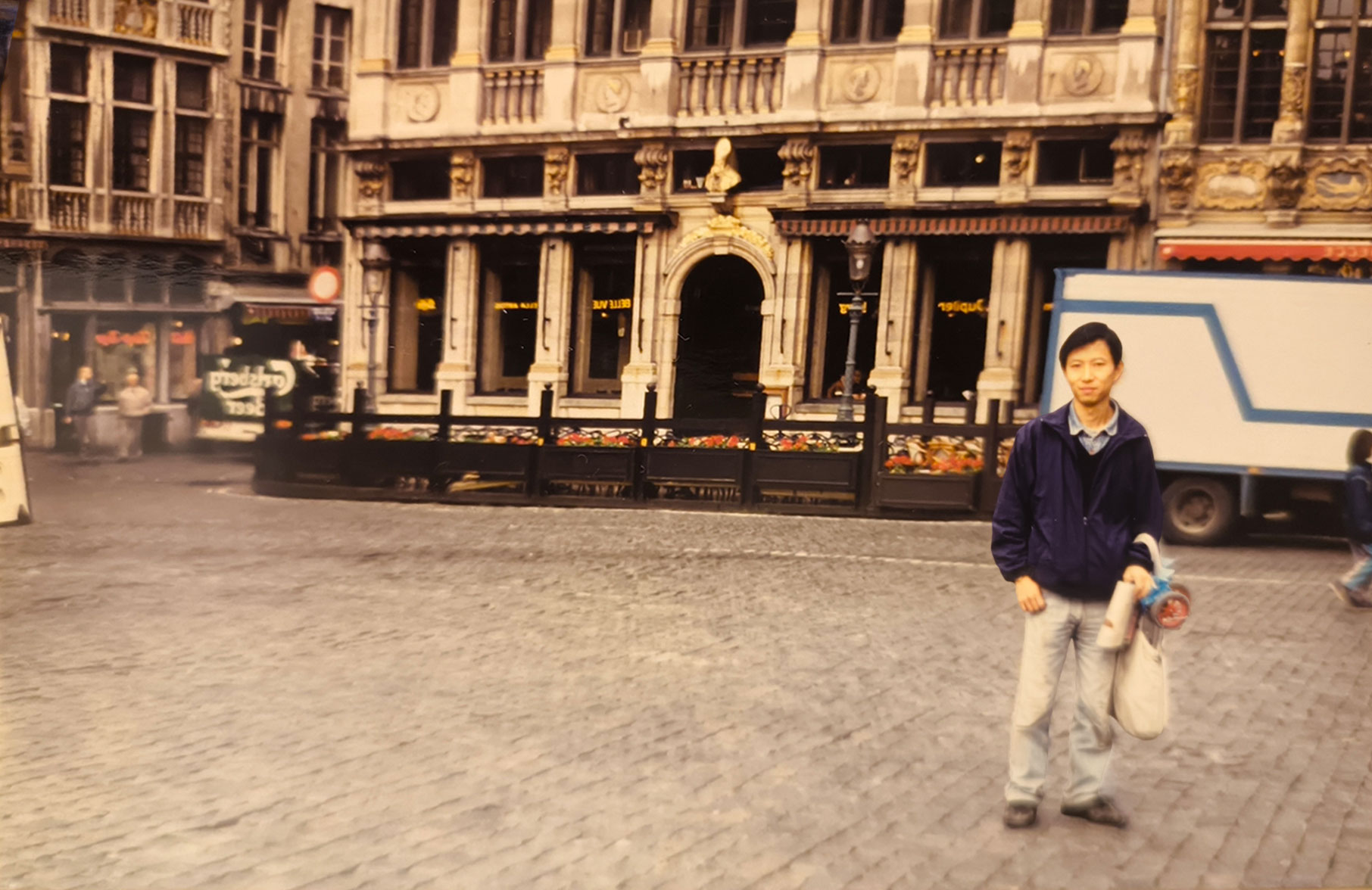
The turning point in Mr. Takani’s life came after he began working part-time at a record shop while already a working adult. There he heard people say that sourcing records had become difficult, and that they wished someone could go abroad to buy them. He decided to quit his company job and head to Europe.
He chose Berlin as his base. And at the center of that decision was the East German state-owned label “Eterna.”
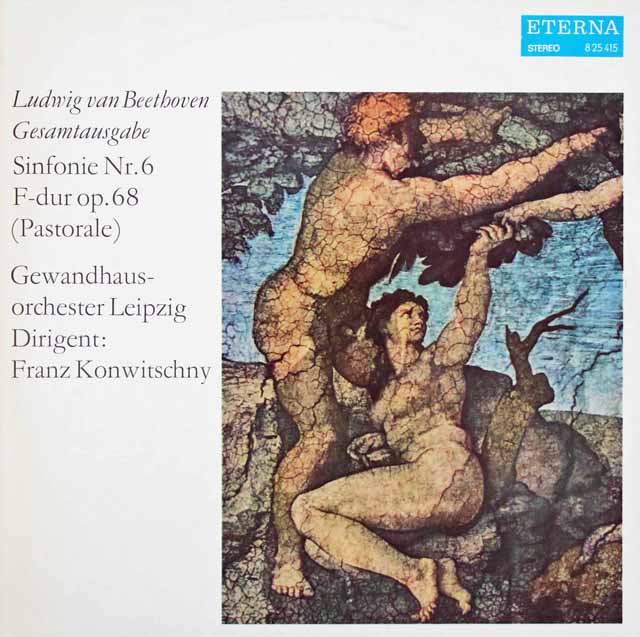
The way he bought records then was very physical. Whenever he arrived in a new city, he first looked for a phone booth at the station. He would check the yellow pages by profession, search for record stores, call them one by one, and visit only the ones that had classical stock. He stayed in youth hostels and traveled by train. It was far from glamorous—extremely steady, grounded work.
But because he kept at that method for four years, records that had barely been known in Japan found their way to Jimbocho. The story that Eterna records alone could fill the entire shelves says a lot about the scale of that effort.
And for Mr. Takani, Eterna was never simply a rare label. He saw value in the culture and recording philosophy that emerged under the East-West Cold War divide.
There was music left behind by standards different from glamour or sales potential. That is where Mr. Takani found value. The word “Eterna” in the name of the shop is not merely symbolic—it is at the very core of the shop itself.
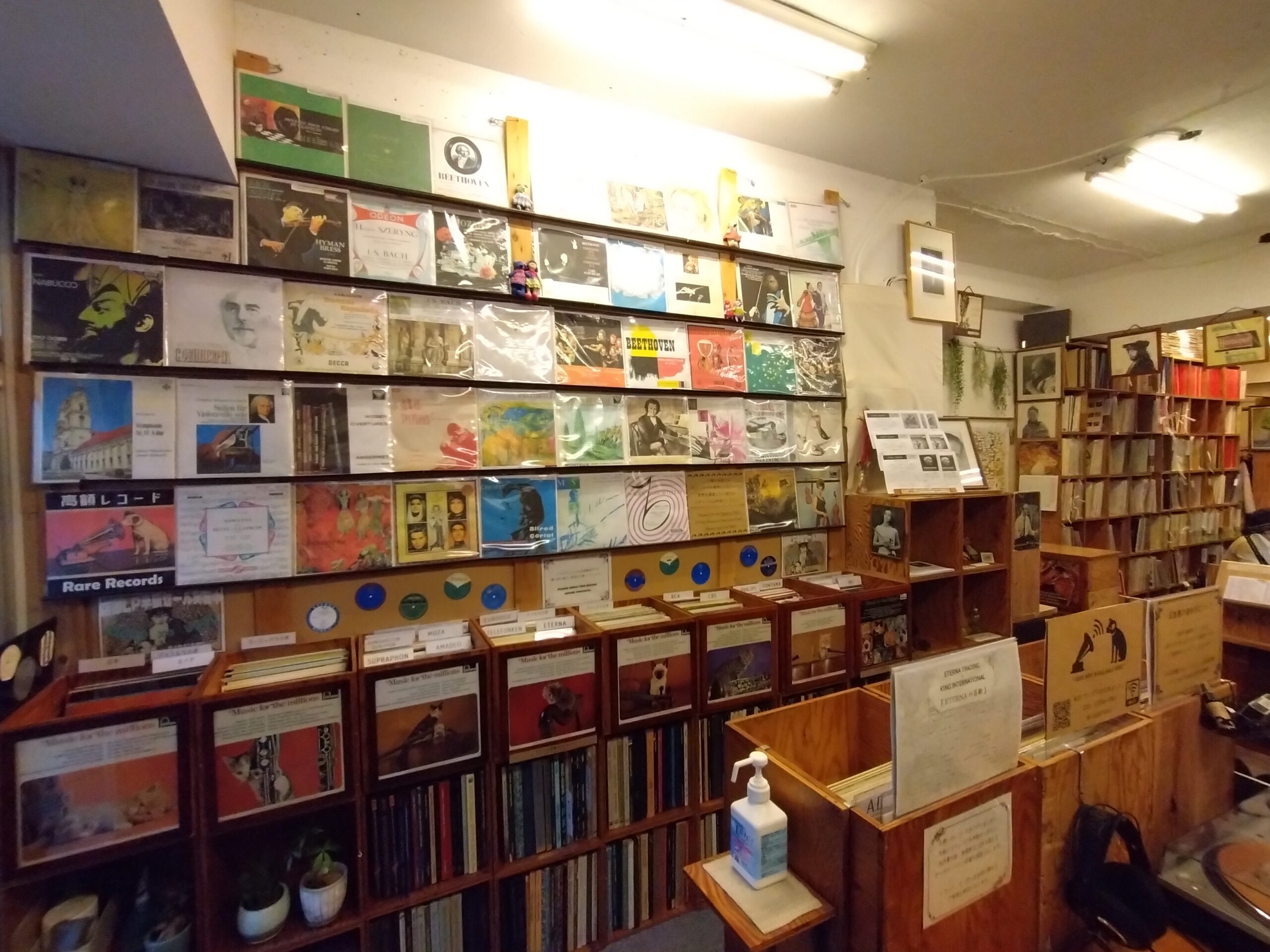
One thing you cannot leave out when talking about Eterna Trading is its database. Mr. Takani has continued entering data in the same flow since the Windows 95 era, accumulating an enormous body of information in Microsoft Access. He says it has already reached the scale of hundreds of thousands of entries.
In the world of classical records, the meaning of a record changes depending on whether it is an original pressing or a reissue, mono or stereo, British pressing or French pressing. Differences that are invisible at a glance determine the value and position of a single record. And those differences are not merely trivia for collectors—they directly affect the satisfaction of the person buying it.
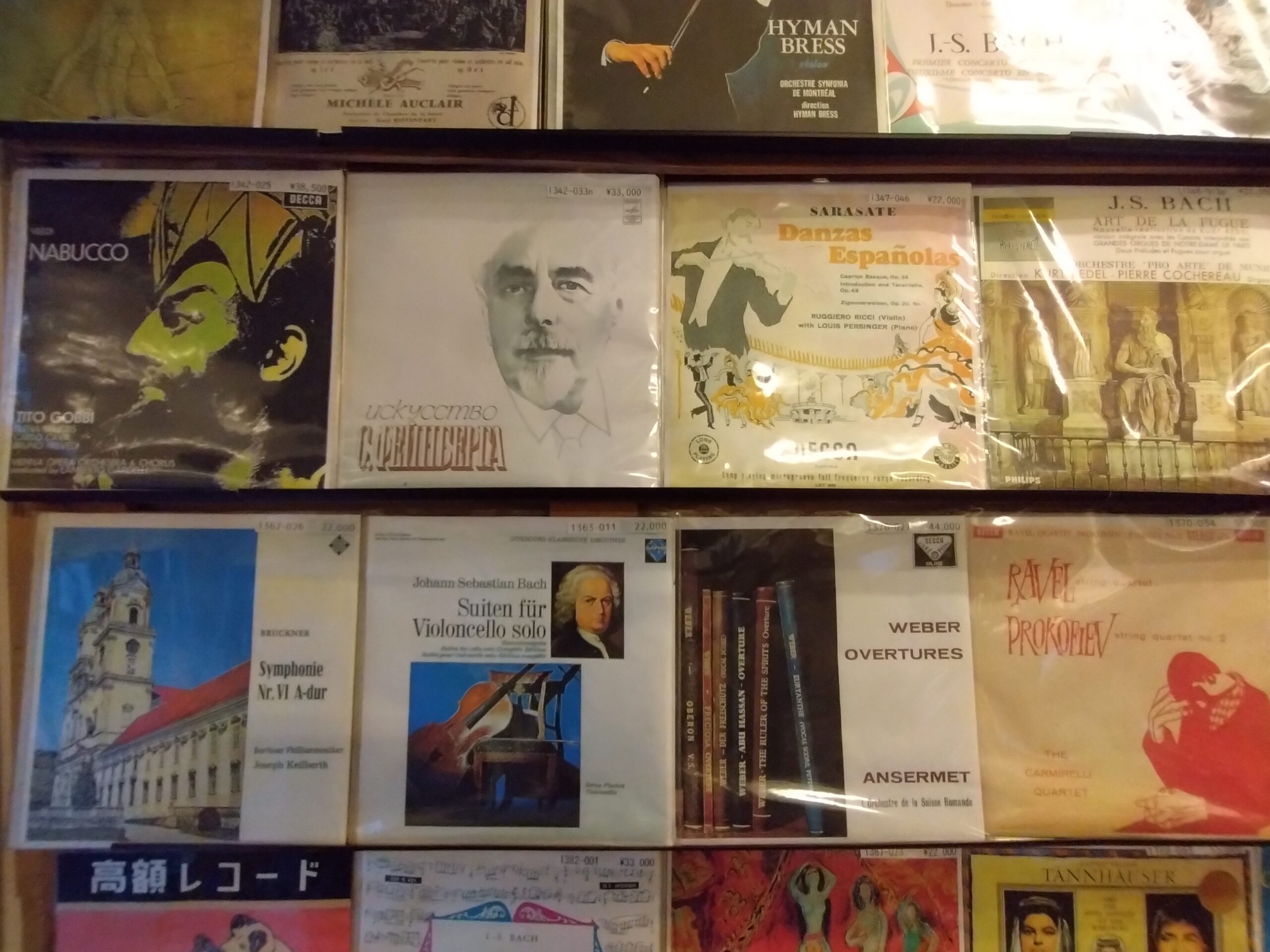
So Mr. Takani keeps inputting data. He checks differences in pressings, researches the careers of performers, writes comments, and sets prices. Each step is part of the work of determining the “right place” for a record.
And he described that work in remarkably strong terms.
It may sound a little grand at first. But once you stand inside the shop, it feels entirely natural. Not just selling, but conveying things correctly first. Because that attitude is so consistent, the notes and price tags in this shop carry real weight.
The shop may be selling records, but what it is really offering behind them might be something closer to trustworthy judgment.
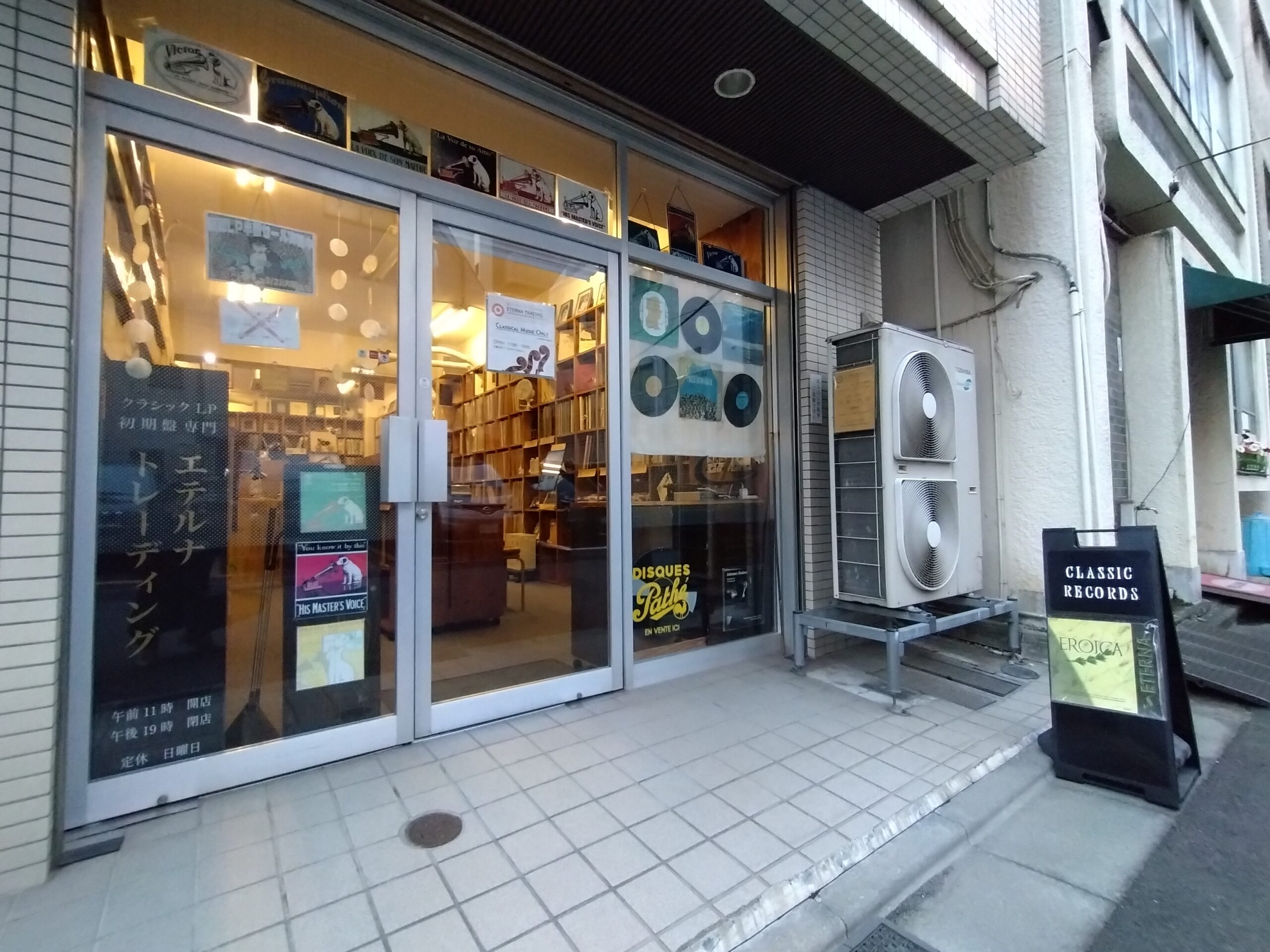
Many people might wonder whether it is really okay for a beginner to walk into a shop like this. A classical specialist store can look like a place where you need a certain amount of knowledge before entering.
But Mr. Takani’s view is surprisingly open. He says that many visitors come after checking stock online, but when someone does not know what to choose, he does not push a ready-made “correct answer.” Instead, he says they should begin by listening to whatever catches their attention.
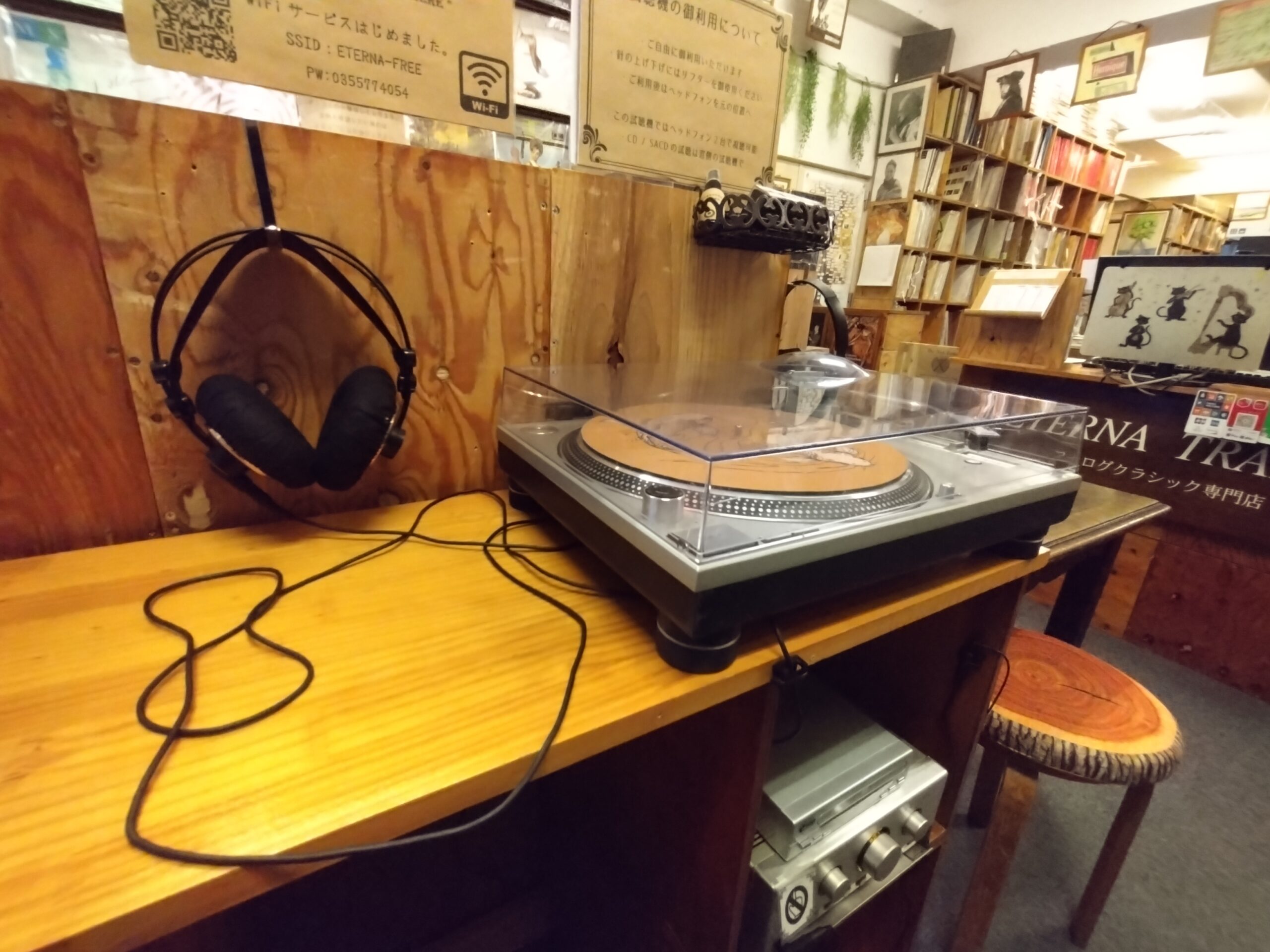
Your first record does not have to be an expensive masterpiece. What matters is creating your own standard. From there, he says, it becomes fascinating to compare different performances of the same piece, or different pressings of the same record.
That line feels especially powerful for people who find classical music intimidating. You do not have to enter through sheer knowledge. You can begin by noticing differences. The same piece can feel completely different depending on the performer. A British pressing and a French pressing can sound different. Even mono and stereo can change the whole impression.
When you hear that, classical music starts to look less like a world where you memorize the “correct answers,” and more like a world where you begin noticing differences. Deep, certainly—but with a real doorway. As a place that guides you to that doorway, this shop feels incredibly generous.
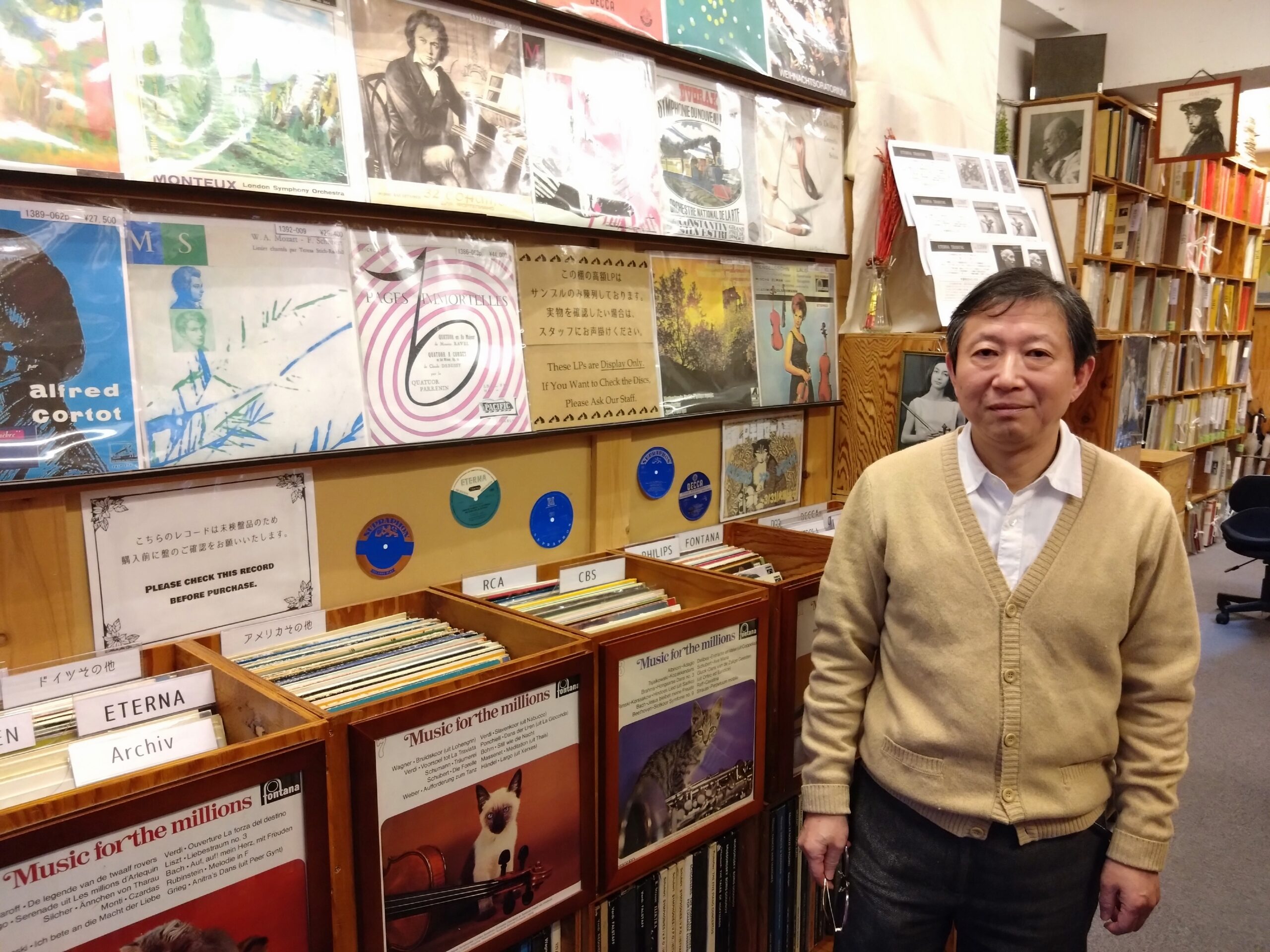
When asked what he values most from the customer’s point of view after so many years of running the shop, Mr. Takani paused for a moment and then gave a very simple answer.
That one line says a great deal about the shop’s way of keeping distance and serving customers. He does not speak to people excessively. He does not force the shop’s enthusiasm onto them. But when customers need information, he gives them exactly what they need.
He says that 80 to 90 percent of visitors come after checking online and asking, “Is this still available?” On the other hand, someone walking in and saying, “Do you have anything good?” is the most difficult kind of customer. Even the way he says that leaves an impression—nothing dressed up more neatly than necessary.
From a market perspective, classical records have been in a difficult phase for a long time. Even so, Mr. Takani does not speak in overly idealistic terms or paint exaggerated visions of the future. If he can maintain the present, that is good enough. Precisely because of that realism, the shop feels trustworthy.
At the same time, he also says that truly good things are eventually recognized over time. Even if no one knows a performer at first, if he continues writing proper commentary, that music will gradually spread through the world. You can feel the weight of 30 years behind those words.
Eterna Trading in Jimbocho is not a noisy or flashy shop. But it has a quiet strength. You are free to pick up the record that catches your eye, and beyond that lies 30 years of accumulated work.
You do not need deep knowledge of classical music to enjoy it here. In fact, this shop may be most interesting for people who are only just beginning. That first record may become the starting point of comparison for them.

|
||
|
||
|
||
|
||
|
||
|
||
|
||
|
||
|
||
|
||
|
||
|