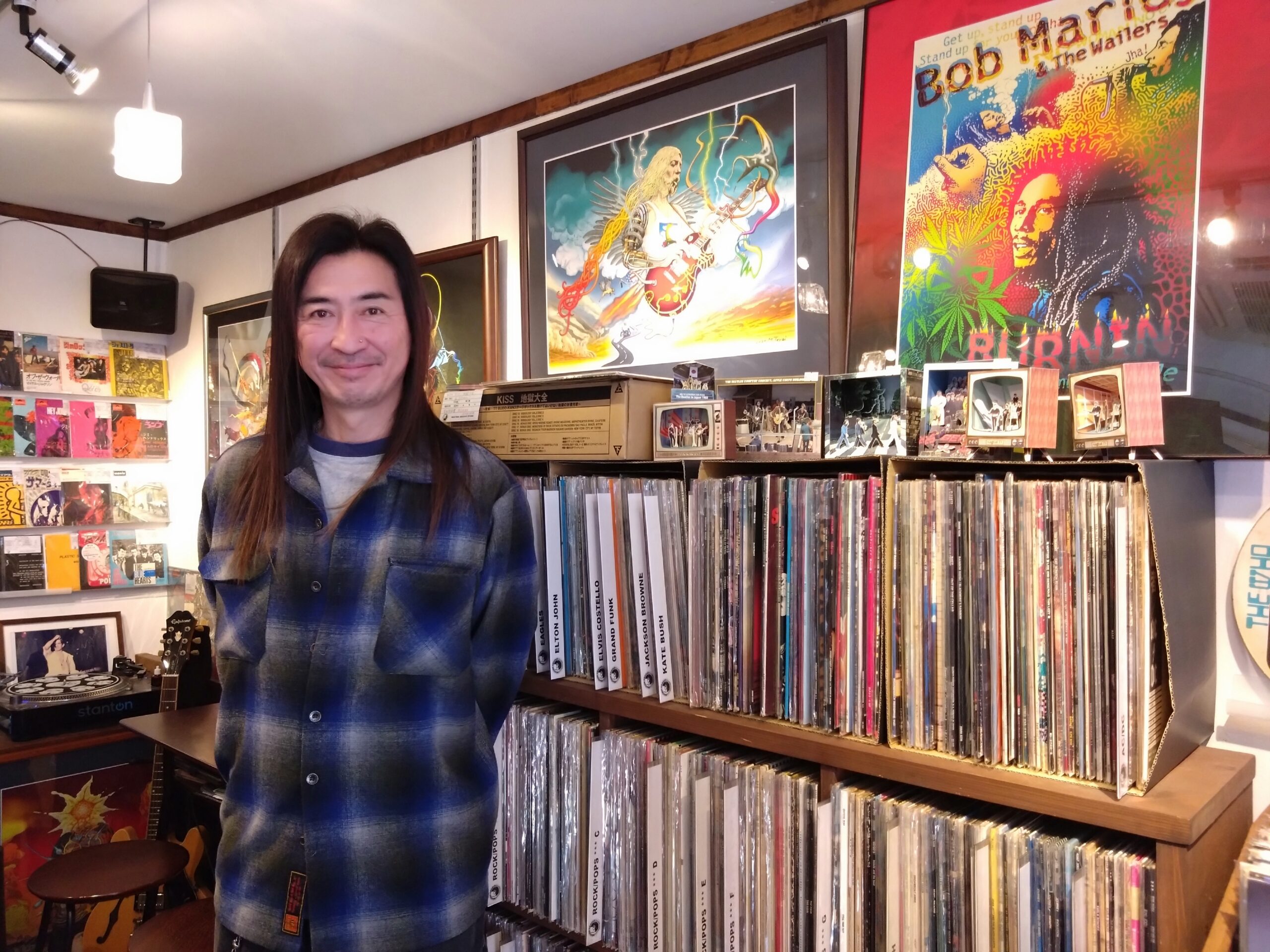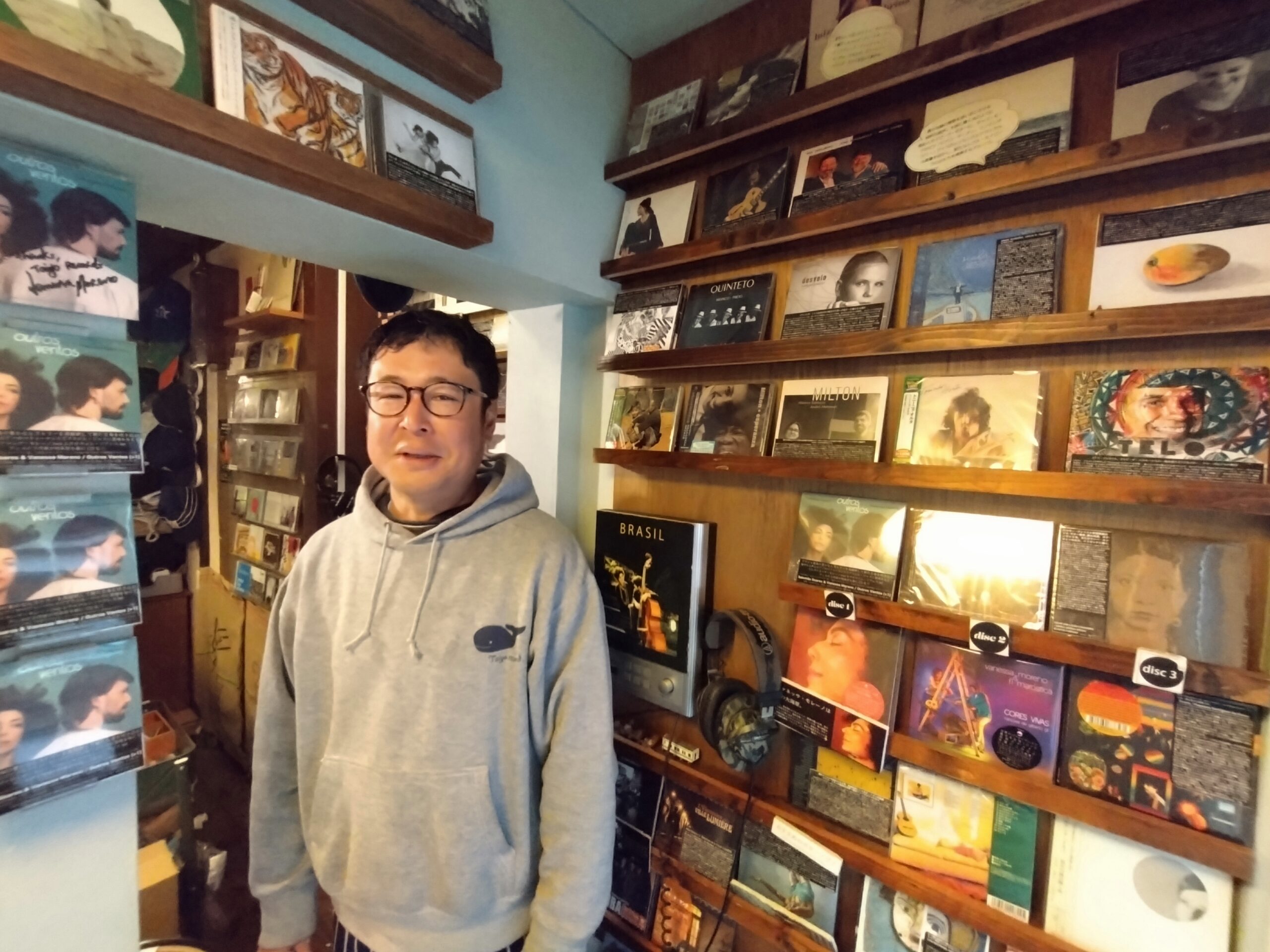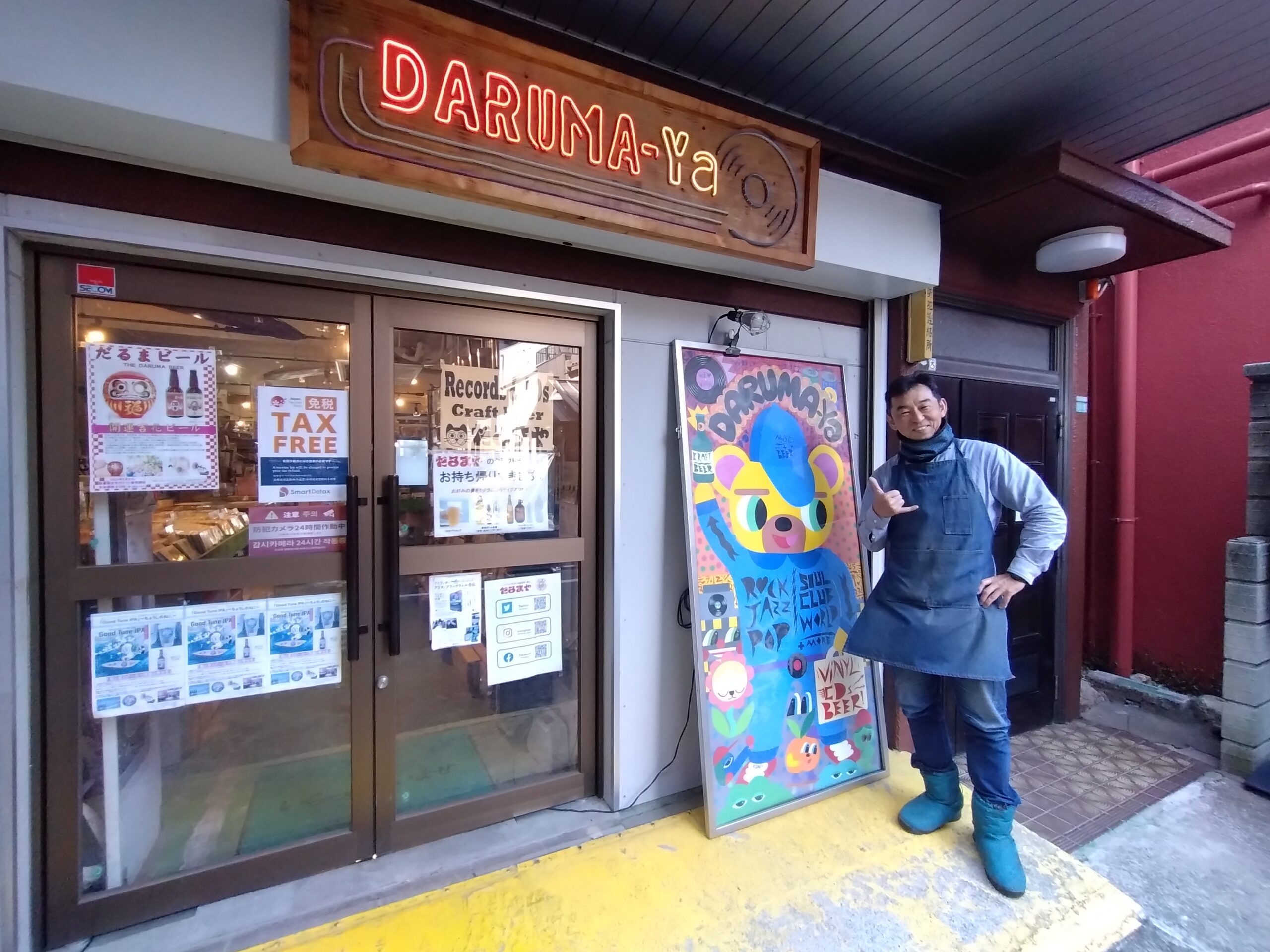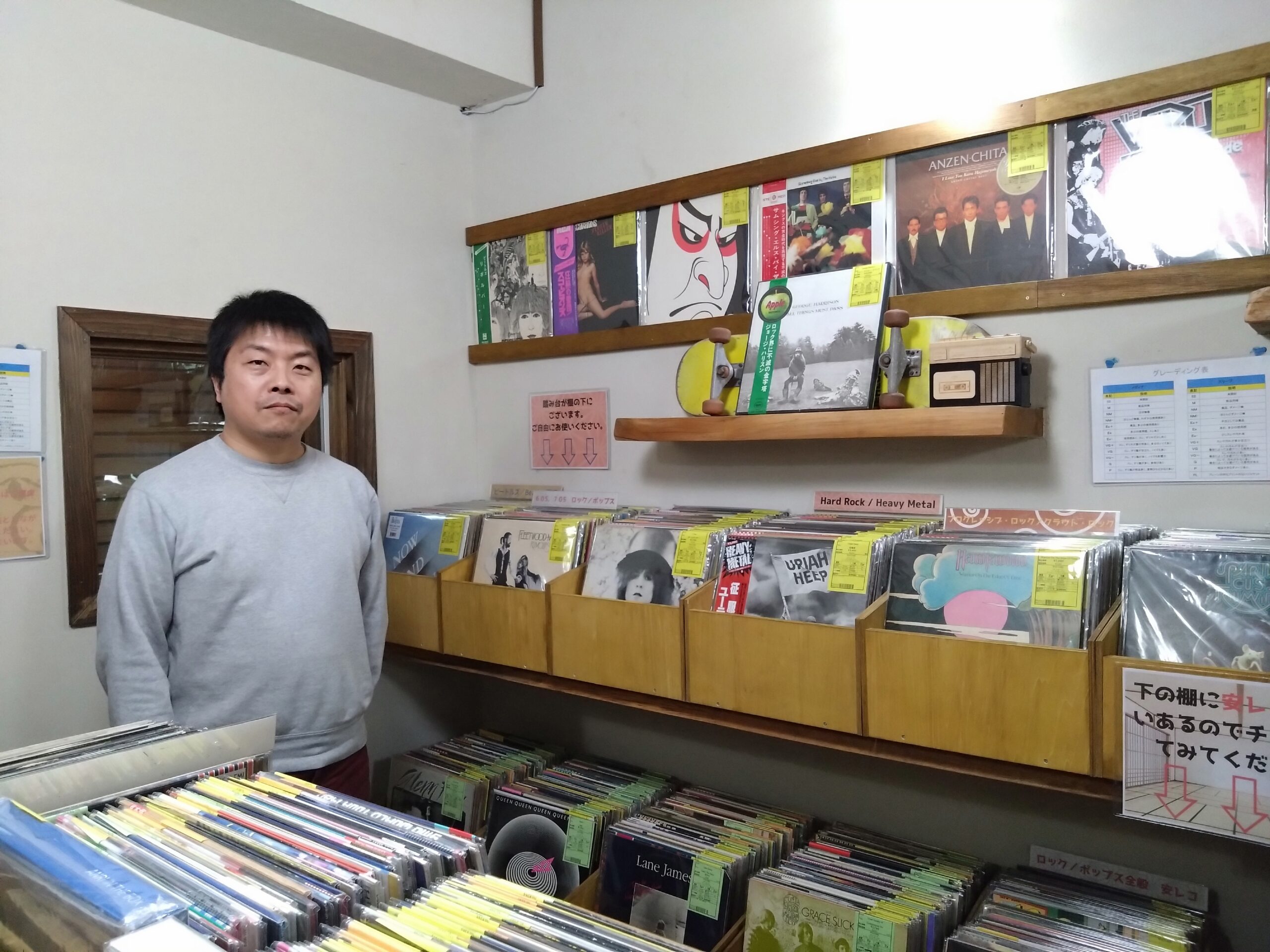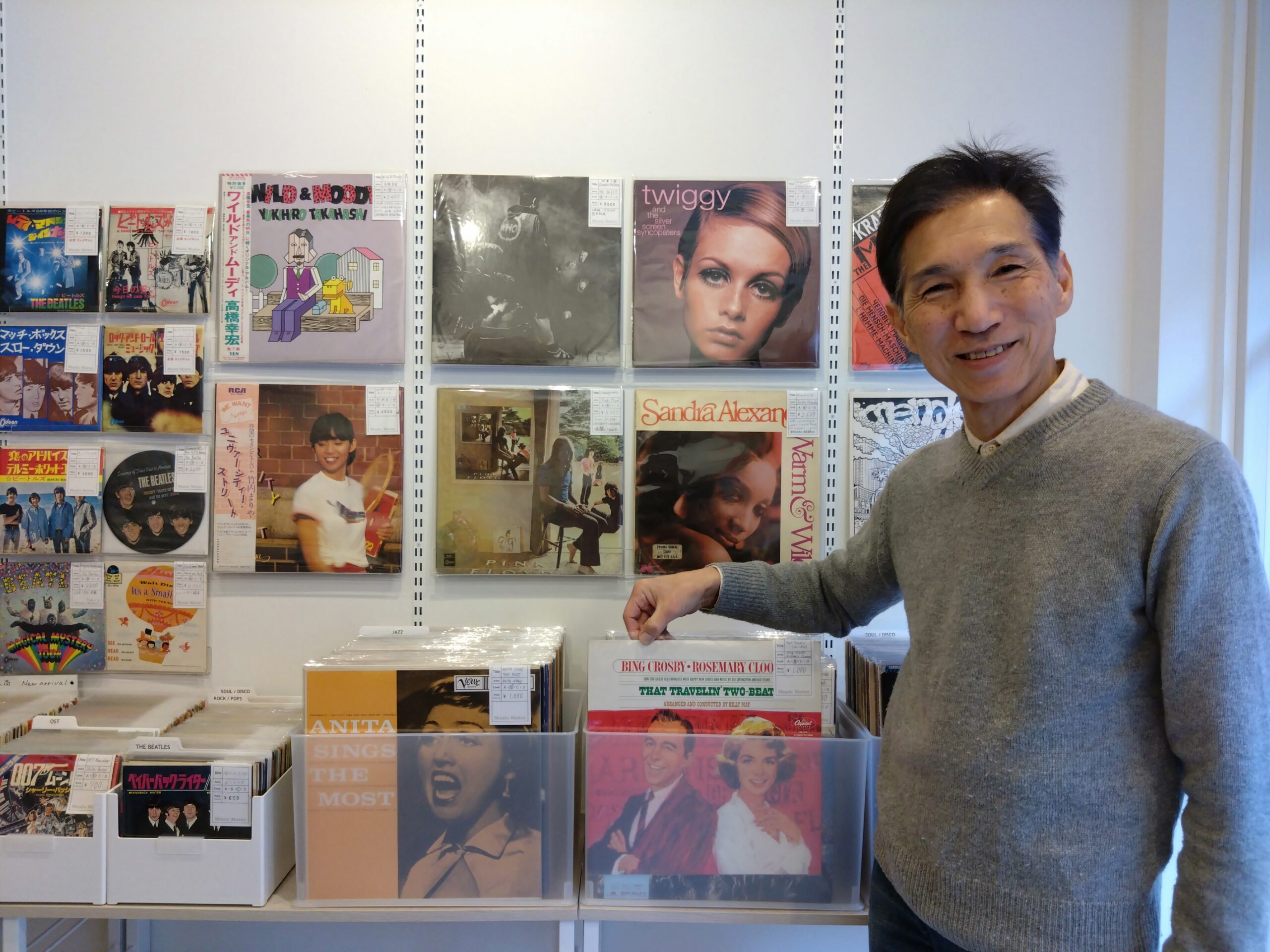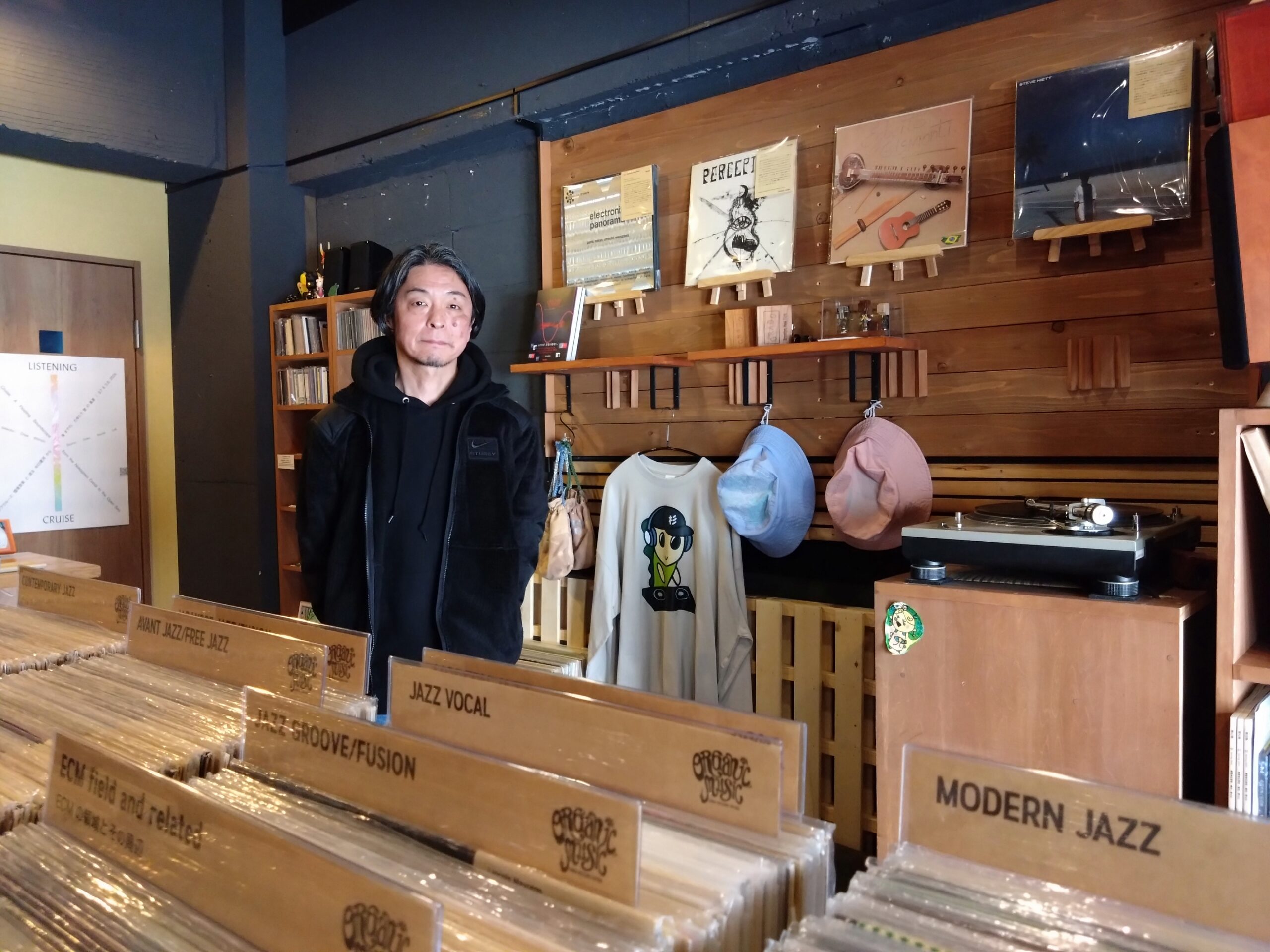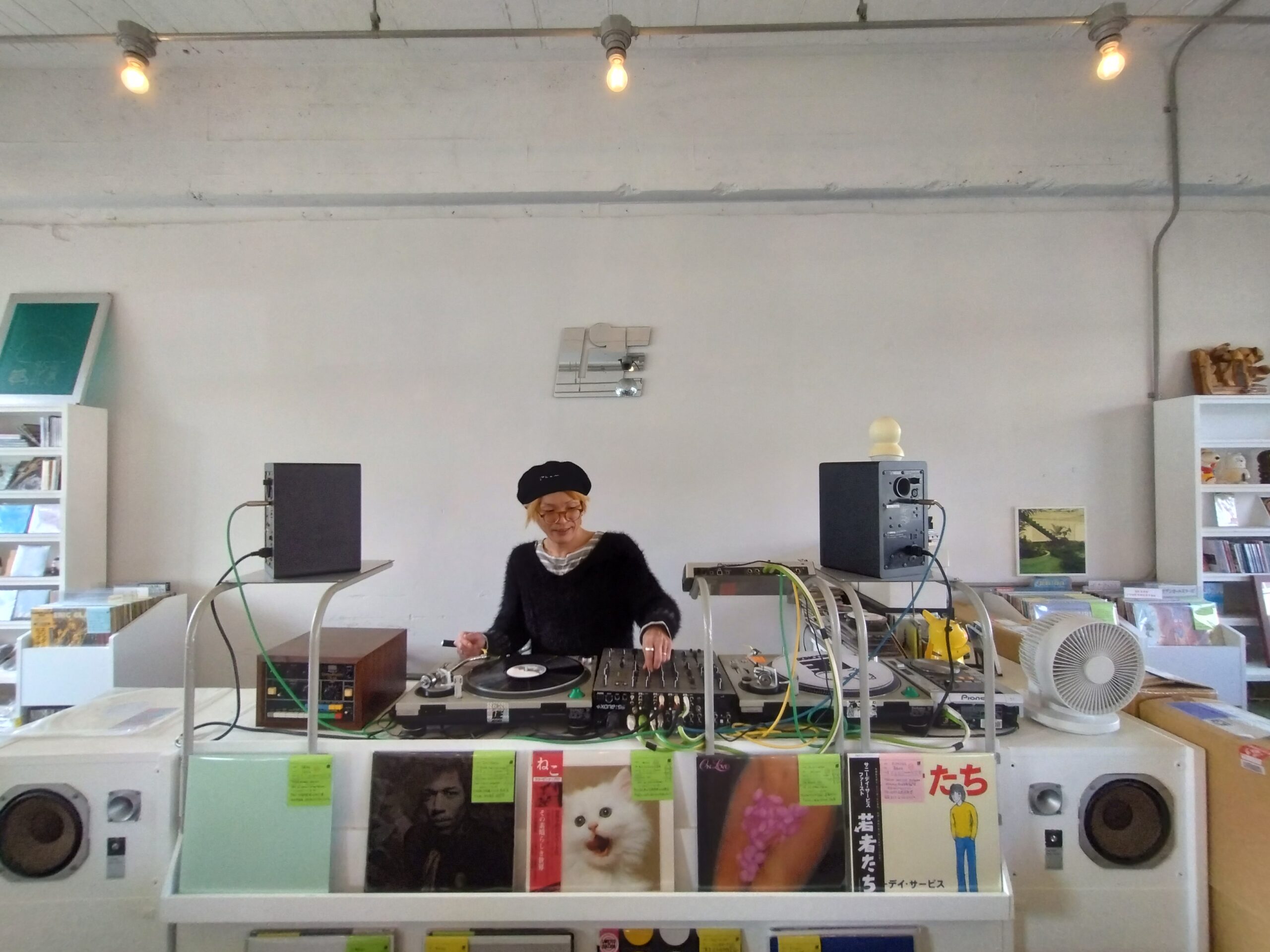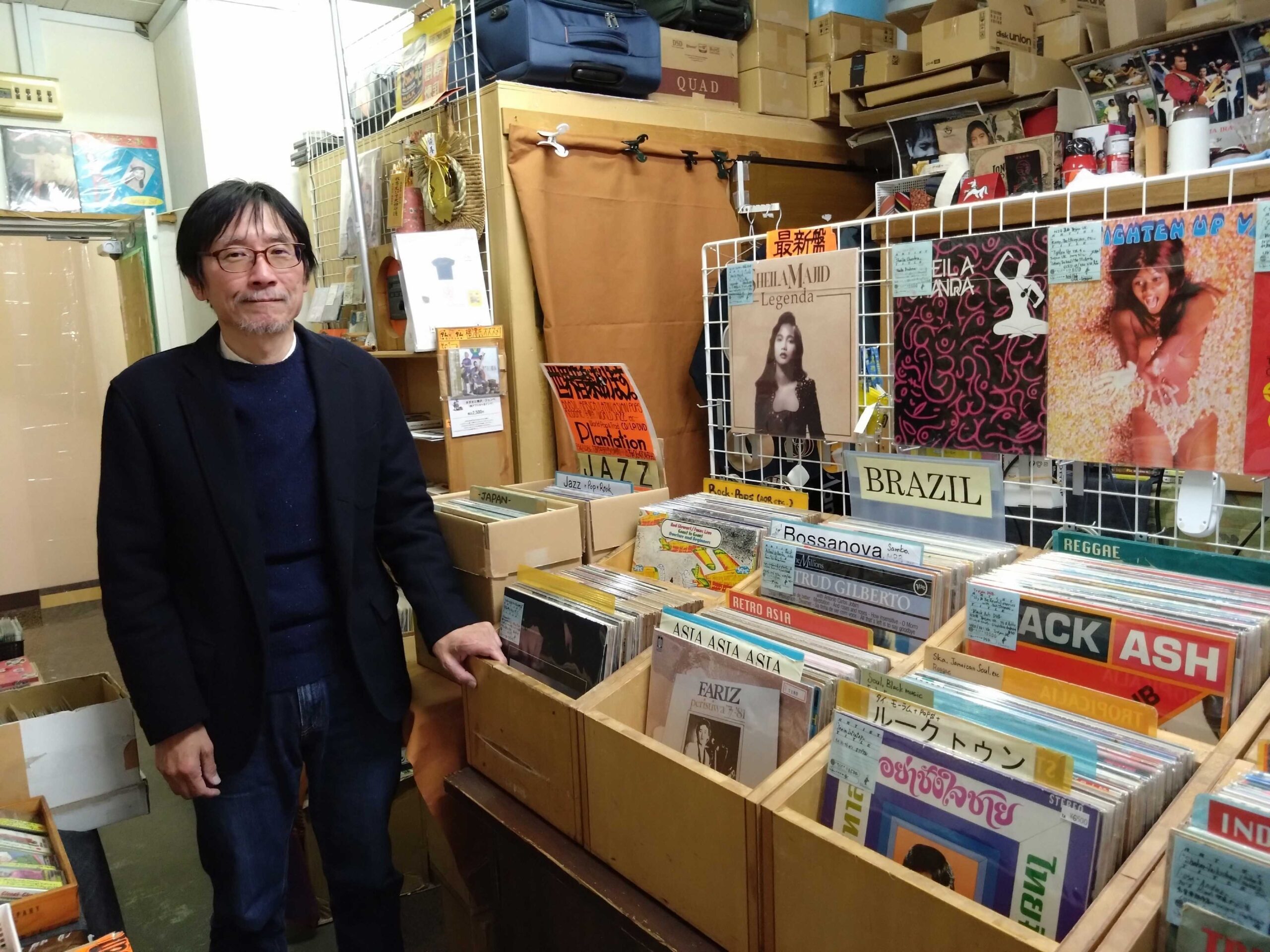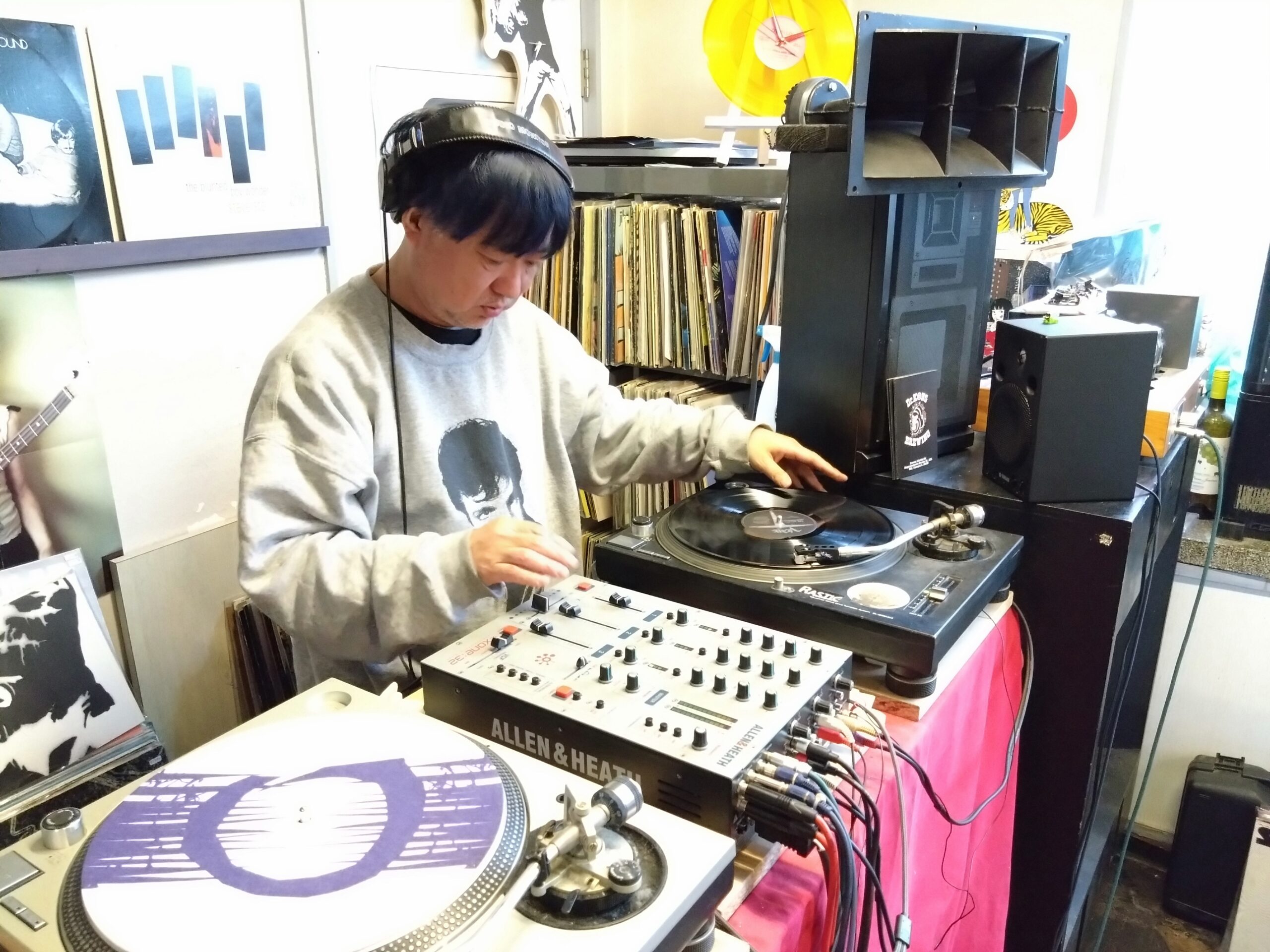
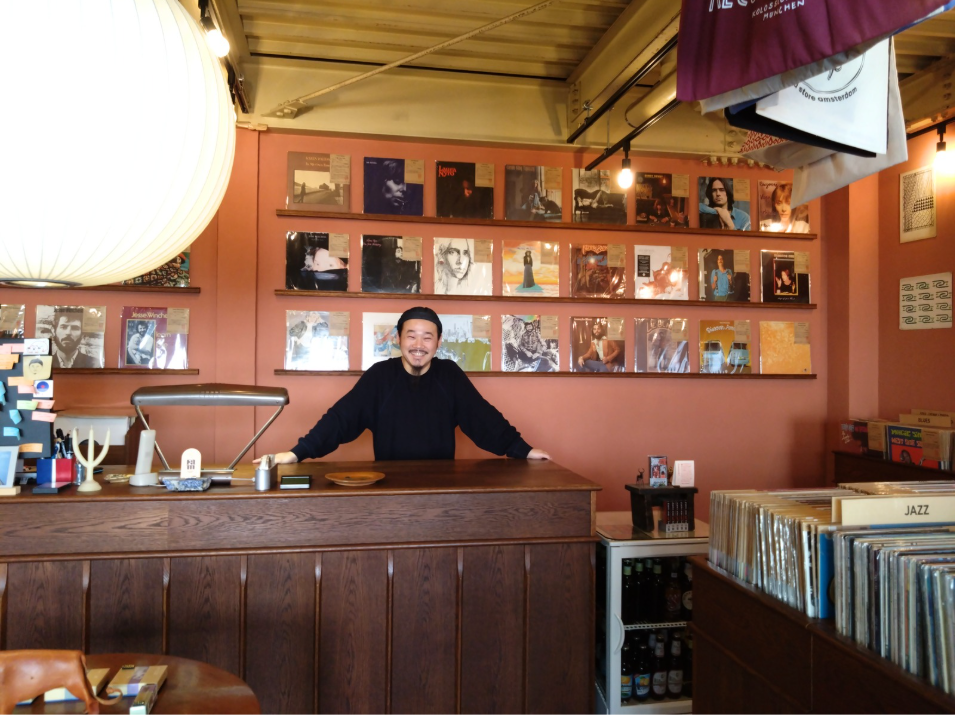
“Record Shop Yomoyama Talk” is an interview series featuring record shop owners. This time, we visited hair & music parlour FAM in Chikusa-ku, Nagoya.
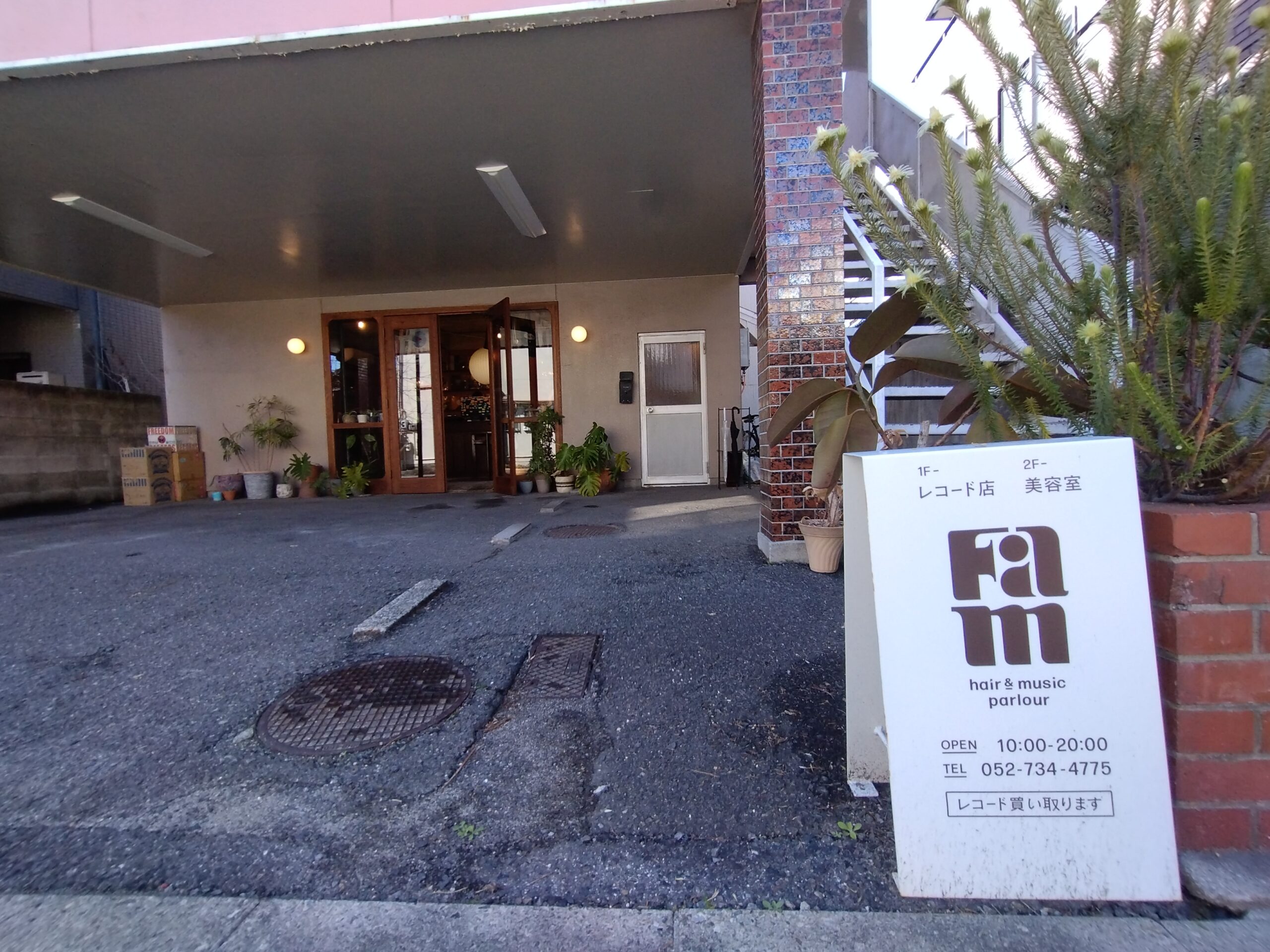
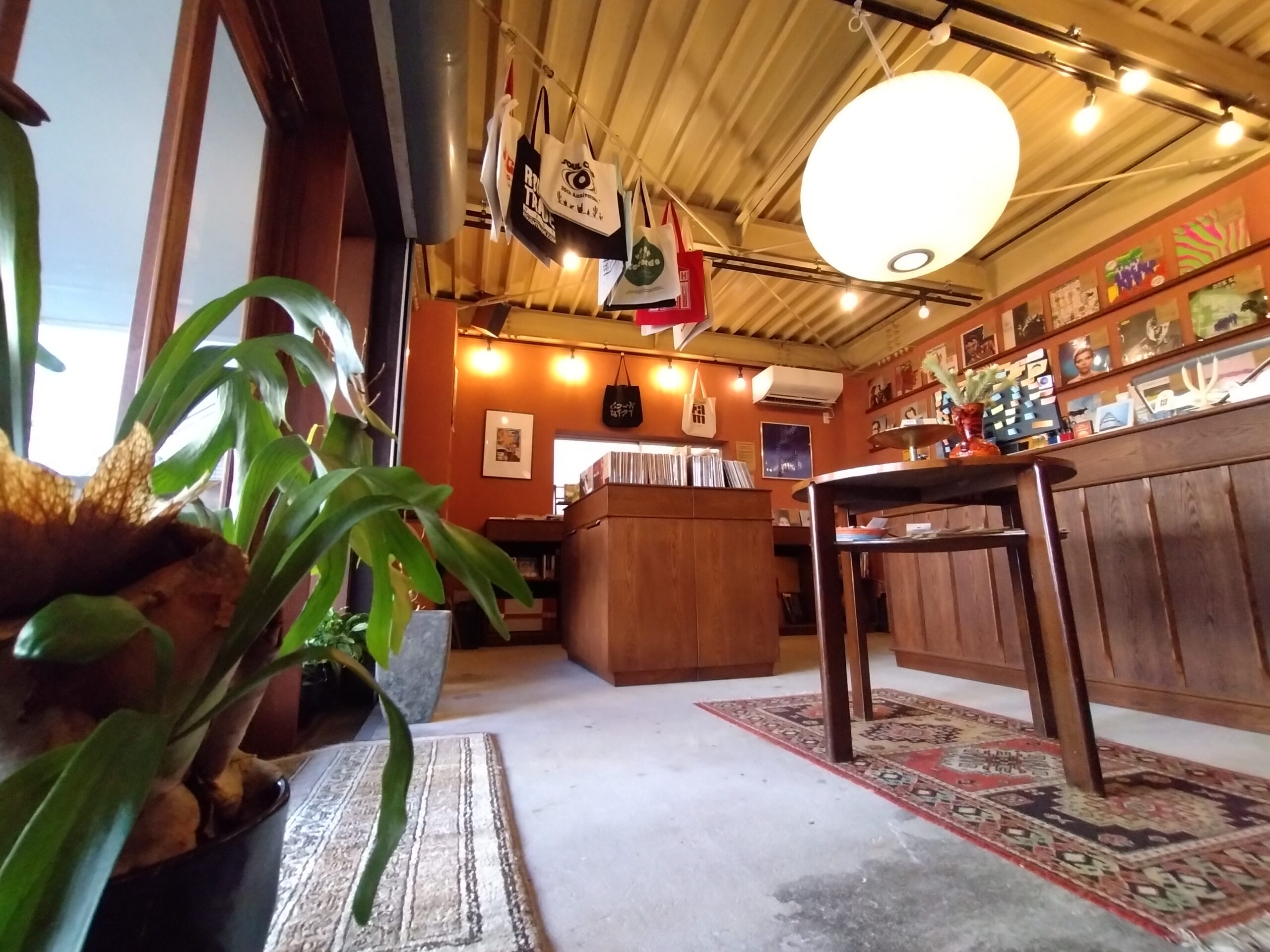
Walking through the residential streets of Ikeshita in Nagoya, the energy of the station area gradually softens and the atmosphere of the town settles down. At the end of that flow, there is a place where the air suddenly changes: hair & music parlour FAM (hereafter, FAM). Even before stepping inside, it already feels a little special.
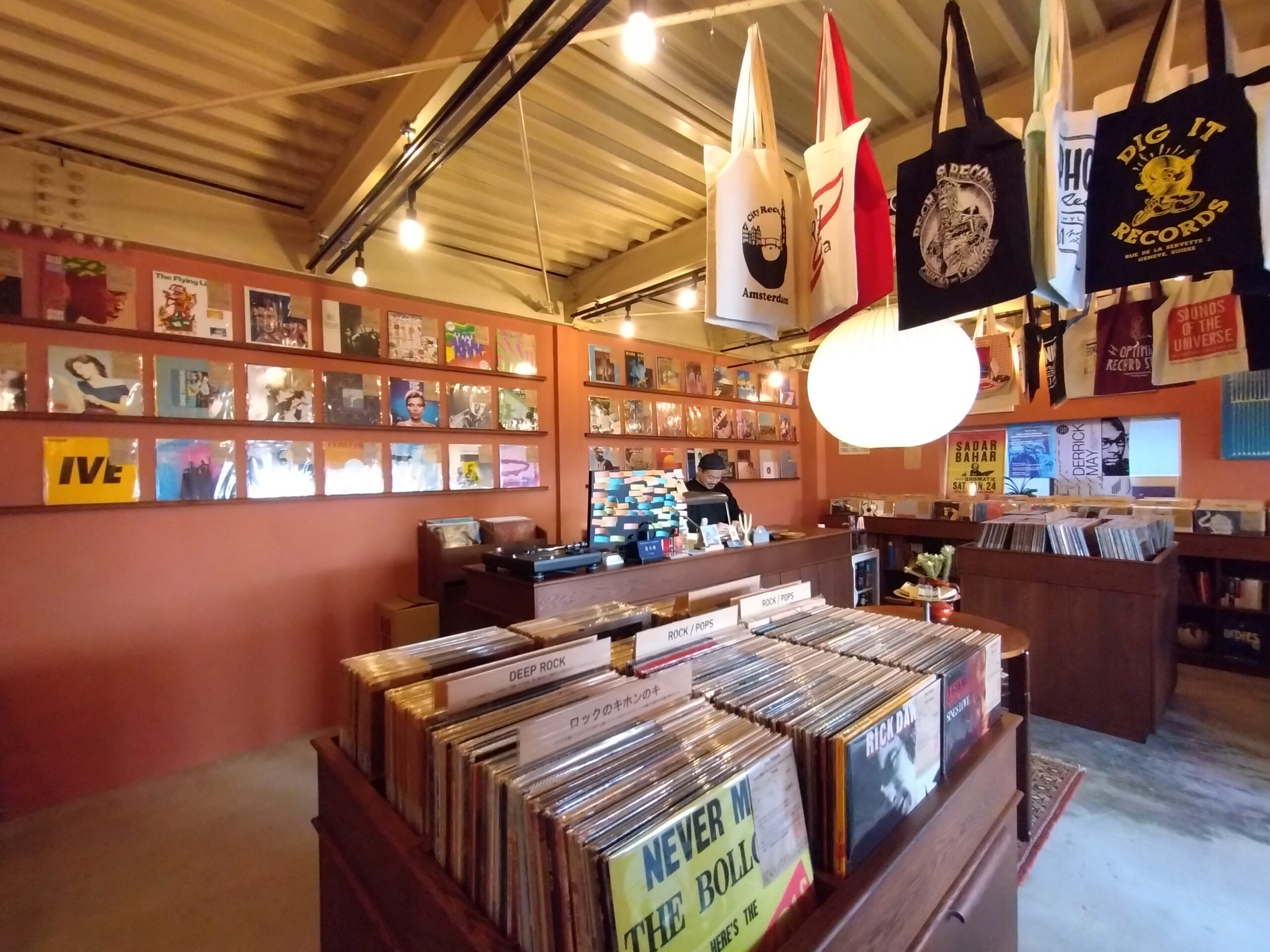
Large windows. A hint of greenery. Light glowing beyond the shelves. It is not flashy, but it undeniably has a sense of place. Record shops can sometimes feel a little intimidating—too quiet, or somehow hard to enter if you are not already knowledgeable. But at FAM, that initial tension gently dissolves. Wooden fixtures, hanging bags, the wall colors, round lights. It has taste, but never feels overdone.
What is more, the first floor is the record shop, while the second floor is a hair salon. Up there too, the light pours in through large windows, and even the placement of plants and furniture feels just right. It felt less like a salon and more like a lounge floating quietly in the city.

Both the first and second floors are designed as places where people want to stay. Records and a hair salon—different purposes, yet the feeling running through them is remarkably similar. Buying something or getting your hair cut is not where it ends. You feel a little more composed. Your view shifts just slightly. That is probably where the appeal of FAM begins.
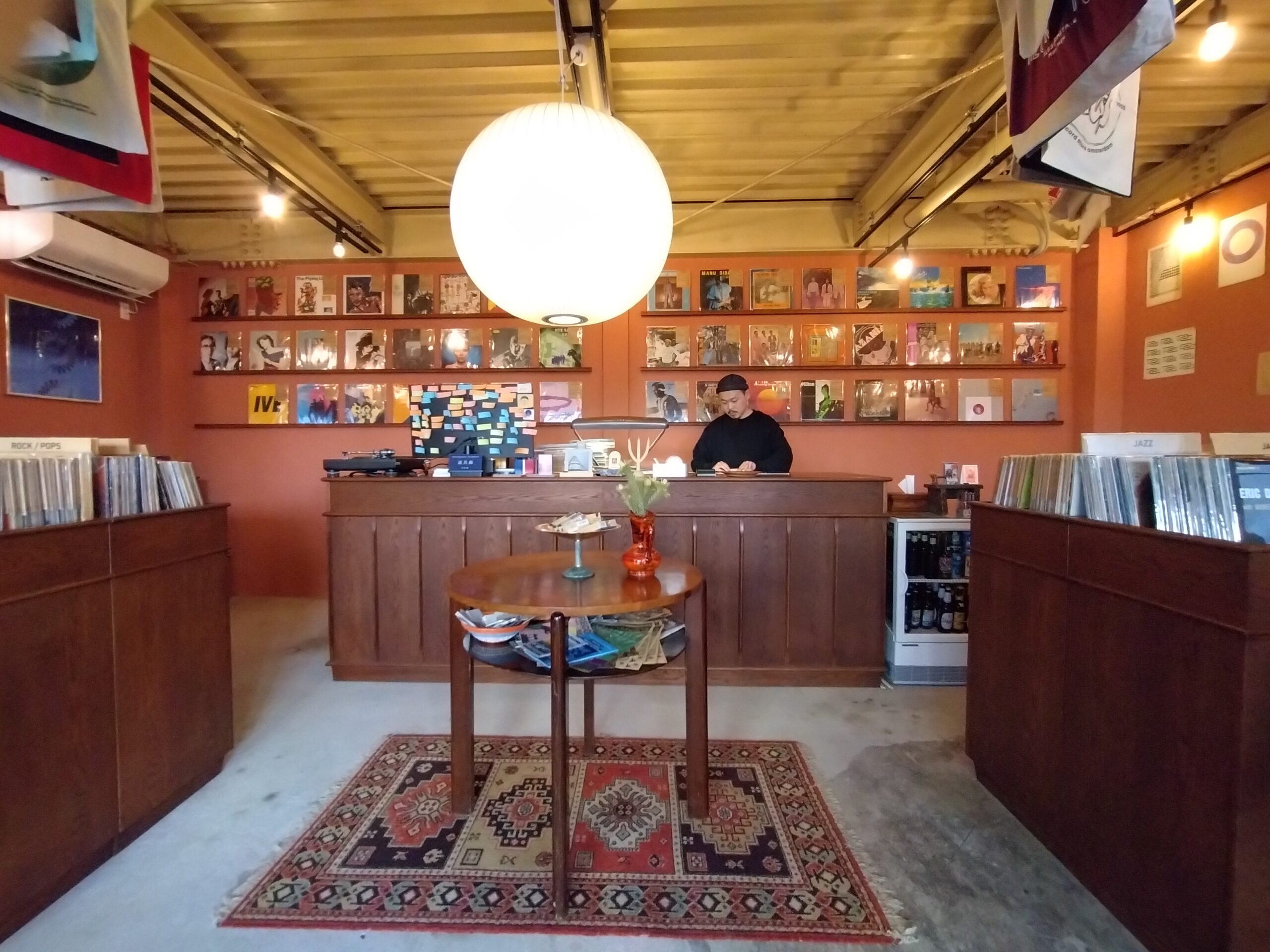
The atmosphere of this shop is not created by the shelves alone. What probably strikes you first is the sense of distance that owner Inagaki brings to it. He is also active as a DJ, and is widely known by the name ton.
When people think of record shop owners, they often imagine someone quiet, a little hard to approach, someone only experienced customers can naturally talk to. But ton says he wants to avoid that kind of atmosphere as much as possible.
He likes people. But he is shy, and hesitates to step in too far. That feeling becomes the shop’s atmosphere itself. Not too close. Not too distant. But unmistakably open. That is why even people who are not deeply familiar with records can feel comfortable here, and can ask, “What’s this record like?” The kindness of FAM is not just about being friendly. It is a very delicate kind of kindness—one that adjusts itself to the other person’s pace.
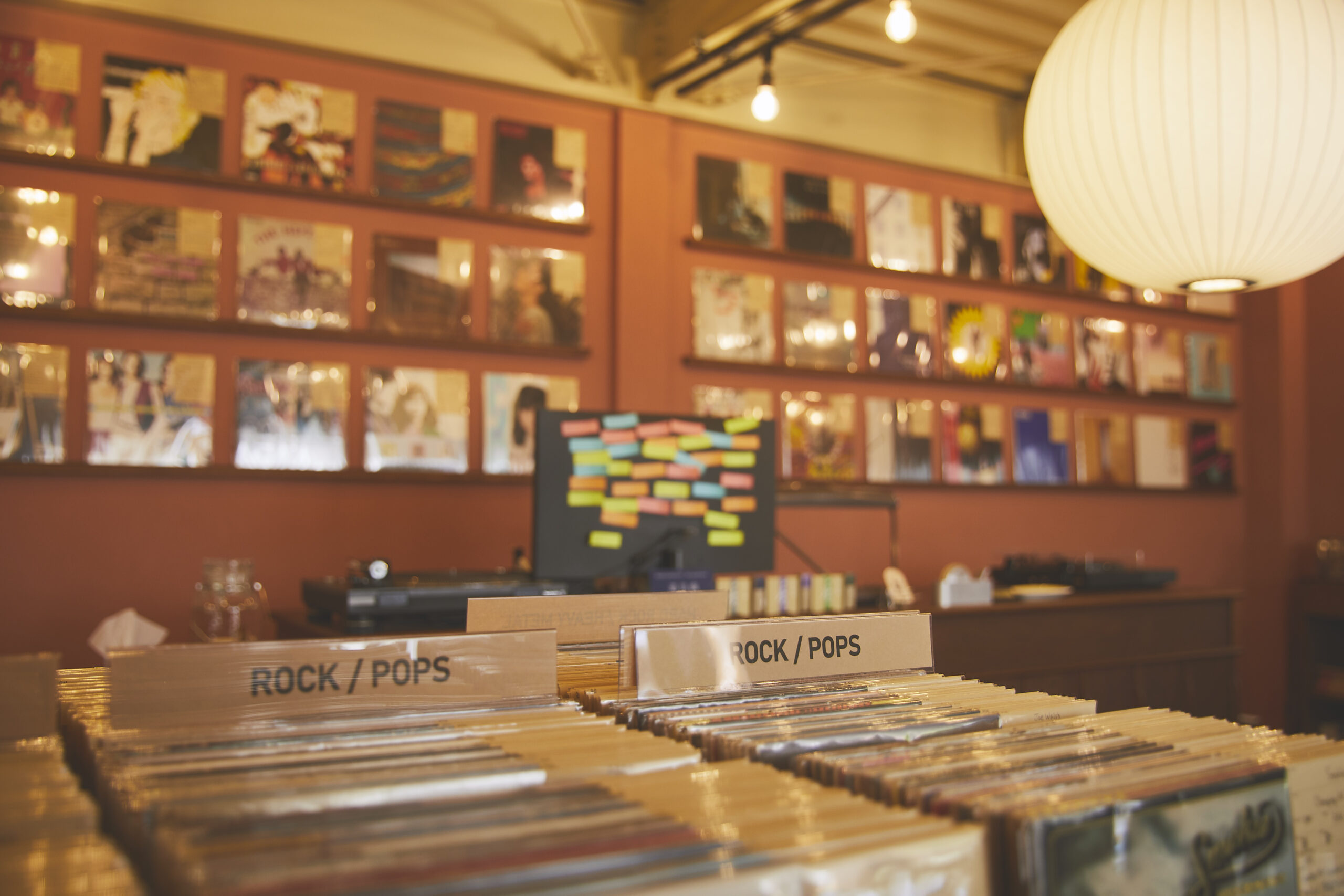
What makes FAM so good is that it has depth while still providing an entrance. In addition to the new arrivals section, there is also a store-recommended corner called “FAM Favorites.” People who like to dig can dig freely. But for those still not used to record shops, there is a clear “start here.” That is an incredibly kind touch.
It has the feel of a carefully selected shop, yet it is not a place only “those who know” can enter. Just as ton says, the regulars range from neighborhood older men to middle schoolers. Some got interested because their grandfather had records at home; others are high school students who come asking about how to DJ.
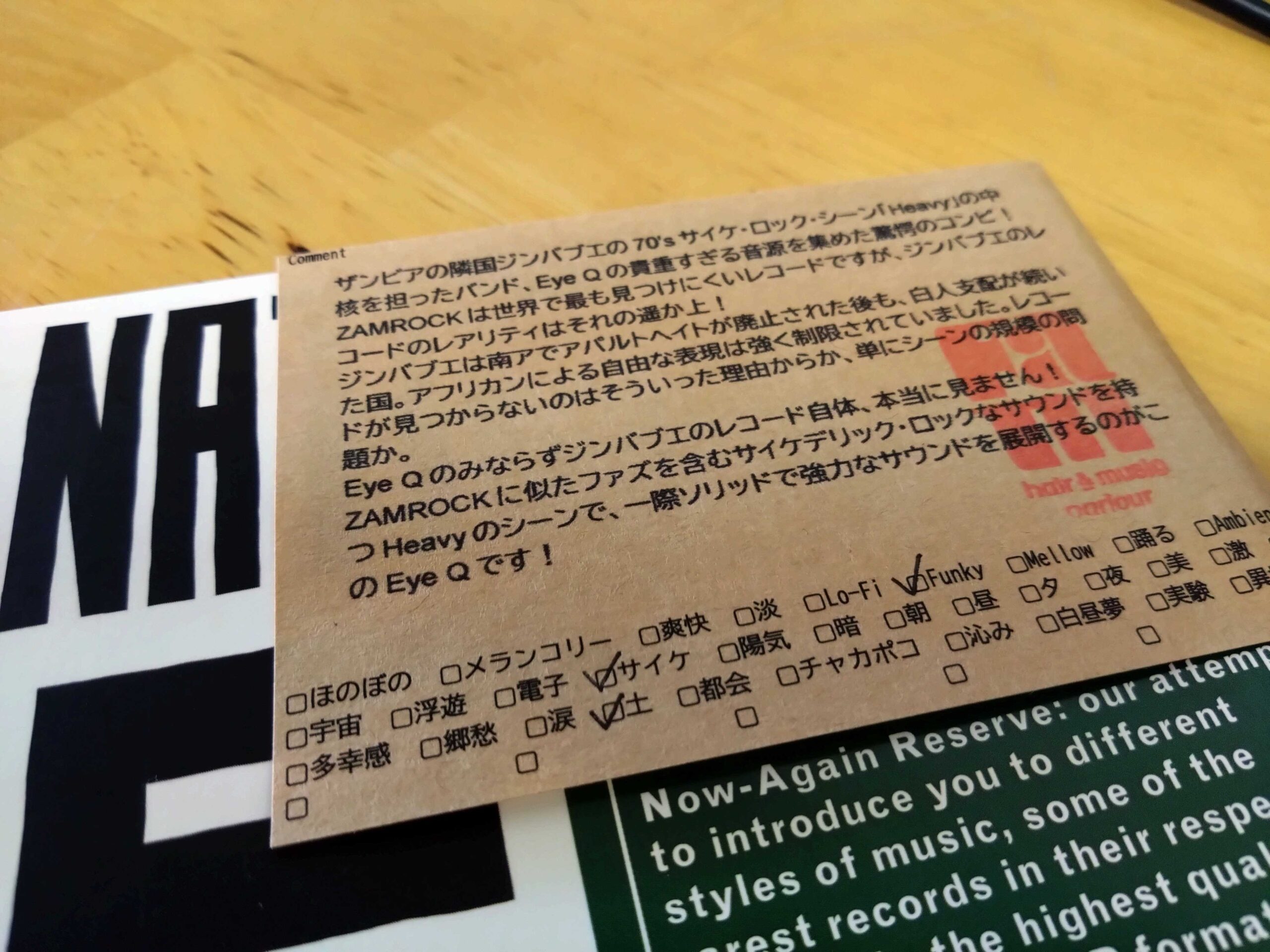
What felt symbolic of this was the comment cards. The passionate notes attached to the jackets spark that feeling of, “Something about this makes me curious.” And at FAM, when a record is sold, they cut off only the price part, and give the comment section to the customer.
Those words are not just there for the display. They are meant to be taken home together with the record. When you buy a record, it can feel like you are only buying the disc itself, but in truth you are taking home the atmosphere of the moment you chose it. FAM’s comment cards put just a little of that atmosphere onto paper and hand it over. It is subtle, but it really hits.
ton seemed quietly happy that those cards never come back once they leave the store. The little note he wrote reaches someone’s room and stays there with the record. That feels like a very real kind of communication that only a physical store can offer. And beyond that little spark of curiosity, there is a deeper door that is unique to FAM. One of them is African music—especially Zamrock. The entrance is gentle, but once you move further in, the world suddenly opens wide. That contrast is incredible.
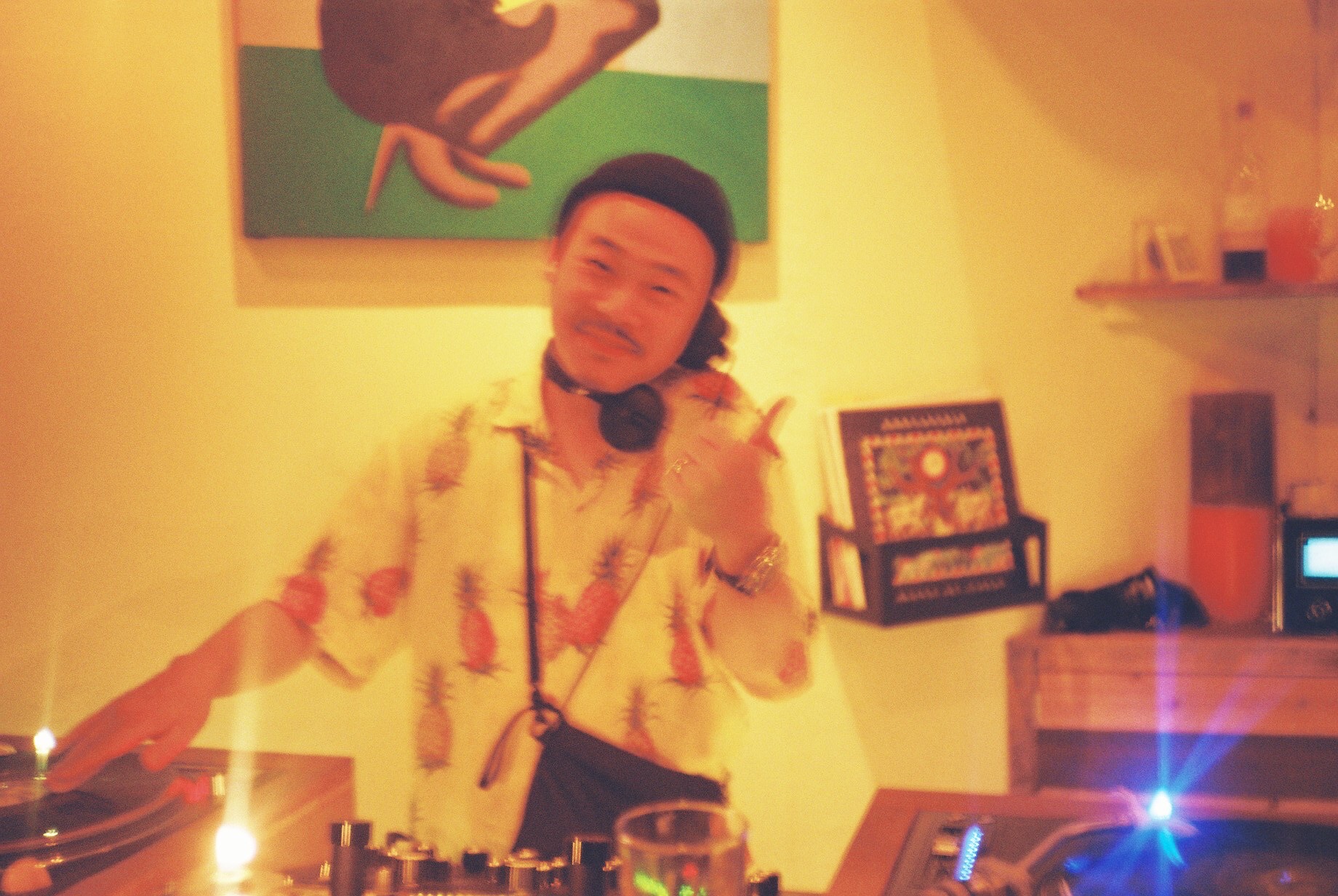
ton’s roots go back to his high school years in Inuyama. It all started with DJing. He went to a gear shop with New Year’s gift money in hand, tempted by an inexpensive set. But his father stopped him, saying, “There’s always a reason why something is cheap.” After that, he bought a Technics turntable at a specialty shop.
Those words carried more weight than just a story about equipment. This was before streaming. He read CD liner notes, listened to DJ mixes, read reviews, and went from store to store searching for the actual records. That physical way of searching became the foundation of the eye he has now for selection and display. He was not a record collector from the start. He just wanted to DJ. But from there, he was slowly pulled deeper into the world of music.
When he worked part-time at a record shop in Osu, Nagoya, ton had his first experience of being taught music by another person. Until then, the only world he knew was the one he had searched for and reached by himself.
Sounds he never could have found by himself suddenly arrived through other people. That was when his ears widened by another step. The thrill of searching for sounds he did not yet know would later become one of the defining qualities of FAM. Then, while working at a secondhand record shop, ton’s ears kept expanding. He had some experience already, and a feeling that he “knew things.” But once he got inside, he realized he knew far less than he thought. Rock, jazz, and everything beyond them—the world was still enormous.
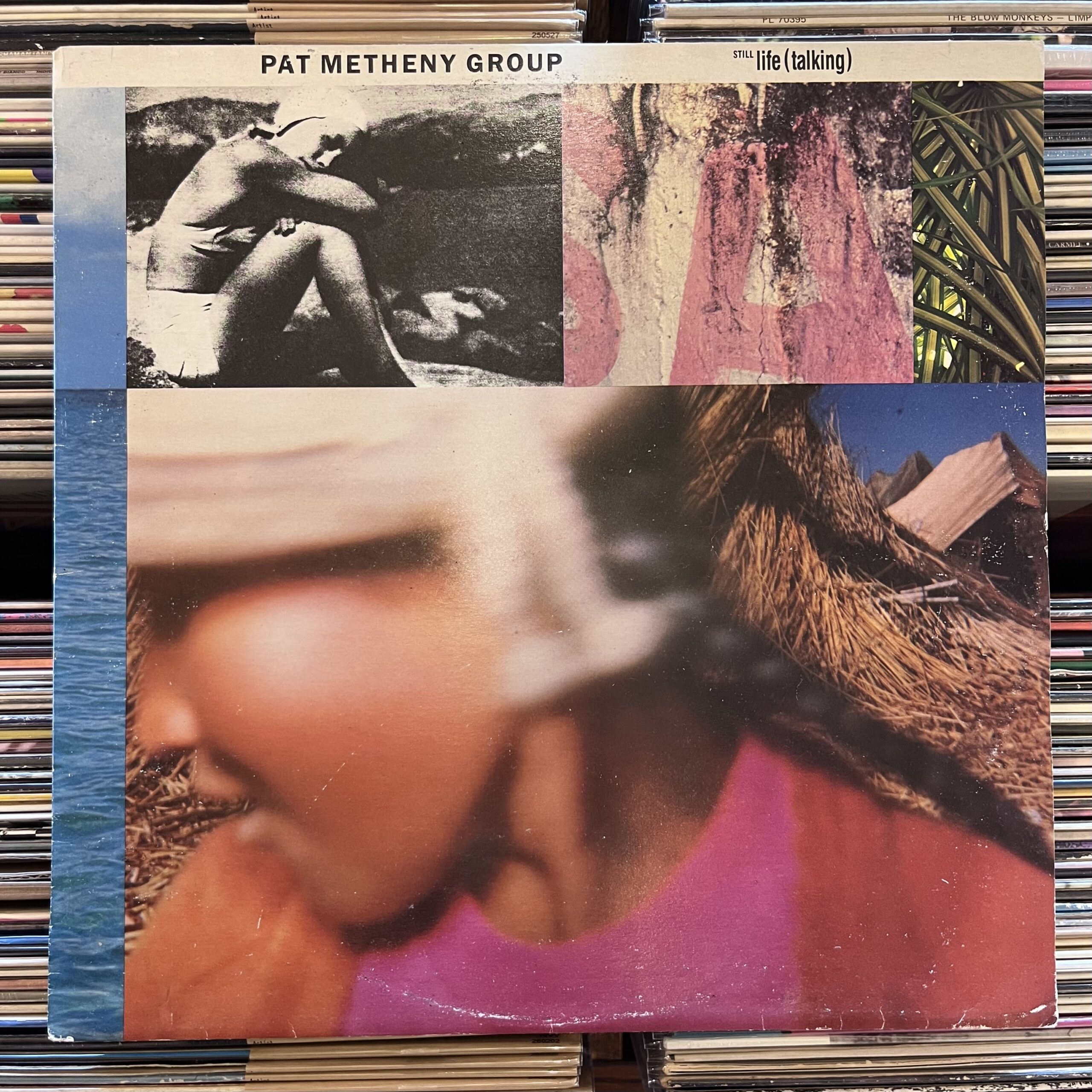
The records he names as turning points are Elvis Costello and Pat Metheny. Originally, ton was strongly drawn to the groove of Black music—soul, funk, hip-hop. Within that context, the first artist who made him think of rock, head-on, as simply “cool” was Elvis Costello.
That one record opened the door to rock for ton. The other turning point was Pat Metheny’s “Last Train Home.” The drums run like the sound of a train, while the guitar drifts gently above. Even without lyrics, a landscape rises before you. It was a song that taught him how sound can become scenery. Music that pierces with heat, and music that wraps you in air—both of those currents are flowing through FAM now.
And then his ears stretched further outward. From soul and funk to psychedelia, from there to South America and music from many other places. At the end of that extension, he encountered Zamrock.

Zamrock was the rock that rang out in Zambia in the 1970s. Psychedelic, rough-edged, exposed, and strangely intense. It is not too polished. Yet that very roughness becomes part of its groove and hits your body directly. When asked to name one especially memorable record from Zamrock, he chose Amanaz’s Africa.
Zamrock is not at FAM because he wanted to use something unusual as a signboard. It is there because ton’s ears, digging deeper and deeper into the sounds he loved, naturally arrived there. Zamrock is not some oddity in this shop. It is an honest extension of ton’s musical life. That is what makes it strong.
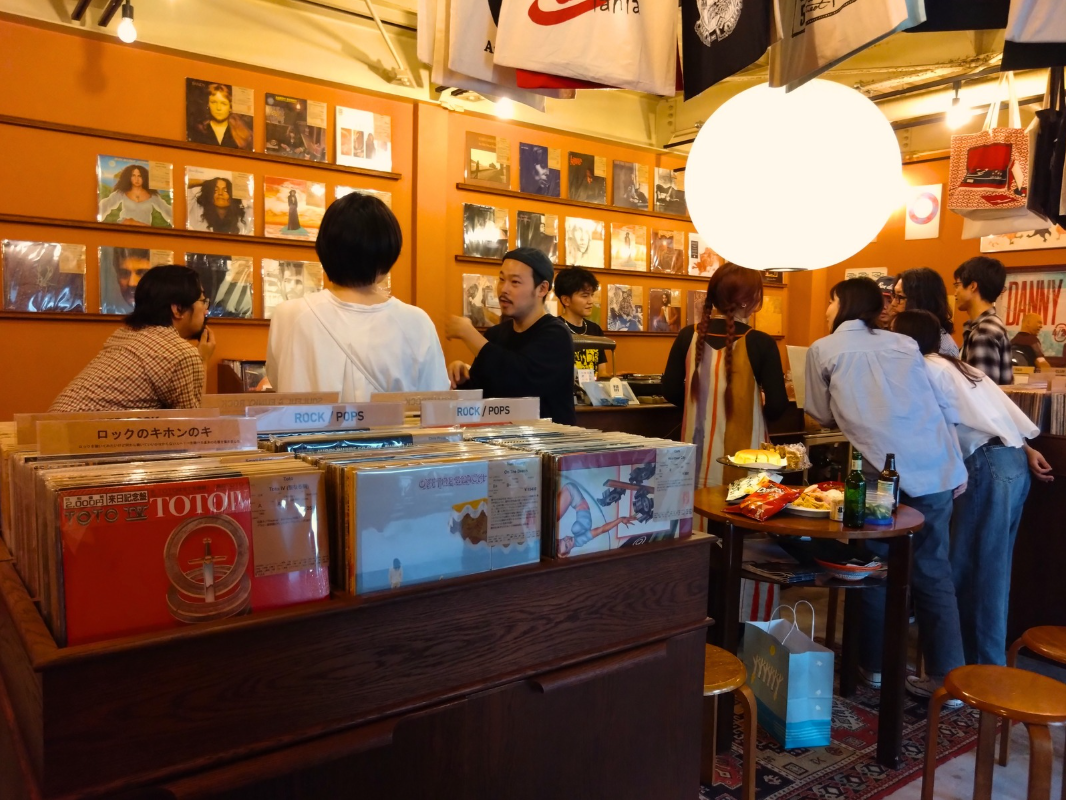
One thing that cannot be left out when talking about this shop is its relationship to Ikeshita. It is not in the city center. But because it sits just outside that, in a residential area, the atmosphere of this place truly works. Every Thursday, a small DJ event is held inside the shop. Customers play records, high school students come to learn how to DJ, food and drinks are brought in, conversations happen. It is not flashy. But a shop with this kind of small, ongoing point of gathering is strong.
ton says he wants this shop to still exist ten years from now, still drawing people in. One of the reasons he gives for that is the difference between the way music is heard now and what a physical shop can do.
There is value in casually receiving recommendations online. But in a physical shop, you get to enjoy a different kind of leap. Someone recommends something. Your eyes stop on a shelf. Something that should not be your taste somehow catches your attention. A sound like Zamrock—something whose name you did not even know—can suddenly end up on your own shelf one day. That kind of leap is something only people and places can create.
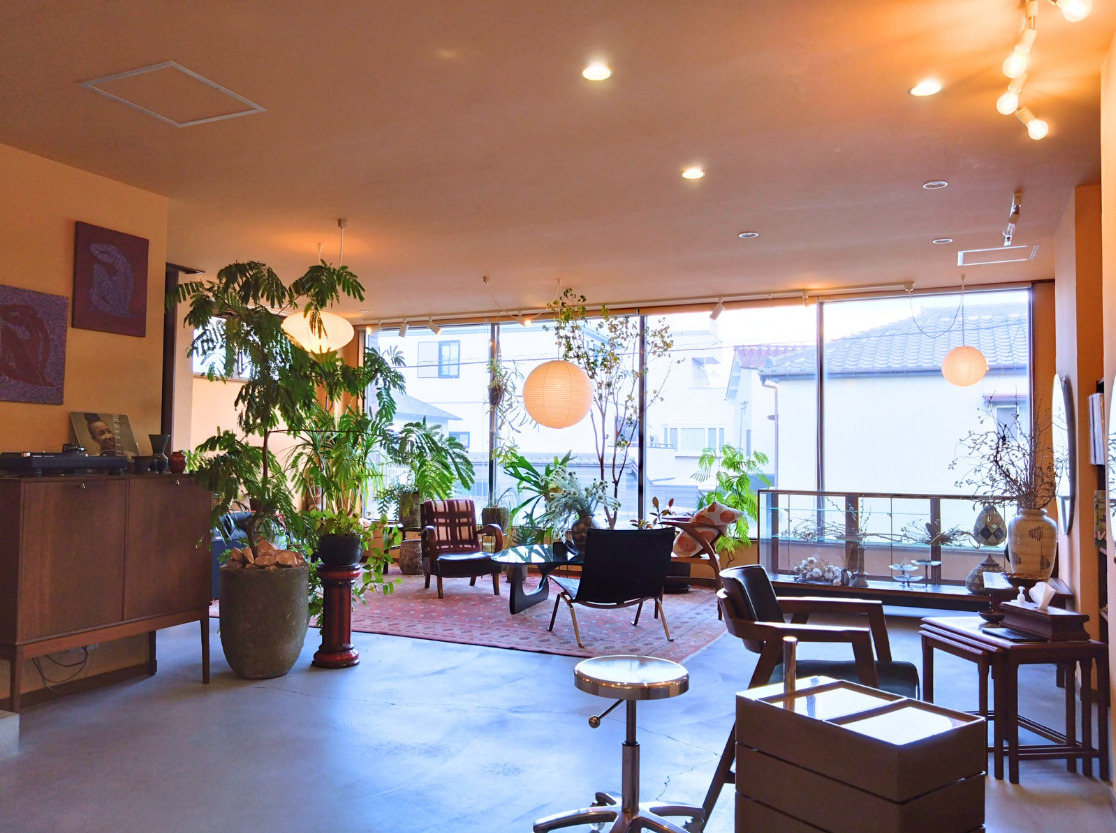
The fact that there is also a hair salon on the second floor deepens the character of this place. Music and hairstyles—they are different fields, but both are jobs that change how people feel. And the salon itself, with its plants, furniture, and the way the light comes in, is designed so that time seems to flow gently. You can encounter records downstairs and tidy yourself upstairs—or the other way around. This building has things that quietly raise the sensitivity of everyday life, both above and below. Husband and wife each do different work, yet together create one atmosphere inside the same building. That feels incredibly natural, and somehow makes the name FAM feel even more fitting.
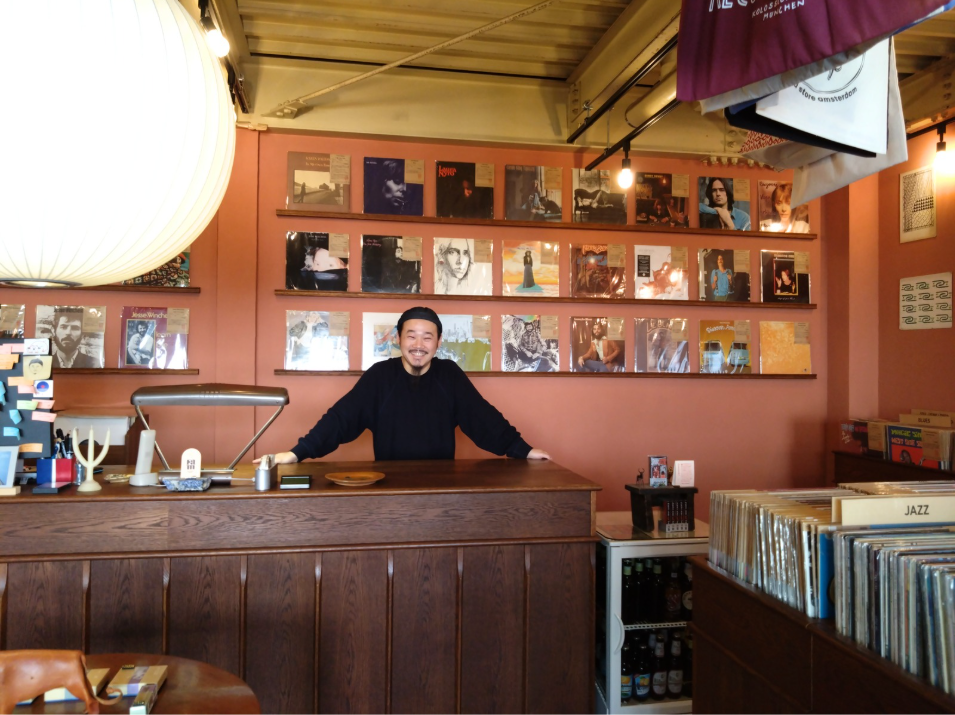
At the end of the interview, I asked, “How do you want people to feel after they leave the shop?” ton’s answer was simple, and perfect.
That makes complete sense. The experience of a record shop does not end at the register. It is in the walk home, the slight feeling of being lifted while carrying the bag, the few minutes before the needle drops. That impatience is part of the experience of buying a record.
FAM is not just a place that sells records. Even music you did not know by name—something like Zamrock—can suddenly become yours through reading the comment cards, looking at the shelves, and exchanging a few words. It prepares an entrance into unknown sound, gently adjusts the distance between people, and creates a small live scene in the middle of the city. Gentle, but deep. Easy to enter, yet capable of taking you far. By the time you leave hair & music parlour FAM, your usual way home will probably sound just a little different.

|
||
|
||
|
||
|
||
|
||
|
||
|
||
|
||
|
||
|
||
|
||
|