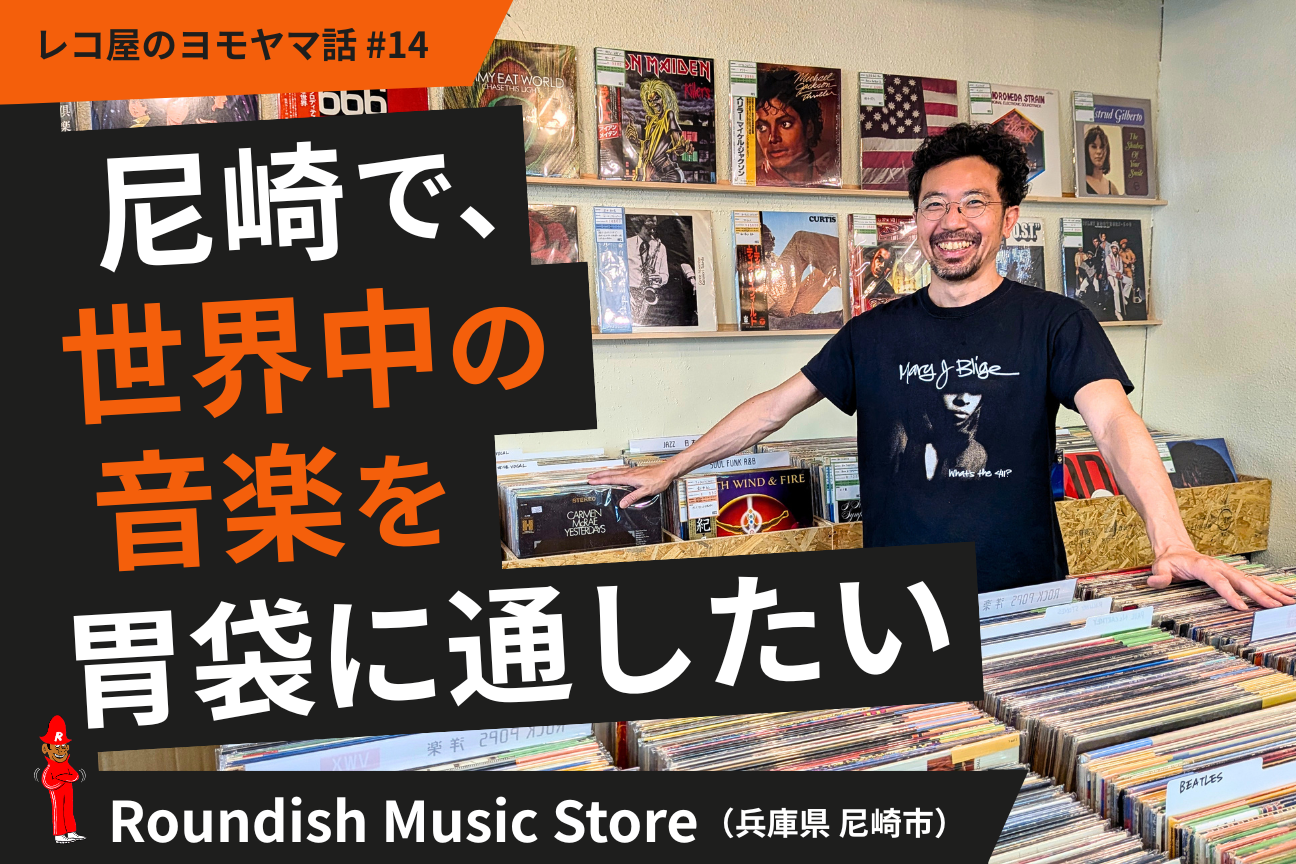
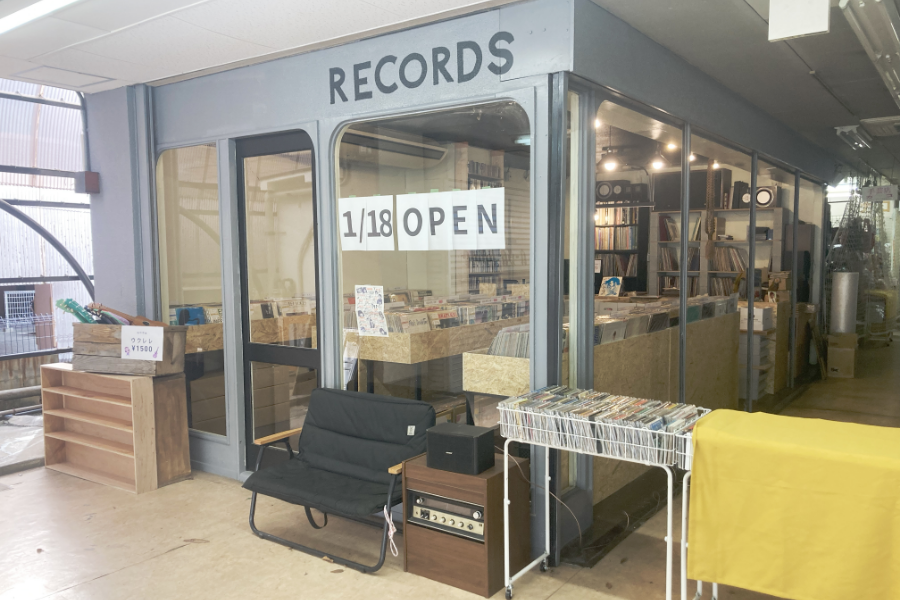
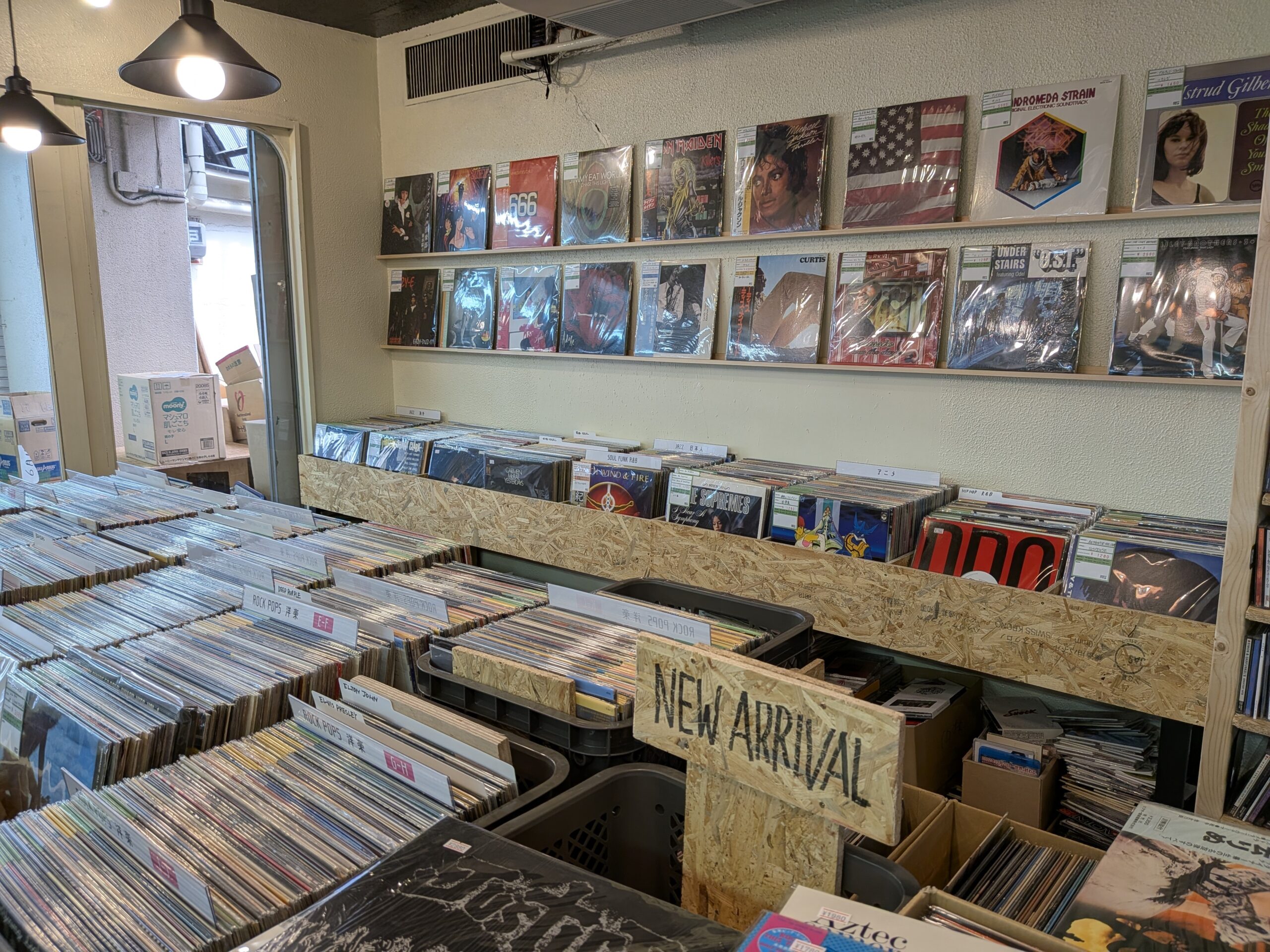
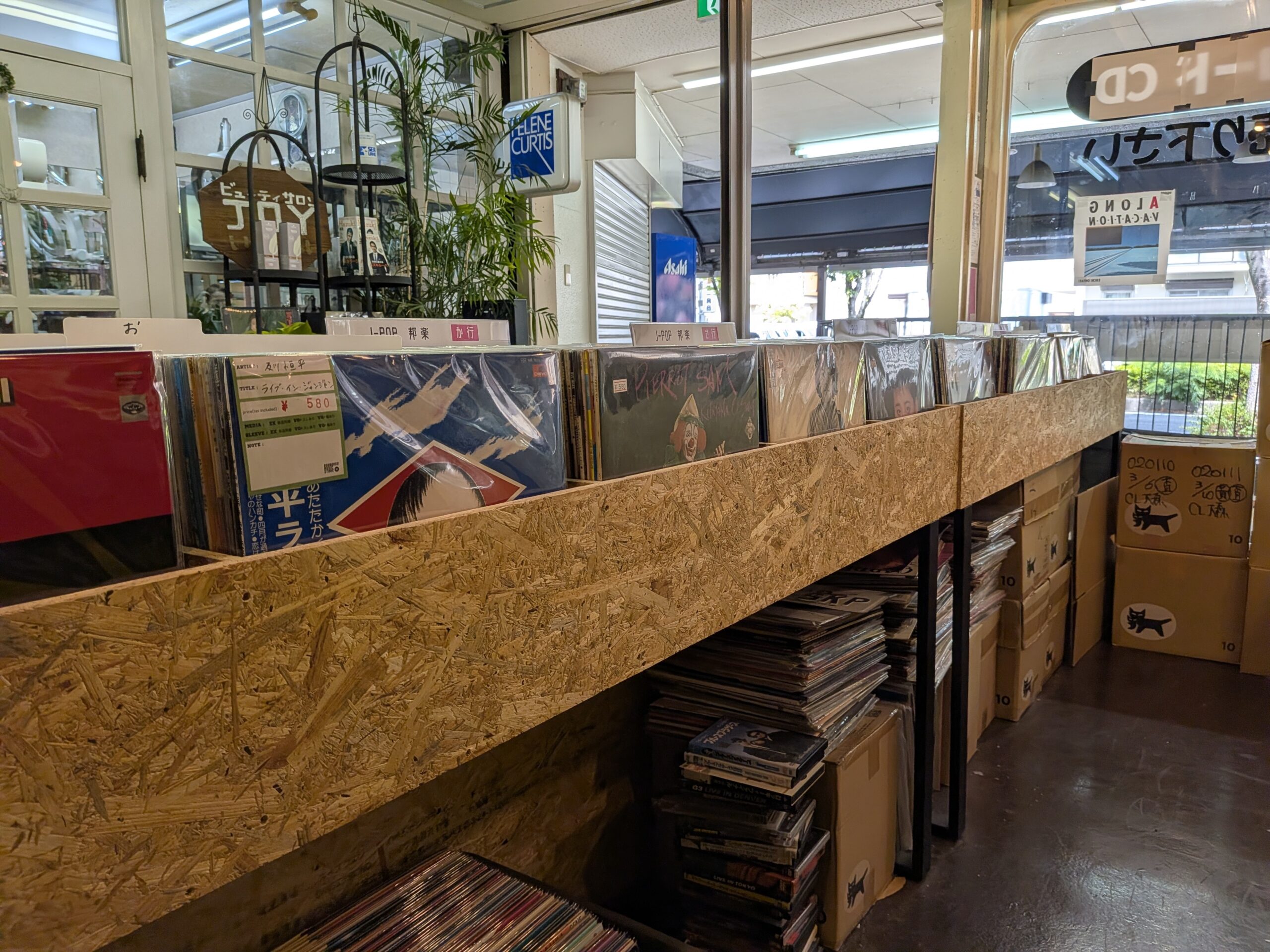
Roundish Music Store is a record shop in Amagasaki, Hyogo, about an 8-minute walk from Mukonoso Station on the Hankyu Kobe Line. Opened in January 2026, the shop carries a wide range of records, including City Pop, Rock, Jazz, Soul, Rare Groove, and more.
“After thinking about what I wanted my last job in life to be, I realized I wanted to return to records—something I could truly enjoy.”
That is how owner Mr. Kamiya describes his return to records. At 19, he went to the UK and immersed himself in DJ culture. In his twenties, he opened a record shop, later ran several restaurants, and eventually found his way back to the world of records. We spoke with Mr. Kamiya about his journey, his approach to building a shop, and what he hopes to do next.

What first drew you deeply into music and records?
Mr. Kamiya“It was in the early 1990s, when I was in high school. UFO, Talking Jazz, Gilles Peterson—those kinds of movements were starting to happen. I used to go to clubs a lot, and when I heard the music being played there, I started thinking, ‘I want to DJ.’
But back then, information wasn’t as easy to find as it is now. Even if you went to an ordinary record shop, it was hard to find the kinds of records being played in clubs.
So I thought, ‘There must be a distribution route that only DJs know about.’
If that was the case, I figured it would be faster to go to the place where the most records in the world were gathered. That’s why I went to the UK when I was 19.”
Going to the UK at 19 sounds like quite a bold move.
Looking back, maybe it was. But at the time, I was just desperate.
As soon as I arrived in London, I went to a club event. I started talking to people there, and that led to introductions to other people. One of the people I was introduced to was Joe Davis (*1).
At that time, London was full of all kinds of records and music information. I often went to Camden Market (*2), and I learned a lot from people I met there.
It felt like an era when, if you took action, you would find something.
(*1) Joe Davis: A London-based DJ and producer, and one of the leading figures in Brazilian music in the UK.
(*2) Camden Market: A large market in London. In addition to records, it is home to shops selling fashion, goods, books, and more, making it a place where visitors can experience London’s market culture.
After returning to Japan, did you start working as a record shop owner?
At first, I was DJing. I would call clubs, send them tapes, and start by playing opening slots. It was the same as when I went to London—there really wasn’t much information available, so looking back, I think what mattered was how many people you met and how much you moved around.
The money I made from part-time jobs all went toward transportation or records. Haha.
Around that time, someone I knew asked me if I wanted to run a record shop together. Because I had spent time in the UK, I knew I could import used records from overseas. At that point, I still didn’t know that much about new releases.
In the end, that plan fell through, but I decided, ‘Then I’ll try doing it myself.’ When I was around 26, I started small in Horie, Osaka. After that, I moved to Honmachi, ran a space that combined a bookstore and a record shop, and also worked together with galleries. I had many friends in the art world, so it became a style where I would sell records while holding exhibitions.
You also went on to run restaurants, didn’t you?
As CDs became more dominant and records started to decline, I shifted from running a record shop to running restaurants. Part of the reason was that I really loved sake.
I ended up doing that for about 10 years, running several places, including an oden restaurant, a sake specialty bar, and a seafood izakaya. Restaurant work was incredibly interesting. You’re close to the customers, and there’s a joy in creating a place where people gather.
My experience running a record shop and DJing really carried over into restaurants, especially in creating spaces where people who love music could gather. But in 2019, with the impact of COVID, I made the decision to close the shops.
Oh, but the oden restaurant (*3) was taken over by a younger friend, and it’s still running today, so please go check it out!
(*3) Oden Maru: The “maru” circle is said to represent a record. Its bold, flavorful oden broth is made with bonito, kelp, and dried sardines, and pairs perfectly with sake. The restaurant still puts a strong focus on sake today.
Eventually, you came back to records.
That’s right.
After doing all kinds of businesses, I realized that when I’m doing work that takes me away from records, I don’t feel quite right. It’s hard to put into words.
Of course, I enjoyed the restaurant business too. But looking back, when I first quit running a record shop, I felt like I had lost some kind of axis within myself. I also realized that people around me had seen me as someone connected to music and records.
Once that was gone, I felt like I was just seen as a guy running restaurants. It was only after quitting the record shop that I understood that.
So I started thinking about what I could devote my life to, and that’s why I decided to return to records.
What kind of place do you want Roundish Music Store to be?
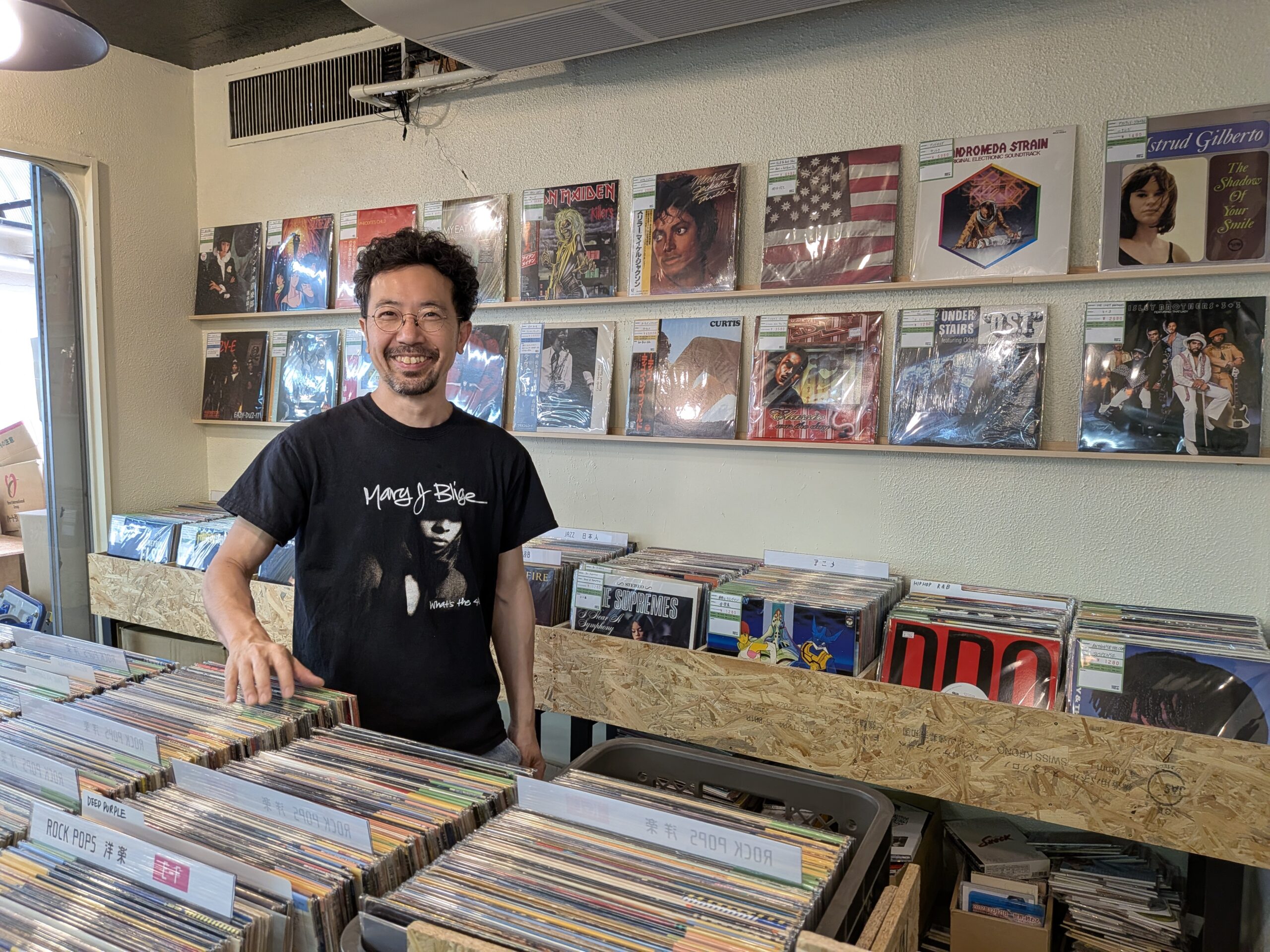
Rather than trying to make the shop huge, I want it to be a place where people who come in can chat freely and have a good time. I’d be happy if both people buying records for the first time and people who already know a lot about music could come by, regardless of age.
In fact, a really wide range of people have been visiting the shop.
Lately, more people have been buying records for the first time, and it makes me happy when they say, ‘This is good.’
Rather than making it a place only for people who already know a lot, I want it to feel open to people who are just beginning to get into records.
Record shops are often on the second or third floor of a building, and I think that can feel intimidating for beginners. I had that in mind when choosing this location. If you’re walking by, it’s easy to drop in, and you can see what the inside of the shop looks like from outside. That made it an easy decision.
Of course, I also think about how to make people want to visit. For example, I pay close attention to the pricing in the shop. I want people to feel that coming here in person gives them a slightly better deal than buying online.
It’s a little far from the station, right? People are taking the time to walk about 10 minutes to get here. So I’d be happy if they find something and think, ‘This is a good price,’ or ‘I’ll buy one more before I go.’
I think part of the fun of going to a record shop is discovering those unexpected finds.
I also had a desire to start in a place that wasn’t stylish Kobe or bustling Osaka, but somewhere that probably didn’t yet have a fully established music culture. I want this to be a place that sends out culture from Amagasaki.
The nearest station isn’t even a limited express stop, and yet people somehow start gathering here. Sounds fun, doesn’t it?
What are your plans for the future?
In order to share something from this place, I think the first thing I need to do is become even more knowledgeable about music myself. Rather than thinking, ‘This is what I want to communicate,’ I feel that if I keep learning deeply, it will naturally come across.
For a record shop, that means music. When I was in food and drink, I also learned a lot about sake and food. When I become interested in something, I dig into it properly. That hasn’t changed.
In terms of what I want to express, on a bigger scale, it’s about “circulating records around the world.” There are records coming into Japan, and there are records going from Japan out into the world. I think that flow of music can become even more interesting.
Rather than simply selling records, I’d like to create a place where music from all over the world comes in and goes out.
I want all that music to pass through my own filter. My ambition is to pass music from around the world through my own stomach. Haha.
Recoya VIEW
The simple and pure ambition of wanting to “pass music from around the world through my own stomach” stayed with us. It felt like a phrase that could only come from someone who has done many different kinds of work and returned to his own honest feelings.
We also felt a strong connection with the way Mr. Kamiya speaks about records—not only as something to be sold, but as a medium that connects people, towns, and music from around the world. That way of thinking is very close to the values we hold dear at Recoya.
Starting from Amagasaki, records from around the world come and go. While Mr. Kamiya speaks about something that big, the shop itself still has an open, easygoing atmosphere that makes you want to drop by. That balance may be what makes Roundish Music Store so compelling.