“Record Store Stories” is Recoya’s interview series with record store owners and managers.
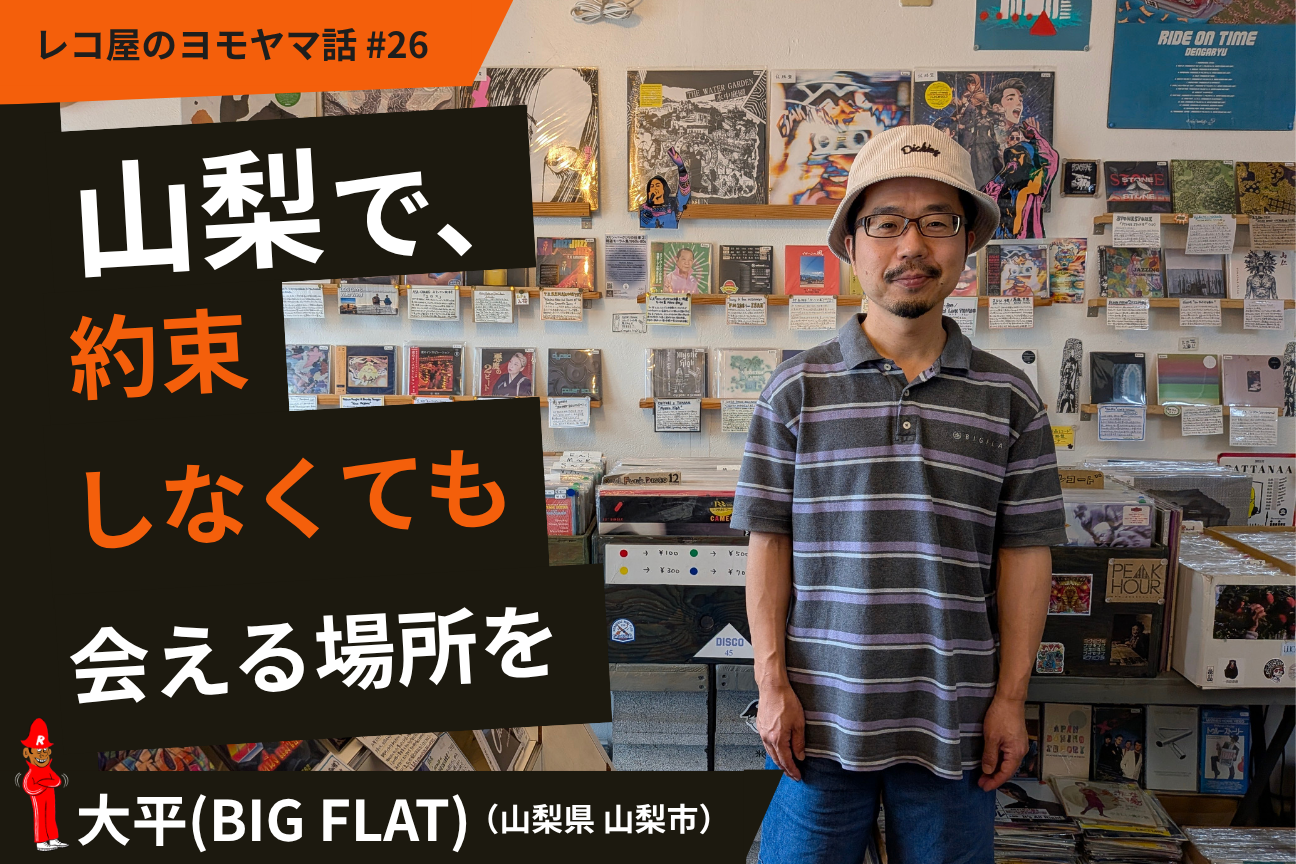
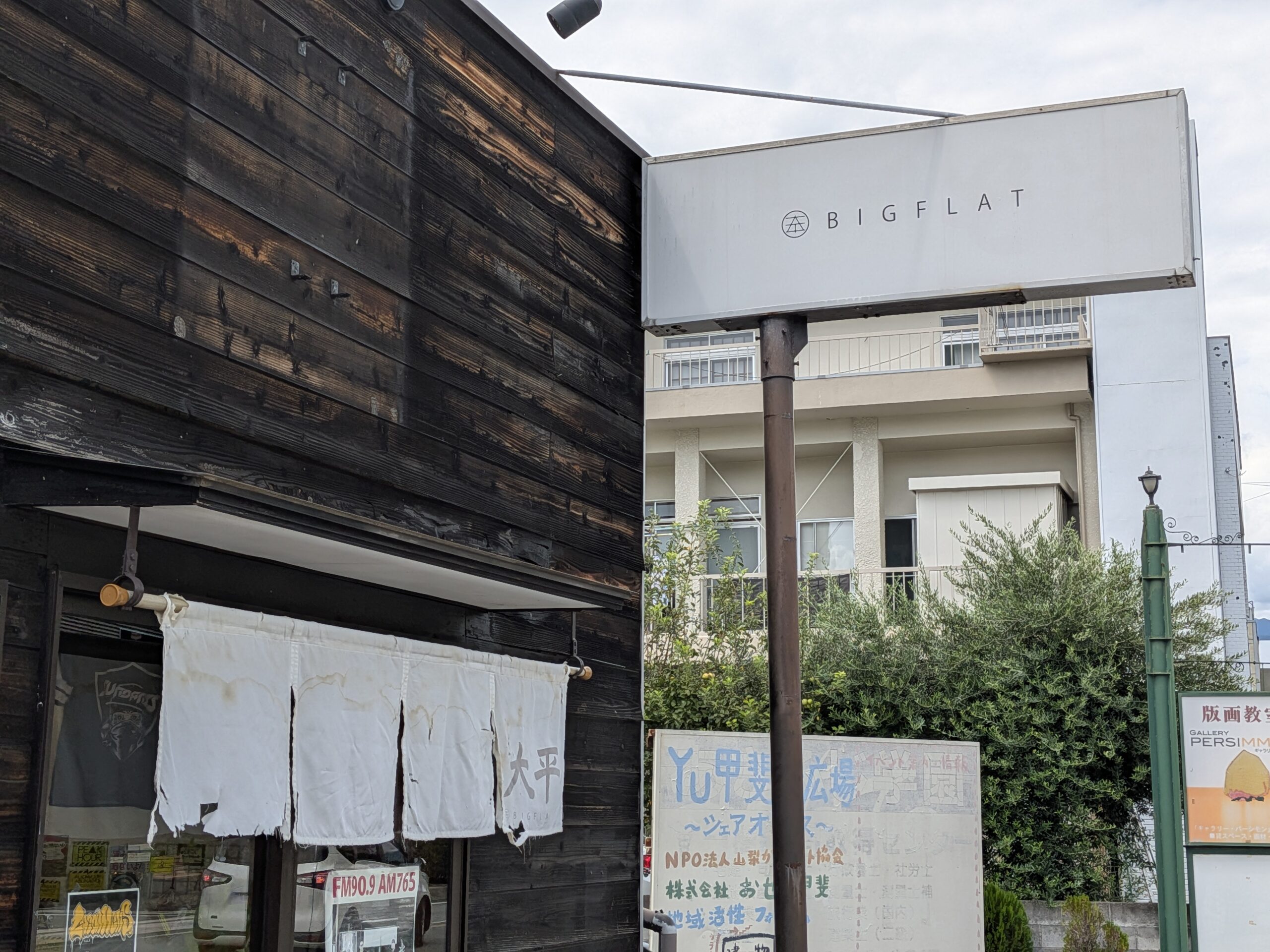
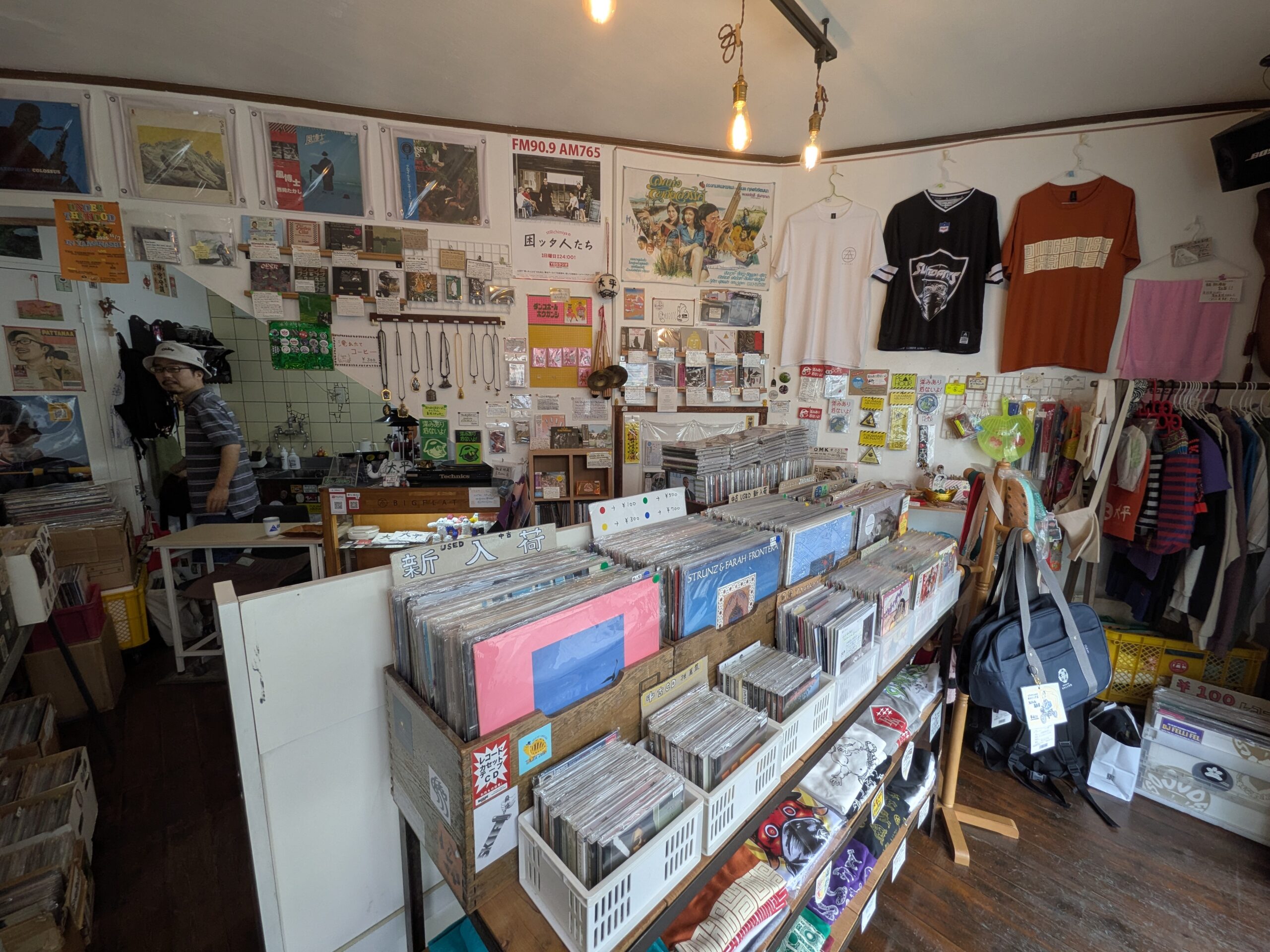
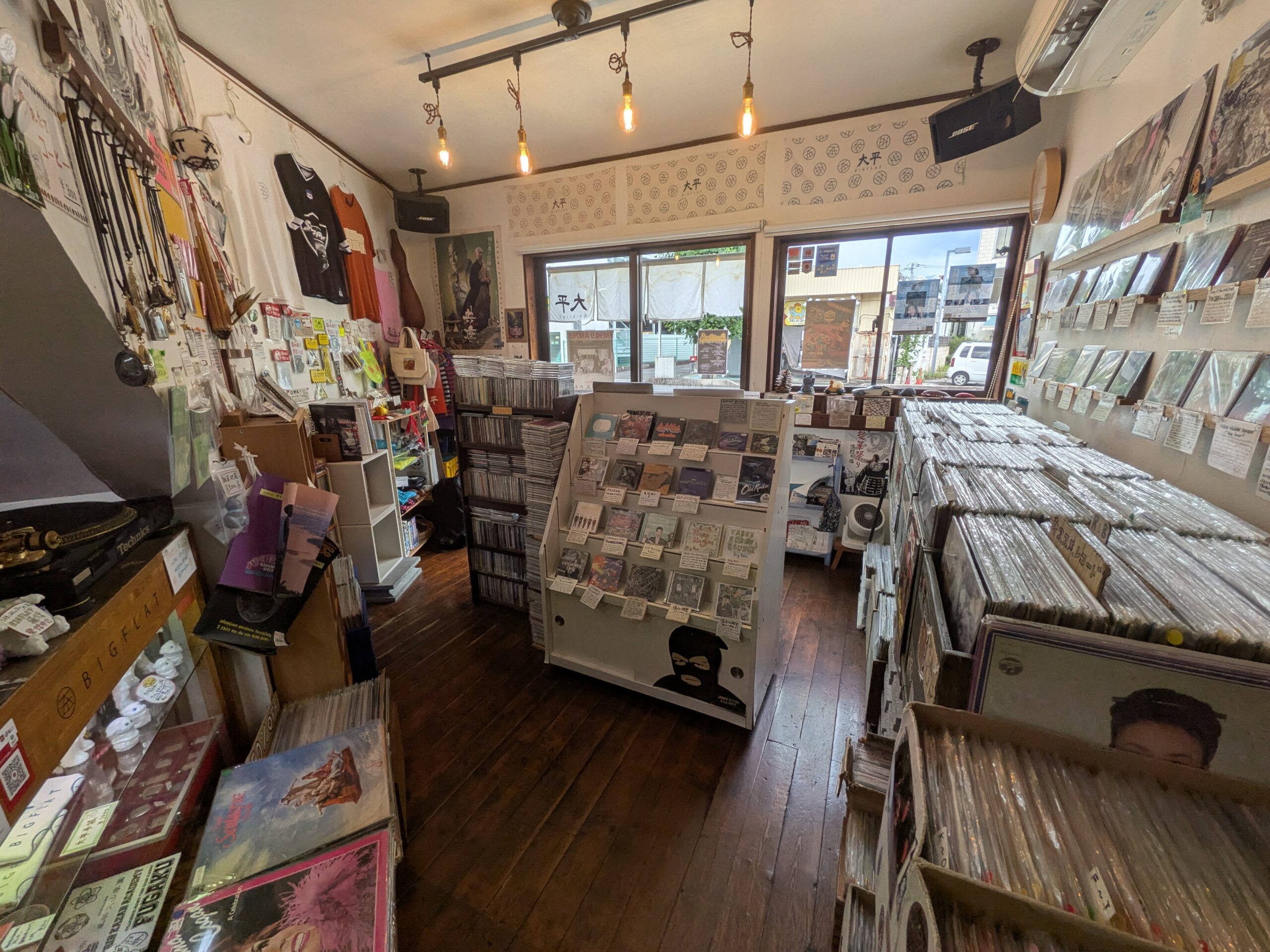
Ohira (BIGFLAT) is a record store in Yamanashi City, Yamanashi. Its shelves hold new and used records and CDs, along with releases and merchandise from stillichimiya.
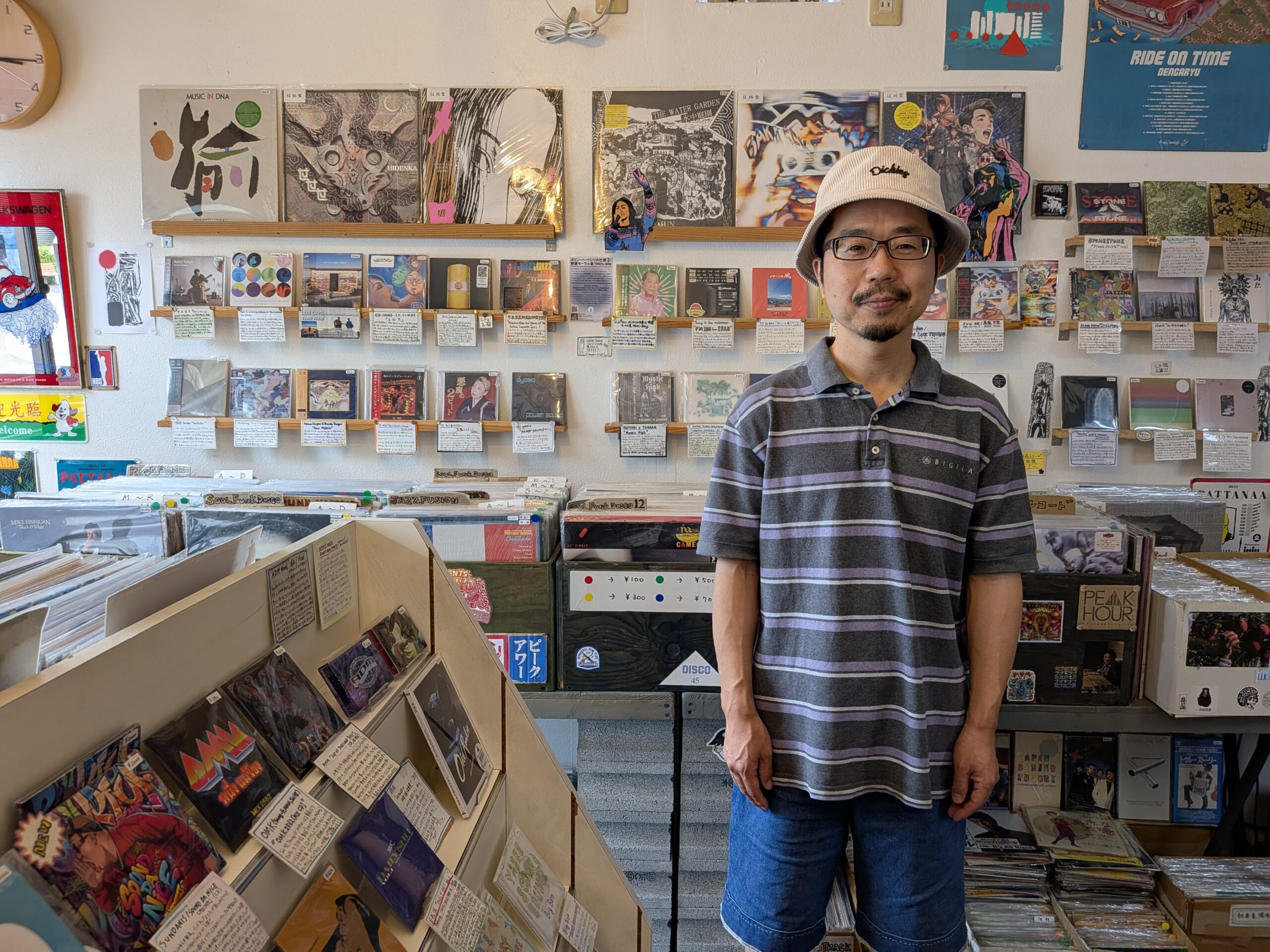
The owner, Big Ben, is a member of stillichimiya, a hip-hop group rooted in Ichinomiya, Yamanashi. “I don’t have some grand ambition. I think running a shop simply turned out to suit me,” he says.
We spoke with Big Ben about discovering music and records, the relationship between stillichimiya and Yamanashi, and what Ohira (BIGFLAT) has become.

What first drew you to music?
 Big Ben
Mine wasn’t a household where music was always playing, but even in nursery school and elementary school I liked TV music programs and anime songs. My favorites were probably the opening and ending themes from GeGeGe no Kitaro. (laughs)
I really became immersed in music in junior high school. I listened to many things, but Curtis Mayfield was especially important. He was a singer, producer, and guitarist who also ran his own label. He became a major figure for me.
My parents had records at home, so I had heard them before. Used shops had records too, and at some point I thought I would like to buy one myself. The first one was Nina Simone, I think. I remembered seeing her name in a magazine, spotted it while looking through records, and thought, “Maybe I’ll buy this.”
At the time, I wasn’t thinking that records sounded better. I liked the visual side—the large 30-centimeter LP covers and the look of the records themselves. Then there is taking one from the sleeve, placing it on the turntable, and lowering the needle. It is inconvenient, but that is part of the fun.
By high school, DJ culture was booming. Technics sold complete DJ sets with turntables, a mixer, and headphones, so I bought one too.
Still, I’m not someone who insists it has to be vinyl. CDs have their own sound, and records have their own appeal. With streaming, you can search for something that catches your interest and hear it immediately. Each format has its strengths.
How did stillichimiya begin?
It started when we learned that Ichinomiya, where we lived, would disappear as a municipality through a merger.
It was part of the Heisei-era municipal mergers. We had grown up in Ichinomiya, and when the merger was announced, we thought, “We want to oppose this.” We chose the name stillichimiya and made a rap song protesting it. There were more members at first; it really felt like a gathering of local friends.
Some members had known each other since elementary school, others since junior high, and some connected in high school. We were friends before we ever assembled a group to make music.
But right after saying we opposed the merger, everyone moved to Tokyo. (laughs) You could ask what we were doing. Some members were already there, and several of us lived together. I moved to Tokyo around 2005.
In Tokyo we gathered to rap and make tracks. We performed live, but during the day we had regular part-time jobs. I lived around Mitaka and often cycled to Kichijoji to buy records—some to play as a DJ and others simply to listen to at home.
Why did you decide to open a record store in Yamanashi?
I came back in 2008, and the other members gradually returned to Yamanashi too. Even after moving to Tokyo, we were ultimately singing about Yamanashi, and many of the friends we spent time with were from Yamanashi. Playing shows and going out in Tokyo was fun, but perhaps we simply began thinking, “Maybe it’s time to go home.”
Leaving my hometown once also helped me see Yamanashi’s appeal more objectively. Even while living in Tokyo, I came back whenever there was a show here. I suppose the place where I grew up simply felt comfortable.
I kept buying records. Kofu had a long-running record store that I visited all the time, but I never thought about running one myself.
There was a period when I was drifting around Yamanashi. A worried friend told me, “Wouldn’t a record store suit you? You like records.” I thought, “That’s true. Maybe I’ll try it.” (laughs)
A mutual friend happened to have a place that could be used as a record store, so I started by borrowing part of it. I never began with a firm goal of becoming a record-store owner.
Three years later, I wanted to move to the current location. I looked at different places for two or three months, but none felt right. Then a friend told me about a vacant space near a curry shop we had visited for years.
The inside was in rough shape, but I chose it. Friends helped with the renovation—our usual crew, other friends, and friends of friends. If we had not found this place, or if the renovation had failed, I might have lost heart. Everyone around me helped enormously.
You are still involved in music-related activities in Yamanashi, aren’t you?
Yes. stillichimiya does not release music as frequently as we once did, but we still have a weekly radio program.
We also hold a stillichimiya DJ event about four times a year at JUJU in Kofu.* The members DJ, and we invite guests. Last year we held Ohira (BIGFLAT)’s anniversary party at JUJU as well.
Sometimes I take records to hip-hop events organized by younger people and set up as a vendor rather than performing as a DJ.
In everyday life, everyone does their own thing. Some make music, tracks, recordings, or mixes. Others work in video, and one member farms. Each person has their own job and activities, with stillichimiya existing on top of that.
We have been friends for a long time, but we don’t actually get deeply involved in one another’s private lives. Sometimes fans know more than we do about where a member is performing that day. (laughs) We are always together, but not always together, if that makes sense. That distance has existed from the beginning.
* JUJU: Kofu JUJU is a music space in Kofu, Yamanashi, where visitors can enjoy hip-hop, R&B, house, reggae, and many other genres. It hosts parties and events with DJs from inside and outside the prefecture and is one of the venues supporting Kofu’s nightlife culture.
What matters most to you at Ohira (BIGFLAT)?
Used records are where I put the most effort. I especially try to price them so people without much money can still enjoy them. Stickers divide them into ¥100, ¥300, ¥500, and ¥700 groups. Among used LPs, ¥500 and ¥700 records are probably the most common.
There are days when you don’t have much money but still want to buy two or three records. I often bought records that way myself. Of course, we also have plenty of more expensive records, but I want to keep a strong selection of affordable used records.
When I first started, my recommendation notes sometimes summarized label information. Recently, I have tried to include what I personally found interesting. On the recommendation shelf, I write not only when a record was released or which label issued it, but especially how it felt to me. That also makes it easier to explain to customers.
Many regulars are older than I am. Plenty do not know that I make music. They simply loved records when they were young and still buy them today.
Someone might tell me, “I saw this band when they came to Japan in the 1970s,” and I’ll say, “Seriously?” (laughs) We have customers in their seventies who know rock incredibly well. They often teach me things I did not know, so I learn a great deal from them.
As I come to understand everyone’s tastes, I sometimes picture a customer while buying stock and think, “That person would like this.”
There is a venue in Kofu called Sakuraza that presents jazz and many other interesting shows. When I go, I sometimes run into shop customers and think, “Oh, you come here too.” (laughs) Some people visit from outside the prefecture because they know stillichimiya or Dengaryu, especially during periods like summer vacation.
Finally, what do you enjoy about continuing to run the shop in Yamanashi?
What I like about running the shop is that people know they can come here and find me.
A customer who had just visited suddenly showed up after we had not seen each other for about two years. We had exchanged emails occasionally, but then he simply walked in and we said, “It’s been a while.”
That happened because I run a shop. A shop is basically open during business hours, so people can come without making plans. Friends can suddenly drop in, or someone you have not seen for a long time can visit. You do not have to contact each other and choose a date. You can go to a place where there are many things and where someone is there. A shop makes that possible.
I started in 2016, so it has been about ten years. Looking back, running a shop truly suited me. I like the time customers spend here, and I also like being alone, organizing records and working. Rather than pursuing some grand ambition, I would like to keep the shop as it is and continue for as long as possible.
This year is also Ohira BIGFLAT’s tenth anniversary. On Saturday, October 31, stillichimiya’s party PATTANAA at JUJU in Kofu will be held as an “Ohira BIGFLAT 10th Anniversary Special.”
PATTANAA takes place at JUJU about four times a year. stillichimiya members DJ at every edition, with various guests and seasonal ideas. This time, tofubeats will appear as the guest DJ, and Omiyuki CHANNEL—Young-G from stillichimiya and me, Big Ben—will perform live.
We will also have a small gift from Ohira BIGFLAT for everyone who attends. It is our tenth anniversary, so I hope you will come and celebrate with us. We’ll be waiting!
Recoya VIEW
What stayed with us from this interview was how often “friends” appeared in Big Ben’s story. They are not always together. Each has their own work and activities, yet they gather naturally when needed—helping renovate the shop or making music together. It is a distinctive closeness built through a long friendship.
Leaving Yamanashi for Tokyo also helped Big Ben rediscover the comfort of his hometown. Today, he has a place of his own in Ohira (BIGFLAT), while connecting music and the city beyond the store through DJ events, radio, and pop-up stalls.
Keeping open a shop that people can visit “without making plans” may be another extension of that way of life. Rather than declaring a grand mission, they continue music in their own ways, in the place where they were born. That itself is part of Ohira (BIGFLAT)’s appeal.