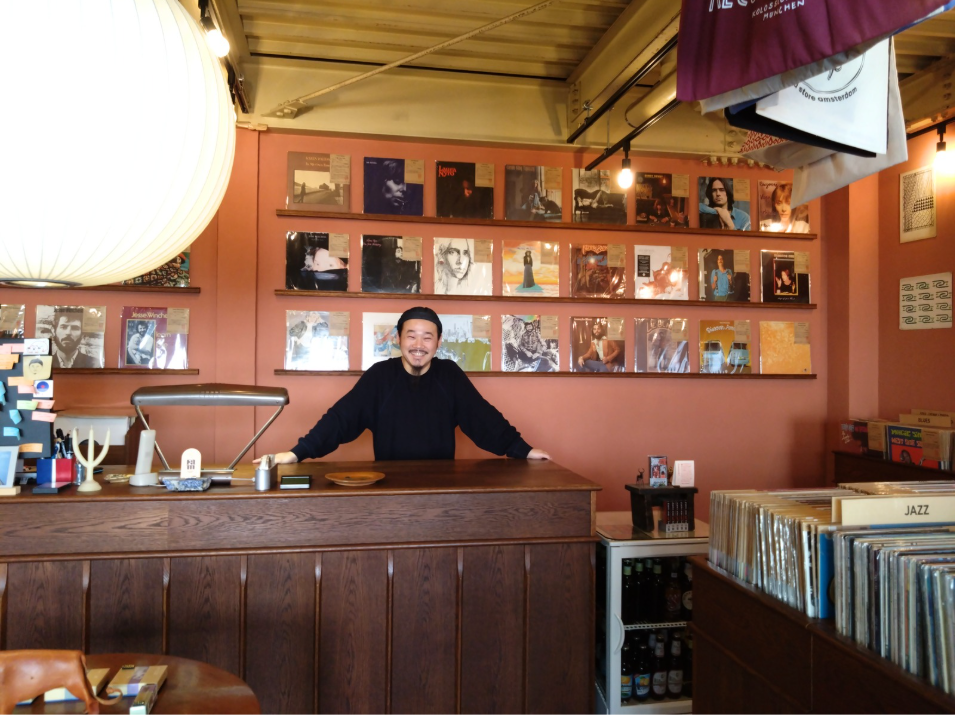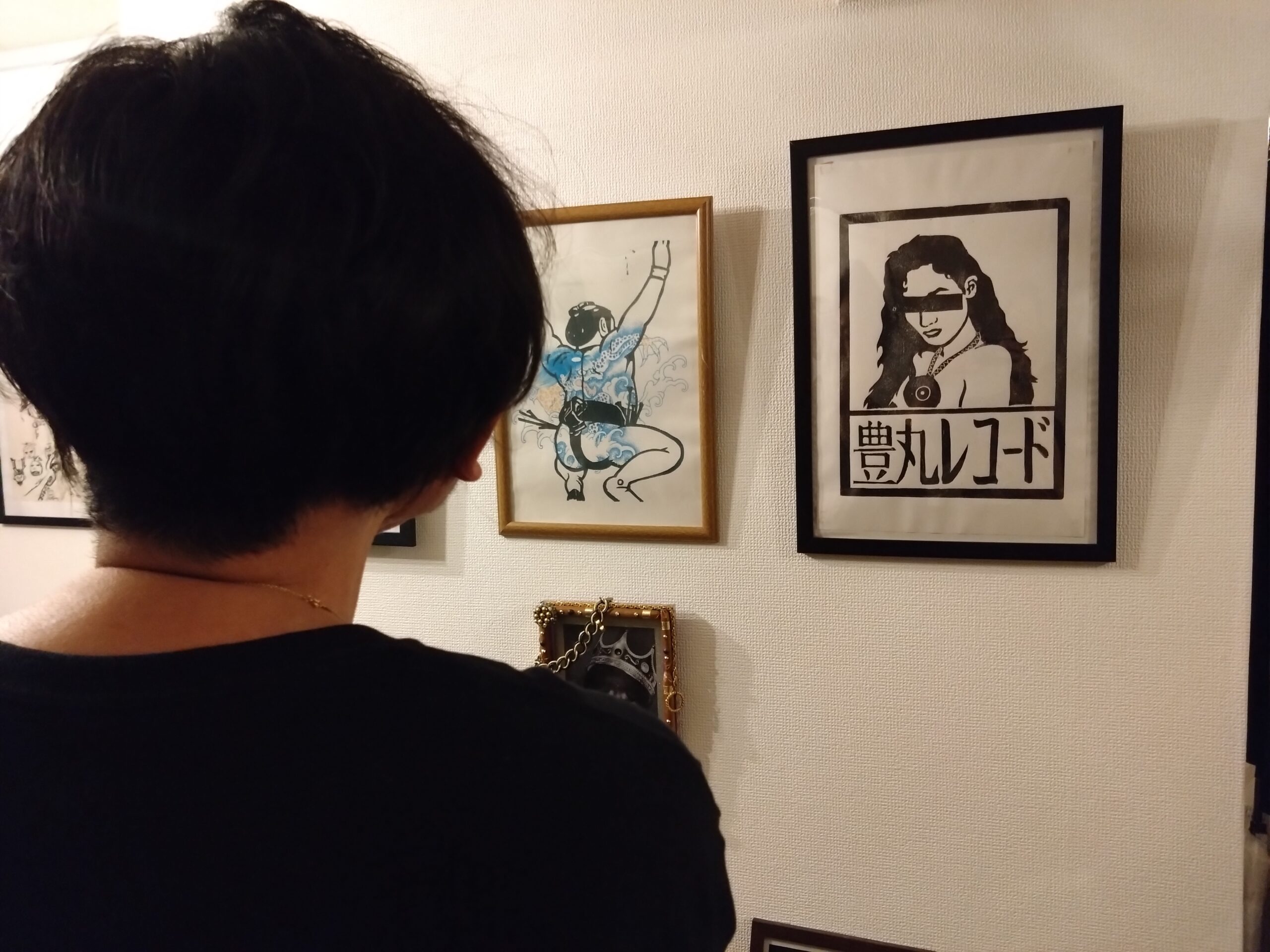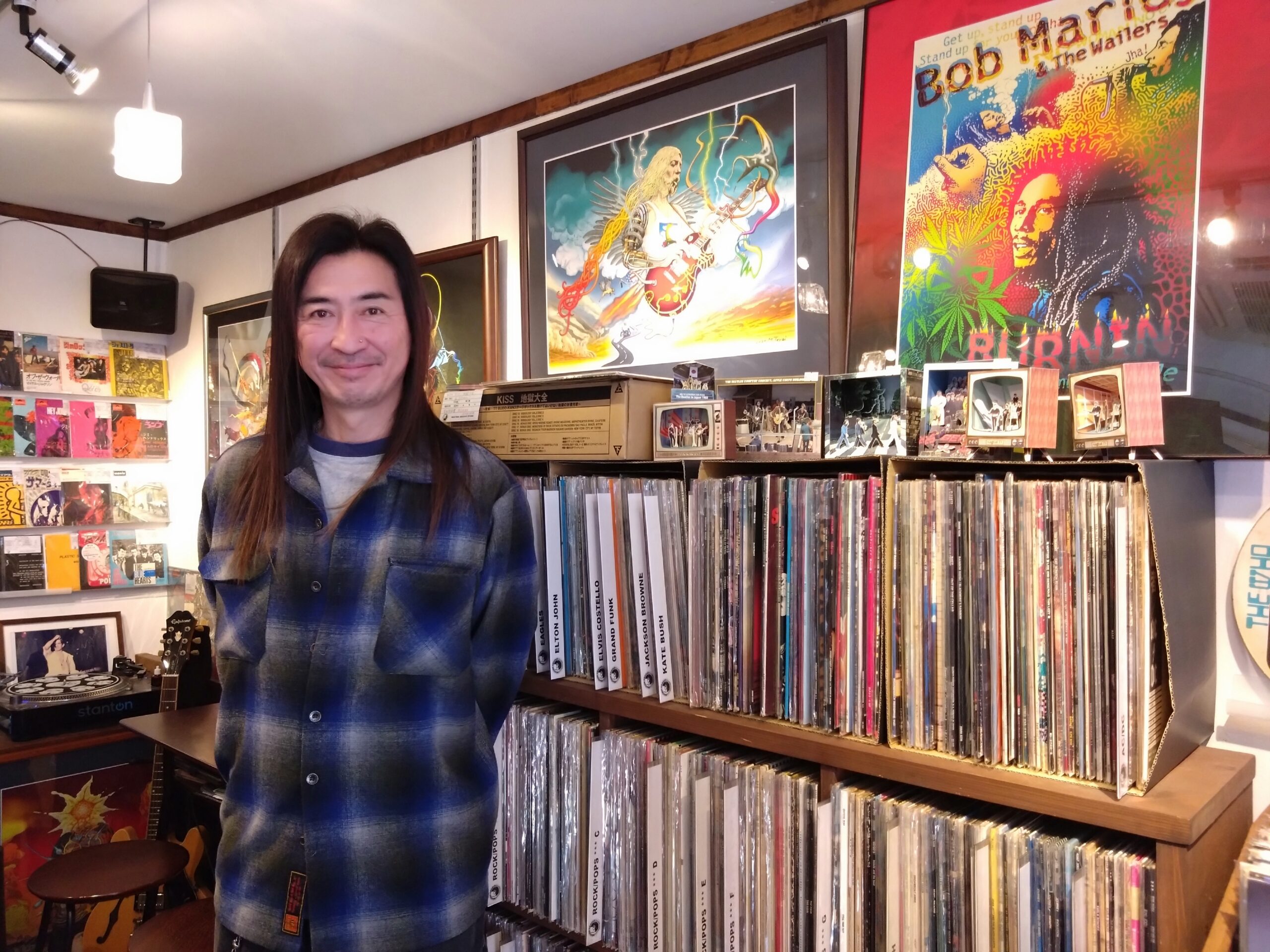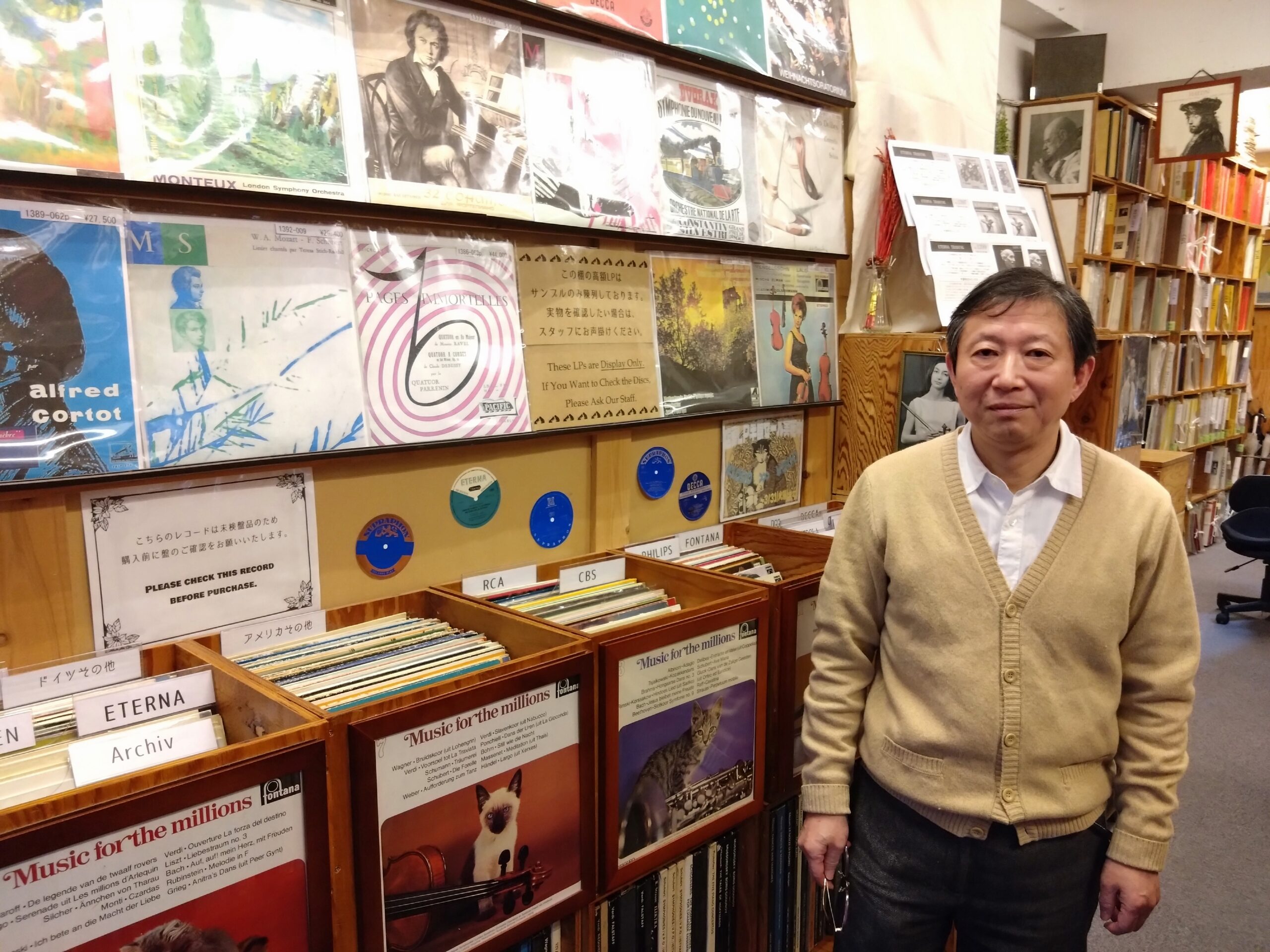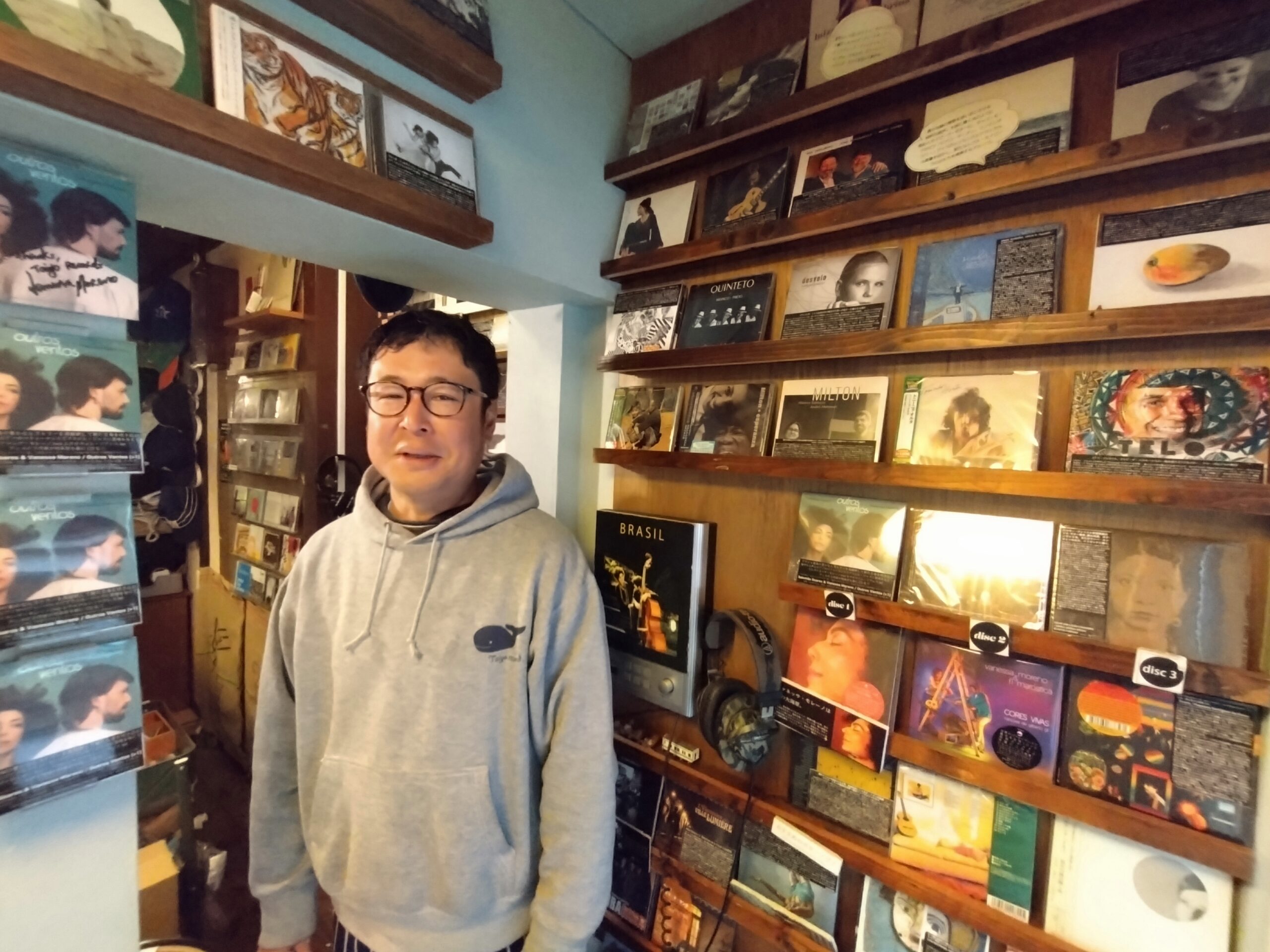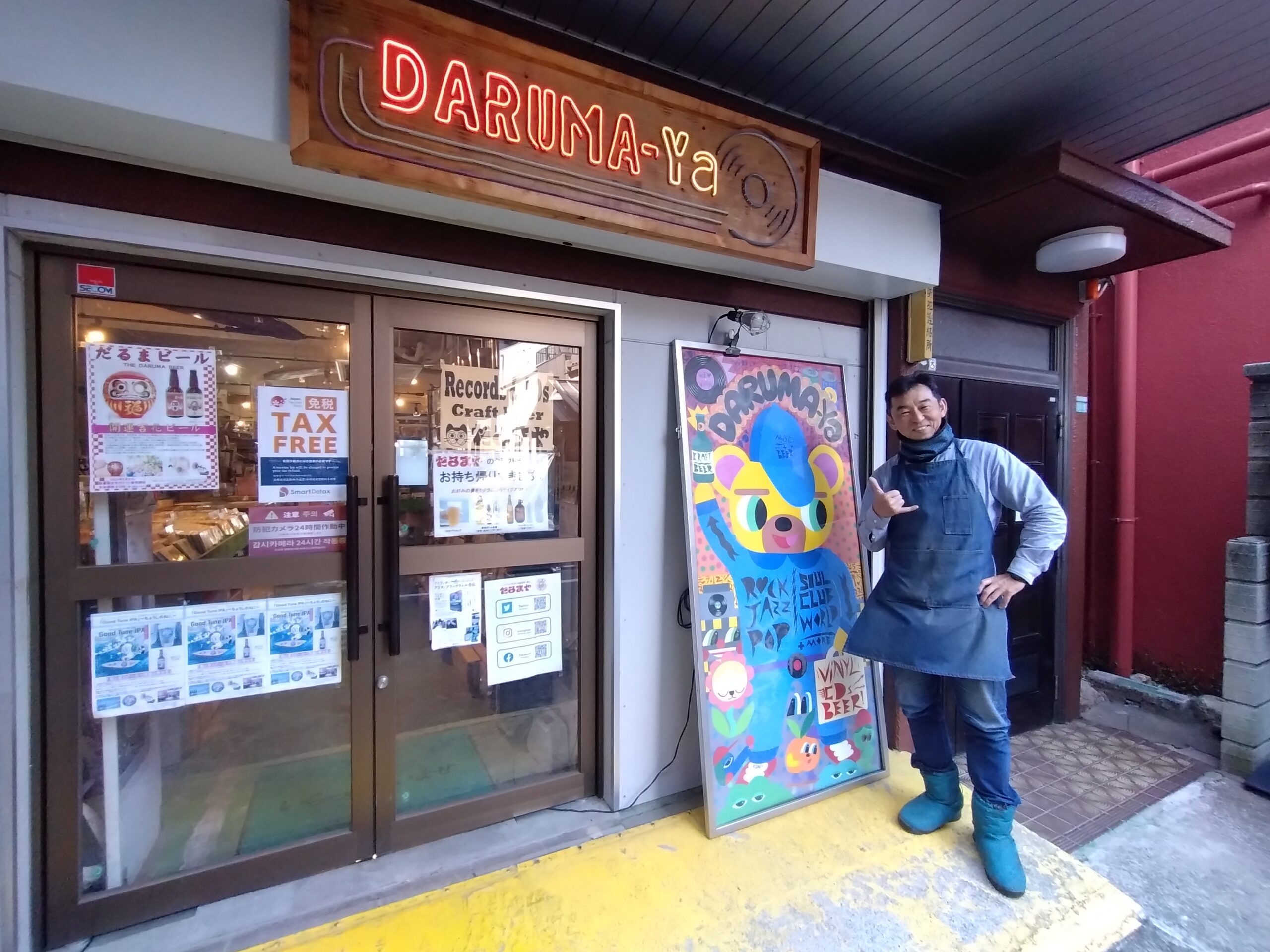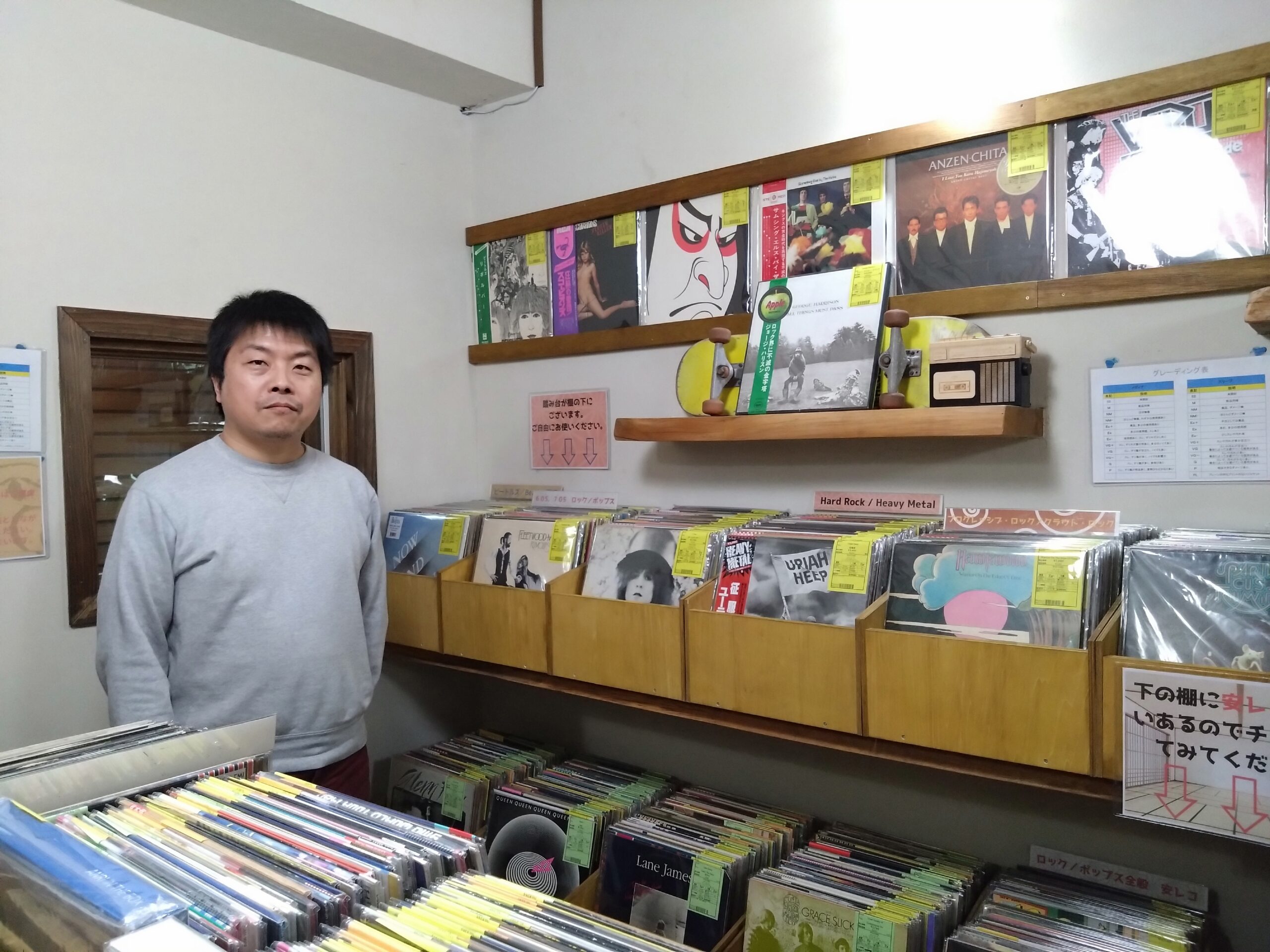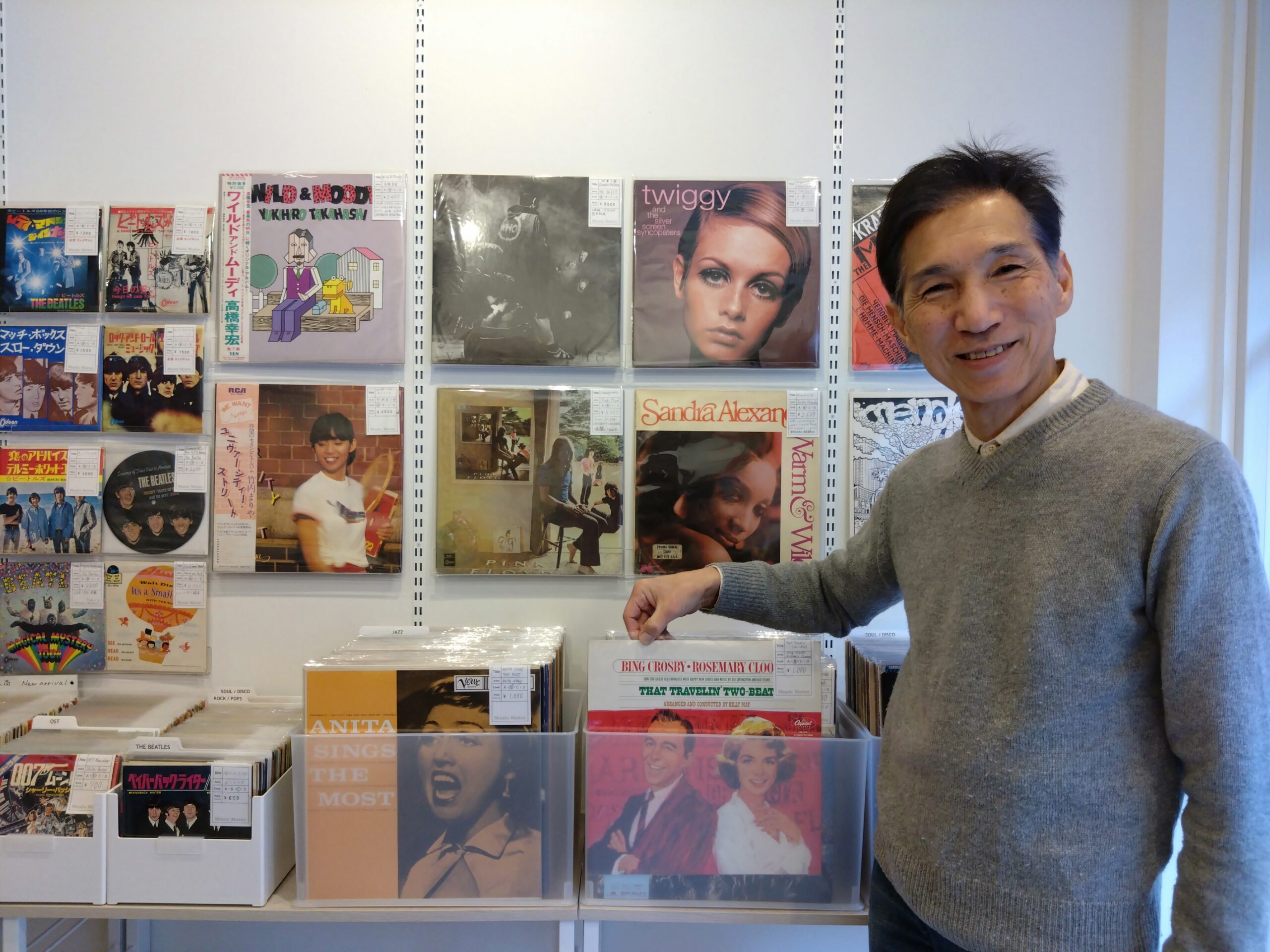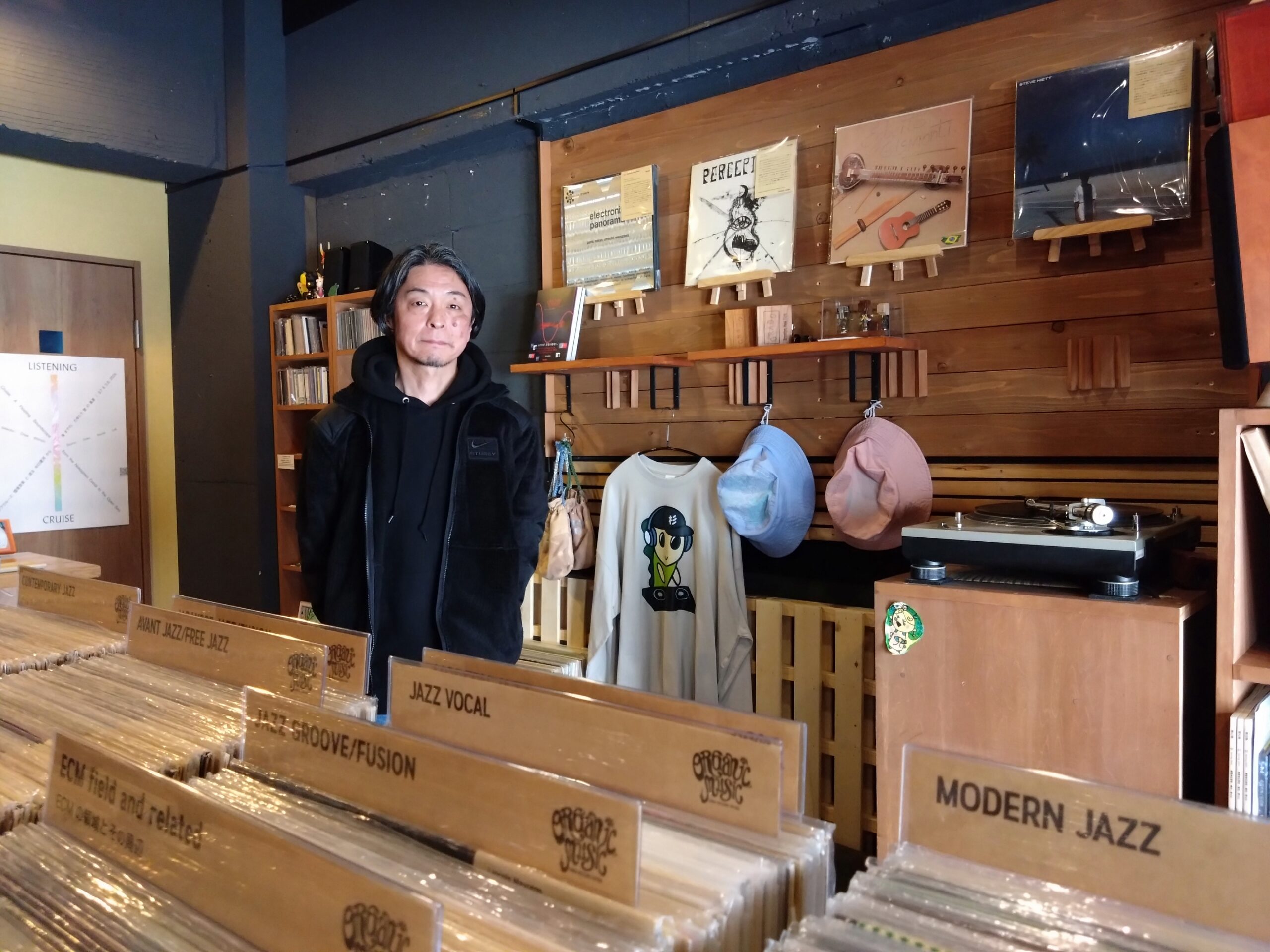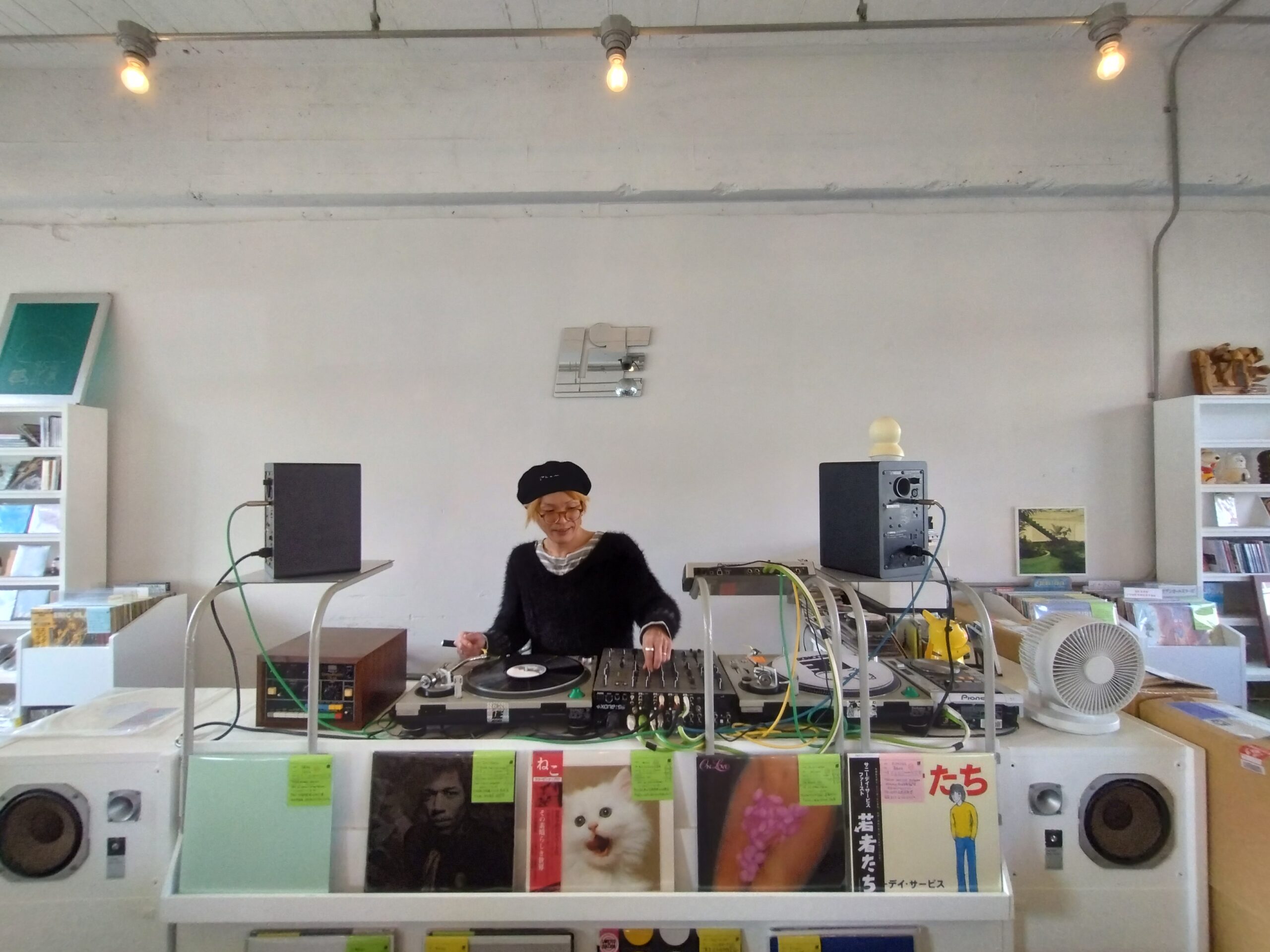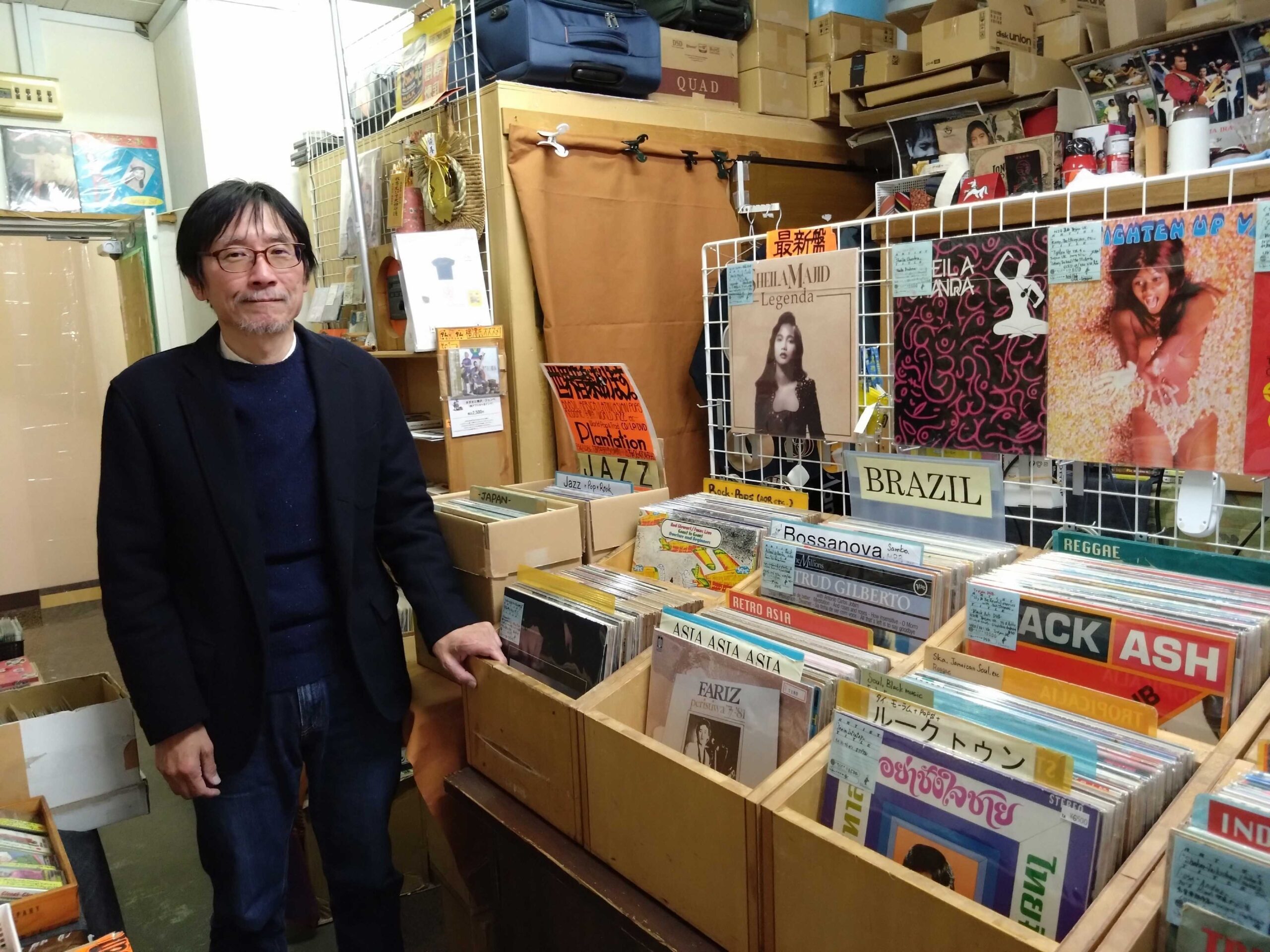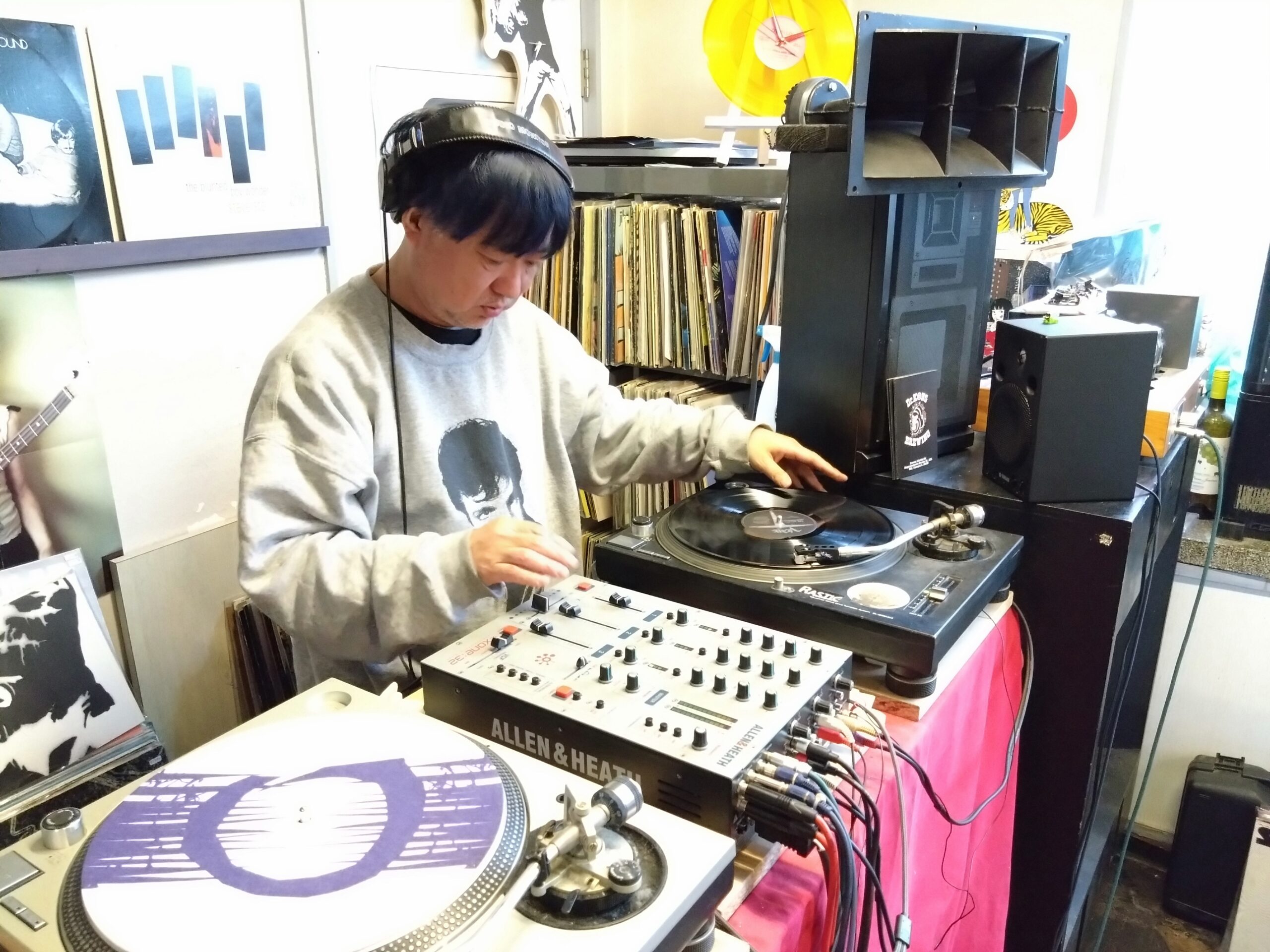
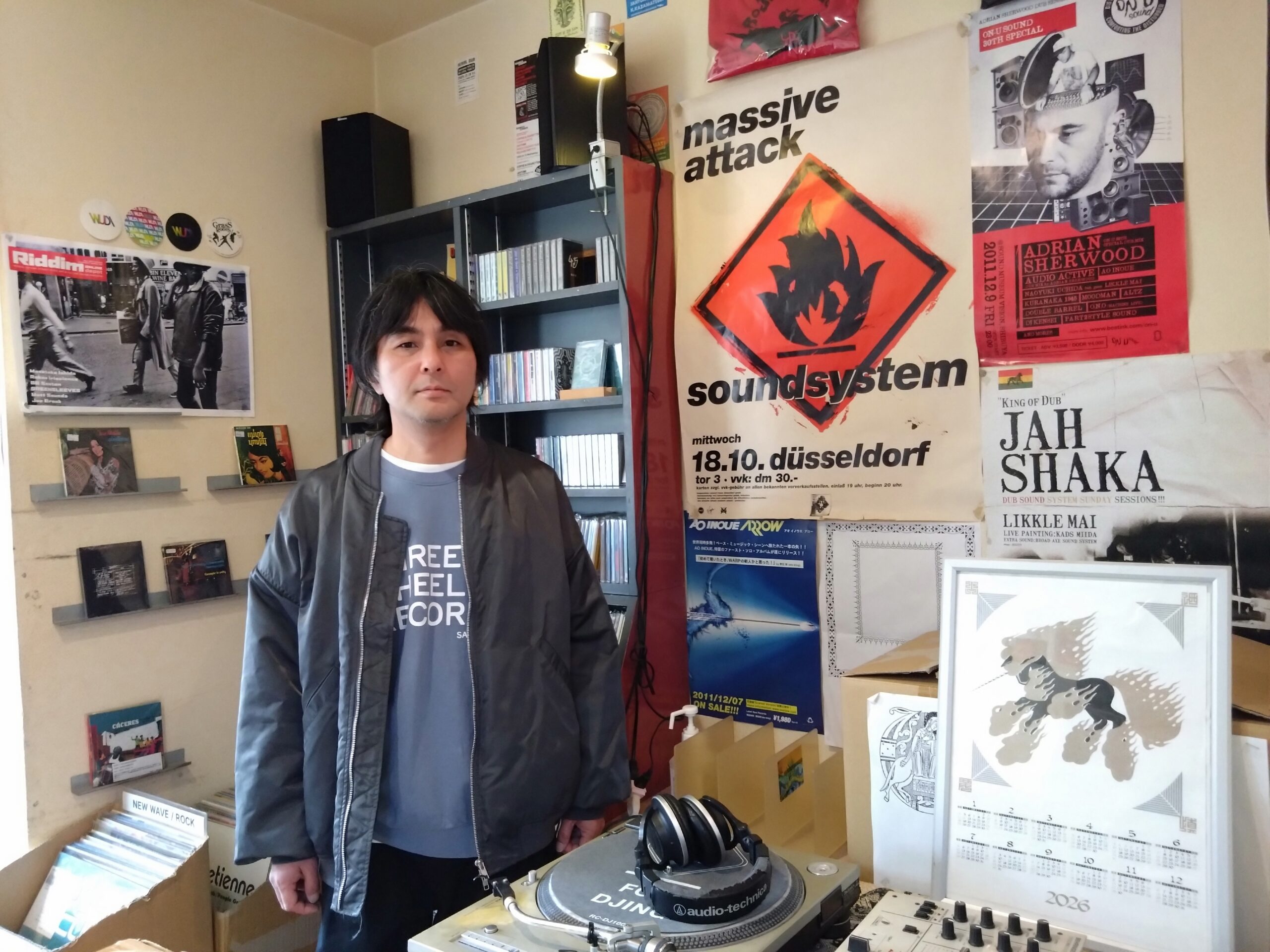
For our interview series with record store owners, “Yomoyama Stories from Record Shops,” we visited GLOCAL RECORDS in Jingumae, Shibuya, Tokyo.
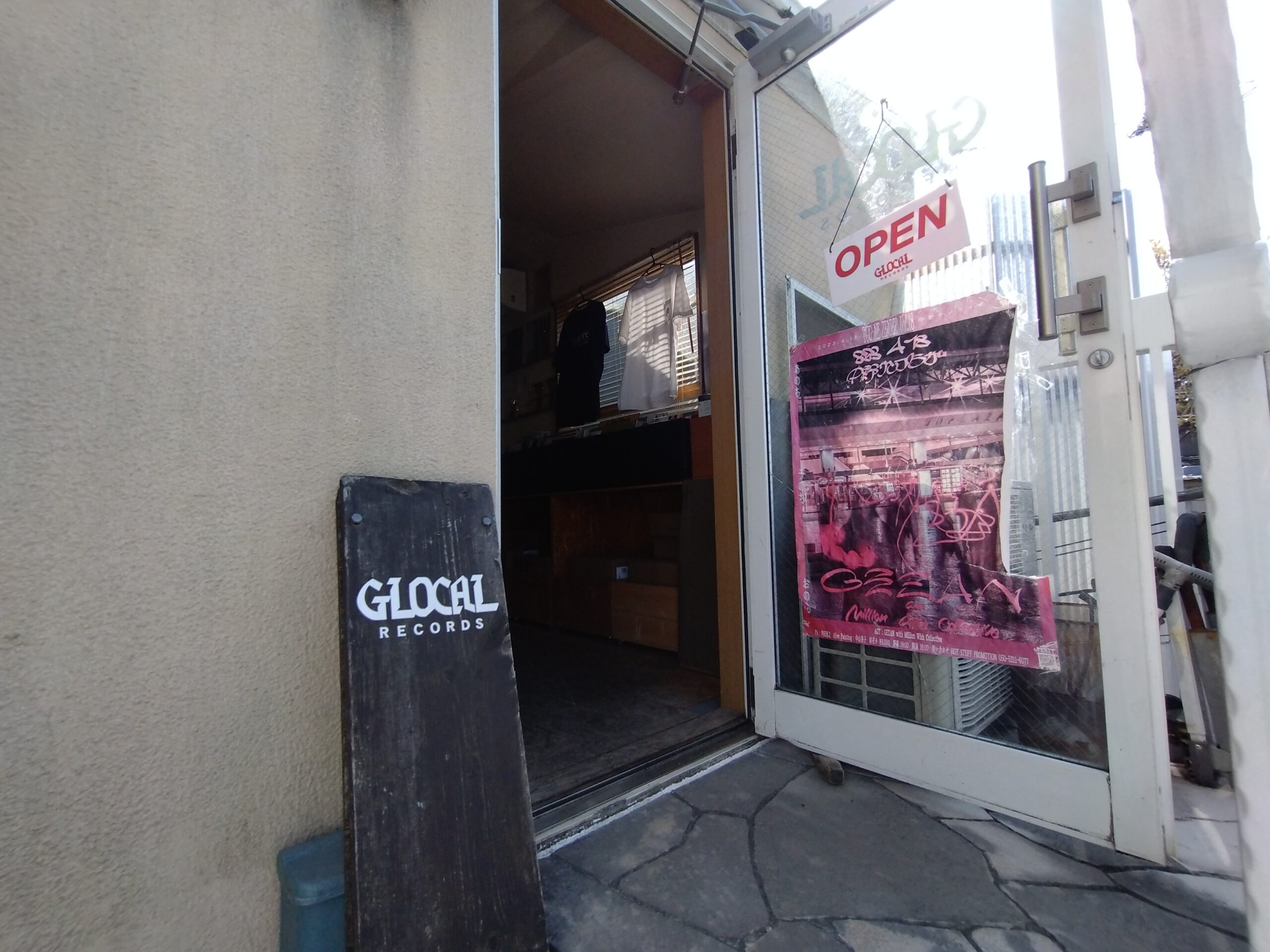
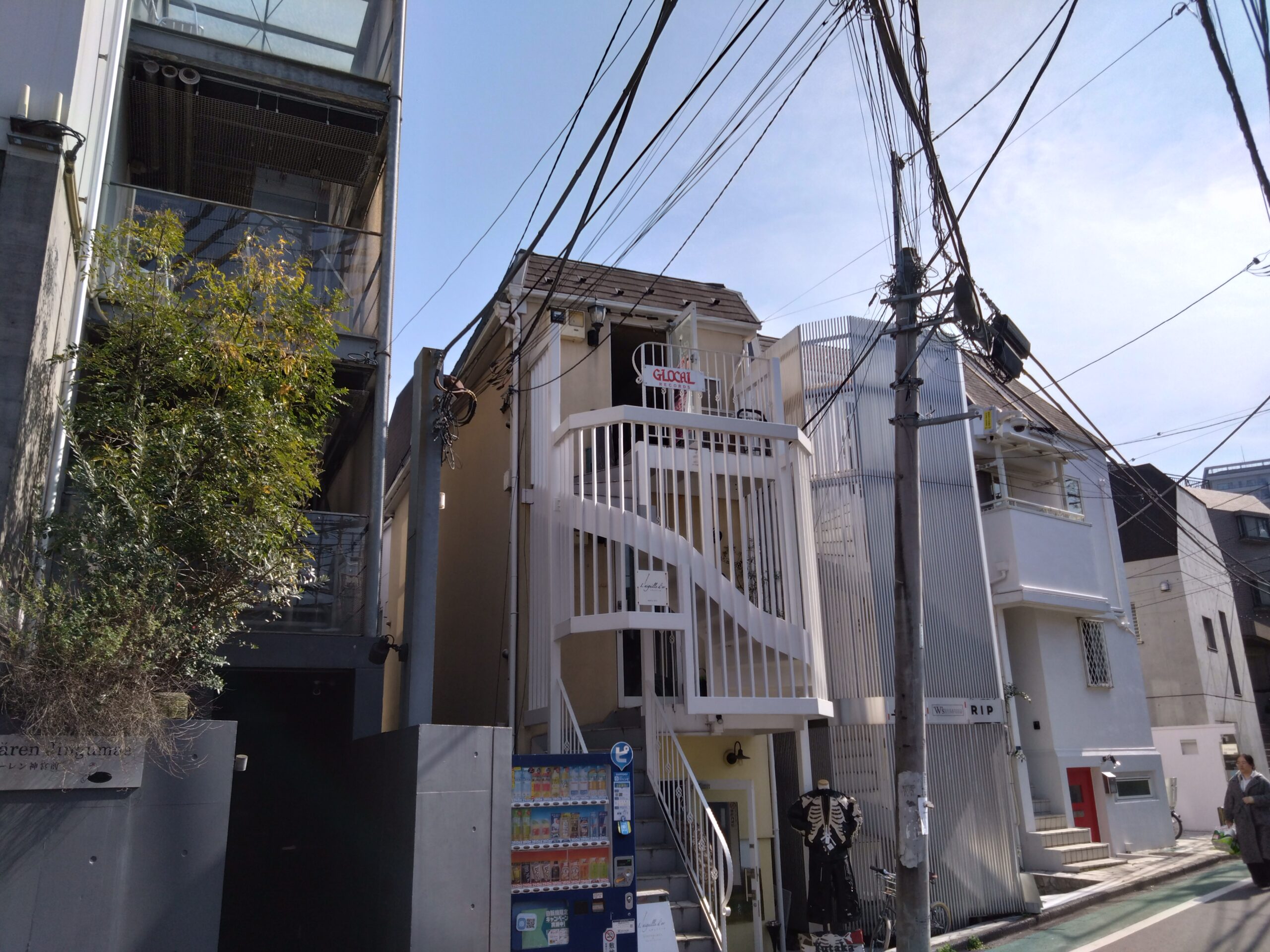
Step just slightly away from the buzz of Shibuya and Harajuku. Down a side street, where the atmosphere starts to feel a little more residential, tucked deep in the alley, you find GLOCAL RECORDS.
It is not the kind of shop that grabs you at first glance. If anything, what feels right about it is that you have to go a little deeper to get there. Because it sits just outside the main flow, the atmosphere here feels fully alive. Rather than chasing the very front edge of trends, it is a shop where sound has been built up over time, chosen carefully by ear.
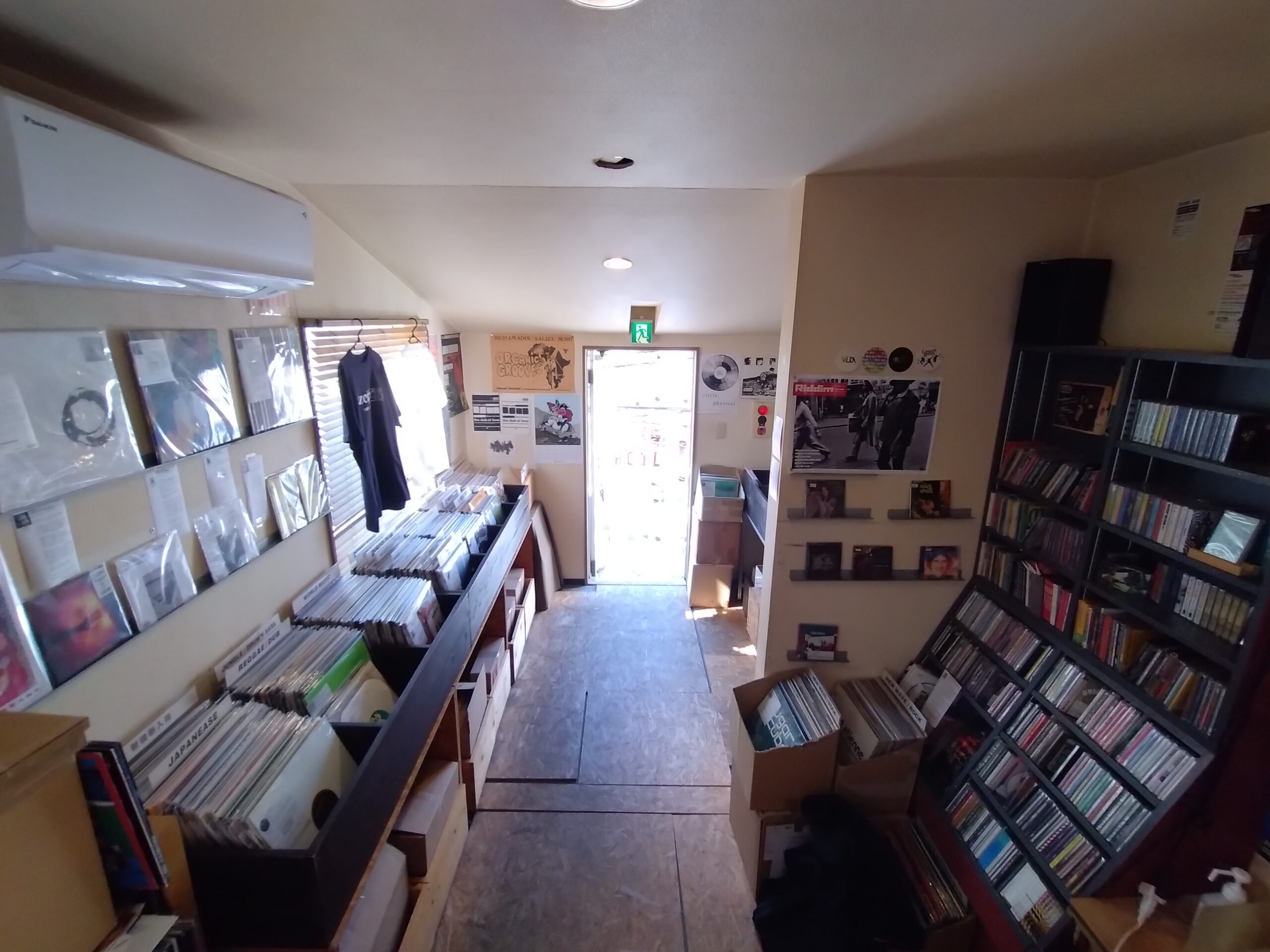
The moment you open the door and look at the shelves, you get it. This is not just a store where records are arranged neatly by genre. Dance music, world music, reggae, breakbeats, hip-hop. These sounds are connected here not as information, but as groove with real on-the-ground feel. Club sounds and sounds carrying the smell of a particular place are treated on the same plane.
GLOCAL RECORDS may look like a shop only for people who already know what they want, but it really is not. More than that, it scoops up that still-hard-to-name feeling of “I think I might like this.” In that sense, it feels like a record shop you can really trust.
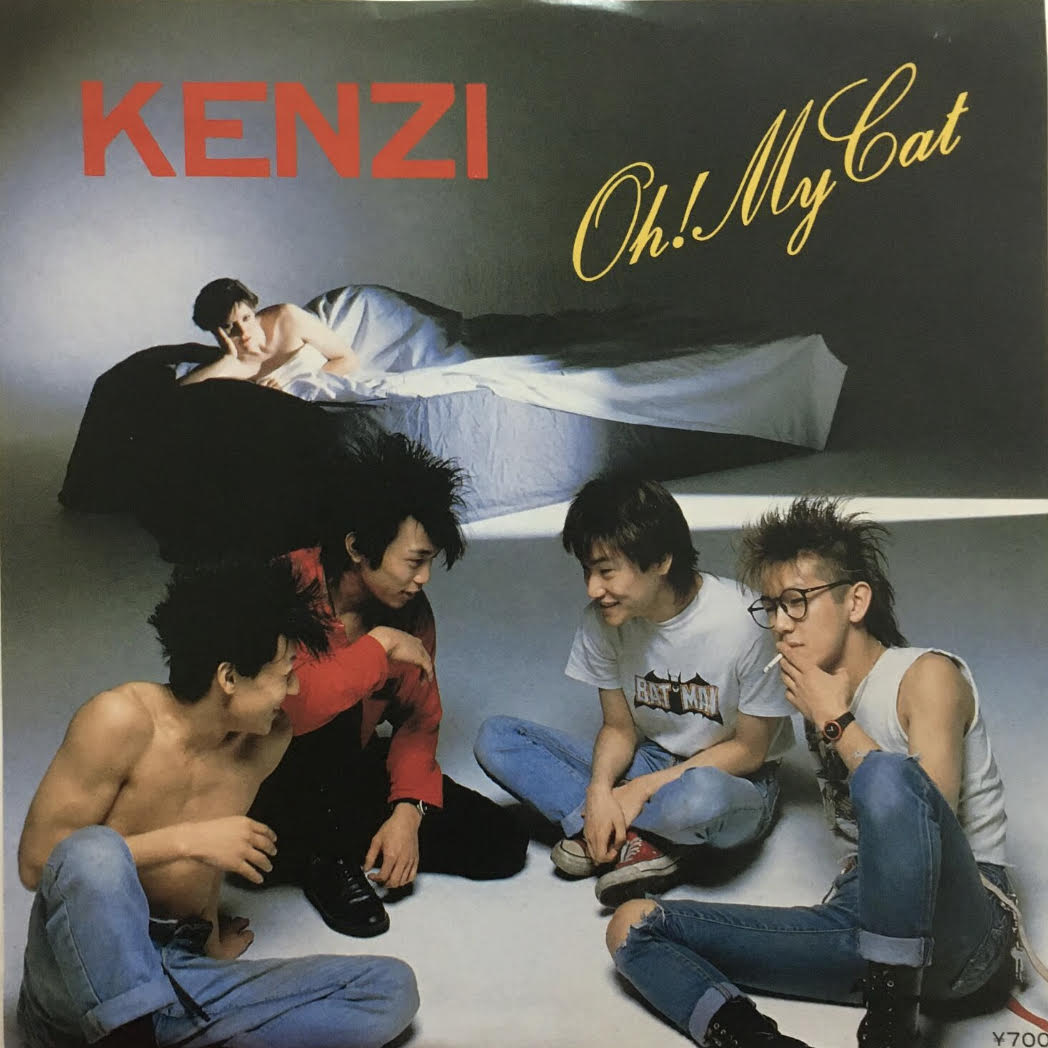
The owner, Minowa, was born and raised in Nakano, Tokyo. His gateway into music was not his parents, but his brother, who was four years older. He says he naturally started listening to the Western music his brother was into when he was still in elementary school.
That was also right at the point when the world was shifting from records to CDs. He belongs to the generation that saw CDs arrive when they were around sixth grade to the first year of junior high. He knows the physical feel of records, but also lived through that moment when a new format suddenly spread everywhere.
But the first record he ever truly wanted for himself was not an obvious hit. He gave his allowance to his brother and had him pick up a Japanese punk 7-inch from a punk specialty shop in Shinjuku. That was his first “own record.”
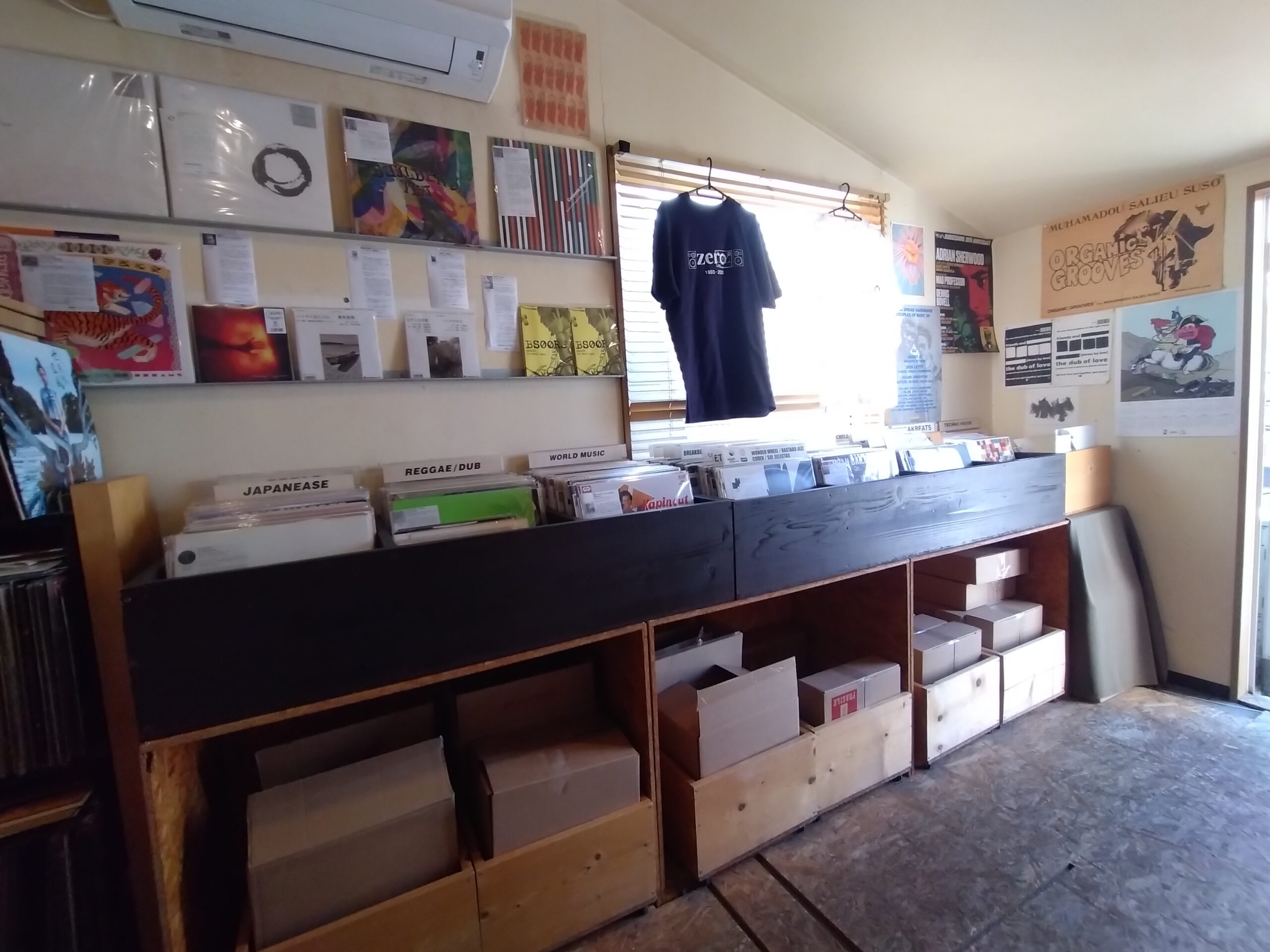
That feels like such a GLOCAL origin story. From the very beginning, it was never about reacting to what sold most. His hand reached instead toward the heat of what was happening on the ground, toward music with the smell of real activity around it. That same instinct still lives in the store’s shelves now. Not sound at the center of the market, but sound you miss unless you listen carefully. He seems like someone who sensed that value from childhood.
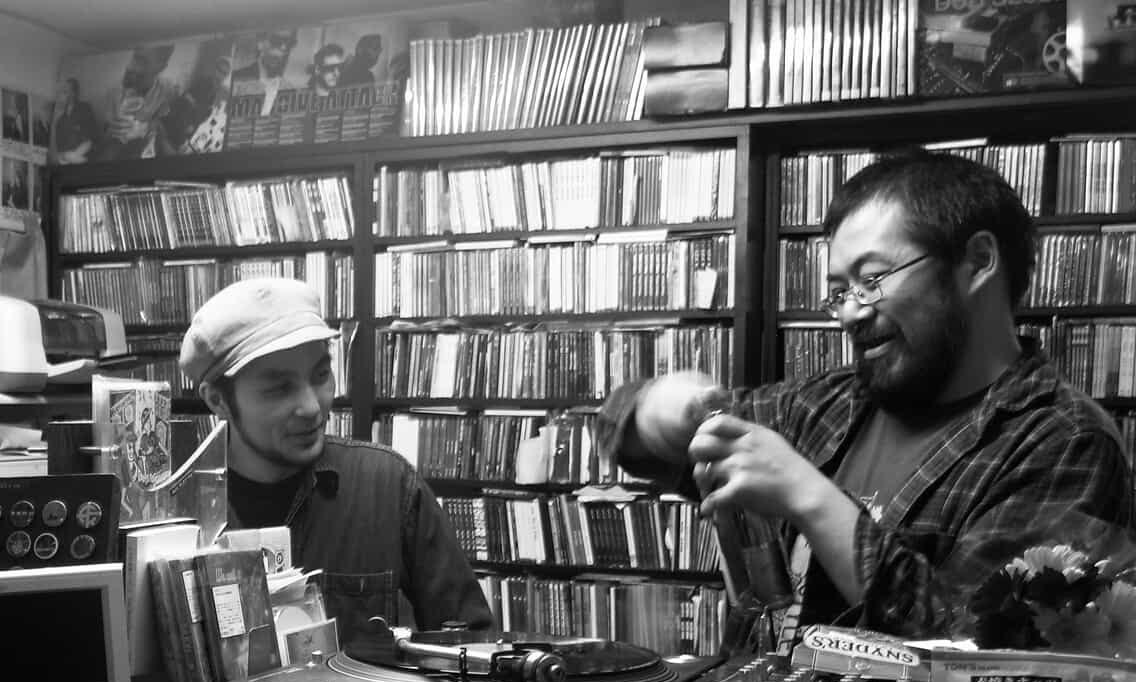
When he entered high school, he naturally started DJing. He and his friends would put on events, rent live-house type venues, and play music. There were no discounts, so the venue fees were high. They were usually running at a loss. Still, they did it. Most of the audience were friends. More than balancing the books, the point was simply to make the night happen.
That line is really good. It is not trying too hard to sound cool, and yet the atmosphere of those early days comes through intact. It was not about whether it made money. It was about having sounds he wanted to play, people gathering, and the fun of making that night exist. That feeling still remains in the shop, and in the label too.
What GLOCAL RECORDS has is not an over-polished, over-managed selection. Of course, there is still a sense of what makes a store work. But beyond that, you can feel something else coming through the shelves: “I want people to know this,” “this deserves to reach someone properly.” It feels like the line he found for himself back in high school is still there now, intact.
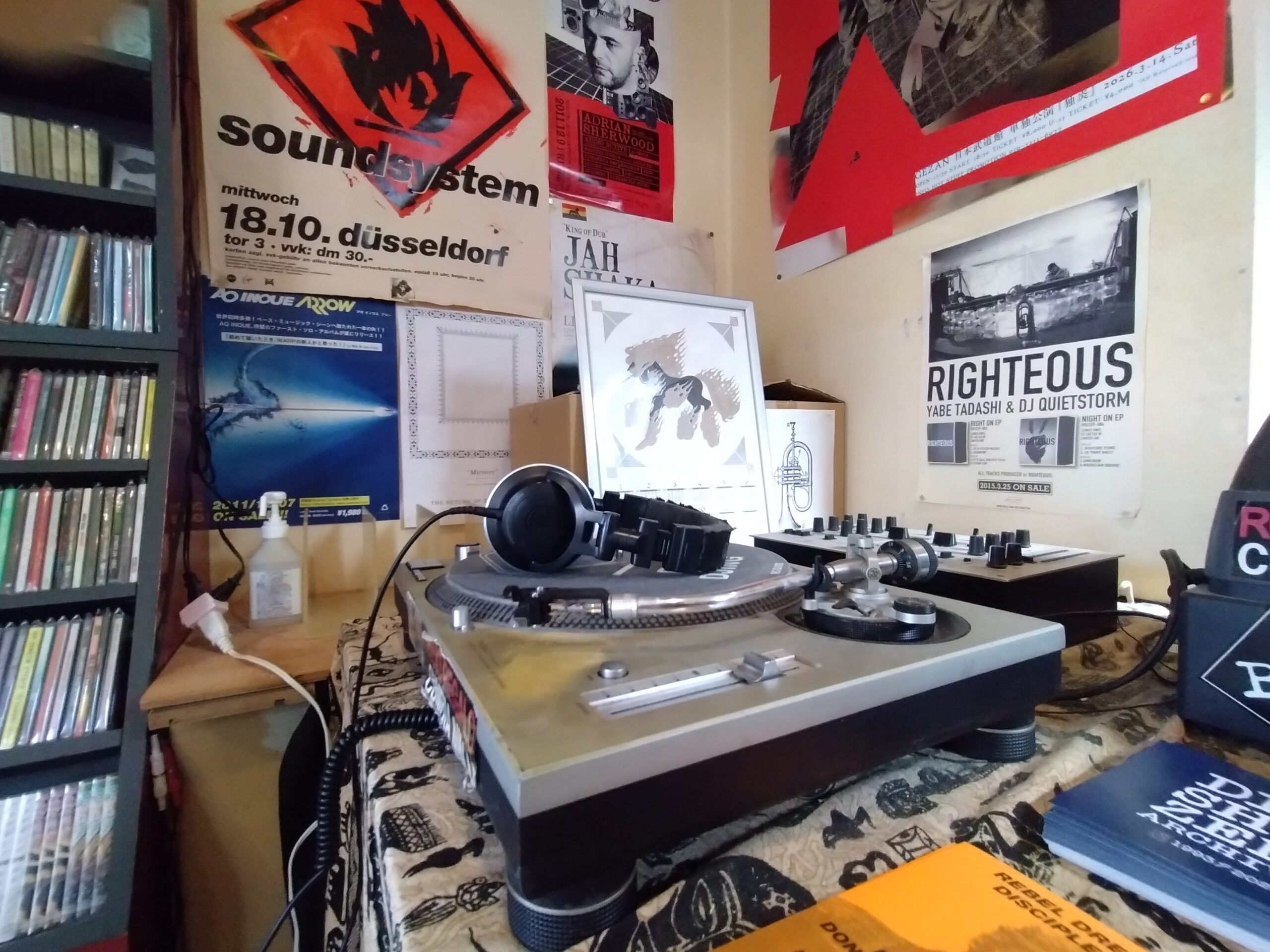
After graduating, he studied at a sound engineering vocational school and moved toward work close to music. But the first workplace he entered did not last long. Maybe precisely because he loved music, he ran into things there that hit hard.
He took jobs unrelated to music for a while. But he kept DJing. He never fully left it, and maybe never could.
The big turning point came when he was 28. A record shop he used to visit often asked him, “Would you help out here?” and that brought him back into the music scene. He spent ten years at that shop after it moved from Ekoda to Shimokitazawa, learning everything there: how to build a sales floor, how to deliver what you love, and how tough the reality of the scene can be.
That phrase, “everything started there,” is a really good one. It carries weight because it is not the line of someone who chased a dream in a straight line. It is the line of someone who stepped outside once and still came back. The seniors he met there were not just knowledgeable people. They were people of the scene. They had the stubbornness to sell only what they truly loved, and the DIY instinct to turn ideas into form right away.
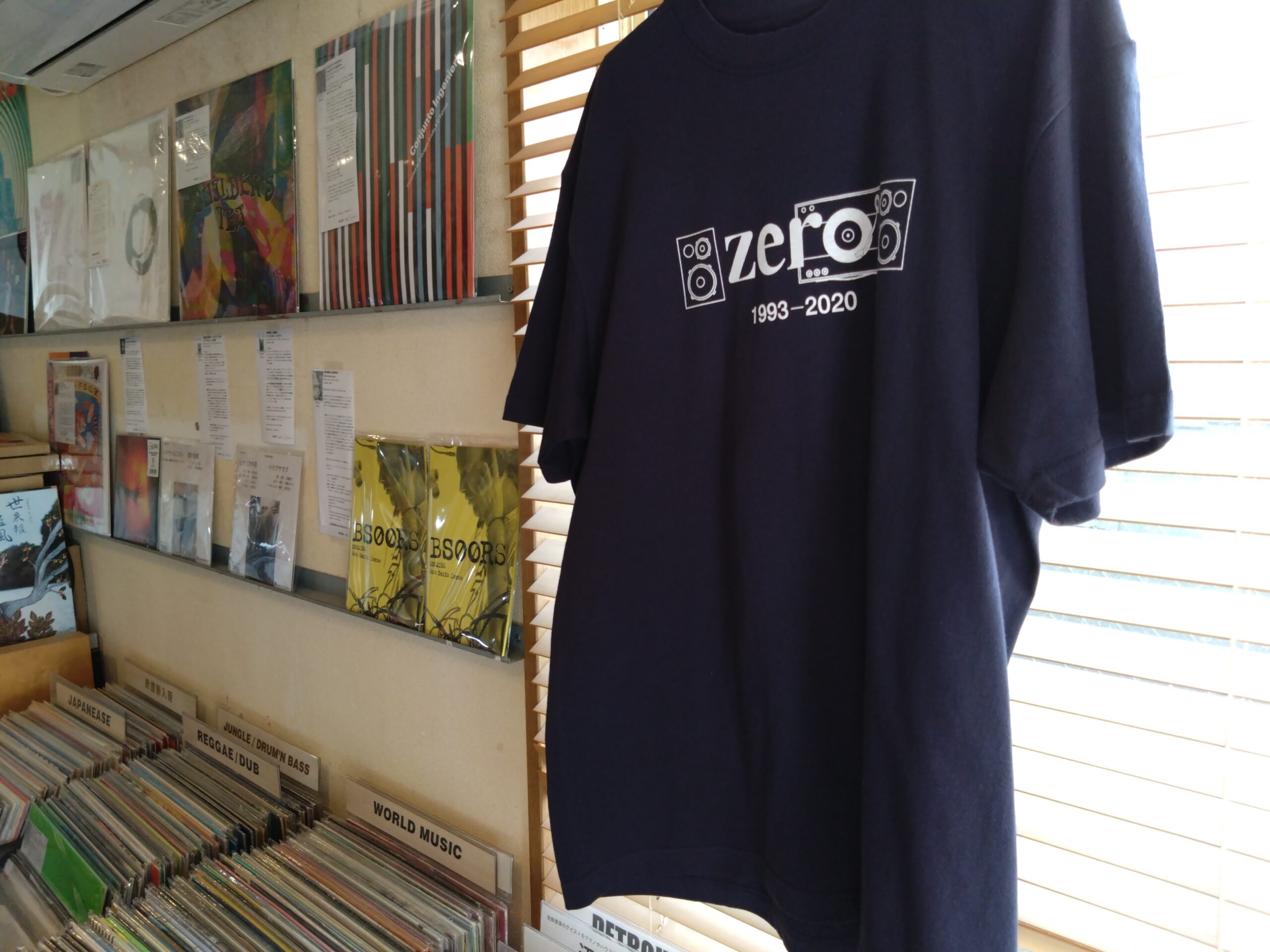
That influence remains strongly in GLOCAL RECORDS now. Printing his own T-shirts, giving original names to shelves, continuing the label — all of it moves with the same rhythm somehow. Think of something, do it. If it does not work, stop. Then start something else interesting. That light, persistent drive is part of what this shop has.
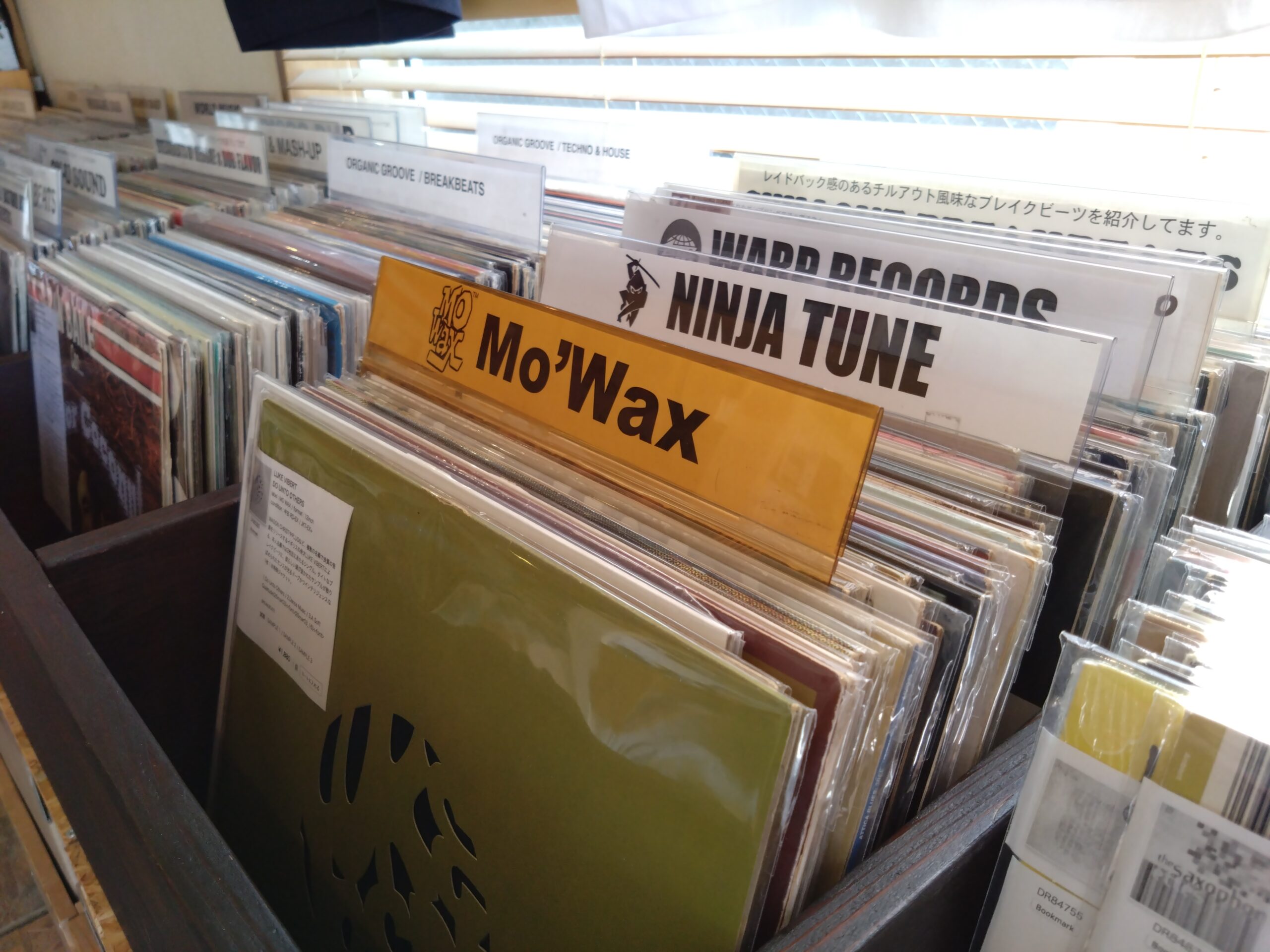
The name GLOCAL RECORDS describes the content of the store with surprising precision. Neither purely global nor purely local, but both at once. It handles sounds from distant places, while the criterion for choosing them is always his own ear and his own sense of the scene.
That one sentence says a lot. Think of the latest club-oriented dance music taking in rhythms that feel rooted in Latin America or Africa. Think of breakbeat and hip-hop sensibilities colliding with music that carries strong local character. He has long been drawn to that kind of “mixing.”
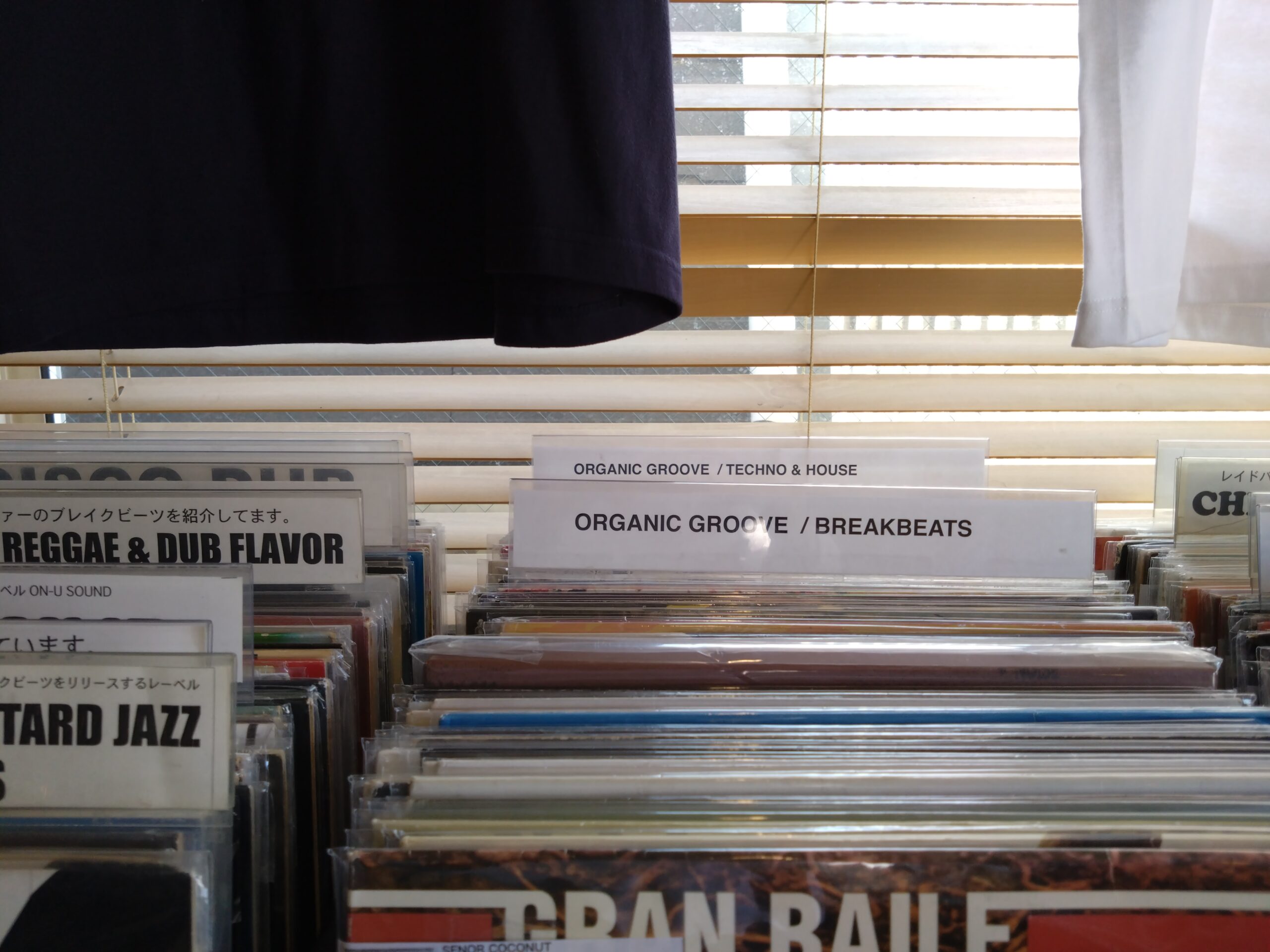
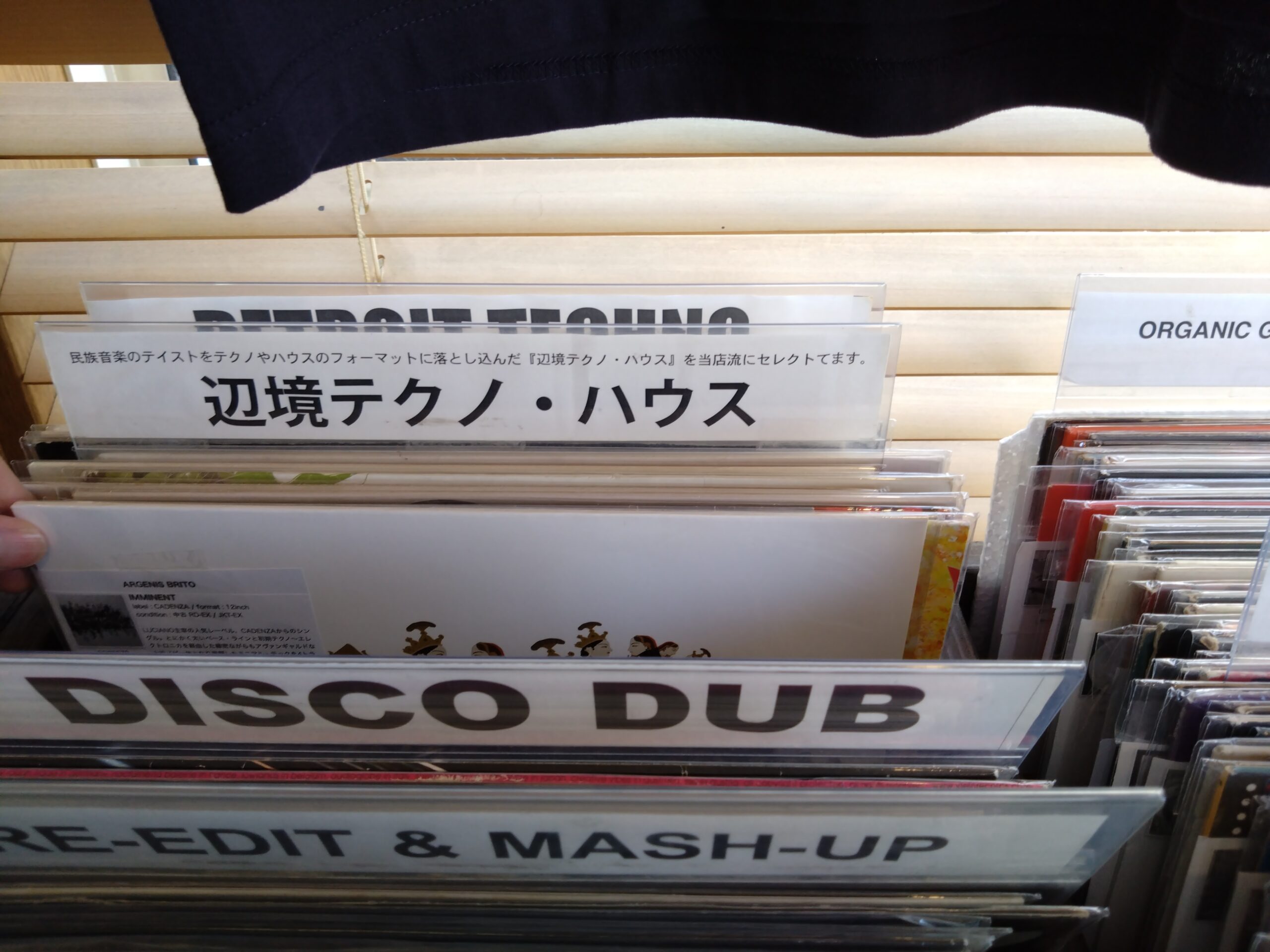
There are the usual label-based shelves, of course. But that is not all. GLOCAL RECORDS also has shelves named according to the store’s own perspective. The most symbolic is what he calls the “Organic Group.”
That “we just call it that” is the best part. It means they are giving shelf form, in their own language, to a feeling that ordinary genre categories cannot quite catch. This is what a record shop should be, really. Not just a place that teaches official classifications, but a place that opens a doorway and says, “See? This way of mixing things is interesting.” In that sense, GLOCAL RECORDS strongly foregrounds the ear of the shop itself.
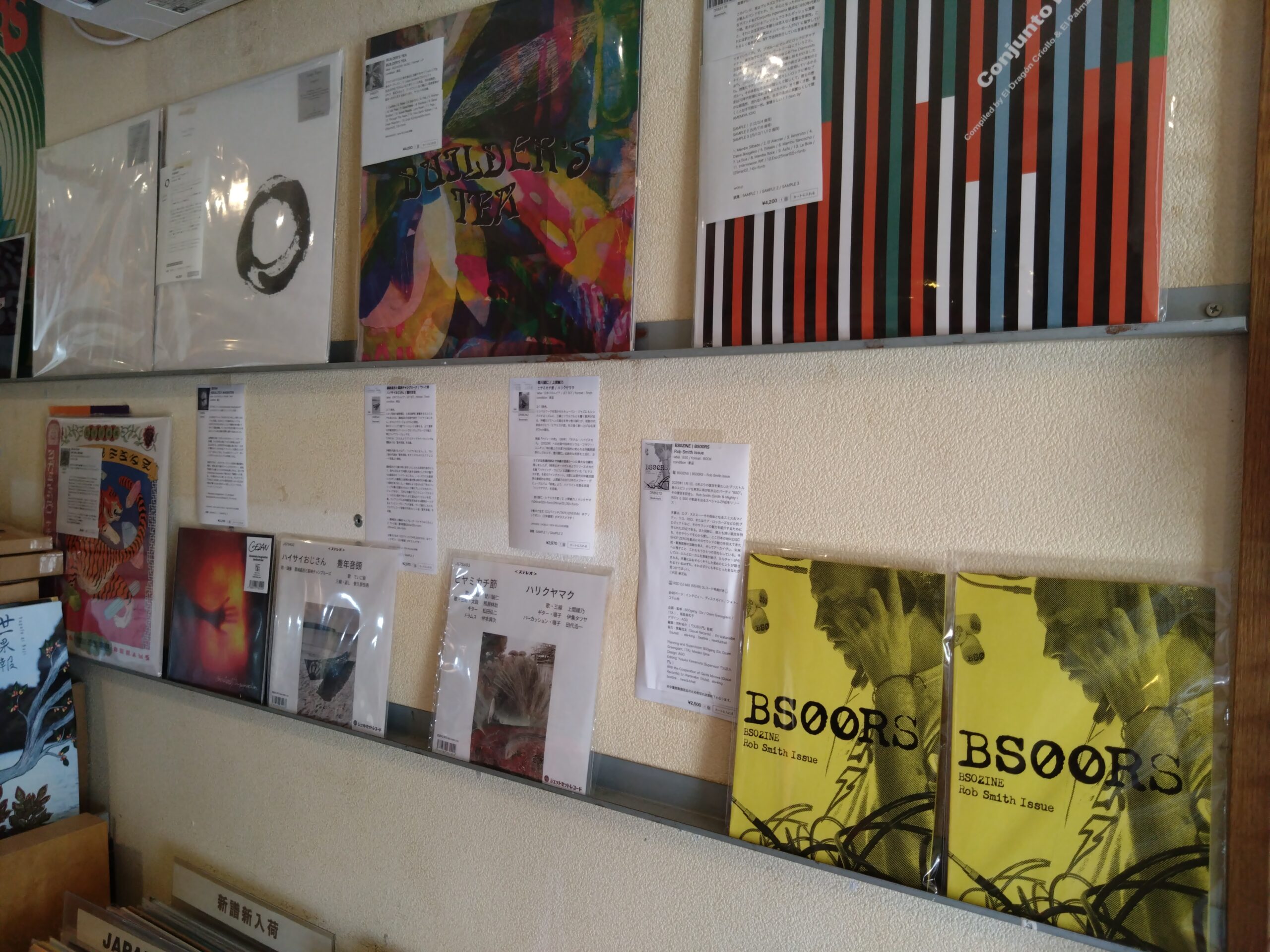
What makes this shop interesting does not stop at the shelf layout. You can feel the owner’s on-the-ground sensibility in the energy of the comments and the way records are handed over.
It is not about arranging everything mechanically according to market price. He wants to pass on not just the record, but also “what makes this amazing” and “where your ears should catch on.” GLOCAL RECORDS has that kind of temperature.
At the core of that feeling was the way Iijima-san worked, someone he watched closely while working in Shimokitazawa. Iijima-san was the kind of person who sold only what he genuinely loved. On top of that, he would try ideas first. If they failed, he would stop. Then he would start something else interesting. He had that DIY speed to him.
Building shelves through his own angle, writing comments one by one, running a label, printing his own T-shirts — the many things the owner does so naturally now all seem to be extensions of having absorbed that way of working through his body.
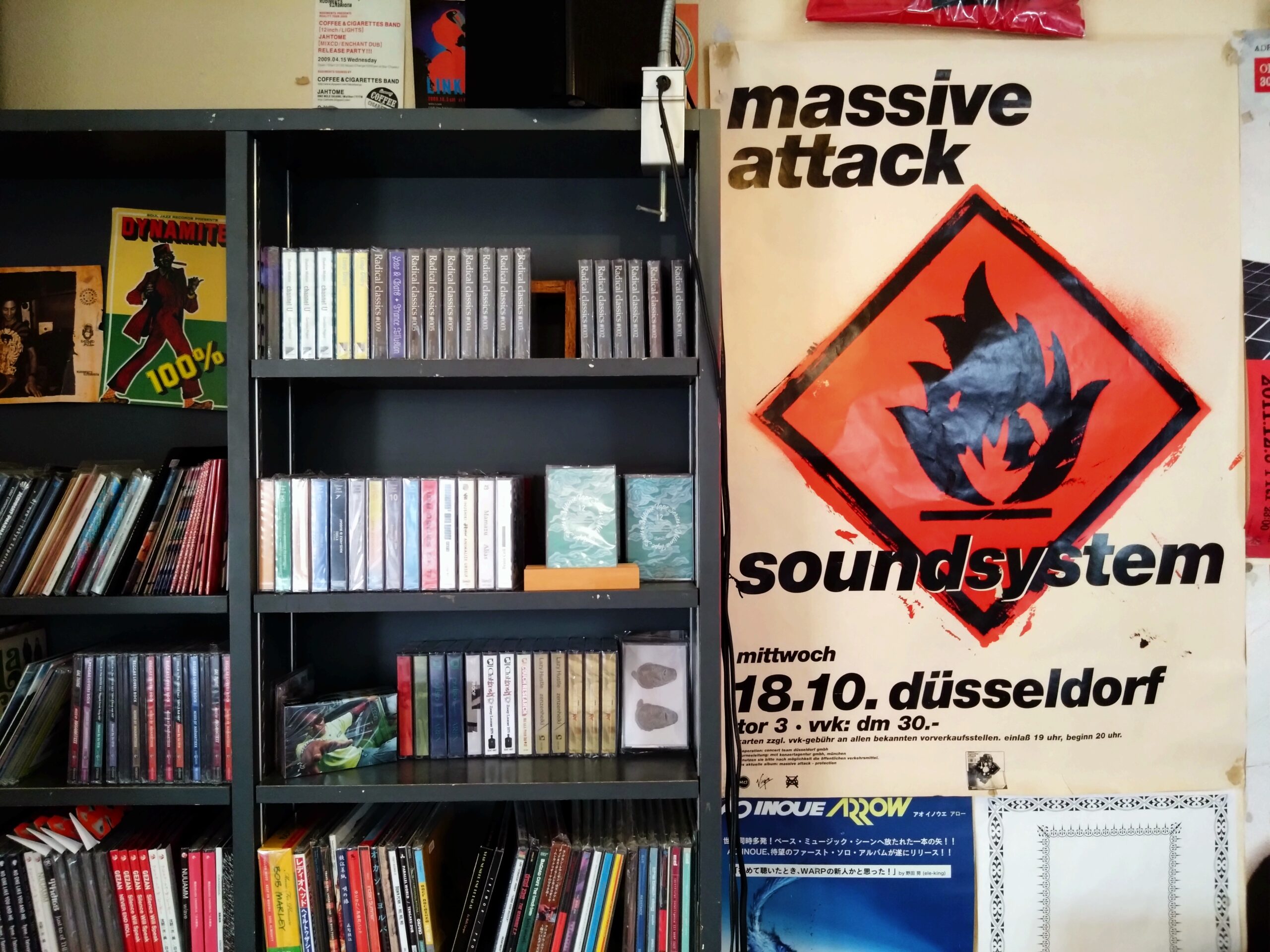
When he was younger, he too had been on the receiving side, someone shaped by record shops. Sometimes he would buy a record recommended by a shop staffer, only to find it later somewhere else at a different price. But he says he never felt cheated. Because what he received there was more than a price tag: it was a way of listening, and a sense of what made that record interesting.
That is why at GLOCAL RECORDS, a record is not handed over as just an object. It comes with an entry point, a way into listening. That is one of the best things about this shop.
Today you can check stock online and buy right away. But the owner sees the difference between the internet and a physical shop very clearly. Online, orders gather around whatever was uploaded in the past few days. A store works differently. Records brought in three or five years ago can suddenly be discovered by someone one day.
That feels like the very reason to go to a record shop. If all you want is the shortest path to the thing you already know you want, online is fine. But a shop leaves room to encounter something you did not yet know you wanted. As a child, he walked into record shops not knowing what might be there. He still believes in the accidental excitement of that experience now.
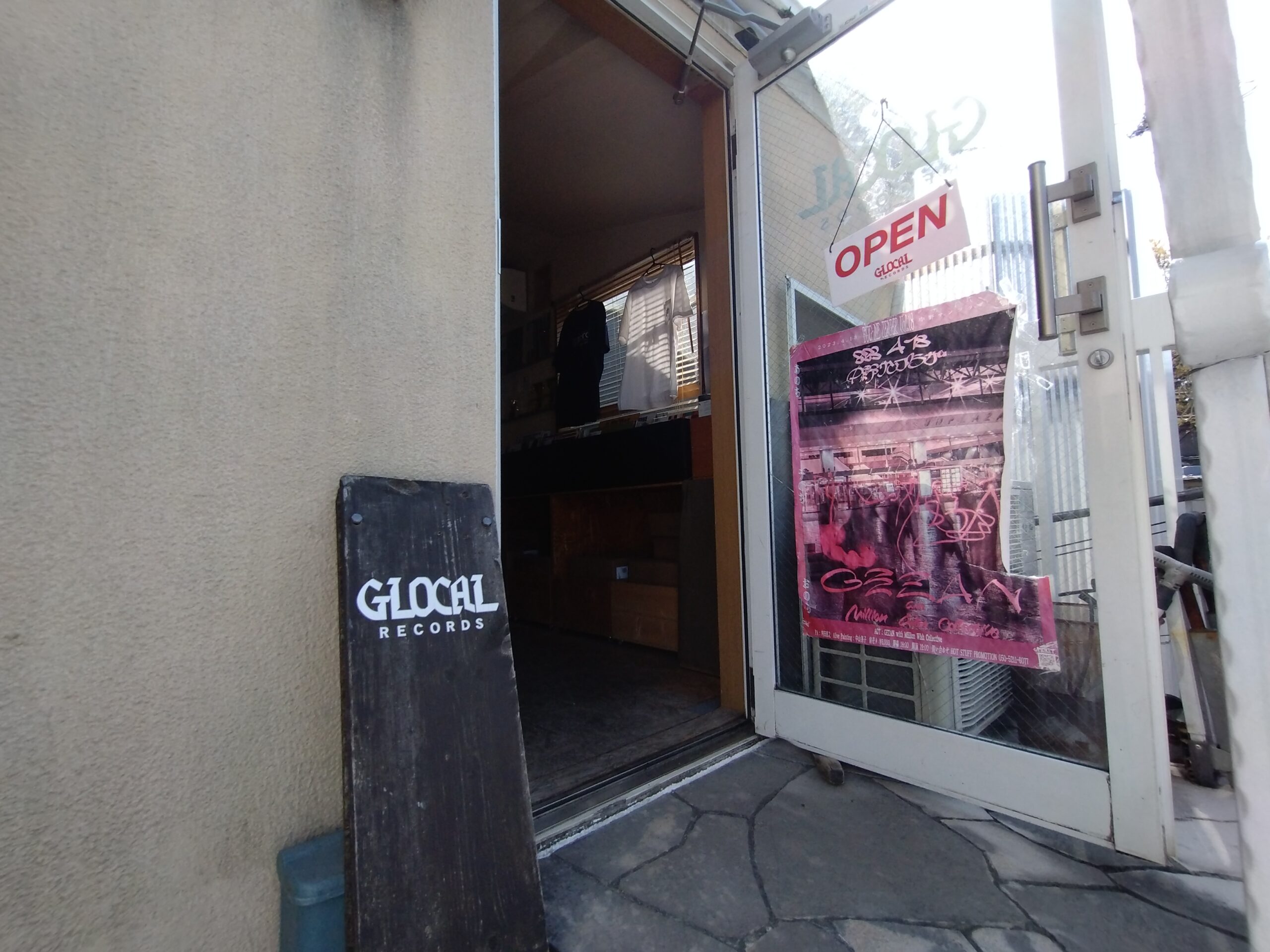
A lot of the visitors are DJs. But not only DJs. Younger customers come, and more foreigners have started coming too. Even though it is close to Shibuya and Harajuku, the people who make their way all the way down this tucked-away lane are looking for something beyond efficiency — they are looking for discovery. And the shop meets that expectation properly.
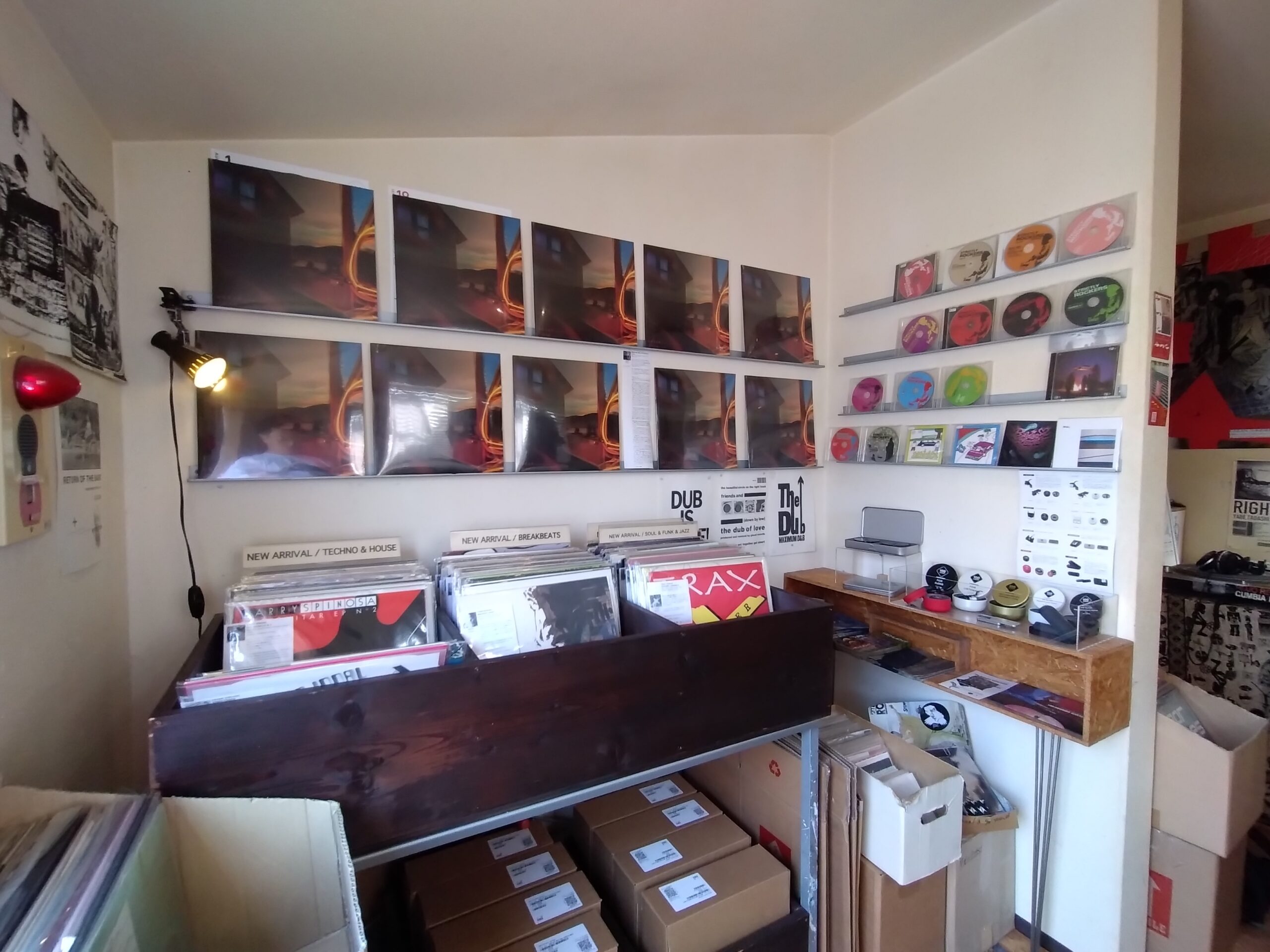
GLOCAL RECORDS is both a record shop and a label. There is no huge budget, and it is not run through flashy launches. It spreads little by little, mostly through social media and limited means. But the reason it keeps going is very clear.
That applies directly to the work of the shop too. It is not about lining up only what is already famous. It is about delivering sound that has not reached people yet. Maybe it is niche. But that is exactly why it matters. When a release gets the response, “I bought that one — it’s great,” you can feel that this is what he is doing it for.
Rather than locking artists in through exclusive contracts, the shop works in a way that feels natural, making music into releases with artists it happens to connect with at that moment. It is not focused only on landing a big hit. It is about putting out what he genuinely believes is good, in a form that can truly reach people. That feeling connects directly to the way each record is placed in the shop.
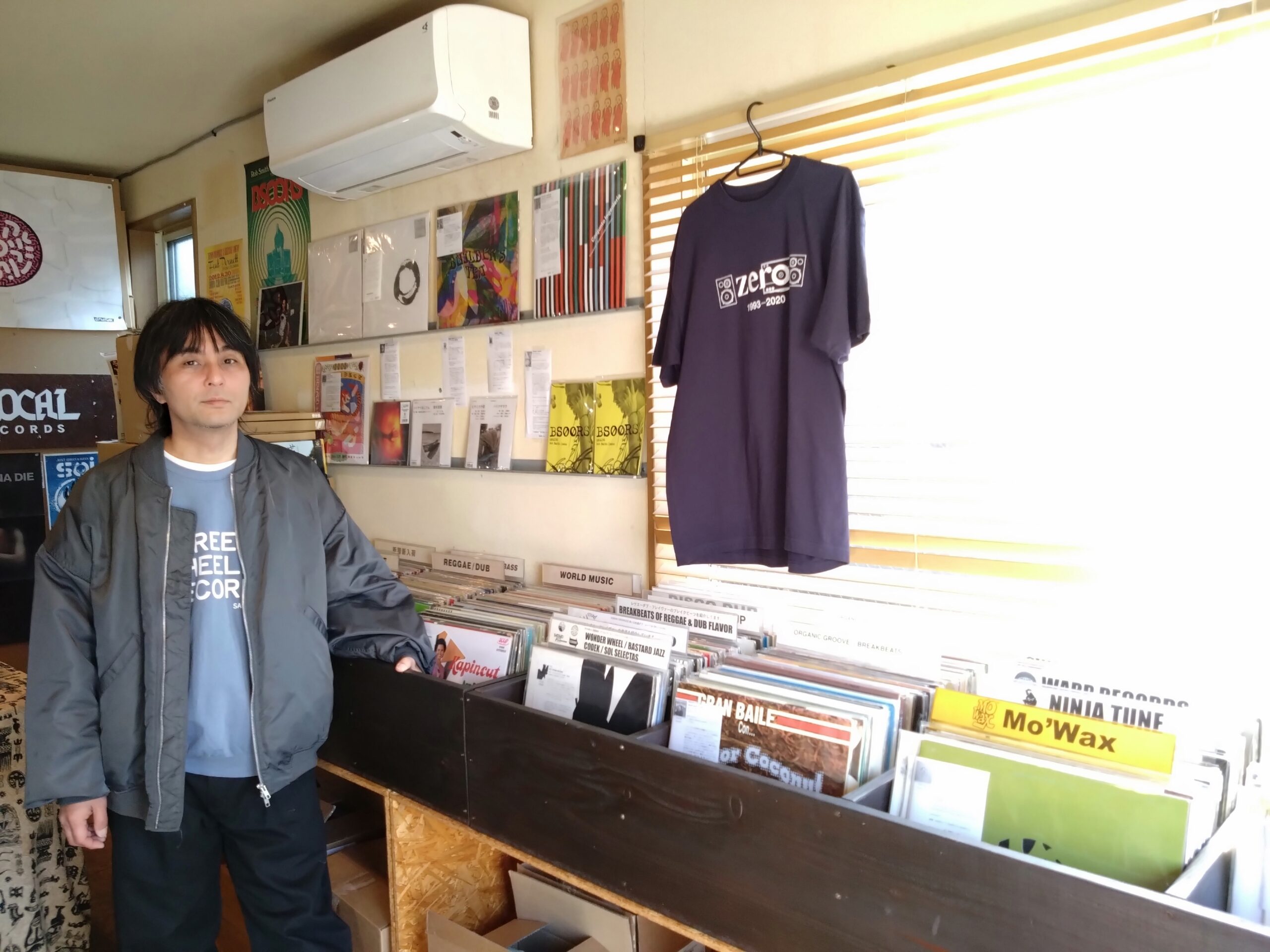
The owner says the core of what he sells has not changed very much. What has changed is the people around it. New generations keep appearing, and younger customers carry home their own one record from the same shelves. Foreigners come. DJs come. Neighbors come too. The air of a residential area and the culture of the city mix naturally together in the alley outside the shop.
That part feels especially good. It is not trying too hard to perform openness for everyone. But because the store has a real core, the range of people who step into it keeps widening. It is not the kind of place constantly stretching itself outward in flashy ways. It simply opens, closes, and opens again. Through that repetition, the scenery around the shop keeps updating little by little.
There is a core that does not change, and new people keep stepping into it. That way of breathing may be the real charm of GLOCAL RECORDS.
GLOCAL RECORDS is not a shop that pressures you with knowledge. But it is not soft in a vague way, either. It chooses carefully by ear, adds context properly, and passes things on with care. That is why it feels trustworthy, and why you want to come back.
In this alley, where time moves a little differently from the main streets, sound can still truly be discovered. Rather than going there to buy a genre, you go there to meet a way sounds mix. GLOCAL RECORDS is the kind of place you want to visit in exactly that mood.

|
||
|
||
|
||
|
||
|
||
|
||
|
||
|
||
|
||
|
||
|
||
|