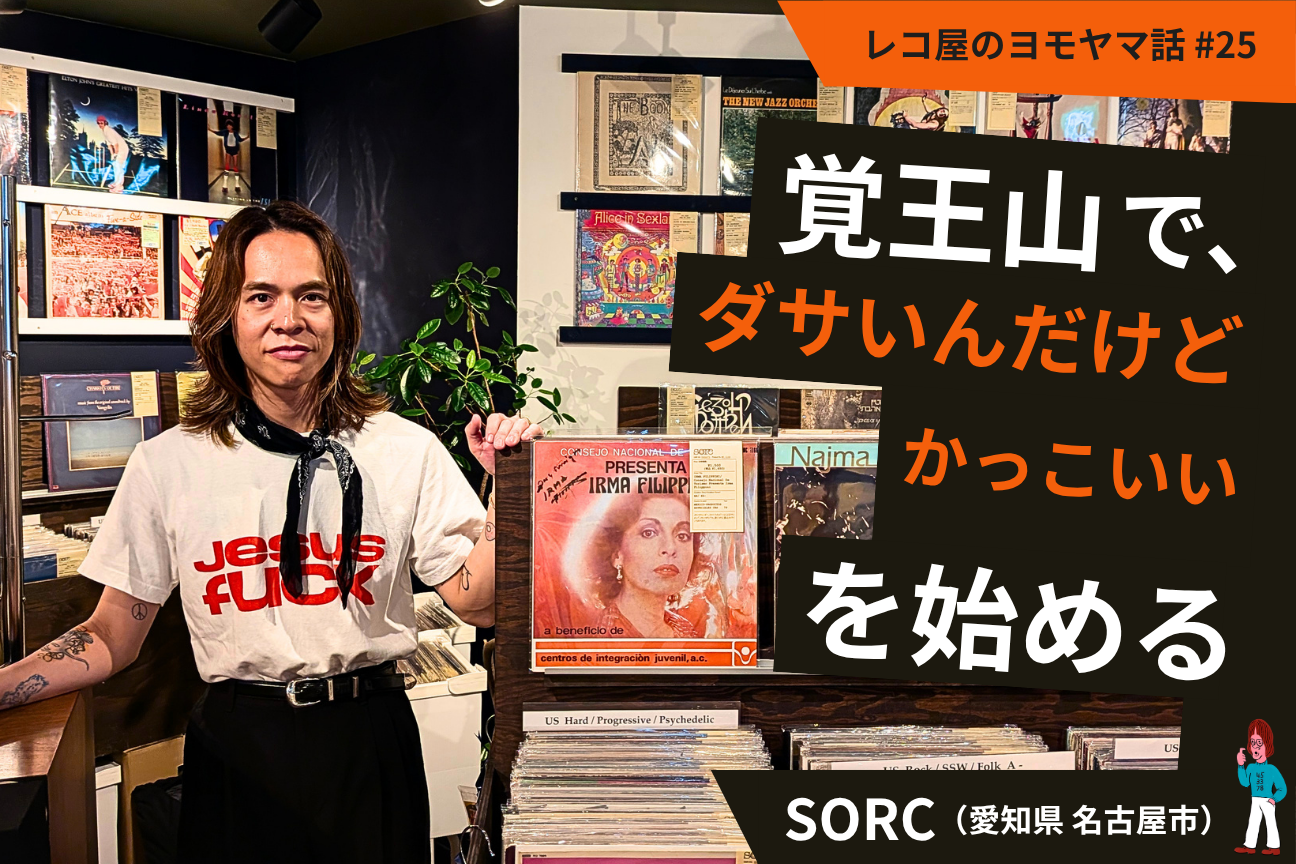
“Record Store Stories” is an interview series featuring the people behind record stores.
SORC is a record store in Nagoya, Aichi.
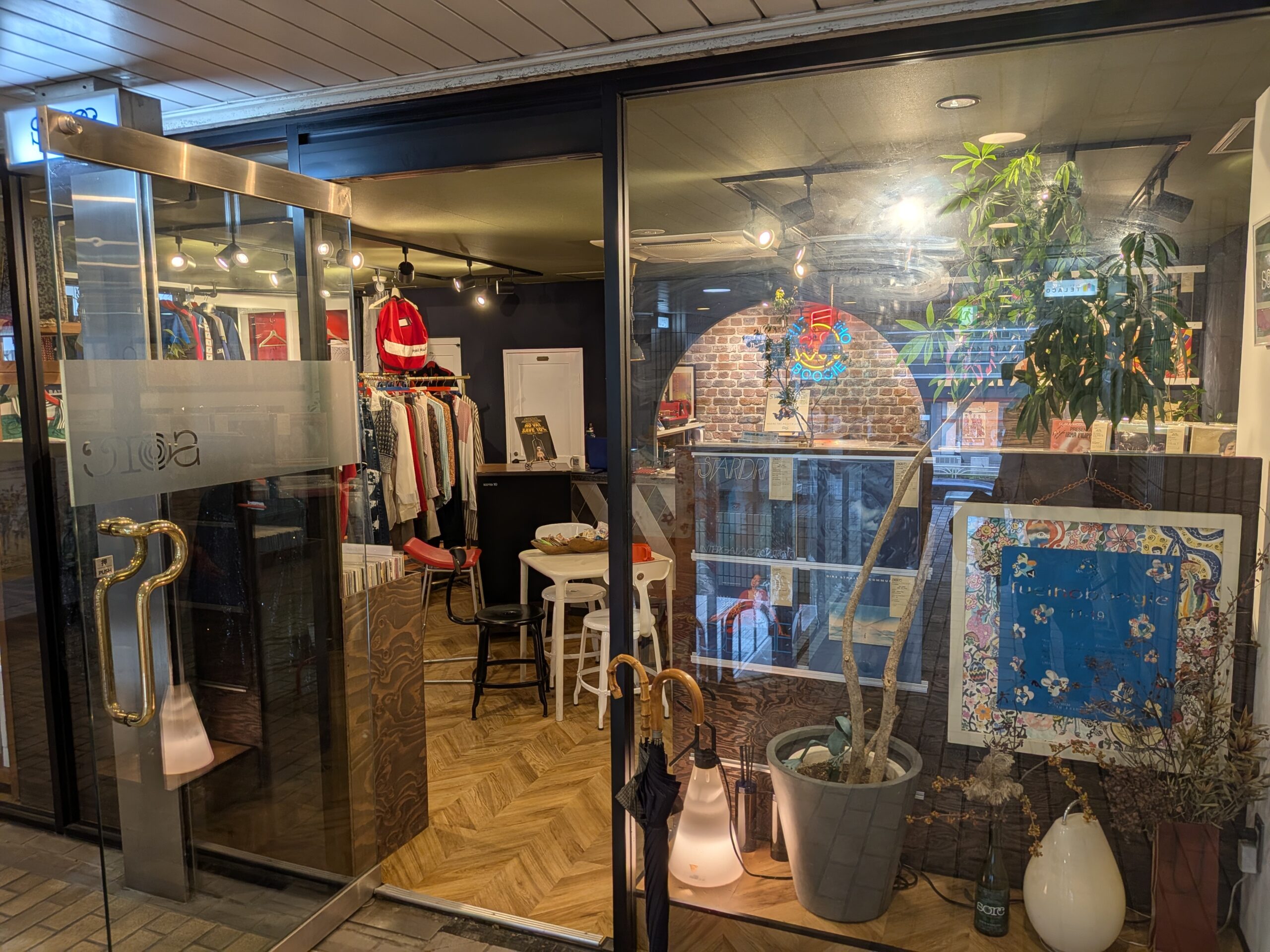
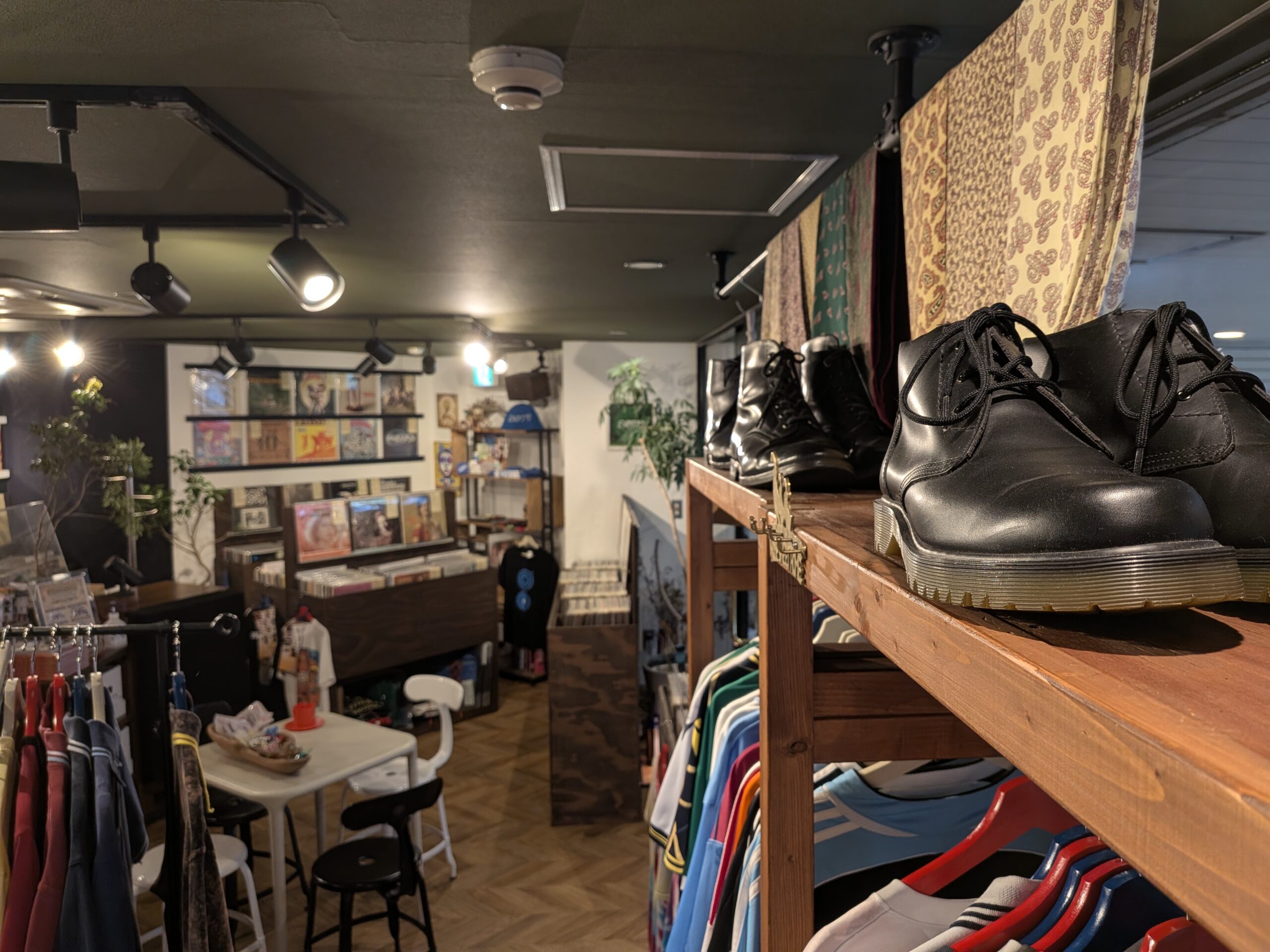
Records and vintage clothing share the store floor. Manager Mr. Kojima is usually behind the counter, while Mr. Obata is the store’s owner and proprietor.
We spoke with Mr. Kojima about how his path led from fashion to records and what matters to him at SORC. We also asked Mr. Obata about the kind of time he hopes visitors will spend in the store.

What first drew you to music?
 Mr. Kojima
Music was always around me because my father listened to records at home and played hard rock on the radio and CDs. But I wouldn’t say I was deeply interested in it from childhood. It was more that the sound was familiar to me.
Music really entered my life in junior high school. I saw some older students playing in a band at the school festival and thought, “I want to start a band.” We didn’t have a light music club, so I played baseball while putting together a band for the festival.
At the time, I listened to BUMP OF CHICKEN, RADWIMPS, and ELLEGARDEN. From there I discovered Green Day and then found my own way into Linkin Park, 2000s American rock, and melodic hardcore (Note 1).
(Note 1) Melodic hardcore: A style of rock that combines the speed and intensity of punk and hardcore with accessible melodies. In Japan, it is commonly shortened to “melocore.”
How did fashion and music come together for you?
When I was a student, fashion occupied a much bigger place in my mind than music. At university, I worked part-time at a select shop in Nagoya, and that was how I entered the fashion world.
Around the age of twenty, I became interested in a more mode-oriented style. I was looking through GAP PRESS (Note 2), a magazine featuring runway looks, when one page made me think, “This is it.” It showed a Saint Laurent collection designed by Hedi Slimane (Note 3).
As I learned more about Hedi Slimane, I discovered how strongly rock influenced him. I was very slim myself, so I was also drawn to the narrow silhouettes he created.
He would sometimes cast musicians rather than professional models in his runway shows, including people from indie bands that were not yet widely known. They often wore vintage clothing. There was something uncool about it, yet it was cool. That drew me deeper into vintage clothing. Around the same time, I discovered the British band SWIM DEEP.
They have a song called “She Changes the Weather.” Until then, I had mostly listened to melodic hardcore and heavier rock, so it shocked me. I realized rock could have this floating, dreamy quality. It was a completely new sensation for me at the time.
(Note 2) GAP PRESS: A fashion magazine reporting on the latest collections from New York, London, Milan, Paris, Tokyo, and other fashion capitals through extensive photography.
(Note 3) Hedi Slimane: A French fashion designer and photographer who served as Saint Laurent’s creative director from 2012 to 2016.
Was that also when you started buying records?
Yes. In fact, the first record I bought myself was by SWIM DEEP. I found out they had released records, and there happened to be a record player at home, so I thought I would give one a try.
Rather than buying it at Tower Records or a used record store, I ordered it internationally from the band’s official website. At the time, I didn’t even understand record sizes very well. When a single arrived, I remember thinking, “Something small turned up.” I wasn’t trying to build a collection. It was simply a matter of buying something because a band I loved had released it.
Around then, Hedi left Saint Laurent, and my passion for fashion settled down a little. In its place, I began listening to more indie music. Music became more central to my life than buying vintage clothing.
That was when I started thinking record stores were cool and that I wanted to work in one. I looked around at different record stores in Nagoya. When I first visited SORC, I loved the atmosphere. The staff were close to the customers, and I thought it was a great place.
I came back a few days later and made a direct appeal to the owner, Mr. Obata. I told him I wanted to run a record store someday and ultimately bring vintage clothing and records together.
Mr. Obata said, “Why don’t you put some vintage clothes in that corner and try selling them?” I couldn’t believe things could move forward so quickly (laughs).
What makes SORC distinctive?
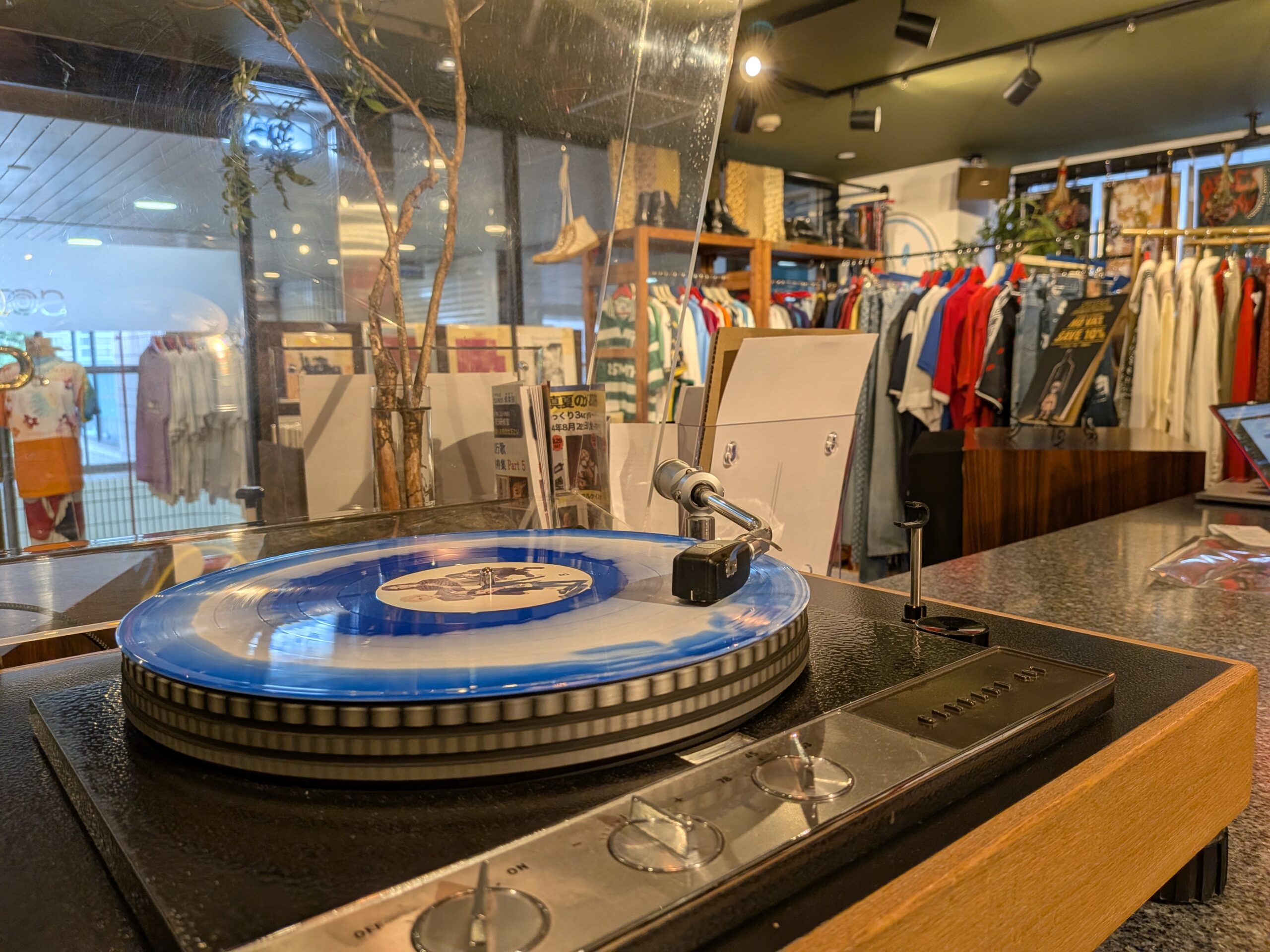
SORC gives people a space where they can listen closely to records in a proper environment. Rather than just checking them through headphones, visitors can experience records as part of a complete listening space. They may not be able to use speakers this large at home, but I want them to hear what records are truly capable of.
SORC also carries expensive records, and those are exactly the ones I hope people will hear before they sell. Some may be records you never get another chance to hear in your lifetime. You can listen to valuable records here in the store. Of course, it is fine to play them later through the smaller speakers or portable players you normally use. But I would be happy if people could take them home knowing that records can produce sound like this.
We also asked SORC’s owner-proprietor, Mr. Obata, about the store.
Mr. ObataOur store is not in the middle of the downtown area, so people make a special trip from Nagoya Station to visit us. That is why I don’t want anyone to leave thinking, “I came all this way, but there was nothing here for me.”
We may have fewer customers than a store in front of a station, but seen another way, that can be an advantage. People can take their time over tea, listen to records in a good space, and try on vintage clothing. Even if they buy nothing, I want them to leave thinking, “That was interesting. I’ll come back.”
Records and vintage clothing are both things that once belonged to someone and can be enjoyed again by someone else. If there are already so many good used things in the world, we should value and enjoy them. I hope that respect for objects comes across naturally as well.
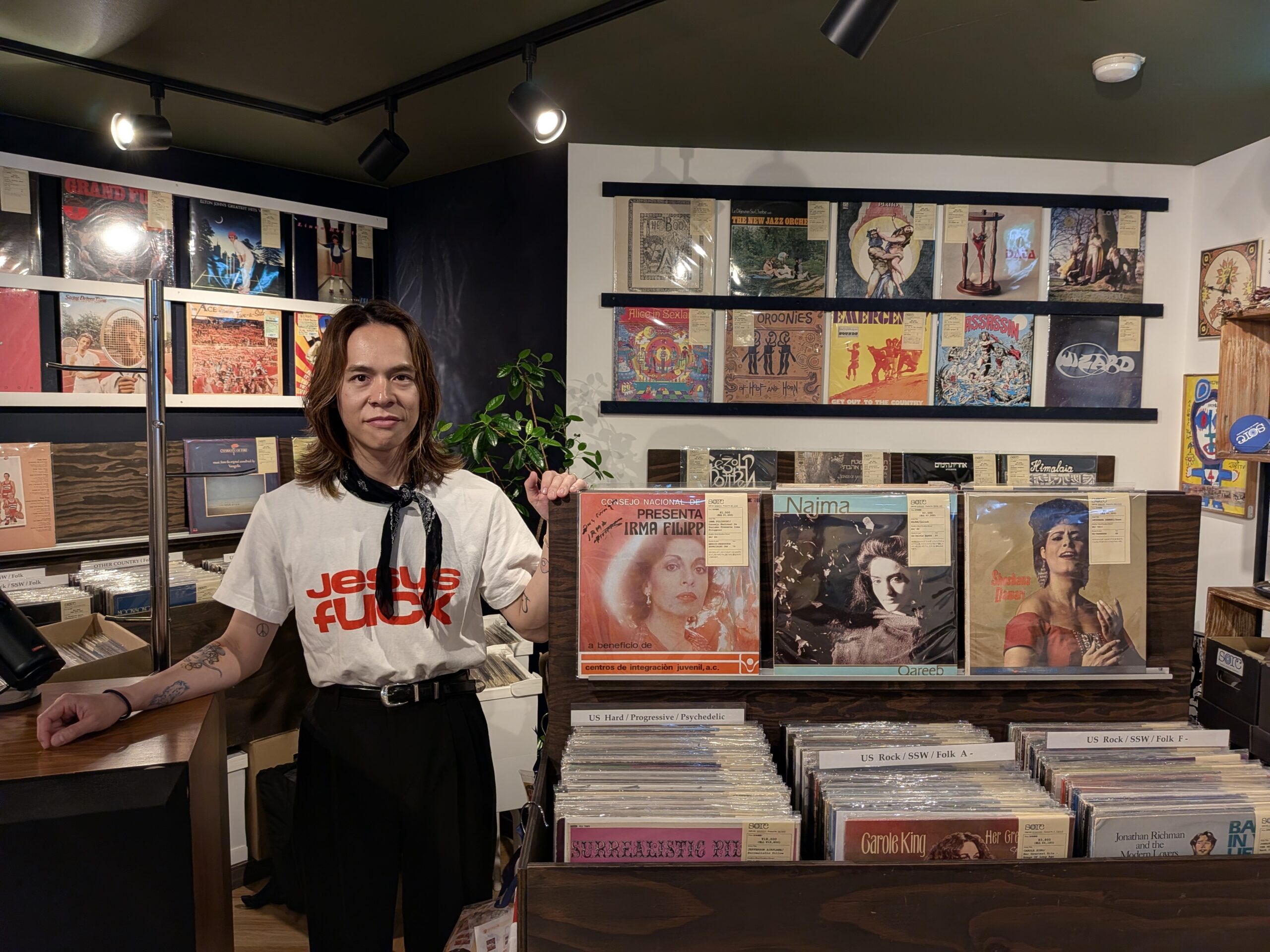
What kind of place would you like SORC to become?
The path I experienced from fashion to music is something I value deeply.
For example, I don’t mind if someone picks up a band T-shirt without knowing the band. But if they decide to buy it, I can say, “Give their music a listen too.” That is the feeling I bring to the store each day. I think guiding someone from an unfamiliar band T-shirt to the band’s music is something I am uniquely able to do.
Because SORC has records, we can actually put the music on. Vintage clothing can lead someone to music, and music can lead someone to clothing. That is something this store can make possible. I want to continue developing that style while turning SORC into more than a place that simply sells things.
The way the store is presented and the shelves are arranged also matters to me. When I began selling vintage clothing, I didn’t want to simply put it in boxes. I wanted to shape how people saw it. I have been influenced by the select shops I knew and the atmosphere of stores overseas. When SORC was renovated, I even asked for a small stage-like space where we could hold live performances.
For the fifth anniversary of my vintage clothing business, a band formed by some of our customers played live in the store. It felt like one of my ideas had finally taken shape.
I recently traveled through the UK, visiting Scotland, Newcastle, Manchester, Liverpool, London, and Bristol and looking at record and vintage clothing stores. I watched who spent money, how they spent it, and what kinds of atmosphere different stores created. Even when I cannot put those observations into words right away, they offer clues. I want to gradually bring the atmosphere and ideas I encountered there back to SORC.
Records and vintage clothing are not things you simply buy and forget. They can bring people together, encourage them to listen to music, and start conversations. I hope SORC can become less a place where people only buy things and more a place where the things they love give them a reason to gather.
Recoya VIEW
Fashion can lead to music that someone has never heard before, while a record can lead to a new way of dressing. At SORC, records and vintage clothing are not separate worlds. The pleasure lies in moving freely between them as parts of the same culture.
Visitors can listen closely to a record through large speakers, try on vintage clothing, and take their time over conversation. Both Mr. Kojima and Mr. Obata made it clear how much they value an experience that goes beyond shopping.
Mr. Kojima’s curiosity grew from the feeling that something could be “uncool, yet cool,” and has developed into a place that connects people with music and clothing. SORC is a store where the things people love can lead to their next discovery.