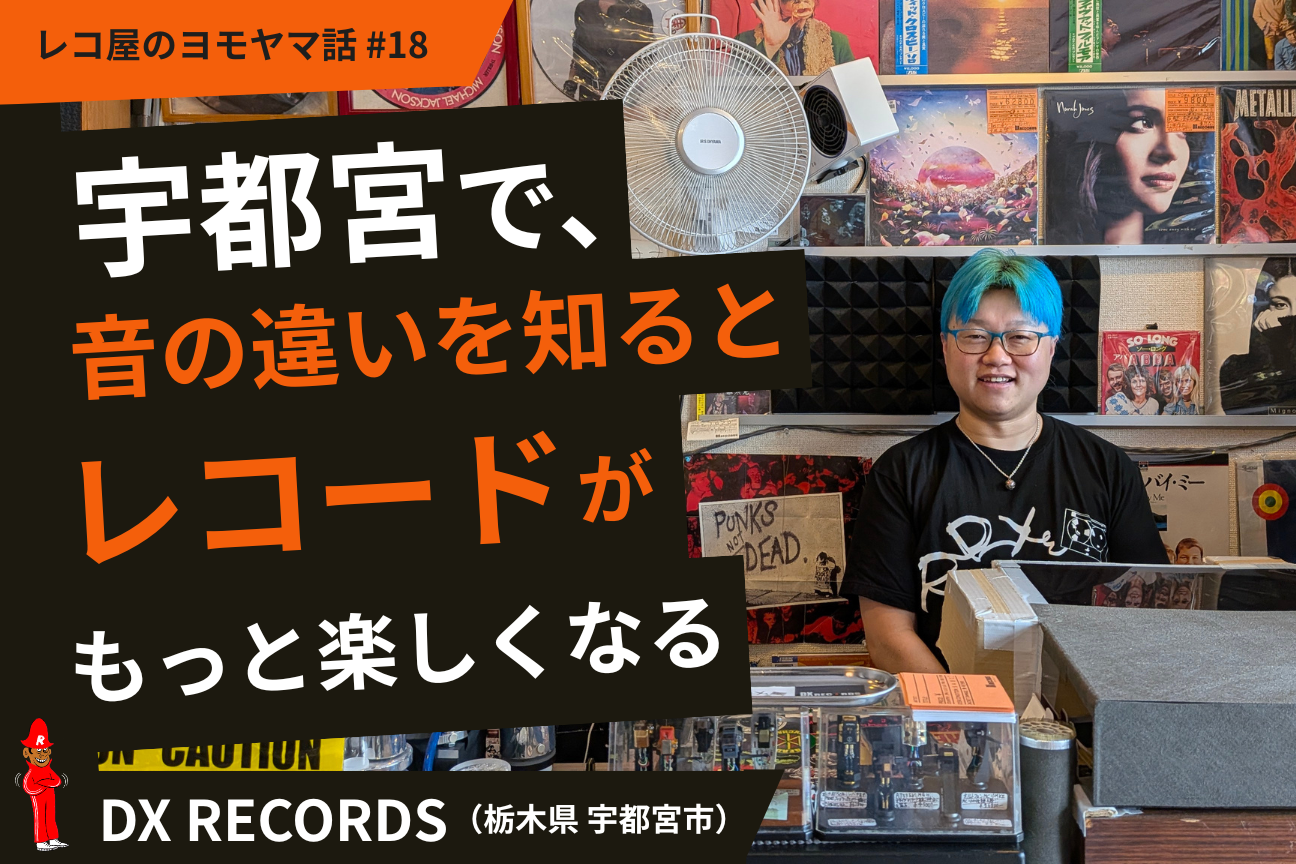
“Record Shop Yomoyama Stories” is an interview series with record shop owners.
DX RECORDS is a record shop located within walking distance of Tobu-Utsunomiya Station.
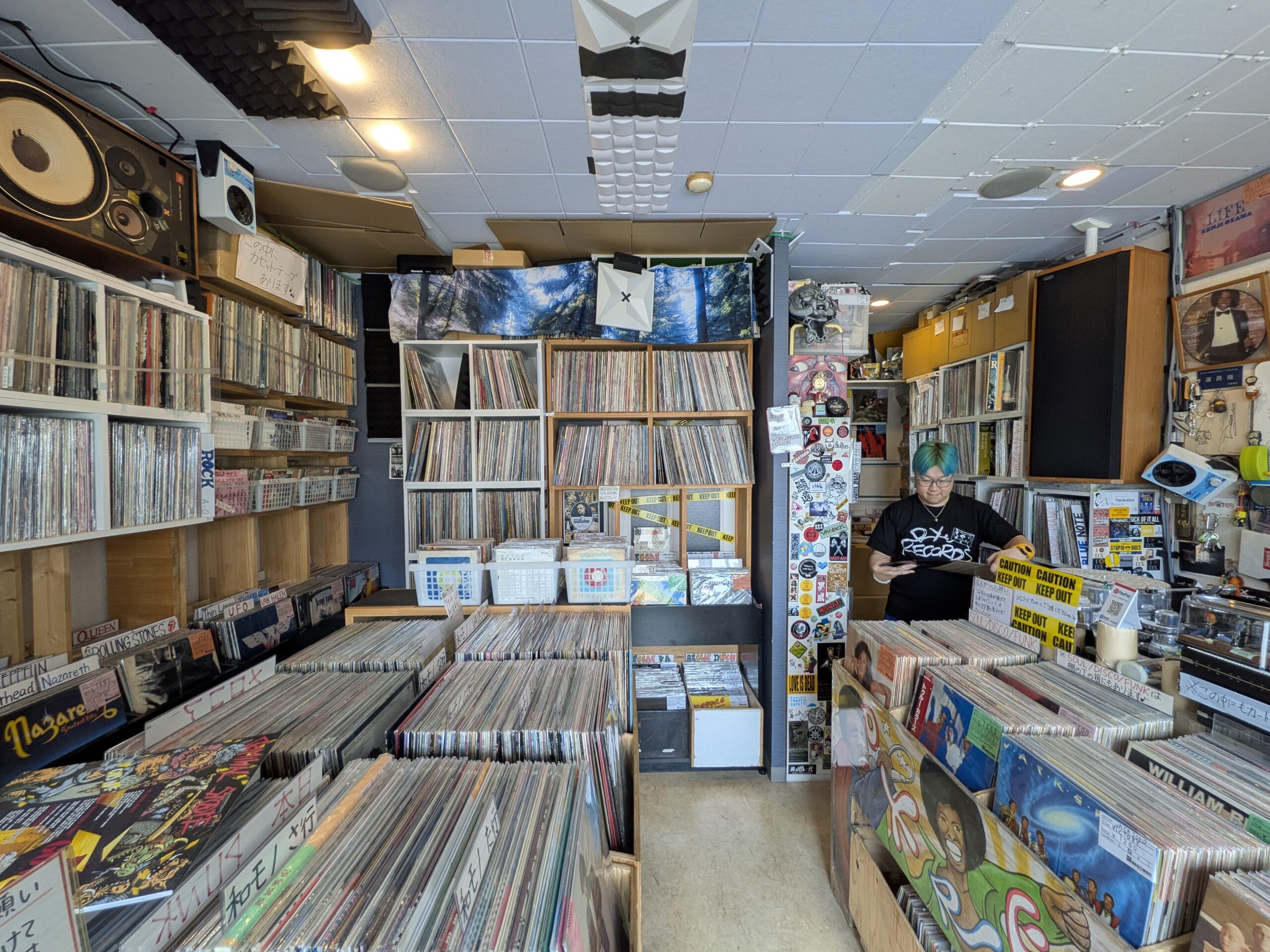
Inside the shop, you will find a wide range of records, including rock, punk, jazz, soul, funk, Japanese records, reggae, blues, soundtracks, and more.
“I want to value records not only as objects, but also along with the time they spent with the people who owned them.”
That is how the owner, Mr. Tezuka, describes his approach.
We spoke with Mr. Tezuka about his first encounter with records, why he started DX RECORDS, and what he values in running the shop.


What first drew you strongly to music and records?
 Mr. Tezuka
I didn’t grow up in a household where my parents listened to records. Around my second year of junior high school, my older brother started DJing, so there may have been a turntable at home. But I wasn’t immediately influenced by that.
At the time, I was into martial arts. K-1(※1), specifically. Among the fighters, I really liked Andy Hug, and I wanted to hear his entrance theme.
But back then, even if you searched online, you couldn’t find things right away like you can now. I went to TSUTAYA, but I still couldn’t figure it out. So I wondered where I could find the answer, and that led me to a record shop.
I asked the person at the shop, “Do you know Andy Hug’s entrance theme?” and he handed me a record, saying, “This is it.”
I thought, “Wait, I only have a CD player.” But since my older brother had a turntable, the shop owner said, “Daiji, daiji!” — in Tochigi dialect, it means “It’s okay.” That became the first record of my life.
(※1)K-1: A Japanese stand-up striking martial arts event founded in 1993, and also a general term for the competition itself.
And that was how you entered the world of records?
As a kid, records were visually fascinating to me. I wondered how sound could come out of this disc. In junior high school, I would go to record shops with my allowance. In high school, I worked part-time, got paid daily, and would ride my scooter straight to the shop with that money.
At first, I bought Queen. Then I bought Billy Joel and looked for Gilbert O’Sullivan. I also liked punk, so I listened to Sex Pistols and Ramones.
My sources of information were TV commercials or songs I happened to hear somewhere. When I thought, “I like this song,” I wanted to hear it on a record.
Even now, there are songs that strike something inside me. Songs that sink in, or songs that move me. I had a strong feeling that I wanted to hear those songs on vinyl.
I also began to feel that the same song sounded different on CD and on vinyl. It’s hard to put into words, but with records, there’s a sense that your body reacts. The sound reaches your body properly. “Moving” may sound a little too polished as a word, but I really did feel that records were different from CDs.
Why did you decide to start a record shop?
I was around 29. The company I worked for at the time was a good company, but when I thought about my future, I wondered if it was okay not to do what I really wanted to do. And then I thought, “For me, it has to be a record shop.”
I had always loved records, and even if it didn’t go well, I wanted to try doing what I loved at least once.
Looking back now, it was scary.(笑)
I decided on the current location very quickly, thinking, “This is the only place.” I started by selling my own records.
So even now, I think it’s a miracle that the shop has continued. I’m truly grateful to our customers. These days, younger people come in, and older people do too. Some customers have been coming since they were four or five years old, and others are over 80.
Also, I think many record shops are in a similar situation, but recently we’ve been getting more visitors from overseas. I can’t speak English at all(笑), but sometimes people from overseas come here by rental car.
What do you value at DX RECORDS?
I really don’t want to treat records carelessly. Not just as objects, but including the time they spent with the people who owned them. I want to value that too.
Sometimes in various media, you see records referred to as “junk records” or “trash records.” That honestly hurts a little.
Of course, some records are hard to price. But for the person who brought them in, they may carry memories. When buying records, people sometimes say, “Sorry, these are old.” But I want to look at them properly as much as I can. I try to notice details, such as the difference between a regular pressing and a promotional copy. I want to think from the other person’s point of view.
Do you also talk to customers about how records should be handled?
Sometimes.(笑)
When records are handled roughly in the shop, it does bother me. I want people to handle them with care if possible. I want customers to enjoy browsing records, and I also want the records themselves to be treated carefully. Both are important.
In terms of helping customers enjoy themselves, I also care a lot about the sound system.
I may be able to offer an experience where someone thinks, “I’ve never heard sound like this before.” I use different speakers with different sound characteristics.
There are speakers that deliver sound sharply, and others that sound a little gentler. Depending on the genre being previewed, or whether customers are having conversations in the shop, I change the speakers so they don’t get in the way of the atmosphere.
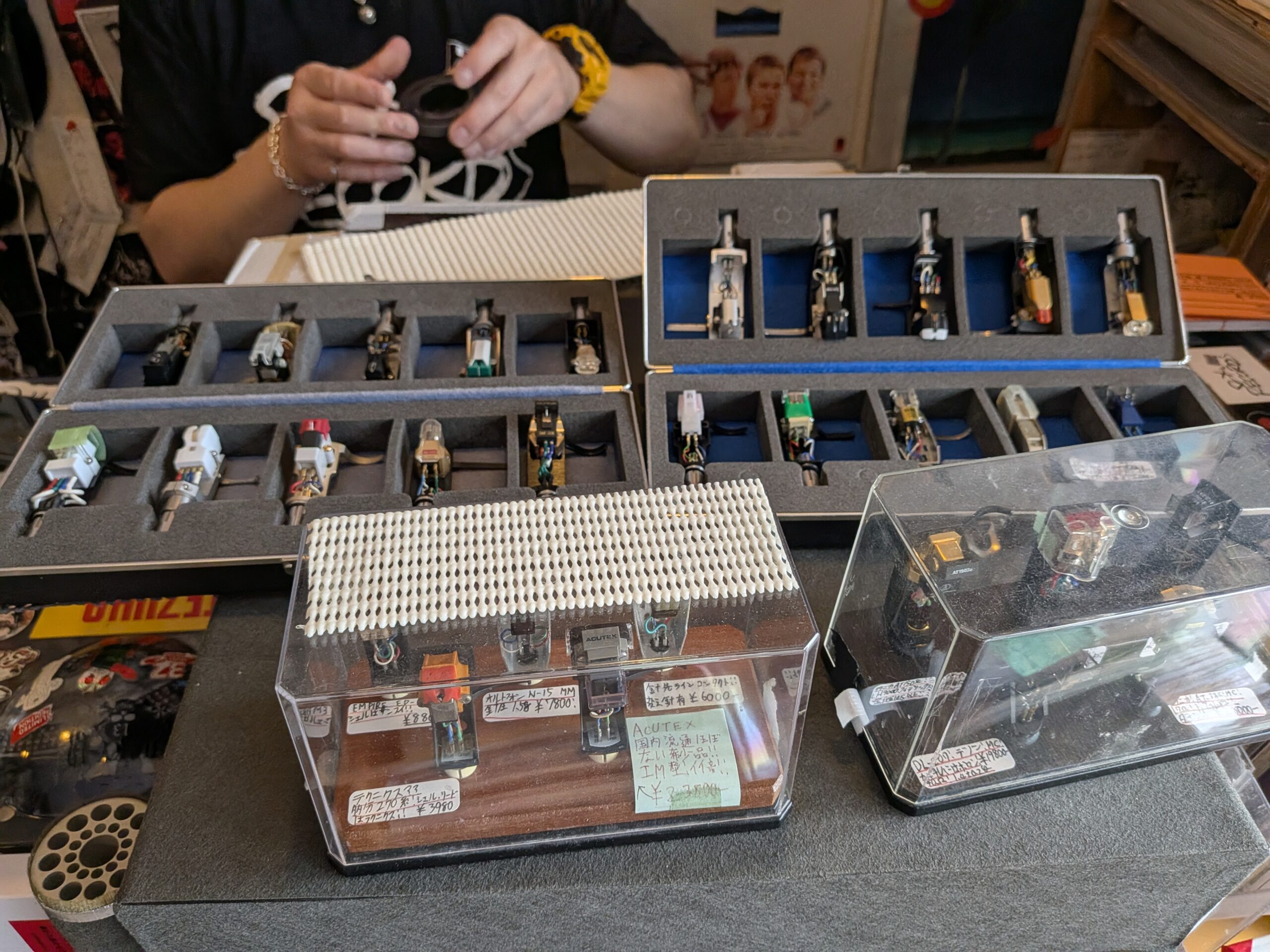
It sounds like even beginners can experience how much the sound can change.
We have around 20 record needles. The sound changes a lot depending on the needle.
For example, a needle that costs a few thousand yen and one that costs tens of thousands of yen sound completely different. But that doesn’t mean the expensive one is always the right answer. Different people prefer different sounds.
We also use players that you don’t usually see. Some have multiple arms, and one is driven by a thread. People who like audio equipment might think I’m a bit of a weirdo.(笑)
But rather than making everything look perfectly neat, my thinking is that what matters is whether the sound coming out is good.
Records are not only something you buy. The way you listen to them changes the impression. I think it becomes more interesting when you learn that the sound changes depending on the needle or speakers.
Of course, everyone has different living situations, and I don’t think improving your playback equipment is the only correct answer. I personally also love the fun of listening on a portable player.
But I want to suggest that this is one way to enjoy records. By actually experiencing the difference in sound, I hope it can become a small trigger or a helping hand for people to enjoy music even more.
At the shop, I’m always trying hard to communicate that feeling, while also being careful not to let my passion get too intense.
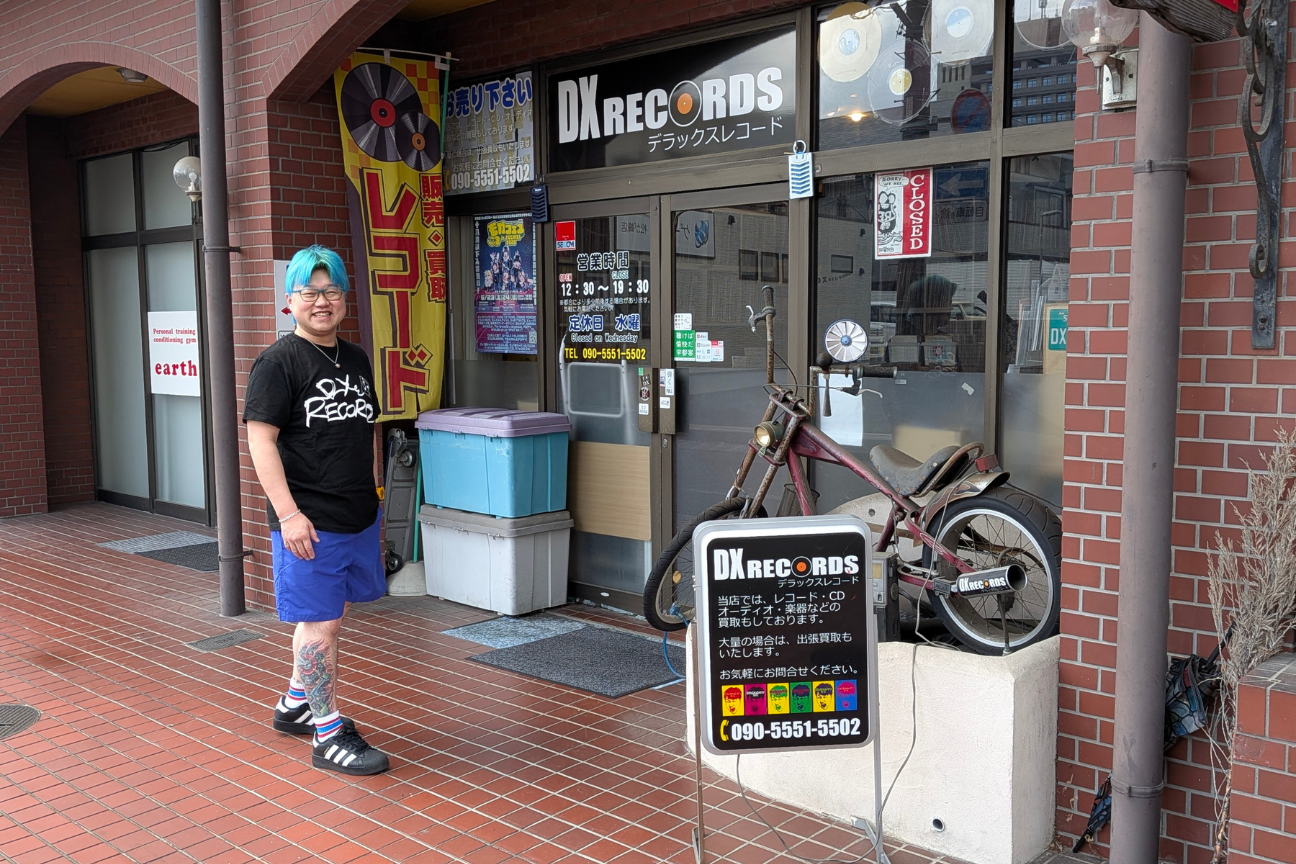
What kind of shop do you want DX RECORDS to be from here on?
Even if it’s small-scale, I want this to be a shop that is loved.
A place where people can relax. If someone leaves thinking, “That was a good time,” that would make me happiest.
Not only buying records, but also having casual conversations, or the next time they come in, saying, “I remember what we talked about last time.” I find those moments interesting.
When I play live with my band, I have a strong feeling that I want people to enjoy themselves. Maybe it’s the same with the shop.
If someone asks me to set up their audio equipment, I try to go further than what a regular technician would normally do. I want to do as much as I can to make the other person happy.
Recoya VIEW
What left a strong impression at DX RECORDS was Mr. Tezuka’s words: “I want to value records not only as objects, but also along with the time they spent with the people who owned them.” Some records are easy to price, and others are not. But each one may carry the time someone spent listening to it. That way of facing records seems to shape the atmosphere of the shop.
Another part of DX RECORDS’ character is its dedication to sound. The shop shows how needles, speakers, and players can change the impression of music, not as difficult technical knowledge, but as a gentle suggestion: “Here is another way to enjoy records.” It is not about saying that expensive playback equipment is the correct answer. Rather, it is a place that helps expand the ways people can enjoy music.
If you are looking for records in Utsunomiya, visit DX RECORDS. Pick up a record that catches your interest, and if possible, ask the owner to play it for you. A song you have heard many times before may sound a little different there.