“Record Shop Yomoyama Stories,” our interview series with record shop owners.
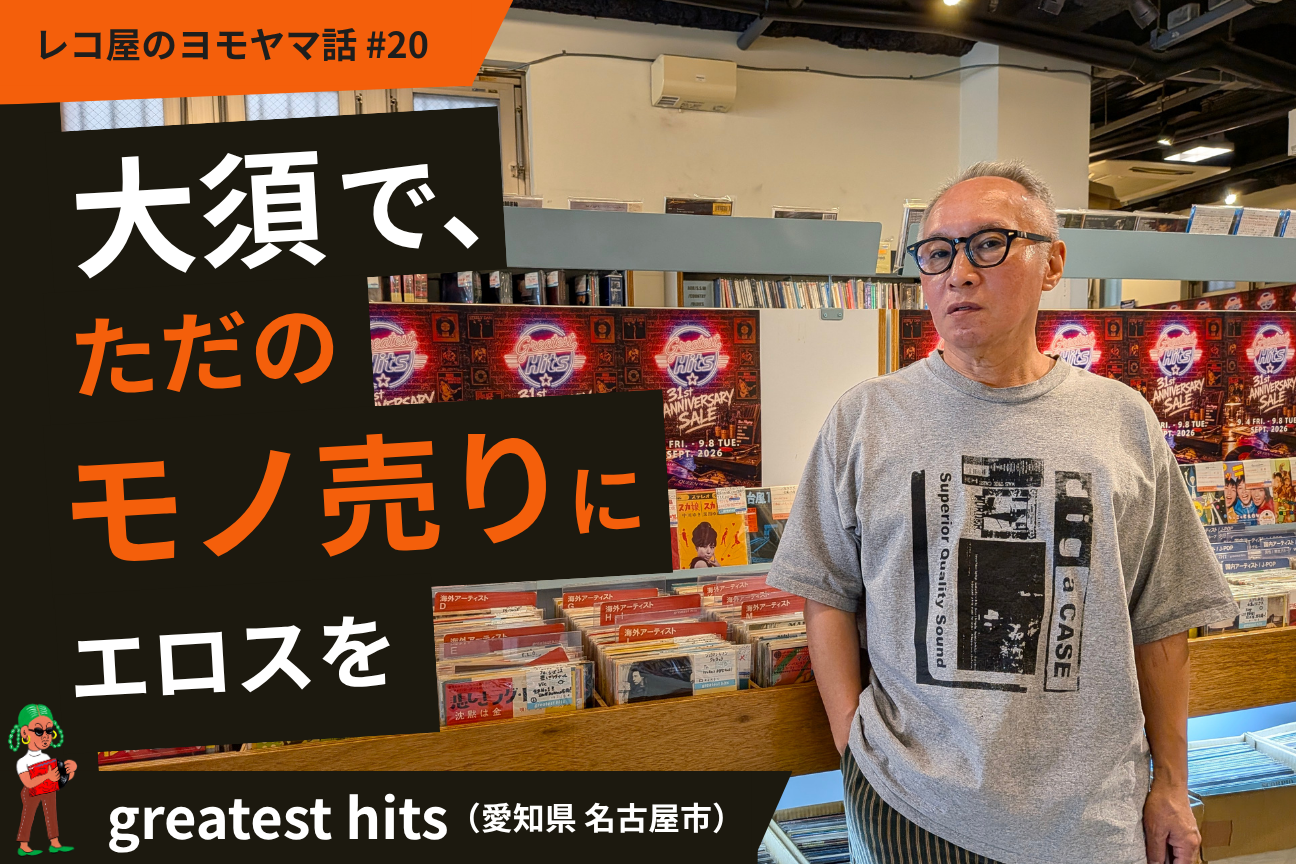
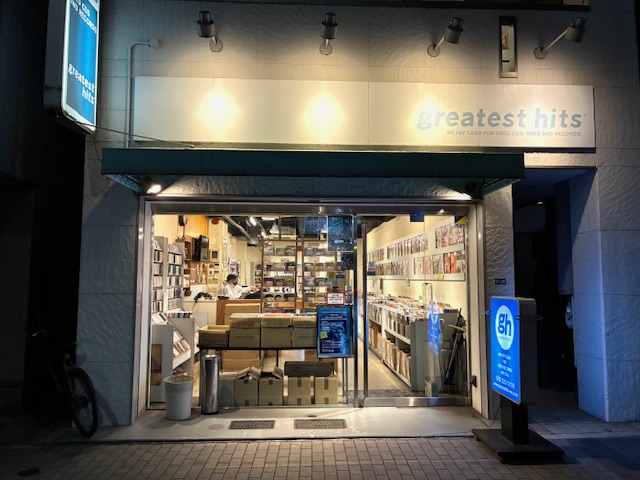
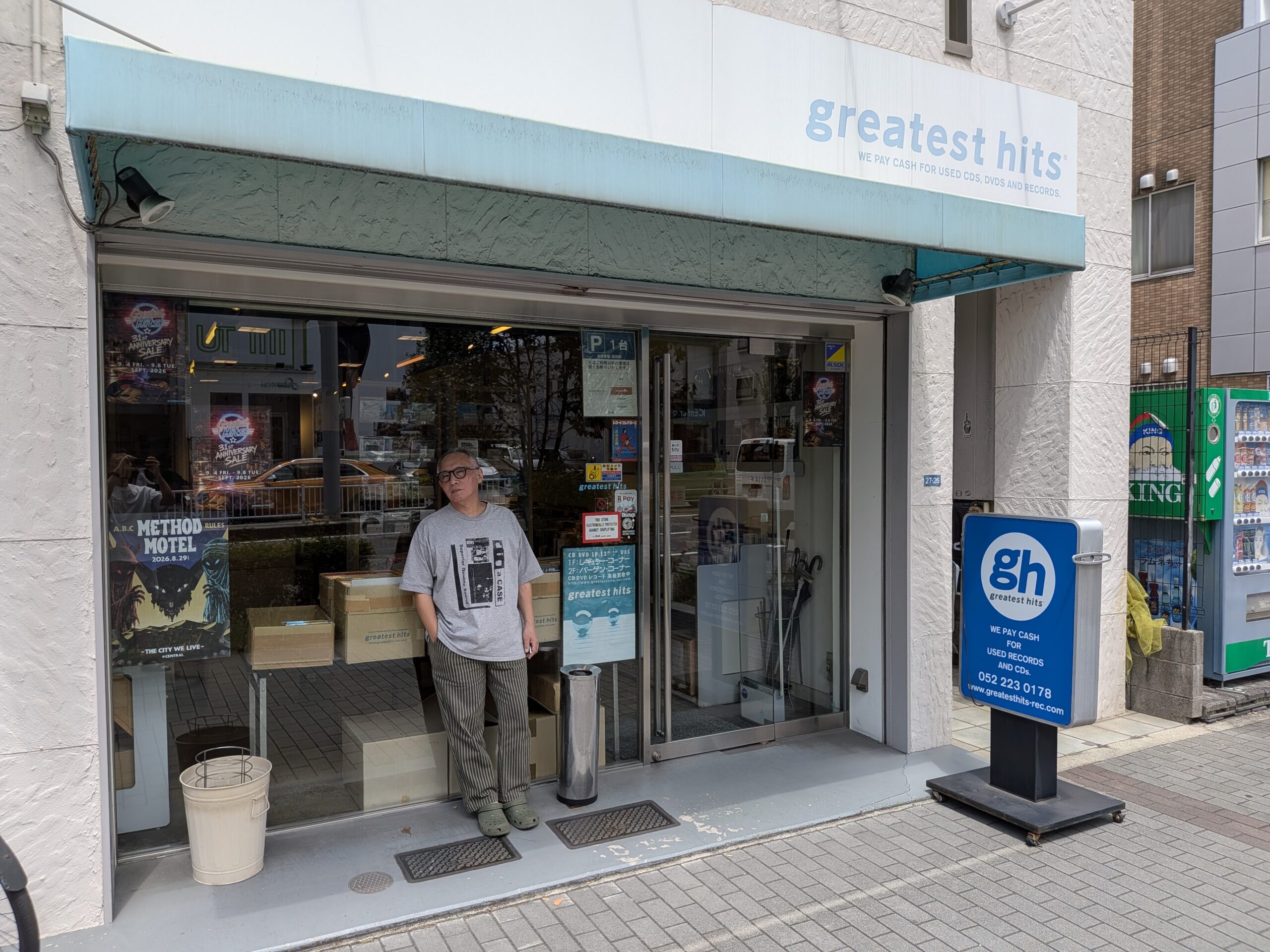
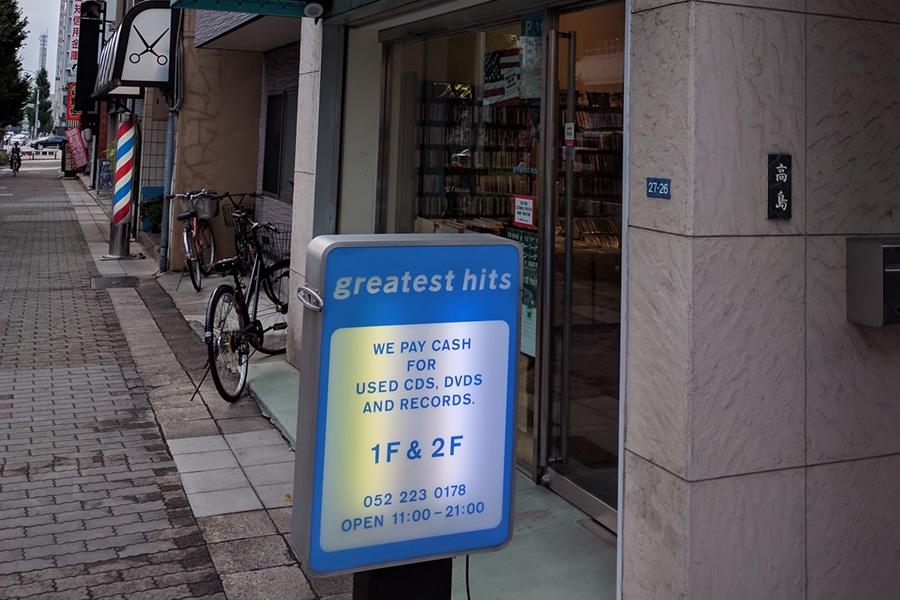
greatest hits is a record shop in Osu, Nagoya, Aichi Prefecture.
The shop first opened in Imaike on September 1, 1995. After a period of operating two locations, it eventually moved into its current form in Osu. In September 2026, greatest hits marks its 31st anniversary.
During the interview, when we asked, “Have you always loved music?” Takashima immediately replied, “No. I still don’t.” When we followed up with, “Then why a record shop?” he answered, “Because I’m an idiot.” Takashima does not try to romanticize the work of running a record shop.
We spoke with Takashima about the history of greatest hits, the changing record-shop landscape in Nagoya, and why he insists that he is “just in the business of selling things.”

How were you involved in the record business before opening your own shop?
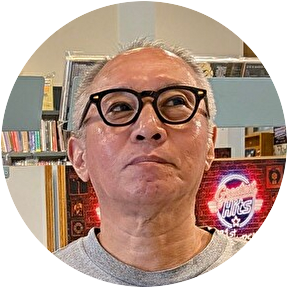 Mr. Takashima
After university, I joined a retail company that sold music, video, musical instruments, and other products. After that, I also worked at a used-record shop, so basically I’ve spent most of my life working in record stores.
At one point, though, I got a little tired of it. A senior from university invited me to take another job, and for about a year and a half I serviced ice-cream vending machines. I drove a refrigerated truck around to swimming schools, game centers, karaoke venues, and suburban shops.
Until then, I had only worked inside stores, so getting out on the road in a truck felt fresh. One of the places on my ice-cream route was a TSUTAYA that was about to open. The manager was very easygoing and let us put a vending machine there.
Later, when I decided to open my own record shop, I just walked into that store and said, “I’m opening a shop, so please sell me your ex-rental CDs.” I didn’t even have a business card yet, and of course I wasn’t wearing a suit. I simply showed up as I was and asked.
At the time, CDs were selling in enormous numbers. A newly opened secondhand shop wasn’t going to naturally attract a steady supply of popular titles by artists like B’z or Mr.Children. Even ex-rental CDs that had finished their run at a rental store were valuable inventory when I was trying to fill the shelves.
For a while, whenever I got a call saying, “I’ve got about 200 discs for you,” I would drive over and buy them. Looking back, it was fun.
What led you to open your own record shop in Imaike? And what was Nagoya’s record-shop scene like at the time?
I opened the shop in Imaike on September 1, 1995. At first, of course, it wasn’t easy. I had rent and loan repayments to cover. But after a few months, I started to feel that maybe I could at least make a living from it.
Looking back, the location in Imaike worked in our favor. Across the road was P-CAN FUDGE (*1), a shop you simply can’t leave out when talking about Nagoya’s used-record scene. People who came there would stop by our shop as well.
The late 1990s were a time when new record shops were opening one after another. The center of the music market had shifted from vinyl to CDs, and CDs were selling at their peak. At the same time, almost as a counter-reaction, scenes such as Free Soul, hip-hop, house, and Shibuya-kei were spreading as niche subcultures.
One characteristic of Nagoya was that the shops were not concentrated in a single district. They were scattered along routes running north-south and east-west. On weekends, people would take the subway from Sakae and visit shops in Chikusa, Imaike, and Motoyama. The Higashiyama Line itself became a route for record shopping.
There were jazz specialists, soul shops, stores dealing in bootlegs, shops strong in guitar pop, club-music specialists actively stocking hip-hop and house, and traditional secondhand record stores. Each shop had its own role, and customers would make the rounds of several stores in a single outing.
Osu in particular has long been a district where vintage clothing, used audio equipment, musical instruments, electronics, and independent culture all mix together. Its culture of walking around in search of secondhand finds was a natural fit for record shops, and with the clubs and live venues of Sakae and Yabacho nearby, music fans could easily spend an entire day exploring the area.
(*1) P-CAN FUDGE: A long-running used-record shop that operated for about 41 years from 1978. It closed in May 2019 following the demolition of the Imaike Building. Known for its distinctive selection ranging from classical music to highly niche genres, it was one of Nagoya’s best-known and most beloved record stores.
You then opened a second location in Osu.
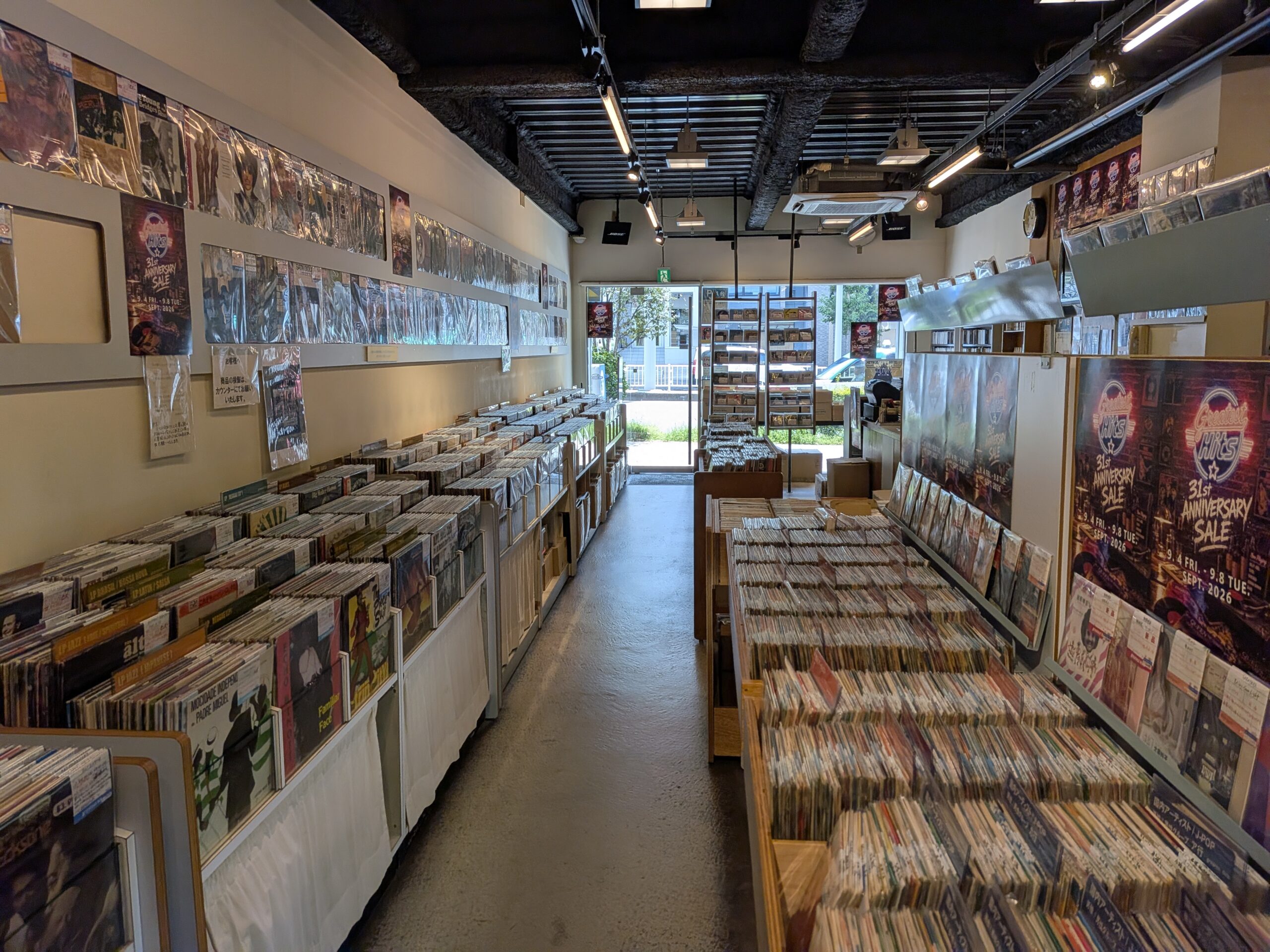
The second location in Osu was originally my family home, where my father ran a bookstore. He said, “I’m closing the shop, so what do you want to do with this place?” It was a good opportunity. We could reuse a lot of what was already there—for example, the comic-book shelving could hold CDs simply by adjusting the shelf heights. We still needed fixtures for records, but I really was fortunate to have that setup.
From there, we operated the Imaike and Osu shops at the same time, and I was even thinking about opening another location somewhere around Sakae. We were buying collections, stock was coming in, and we wanted more places to sell it. I had started the business largely on momentum, but it was actually running in a surprisingly healthy way.
In the 2000s, digital distribution arrived and the environment surrounding physical music changed. But I don’t think it is right to reduce everything to the general statement that “the whole industry was struggling.” Some shops were doing fine.
What had the most direct impact on the Imaike shop, I think, was the introduction of dedicated parking-enforcement officers. The shop had a glass front, so from inside we could see customers’ cars parked on the street being towed—or just barely escaping it in time.
At the time, I wanted to keep both locations going, so closing the Imaike shop was genuinely heartbreaking.
Is there anything you consider especially important at greatest hits?
Nothing that grand. We’re just in the business of selling things.
For example, even if we sell a used Beatles record for one million yen, Paul McCartney doesn’t receive a single yen. We’re the ones who make the money. So saying that we are “contributing to the music industry” can feel arrogant, even self-important.
When I think of the music industry, I think of the people who write songs, sing, play instruments, or work in sound and lighting. Those are the people in the music industry. If someone working at a record shop plays in a band or DJs as a hobby, that’s no different from playing amateur baseball or golf.
Of course, it’s not that I dislike music. Even at my age, I still play in a band, and of course I still go to live shows. But I keep that separate from my work as a record-shop owner. At the shop, the job is simply to buy things, put a price on them, and sell them. I don’t think you should lose sight of that. Maybe after going through plenty of my own misconceptions over the years, I’ve reached a point where I can say that.
So do customers follow the records rather than the shop or its staff?
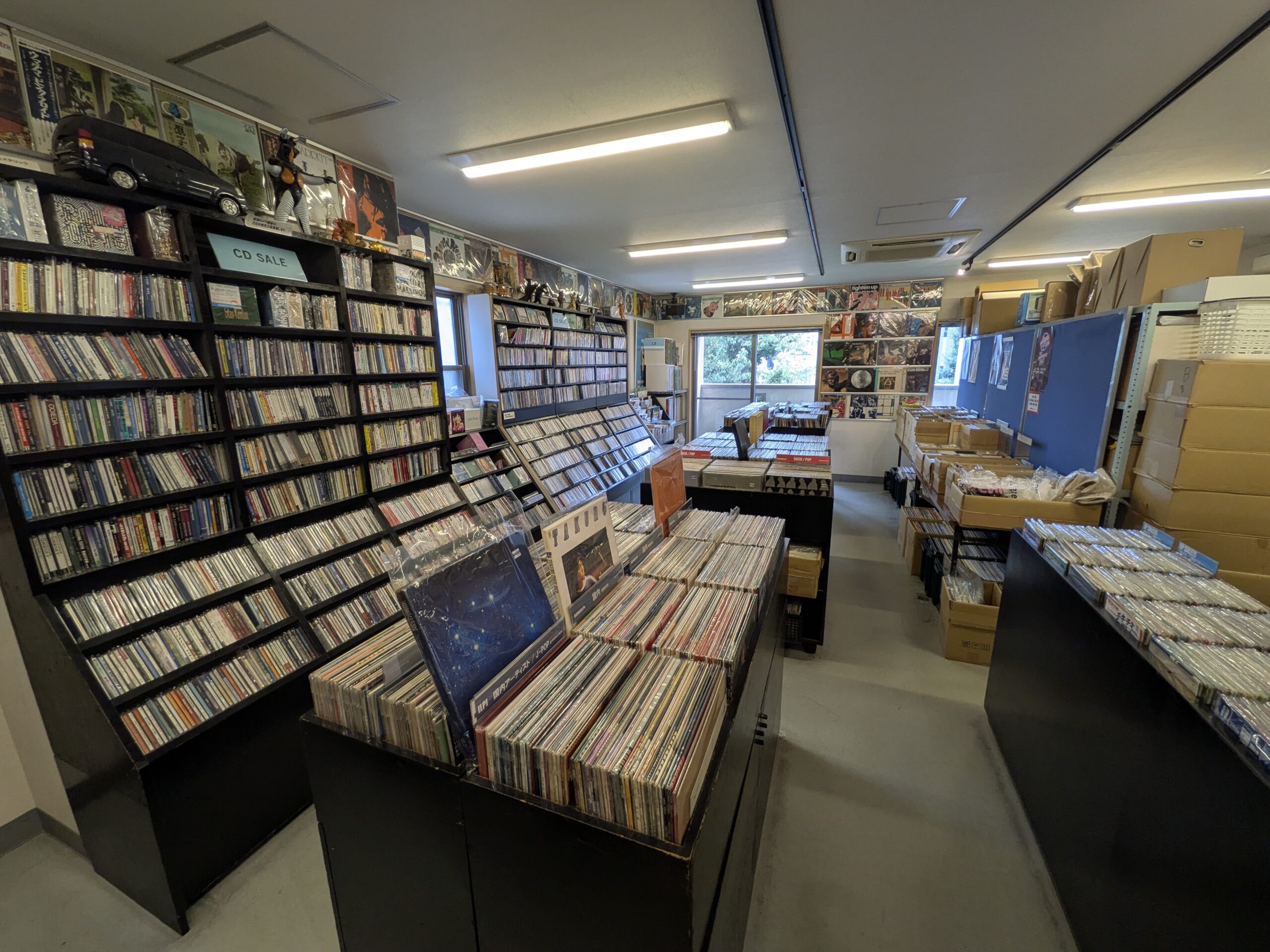
Collectors in particular aren’t attached to the shop or to us as staff so much as they are attached to the records themselves.
To take an extreme example, if you laid out a mat under a bridge and put several incredible Blue Note records on it (*2), people would come. No matter how cool a shop sounds when it talks about itself, if the good records stop coming, the customers thin out. That is how important the merchandise is in the used-record business.
That’s why I find it strange when I see people enter this business with nothing but the numbers in mind. (laughs)
Maybe you can run a business without knowing much about music, but then I wonder: why choose records at all? You’d probably make more money running a yakiniku restaurant. (laughs)
And then there’s “eros.”
(*2) Blue Note: Blue Note Records is a legendary American jazz label. Original copies and early pressings from the 1950s and 1960s are especially sought after, and depending on the catalog number and condition, some can command very high prices.
Eros!?
I don’t mean it only in the sexual sense.
For example, on a beautiful summer day, when the city begins to sparkle as evening turns into night. Driving to a record fair far away. Opening a box when a great collection comes into the shop.
That sense of anticipation, the little thrill, the excitement. Being drawn to something and feeling your heart move. That’s the kind of feeling I mean when I say “eros.”
Recorded music isn’t an everyday necessity in the first place.
Even back when vinyl was the dominant music format, there was a popular saying that the total value of recorded-music sales in Japan was about the same as the sales of tofu. Whether it is records, CDs, or cassettes, that gives you a sense of where recorded music sits in the grand scheme of things.
When it comes to life’s priorities, it is at the very back of the line. Unless you’ve completely transcended worldly needs, when money gets tight, you’re going to choose bread over records.
And yet we make our living selling things that people can live perfectly well without.
That is exactly why there has to be something that makes people want those things anyway, or makes them want to come to the shop. For me, that is “eros.”
I want people who come in to feel something in the records and in the shop—to get excited, to find themselves strangely drawn to something, to want to come back. A shop needs that kind of “eros,” that pull that draws people in.
And I don’t think eros is easily born where there is no room to breathe.
If you are worried about what you are going to eat today, records are hardly a priority. There has to be peace, a little room in life, and the capacity to love something. Maybe that is where eros can begin.
“Peace,” “room to breathe,” and “love.” I think this business rests on those things too.
Even after all these years, a great collection coming into the shop still excites me. If that feeling disappeared completely, I don’t think I could keep doing this.
And one last announcement: greatest hits celebrates its 31st anniversary this year. We’ll be holding our 31st Anniversary Sale from Friday, September 4 through Tuesday, September 8, 2026. During the sale, we’ll have deeper discounts than usual, along with increased buying prices for records and other items. I’d be very happy if you stopped by.
Recoya VIEW
What stayed with us was Takashima’s refusal to describe the work of a used-record shop as a contribution to music culture. He spoke of it simply as the job of acquiring things, pricing them, and selling them to the people who want them.
He does not put forward grand ideals or make the work sound bigger than it is. Customers follow the records first, not the shop or its staff. That is why the job is to source good stock, price it properly, and put it on the shelves.
And yet a great record still moves him when it comes into the shop. Takashima calls that excitement, that flutter of anticipation, that irresistible pull, “eros.”
Perhaps precisely because he sees himself as nothing more than a seller of things, he has never lost the feeling that comes with encountering something special. Takashima might tell us, “It’s not that deep,” but even so, we came away feeling that we understood, just a little, why greatest hits has kept going for 31 years.