
“Record Store Ramblings” is Recoya’s interview series with record store owners and managers.
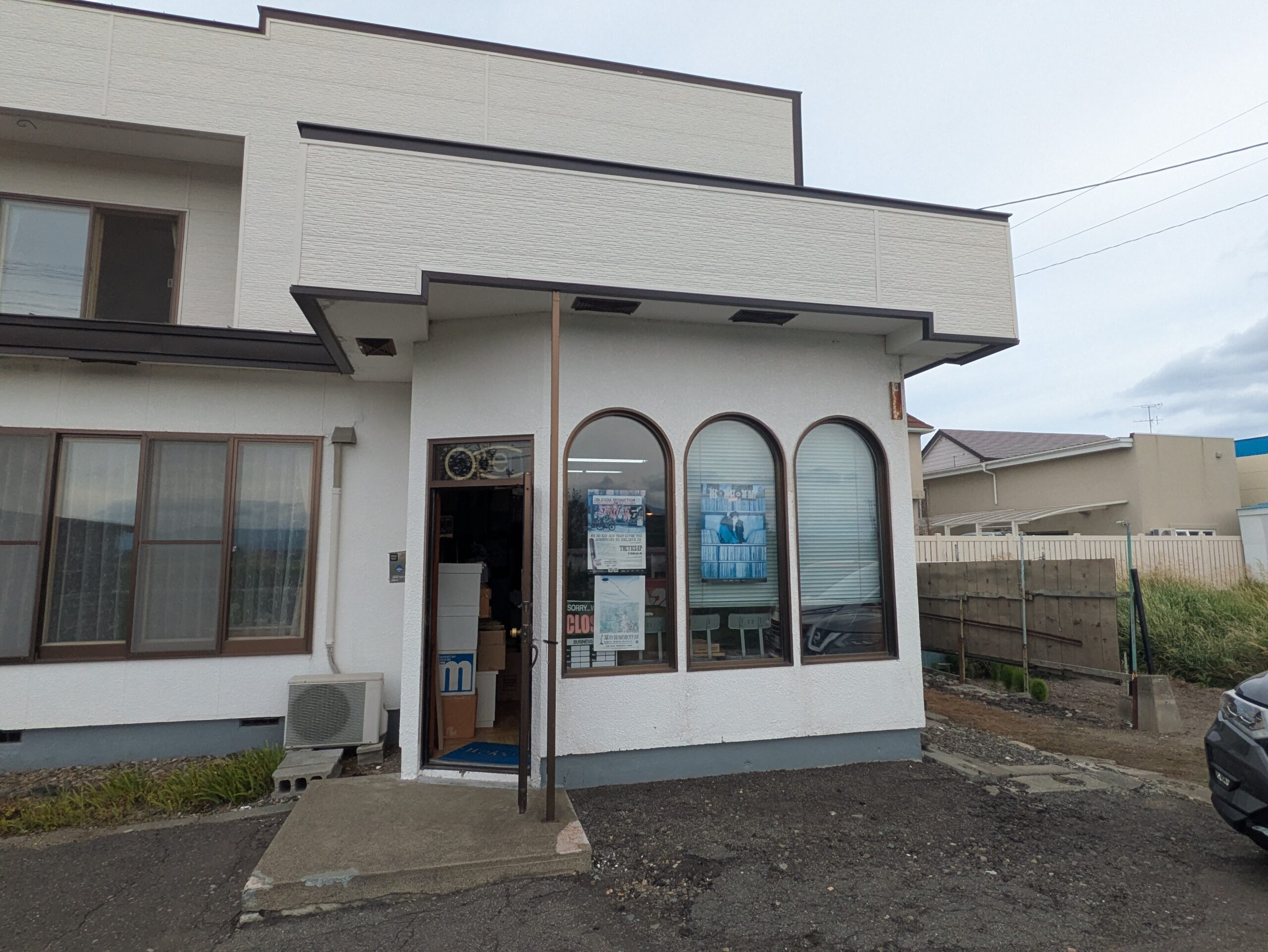
JUICErecords is a record store in Shari, Hokkaido, the gateway to the Shiretoko Peninsula. Housed in part of a former electrical shop along National Route 244, its racks center on hip-hop and extend to soul, funk, jazz, and Japanese music.
Owner METH is also active as a street dancer, DJ, and designer. He left Shari for Tokyo at eighteen, immersed himself in dance, and spent his days visiting record shops in Udagawacho. In 2011, following the Great East Japan Earthquake and the birth of his child, he returned home and opened JUICErecords in his family’s electrical shop.
We spoke with METH about discovering music and dance as a teenager, his years in Tokyo, why he returned to open a record store, and what lies ahead as JUICErecords enters its fifteenth year.

What first drew you to music and dance?
 METH
METHWhen I was a teenager in the 1990s, all kinds of culture arrived at once—not only dance, but the NBA, skateboarding, and fashion. Shari did not have the kind of information access we have today, so I gathered what I could from magazines.
At first I had about ten friends who danced too. Gradually they moved on to skateboarding or basketball, and I was the only one who kept dancing. They still found it interesting, though, and I sometimes worked on things with friends who played in bands.
Records were hard to buy locally. Asahikawa was the closest option, and for the hip-hop records we wanted we had to go to Sapporo. We would board a night bus around ten, arrive at five or six in the morning, and then make the rounds of the shops. The expressways were not as developed then, so it really felt like a journey.
How did you spend your time after moving to Tokyo at eighteen?
It was dance above all else. Having come from the countryside, I wanted to work hard enough to have something worth reporting to my parents. In Tokyo I could experience the music and clothes I had only seen in magazines every day. I was there when Udagawacho’s record shops were thriving, and I bought records almost daily.
When I found another copy of a record I loved, I would buy it and sell it to a friend. It felt like filling a box with my own recommendations and taking it to someone. I was selecting records and passing them on long before I opened a store.
While working as a dancer in Tokyo, I also began doing design work—making our costumes and T-shirts, flyers, and logos. Dance, music, and design were never separate things to me.

Why did you return to Shari, and how did JUICErecords begin?
The Great East Japan Earthquake in 2011 was one catalyst. My child was born around that time too, and I decided to return home for a while. Until then, moving back was not something I had seriously considered.
I knew that once I left Tokyo there would be fewer opportunities centered only on dance, so I wanted to do something else as well. I had long wanted to run a record store and already owned two to three thousand records intended for sale. I began with a pop-up at a clothing shop run by a classmate.
This building was my father’s electrical shop. He let me use the empty space, and I have more or less stayed ever since. Being able to continue without taking on large fixed costs is one reason the shop has lasted almost fifteen years in Shari.
What does it mean to have a record store in the local community?
It makes a completely different place. There are plenty of DJs around here, especially in Kitami, which has long felt like a DJ town. People can buy records online now, but many have never experienced digging through physical records in a shop.
I like the physical act of digging. A store might reduce a record to 100 yen, and then a customer discovers it. The joy of finding something unexpected at that price can only happen in a shop. At JUICErecords I also try to price things a little below the market when I can.
Hip-hop LPs have become astonishingly expensive. Rather than insist on perfect copies, I sometimes offer affordable records that are more than good enough for DJ use. A customer can examine an incomplete copy, decide that a desired track is worth 2,000 yen, and buy it with confidence. That is part of the pleasure of digging in person.

Is the shop also a place where people gather?
Yes. What I wanted was something like a salon. Dancers often do not have a base of their own and are always moving. But if there is a place where people know I will be and can stop for a conversation, something can grow from that.
High school students come in too. They may discover hip-hop through dance and then touch records for the first time. Young people in Shari do not expect to encounter records in their own town, so the shop itself surprises them. We do not have a large sign, so when someone finds us I feel like saying, ‘You really made it here!’
I think it is more interesting not to separate dance from music. I sometimes give private dance lessons in the shop, and people curious about DJing can try the equipment. I also service turntables and players and sell them ready to use. I want to give people the starting point as well.

As JUICErecords enters its fifteenth year, what would you like to do next?
If you look only at business logic, this location and a record store may not seem compatible. But some people enjoy that curious mismatch. I want the very fact that a small town like Shari has a record store to become part of its culture.
Some people may feel out of place here or have energy they do not know what to do with. I want to tell them that music is a healthier direction. Music can be wonderfully obsessive too—healthy and legal, yet deep enough to lose yourself in. I want people to know that world exists.
For our fifteenth year, I want to create something tangible with the local shops I love. I have made dance, records, and design my three lines of work. Using all three to create new value together would be a fitting way for JUICErecords to mark the anniversary.
I want to keep a record store alive in Shari. I value how rare it is to do this in this location, and I hope both locals and travelers will continue to feel that something is waiting for them here.
Recoya VIEW
What stayed with us at JUICErecords was METH’s refusal to separate music, dance, and design, and his commitment to passing them on as one living culture. Even when almost anything can be bought online, a place to dig through physical records, talk with someone, and touch DJ equipment for the first time creates beginnings that a screen cannot. JUICErecords turns the unlikely pairing of a small town and a record shop into its strength. We look forward to seeing what people and expressions grow from Shari over the next fifteen years.