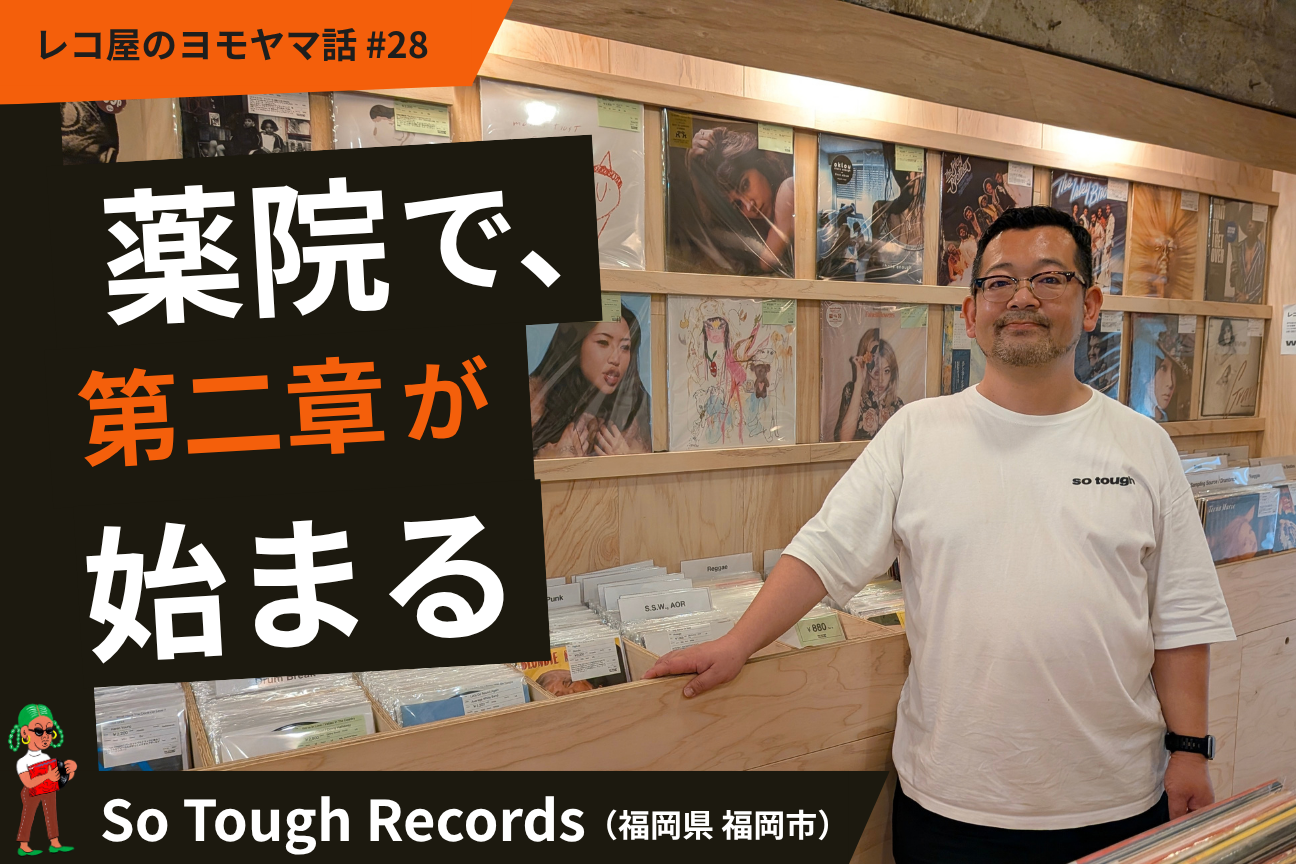
“Record Store Ramblings” is Recoya’s interview series with record store owners and managers.
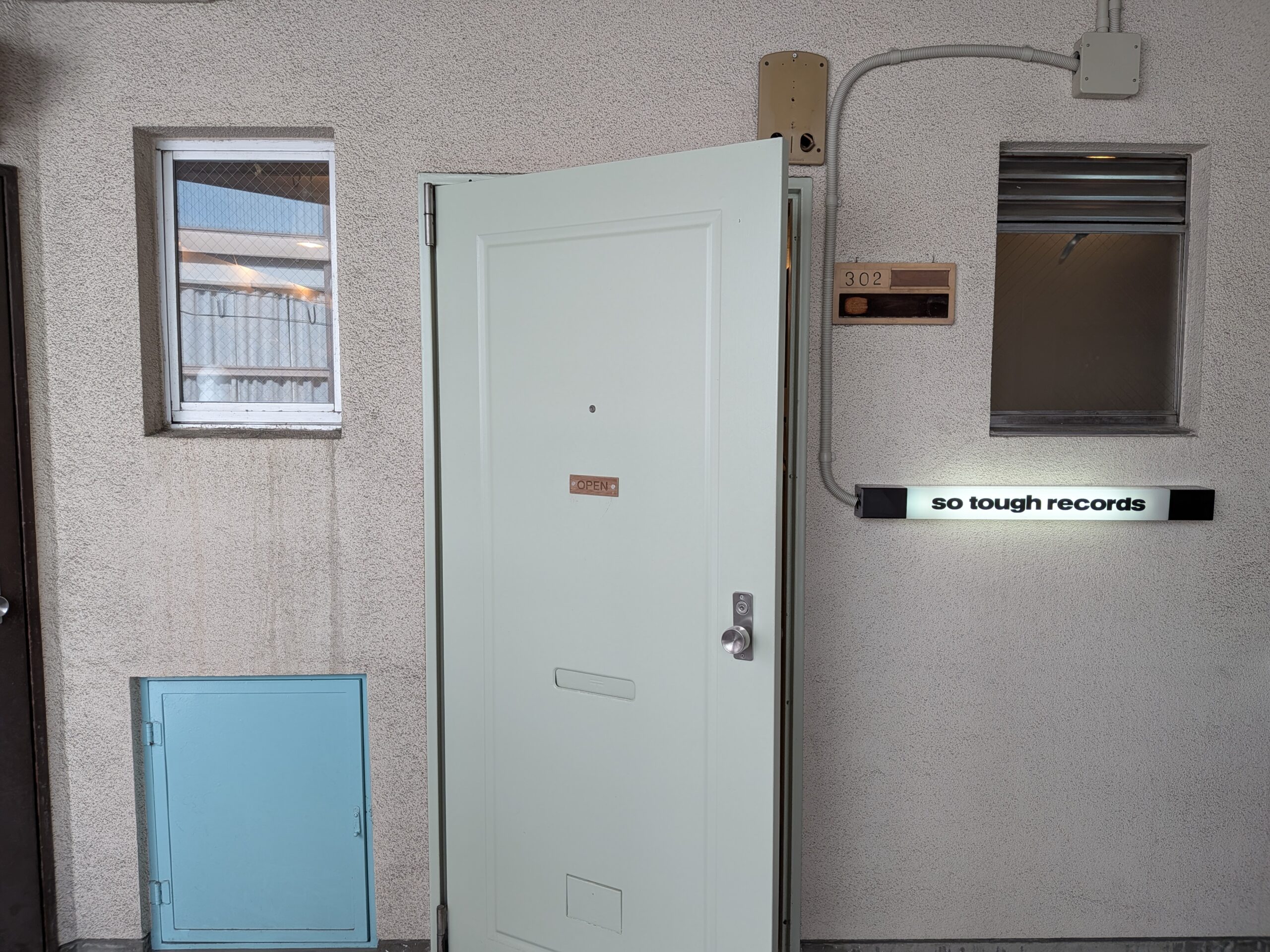
So Tough Records is located in Chuo Ward, Fukuoka City, about a two-minute walk from Yakuin-odori Station on the Nanakuma subway line.
Opened on August 27, 2025, it is a vinyl specialty shop centered on used records.
We spoke with owner Inamasu about discovering music, continuing to DJ and sell records online while working full-time, and why he opened a physical shop after turning fifty.

What first got you listening to music?
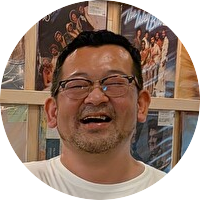 Inamasu
My older brother was a major influence. There is quite an age gap between us, and the music he listened to was always playing at home. I think the record player belonged to my father.
Later, I would discover a song I had heard as a child and think, “Wait, I know this.” All kinds of music must have reached my ears without me realizing it. I began listening seriously for myself in junior high school.
I bought both records and CDs then. Imported records could be cheaper than CDs, so I often simply chose the less expensive format.
When I was in junior high school, I even traveled to Osaka to see the British punk band Buzzcocks perform in Japan.
I never really wanted to start a band. My brother’s instruments were at home, so I touched them and played around a little, but I never kept practicing. I think I was better suited to listening than performing.
When did you start DJing?
I started after entering university. A friend said he was going to become a DJ, so I began doing it with him.
I bought two turntables, practiced at home, and played events. There were small clubs then, and if someone announced a DJ event, there was a scene that could bring out dozens of people.
After I started working full-time, I kept buying records and DJing privately. Once you have a salary, you can buy more records than you could as a student, so the collection grew quickly.
But I did not only buy. When I ran out of money, I sold records and bought more. I had several thousand before opening the shop, but the total number I have bought over the years must be much larger. There are records I wish I had never sold.
For the eight years before opening the shop, I worked for a company in Oita in a job unrelated to music. At first I wanted to return to Fukuoka as soon as I could, but Oita was comfortable, and DJing gave me friends and a community. Even when I was told I could move back, I chose to stay.
After I turned fifty, though, I began asking myself whether continuing as a company employee was really enjoyable. Life in Oita was comfortable, but my friends in Fukuoka seemed more stimulating.
How did you open the shop?
While living in Oita, I also sold records online. It began as a side job—just a way to add a little spending money.
For about ten years I bought records overseas and sold them online. I sourced through Discogs and dealt directly with overseas buyers and labels. Over time, I built a foundation for importing records and selling them in Japan.
I was not doing it because I planned to open a shop one day. I simply thought it would be nice to earn a little from something I loved. When I decided to return to Fukuoka and do something new, I thought I might as well open a record store.
Of course, it was not that casual in reality. I did not know whether it would work, so I asked several people for advice, including a friend who runs a record store in Hiroshima and a younger friend who runs a music bar in Fukuoka.
Some said I absolutely should do it. Others said online sales were enough, or warned that rent and a record-only business would make things difficult.
But if I kept selling online alone, I would stop meeting people. I thought, “If I carry on alone like this, I might die,” and laughed about it.
I do not want to talk with everyone, but I love talking about music. I like being alone and I like talking to people too. Maybe that is selfish. I think I wanted a place people could visit, not just an online business.
Once I decided to open, I quickly bought the records I needed through Yahoo! Auctions and elsewhere. I had always told myself I would quit my job when I found the right property. I found this place around April, left the company, returned to Fukuoka in June, and opened in August.
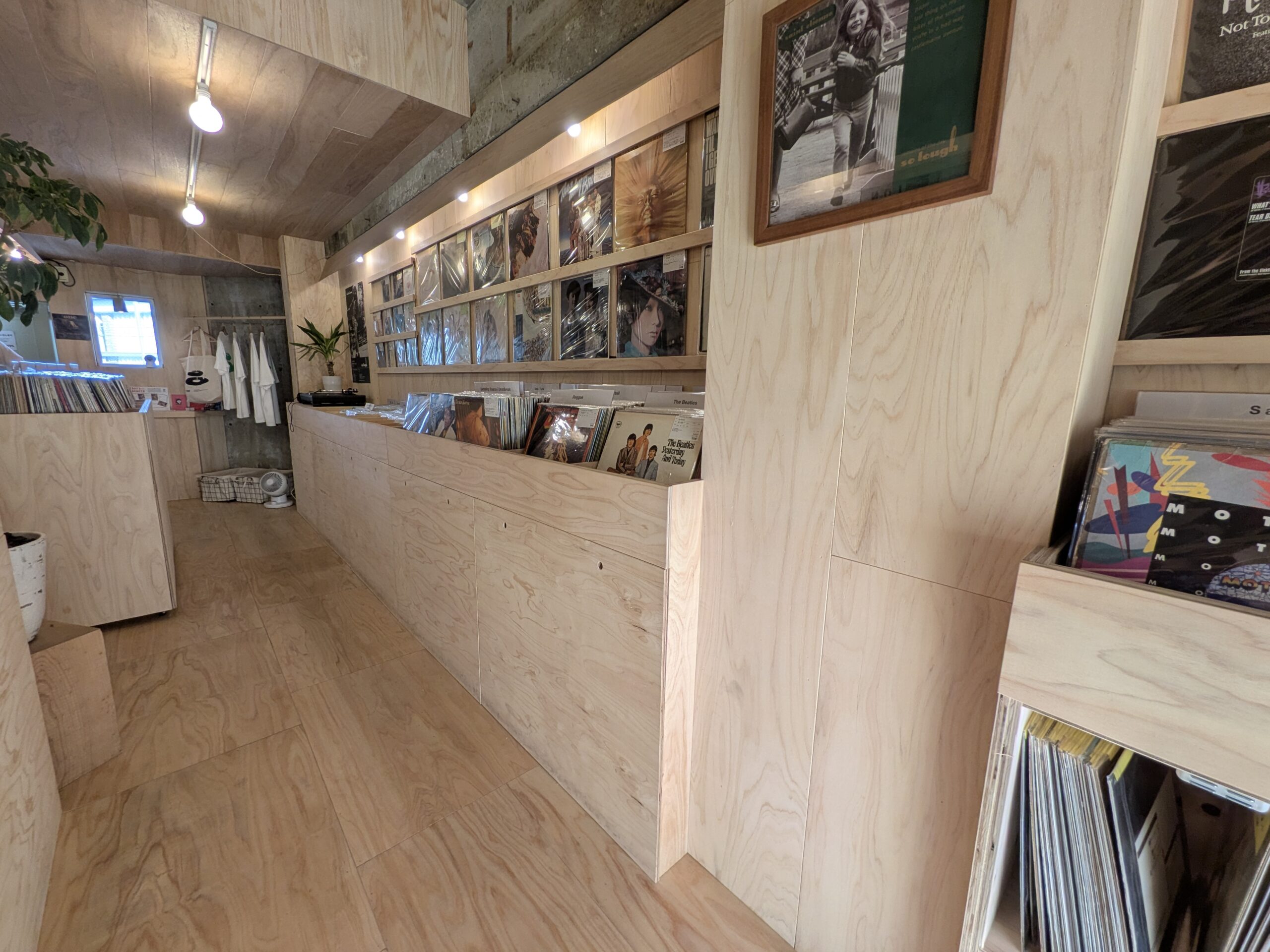
This room had originally been used as a residence. I even contacted someone I had not spoken with for about ten years to ask about the interior. People still helped me after all that time. Looking back, many people gave me the push I needed.
How would you describe the selection at So Tough Records?
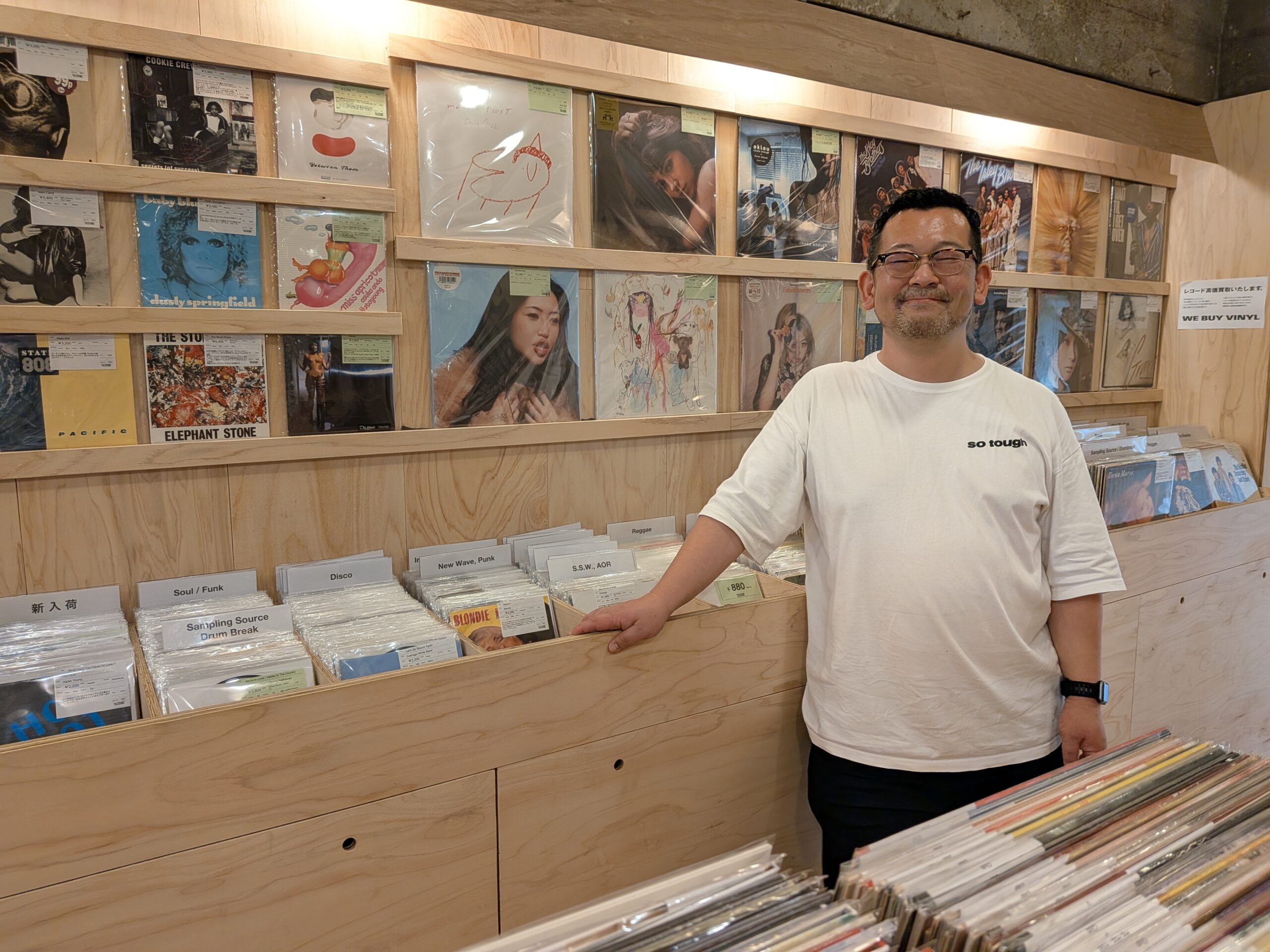
We have LPs and 12-inch records, but I think our strength is seven-inch singles.
Over roughly ten years of online sales, I developed my own way of choosing records. Seven-inch records sold well online, so I use that experience in selecting stock for the shop.
Sometimes I buy from overseas dealers, and sometimes I order directly from foreign labels. I do not specialize in one genre, but because I have spent years DJing, I think I select with a DJ’s sensibility.
At first I expected mostly DJs to visit. In reality, many customers are not DJs. We see people in their forties and fifties who have listened to records for years, but younger customers come in too.
Is there anything you keep in mind when serving customers?
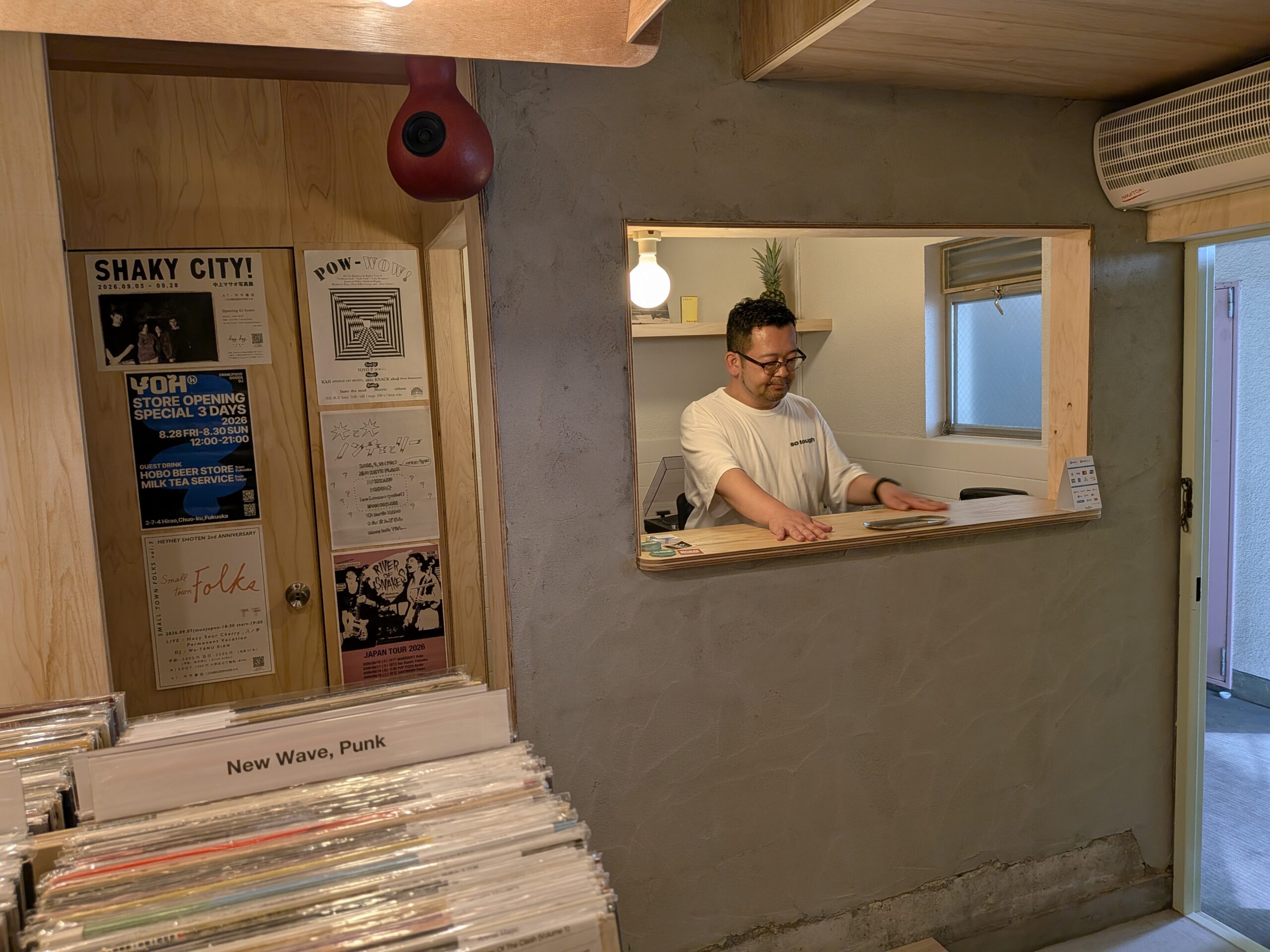
Basically, I want people to browse and listen freely. I do not rush over to talk, and I do not recommend anything unless they ask.
When I visit a record store myself, I want to be left alone. So I try to offer the kind of experience I appreciate as a customer.
Still, if someone brings up a record I love, I cannot help saying, “That one is great.” I say I leave customers alone, but I react when I see something I like.
Some people only take photos of the interior and leave, and that is completely fine. If they like the place, perhaps they will become interested in records someday.
I never think people should stay away unless they are buying. Simply coming to see what a record store is like can be a first step toward music.
What kind of shop would you like So Tough Records to become?
I do not have a detailed target for where the shop should be in a few years. It has only been open for about a year, and I find it more interesting to imagine what it might look like when I am sixty or seventy than to focus only on the immediate future.
If I had to name one goal, I would like to continue until I am around seventy. I want to keep running a record store beyond the age people generally think of as retirement.
When I opened, people suggested serving alcohol or combining the shop with a café. But having more people drinking and staying for a long time does not really suit me. Even now, once a conversation starts, some people stay for two hours.
Many shops now combine records with cafés or general goods, but for the time being I am happy for this to remain a simple place filled with records.
Recoya VIEW
What stayed with us after visiting So Tough Records was Inamasu’s decision to leave company life and open a physical shop after turning fifty. It may look like a sudden leap, but it rests on years of DJing and roughly a decade of selling records online.
He gives visitors space, welcomes people who only want to look around, and yet cannot help responding when someone picks up a record he loves. That balance reflects the many hours he has spent in record stores himself.
Rather than adding a café or bar, he wants So Tough Records to remain a straightforward place filled with records—and hopes to continue until around seventy. We look forward to seeing the shop’s story accumulate in Yakuin.