“Record Shop Stories” is our interview series with the owners and managers of record stores.
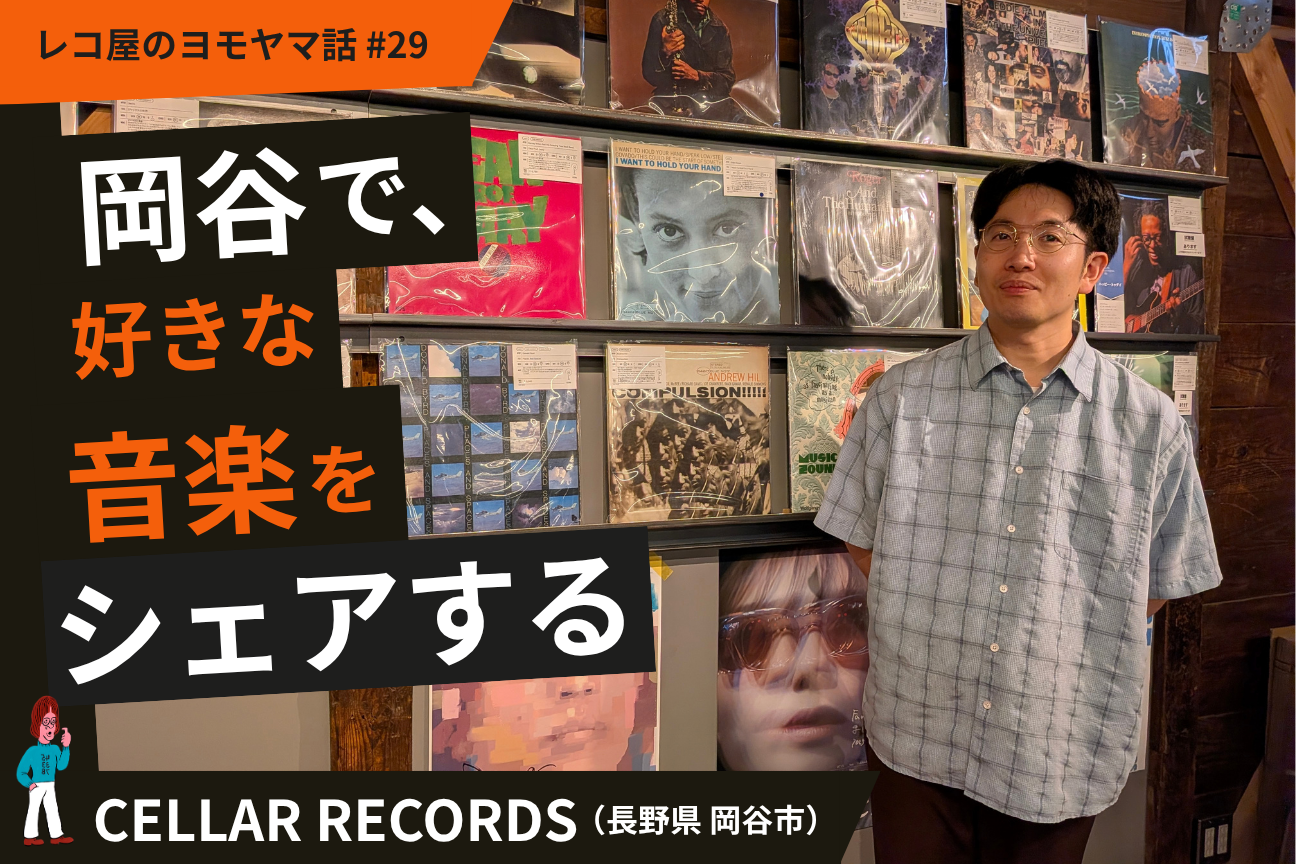
CELLAR RECORDS is a record shop in Okaya, Nagano.
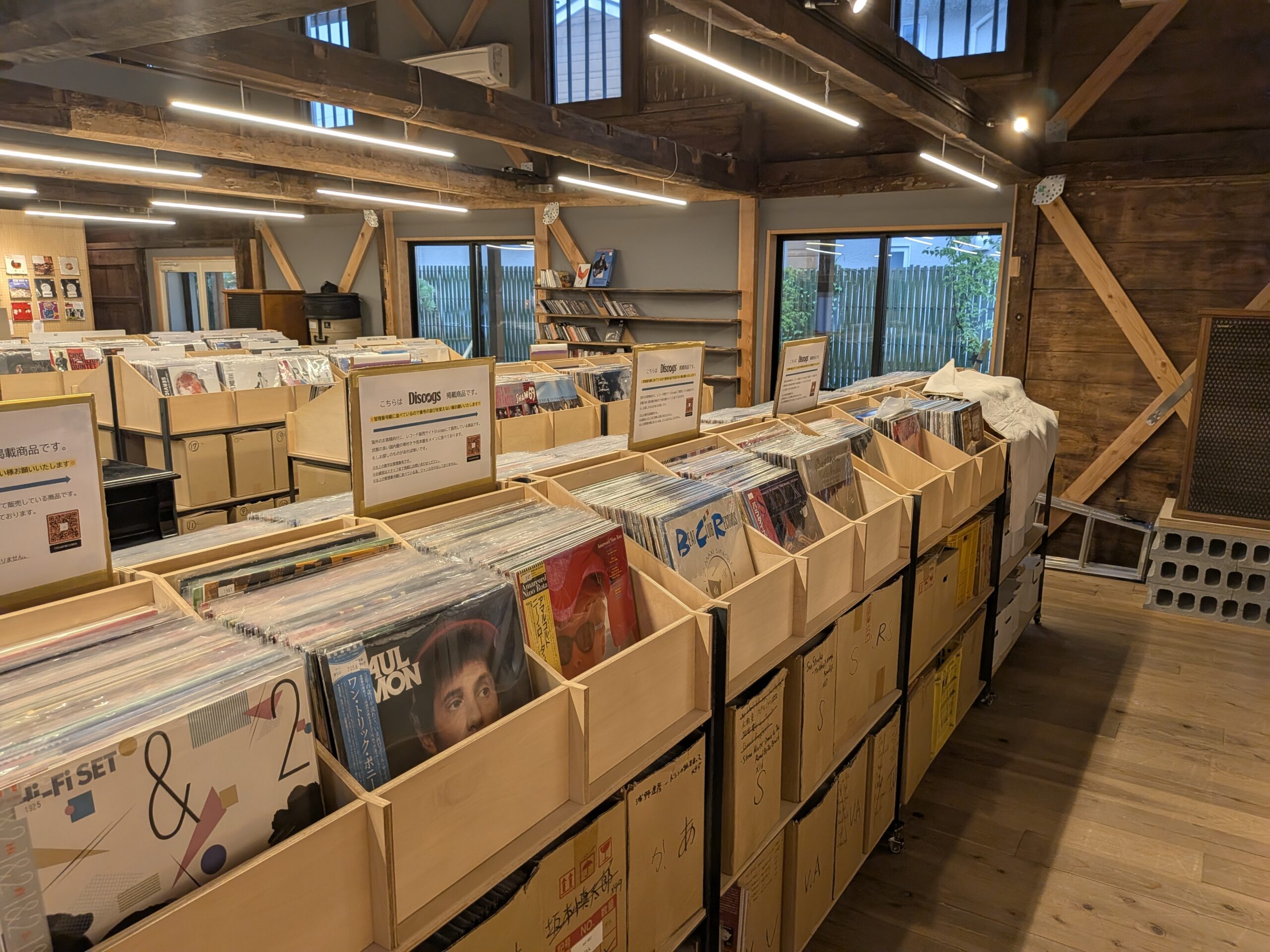
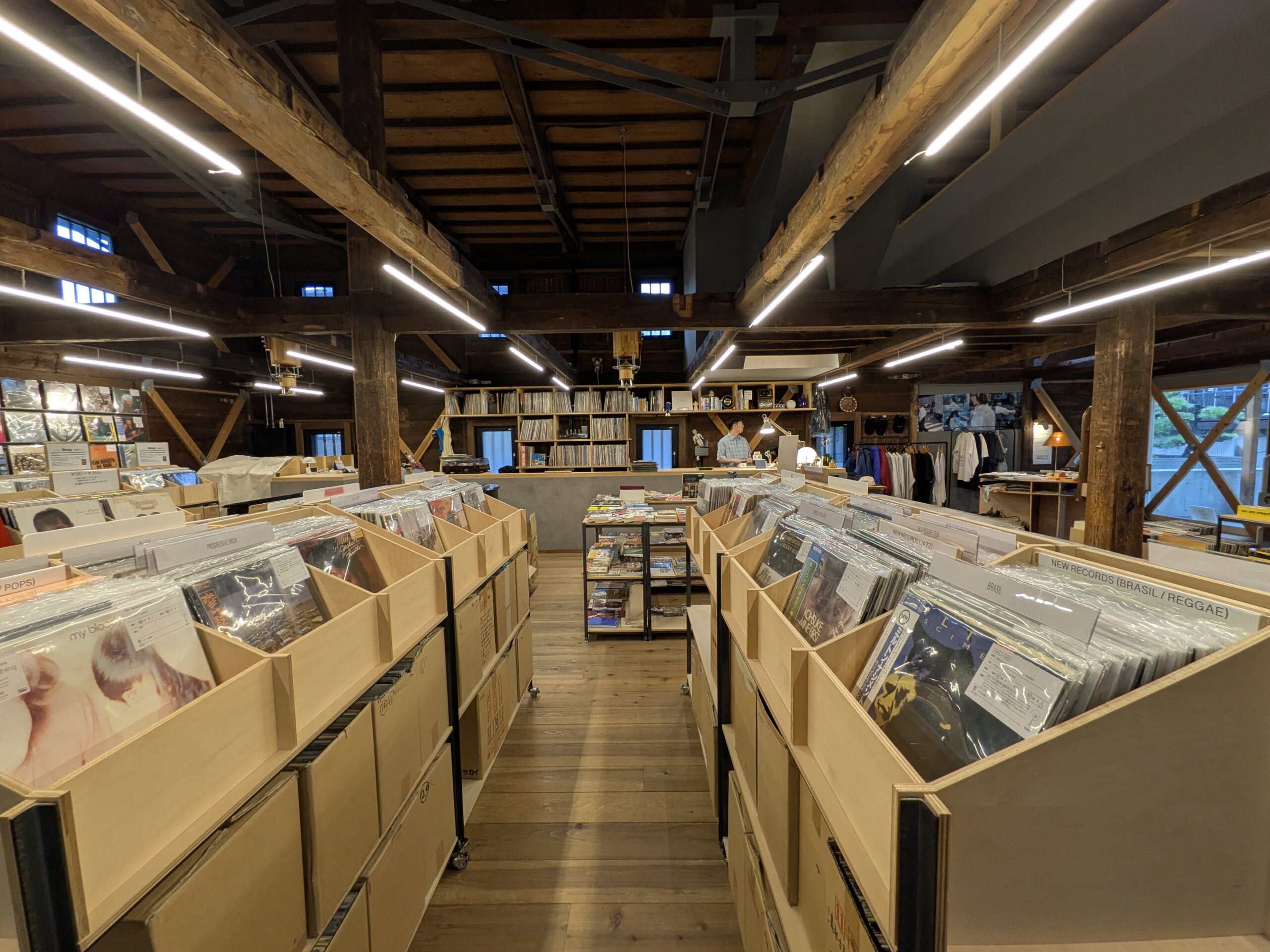
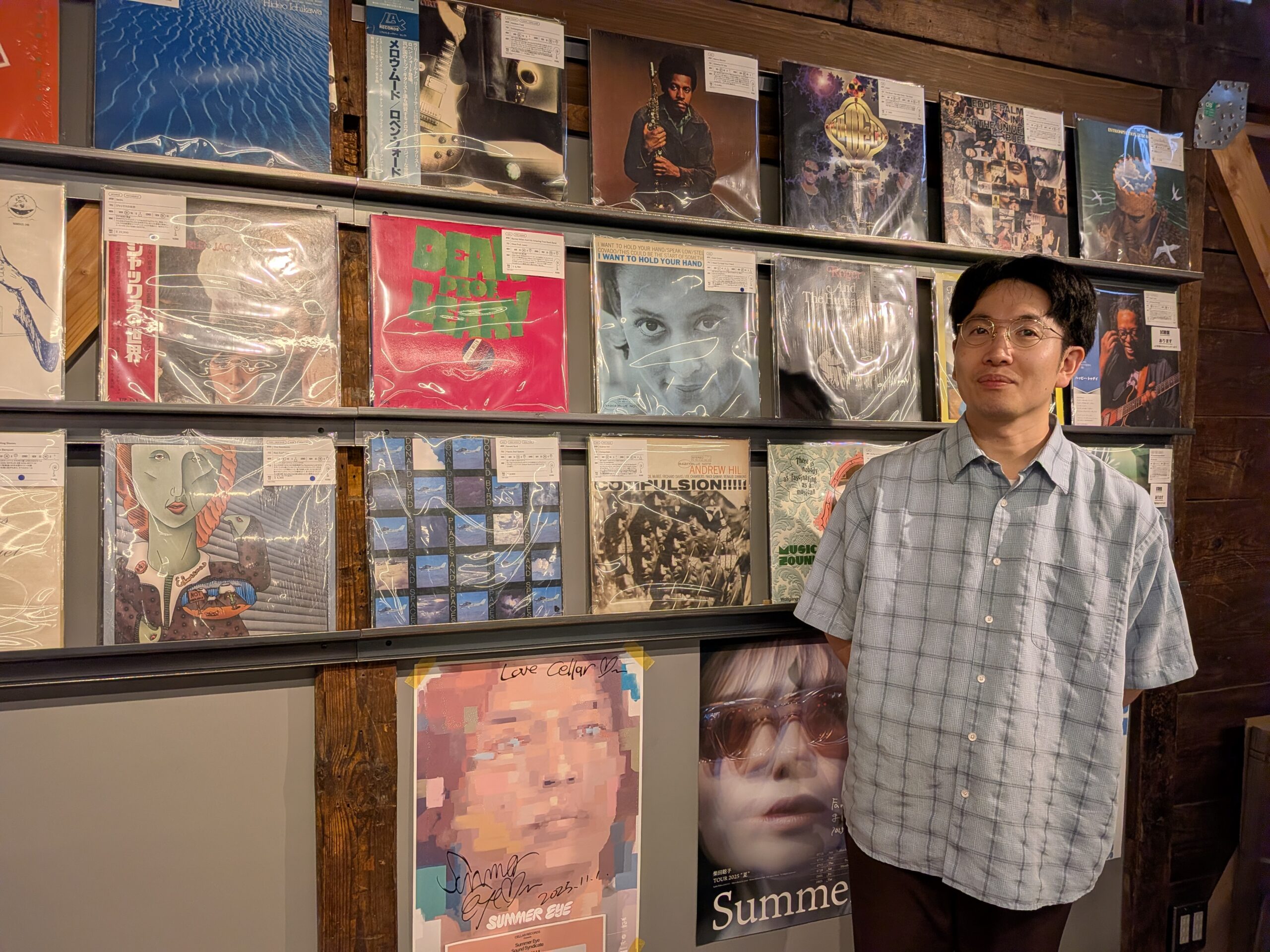
Inside its beautifully repurposed old building, records spanning jazz, rock, and many other genres fill the shelves. Among them are slightly obscure titles accompanied by handwritten recommendations from owner Hama.
We spoke with Hama about how he discovered music, how performing changed the way he listens, and the kind of place he wants CELLAR RECORDS to be.

What first sparked your love of music?
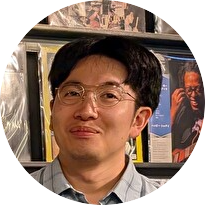 Hama
HamaI think I started realizing how much I liked music in the later years of elementary school. I got hold of a cassette player my older brother had been using. I cannot clearly remember whether he gave it to me or I simply took it without asking, though (laughs).
There was a copy of Jamiroquai’s The Return of the Space Cowboy inside, and I listened to it constantly. I did not understand genres at the time, but I think I was naturally drawn to music that felt smooth and pleasing to the ear. It felt like the first time I had encountered exactly the kind of music I wanted to hear.
After my parents bought me a MiniDisc player in junior high, I began listening much more seriously. There was a TSUTAYA in Okaya then, and my friends and I went there almost competitively to rent CDs.
It also mattered that three or four of my friends listened to music enthusiastically. We introduced one another to new things, and my tastes kept expanding. RIP SLYME and Dragon Ash were popular then, and from there I naturally moved into R&B and music from overseas.
We all liked fairly mellow music. Even within the same artist’s catalog, we often ended up liking the same songs.
One of those friends began buying records around our third year of junior high, and the others followed. I thought records were appealing too, but I did not have the money then. Even in high school, I was still buying CDs.
I bought my first record after entering university.
It was a compilation of Kraftwerk’s early work, from their krautrock-like period before the era for which they became known as techno-pop pioneers.
I did not even own a record player yet (laughs).
But I knew I would eventually buy one, so I went ahead and bought the record first.
Did becoming a performer change the way you understood music?
I moved to Tokyo for university and joined both a jazz club and a rock-oriented music circle.
I had been vaguely interested in jazz since high school, but for me the desire was less ‘I want to listen to it’ and more ‘I want to try playing it.’ Of course, once you decide to perform jazz, you have to listen to it. When I finally listened closely, I found it fascinating.
Jazz is still what I buy most often. You play the theme, improvise over its chord progression, and return to the theme. The exchange between the musicians is a huge part of the music.
There is plenty you can understand simply by listening, but when you actually perform with other people, there are technical and intuitive sensations you cannot know until you do it yourself.
It feels like having a conversation through sound. It is difficult to put into words. In any kind of work, there are things you understand only after actually doing the job; it is something like that.
Becoming a performer gave me more perspectives from which to hear music.
It is not jazz, but I have continued performing and also work as a drummer. I regularly play in support bands for musicians and travel to perform around Japan. Those connections have also led musicians to visit the shop, where we have held in-store concerts and record events.
What made you decide to open your own record shop?
I had always vaguely assumed that I would run a record shop someday.
I loved records themselves, but I also loved the act of buying them. When I worked at a record shop in Tokyo, every day was enjoyable because I came across so many records I did not know.
Working there did not immediately make me think I was ready to run my own shop. Once I actually decided to do it, I began building my knowledge more consciously.
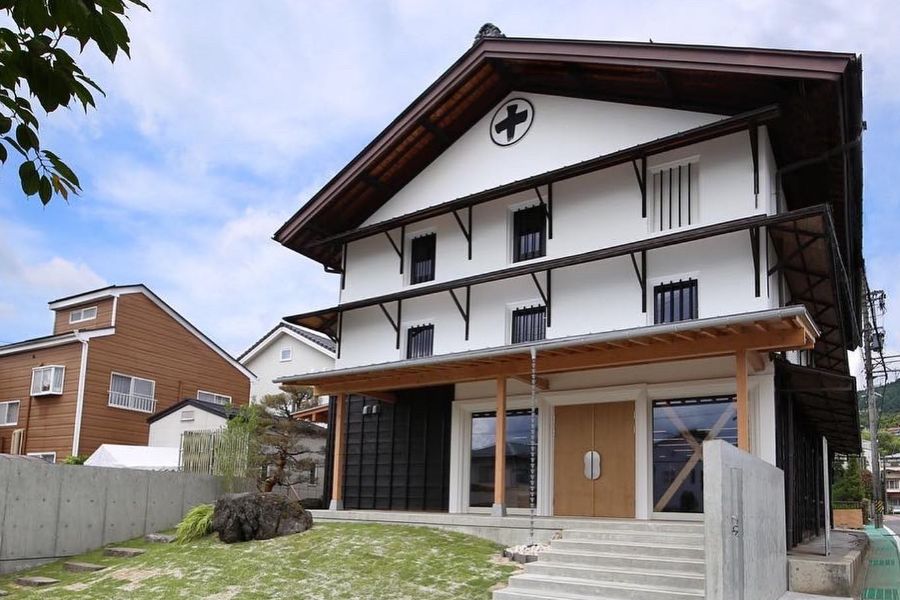
The building that houses the shop had previously been used as a warehouse by a household-goods wholesaler. My father works in design and loves old buildings and wants to preserve them, so someone apparently consulted him about the property. He then asked me whether I wanted to do something here, and that opportunity prompted my decision.
What do you value most at CELLAR RECORDS, and what defines the shop?
I listen to many genres myself, so all kinds of customers visit. The music I most actively introduce through handwritten comments in the shop tends to be a little obscure.
I have always loved that kind of music, so I want to champion it here whenever I can.
Perhaps because of that, we seem to attract quite a few listeners looking for something more unusual or music they have never encountered before.
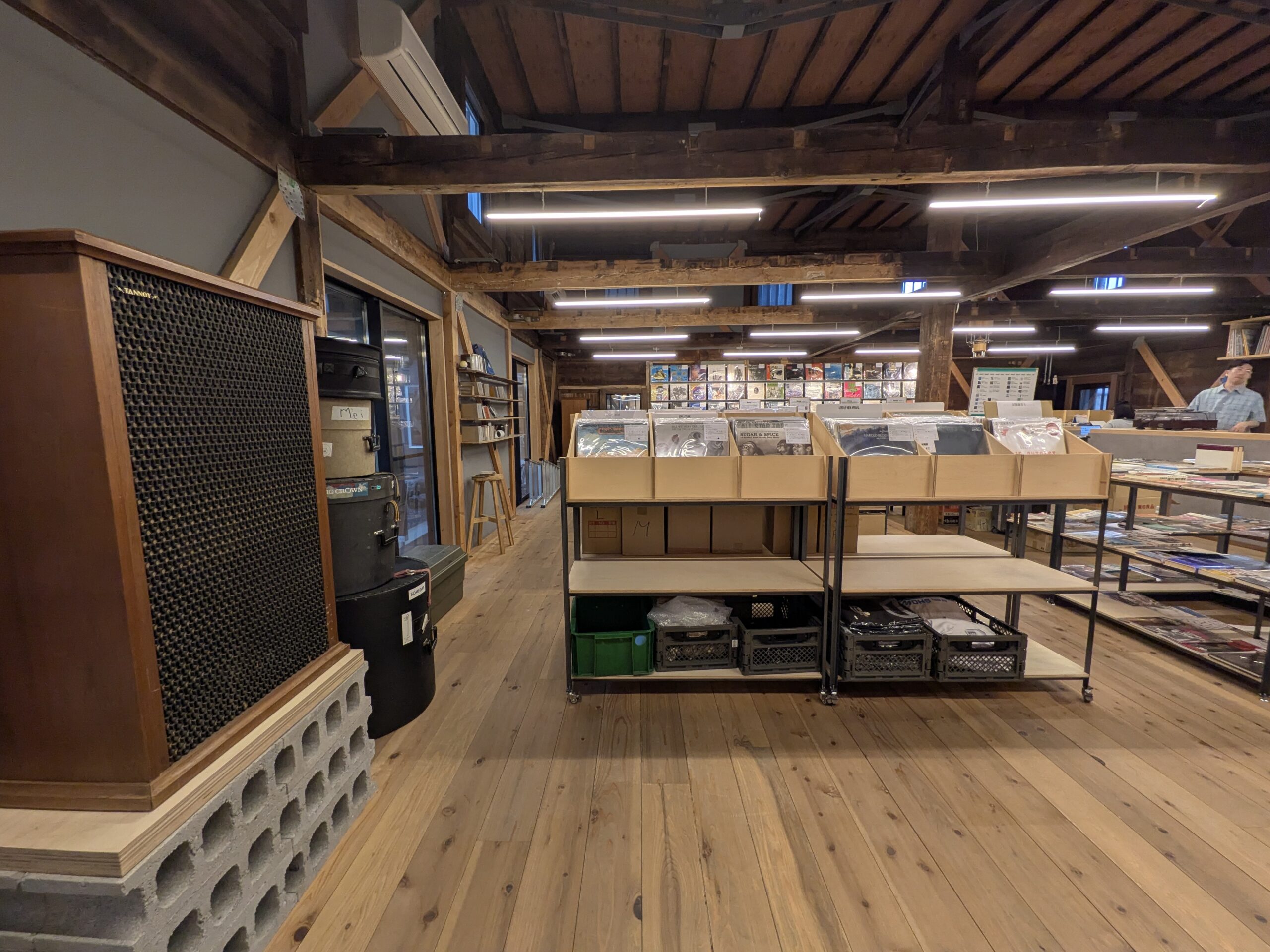
I also care about the speakers we use in the shop. They are Windsor speakers made by US TANNOY. Compared with the UK sound, the US version feels broader and less delicate, with weight in the low end and a powerful, forward presentation. I like that kind of sound, which is why we use the Windsors here.
I try to watch what records customers are selecting.
When I see someone holding several records, I sometimes think, ‘If they like this, they may like that one too.’
If there is something in the shop they have not noticed, I will gently say, ‘You might also enjoy this.’
I do not want recommendations to feel pushy, but the records someone chooses can reveal what they like and what they are searching for.
I hope that can lead them to a record they did not know before.
Pricing is also extremely important. I always research market prices, but sometimes I follow the market, while other times the music itself makes me want to price a record a little lower so it reaches someone. There are also records I insist on offering at a particular price.
Pricing changes the impression a shop makes, so I treat it very sensitively.
How has it felt to actually run a record shop?
It is incredibly fun (laughs).
Of course there are unpleasant and negative moments, but the enjoyment outweighs them.
Looking back, I think I have always loved sharing things with other people.
In high school I was on the broadcasting committee. Along with preparing PA equipment (*1) for school events, we ran a lunchtime broadcast every day and played one or two songs. I loved getting to play music I liked.
I think I have always found real pleasure in sharing what I love with someone else—and in having other people introduce things to me.
A record shop is a job where you select something you believe is good from an enormous amount of music and pass it to another person. That may be why I enjoy it so much.
I also learn a tremendous amount from the records customers bring in for us to buy.
When you shop for yourself, you naturally focus on genres and artists you are already seeking. With purchased collections, however, records arrive from areas I do not normally follow.
I check everything before putting it on sale, and that produces discoveries such as, ‘I knew this artist’s other record, but I never listened closely to this one,’ or, ‘I had no idea this had a Japanese pressing.’
Sometimes it feels like taking a counterpunch (laughs).
Something fascinating that I would never have reached on my own emerges from records brought in by another person. Those moments really energize me.
(*1) PA equipment (Public Address): sound equipment used to deliver microphones and instruments to an audience at concerts and events.
What kind of shop would you like CELLAR RECORDS to become?
First, I want to increase the selection and give visitors even more to enjoy. Rather than starting something completely different, I want to strengthen the CELLAR RECORDS we already have through steady work.
Buying collections is important for that. I also want people to enjoy the comments attached to records and to feel, ‘This is a shop where I would be comfortable bringing my own collection.’
I think it comes down to accumulating those small things one by one.
Someday, it could be interesting to create a dedicated purchasing center. For now, though, I want to add more records and make the shop more enjoyable for everyone who visits.
One announcement: CELLAR’s Record Market Vol.3 will be held on Saturday, November 21. Paddy Fields Records from Ibaraki, FOLC Records & Arts from Kamakura, hair & music parlour FAM from Nagoya, and Rubbergard Records from Tokyo will be taking part. There will also be food and DJs, so please come by if you are interested!
Recoya VIEW
In high school, Hama played his favorite songs over the school’s lunchtime broadcast. He traded music with friends, learned to communicate through sound by performing, and now passes music to others from the shelves of CELLAR RECORDS.
At the same time, collections brought in by customers introduce him to music he might never have found on his own. He shares what he loves, yet remains open to receiving unfamiliar music from others.
That movement in both directions seems central to what makes CELLAR RECORDS so compelling.
Following Hama’s handwritten recommendations and choosing a record you might not normally pick up is one of the shop’s distinctive pleasures. When you visit Okaya, browse the shelves, listen to the TANNOY speakers, and look for a record you will want to bring back into your everyday life.